The Insider's Guide to Polynesian Eats at Disney World: What's Worth It, What's Not
Published June 11, 2026 · Updated October 16, 2026
At a Glance
- Best for: Resort guests (and monorail-loop day visitors) who want the full Polynesian food experience without paying table-service prices three times
- Time needed: 20–30 min for counter service or a mobile-ordered grab; 90 min+ for an 'Ohana dinner
- Typical cost: Counter meals at Captain Cook’s are the budget layer; Kona Café sits mid-range (Tonga Toast runs roughly $17 there); 'Ohana is the one real splurge; signature cocktails run around $17–$17.50
- Best time to go: Captain Cook’s before 7 am or after 9 pm (the Tonga Toast line jams 7–9 am); table service at lunch or dinner, never during your Early Theme Park Entry window
- Don’t miss: The free Pineapple Lanai Dole Whip (resort-guest wristband required — day guests still pay), 'Ohana’s noodles and rum-caramel bread pudding, and the Fireworks Hill beach for Magic Kingdom fireworks
- Skip: The 'Ohana Polynesian Mai Tai if you’re already paying for the feast, a round two at Trader Sam’s, and any plan that makes a Poly meal its own separate trip
- Pro move: Mobile order Kona Island at least 30 minutes ahead, and grab a Fireworks Hill wristband at the front desk before 5 pm
This guide is for anyone staying at or stopping by Disney’s Polynesian Village Resort who wants to eat well without blowing the food budget on three sit-down meals. The single biggest win: let Captain Cook’s and the pool bars carry your cheap meals and lean on the free Dole Whip for snacks, then spend your real money on one 'Ohana dinner. Bolt the whole thing onto a Magic Kingdom day via the monorail and you get the full Polynesian experience for roughly the price of one splurge.
Who This Guide Is For (and Who Should Skip the Poly Entirely)
The Polynesian is a brilliant food stop if you’re already going to be near it — and a mediocre use of 90 minutes if you’re not. That’s the whole fit test. The resort sits on the monorail loop, a short hop from Magic Kingdom transportation, which makes it one of the easiest dining detours to weave into a real park day. It also means a “special trip” from a far-flung resort costs you two transfers and most of an afternoon for food you could approximate elsewhere.
Find your group in this table
| You are… | Verdict | What actually changes |
|---|---|---|
| Staying at the Poly (or on the monorail loop) | Go, repeatedly | Free Pineapple Lanai Dole Whip with a resort wristband, Captain Cook’s as your cheap breakfast, walk-back naps |
| Doing a Magic Kingdom day from anywhere on-site | Go, but bolt it on | Monorail or boat makes it a 10–15 minute detour, not an excursion |
| Staying at a far resort (Animal Kingdom area, All-Stars, Riviera) | Only on a MK day | Transfer time eats the value; never make the Poly its own destination |
| Day guest, no resort wristband | Go for 'Ohana or Trader Sam’s only | The Dole Whip is not free for you — you pay like anywhere else |
| Picky-eater household | Proceed carefully | Kona Café and 'Ohana lean Asian-Pacific; if your table doesn’t like those flavors, this is a hard sell |
| Dietary-restriction household | Strong yes, with prep | Table service is where Disney’s allergy handling shines — ask for the chef |
| Adults chasing tiki bars | Yes — this is the destination | Trader Sam’s Grog Grotto is the actual draw; the food is the supporting act |
The day-guest reality check
The “free Dole Whip” line is the most-repeated Poly tip online and the most misunderstood. It’s complimentary at Pineapple Lanai with a resort-guest wristband. No wristband, no freebie — you pay standard snack pricing. Know that before you promise the kids a free dessert on the walk over.
What day guests should come for: a dinner reservation at 'Ohana, or a seat at Trader Sam’s Grog Grotto, where signature cocktails start around $17 and the show — drinks that change color, the bar erupting in effects — is the thing you’re buying. Both work without a room key.
Pro tip: If you do have a wristband, the free Dole Whip quietly lowers your entire day’s food spend. It’s a real dessert at zero cost, so cut the paid mid-afternoon snacks and redirect that money to one good cocktail or the 'Ohana splurge. Same budget, better day.
Picky eaters vs. dietary restrictions — not the same problem
These get lumped together and they shouldn’t be.
- Picky eaters are the group most likely to be disappointed. Kona Café and 'Ohana are built on Asian-Pacific flavors — noodles, skewers, sauces. If your kid’s menu is chicken tenders and plain pasta, you can make it work at 'Ohana (the tenders exist, and refills are unlimited), but you’re paying family-style pricing for a plate they’d eat anywhere. Captain Cook’s is the safer play: counter service, broader comfort options, a fraction of the cost.
- Dietary restrictions actually do better here than at most quick-service-heavy plans. Request the chef at table service, and ask for the ingredient binder at the counter. The sit-down format gives the kitchen room to adapt — which is exactly why 'Ohana or Kona is worth the reservation if someone in your party has a serious allergy.
How to slot it in without wrecking your park day
If you’re on-site, you get Early Theme Park Entry — 30 minutes before official open, every day — and that window is genuinely valuable at Magic Kingdom. Don’t trade it for pancakes.
- [ ] Fast breakfast first — mobile-ordered Captain Cook’s, not a sit-down that eats your head start
- [ ] Use Early Entry on a headliner before the rope-drop wave lands
- [ ] Save the leisurely table-service meal for lunch or dinner, during the park’s afternoon lull
- [ ] Monorail back for 'Ohana, then catch the Magic Kingdom fireworks from the Poly beach
- [ ] Grab a Fireworks Hill wristband at the front desk before 5 PM if you want that beach spot after dark
Short on time? Kona Café does table-service-to-go. Order it, carry it out, refuel on the way to the monorail — you get the food without burning 90 minutes in a chair.
The one thing to remember: the Poly earns its reputation when it’s a stop on a day you were already having. Build a day around it from a far resort and you’re paying in transit time for a meal that doesn’t need that much ceremony.
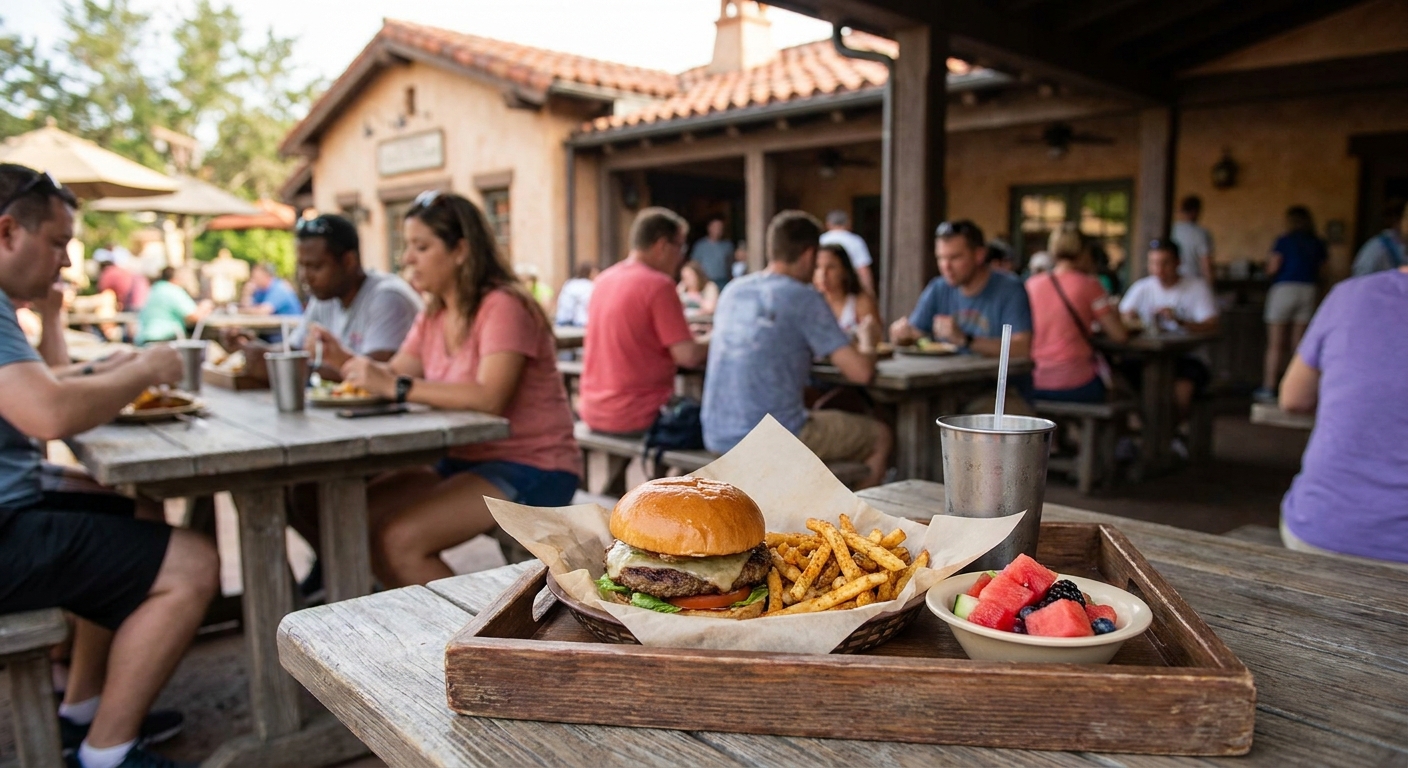
Every Polynesian Dining Venue, Compared
Most families overbuild their Poly dining. You need exactly one table-service reservation and one counter-service workhorse — everything else is optional.
The Polynesian has more places to eat than its footprint suggests, and that’s the trap. Guests book two sit-downs, then discover the counter would have done the job for a third of the money. Here’s the honest layout.
The full comparison
| Venue | Service | Typical per adult | Reservation? | Kid-friendly | Speed | Signature item | Verdict |
|---|---|---|---|---|---|---|---|
| 'Ohana (dinner) | Table service, family-style | Highest tier on property-resort scale | Yes — book it early | High (loud, lively, refills) | Slow (90 min) | Bread pudding with rum-caramel | Splurge |
| Kona Café | Table service | Mid | Yes, but walk-ups happen | Medium (limited picky-eater help) | Medium; to-go available | Tonga Toast (around $17) | Value |
| Captain Cook’s | Counter service | Low | No | High | Fast with Mobile Order | Tonga Toast, cheaper than Kona’s | Value |
| Kona Island | Grab-and-go counter | Low | No | Medium (sushi skews adult) | Fastest | Sushi and quick bites | Value |
| Pineapple Lanai | Walk-up window | Lowest — free with a resort wristband | No | Highest | Fast | Dole Whip | Value |
| Barefoot Pool Bar / Oasis Bar & Grill | Poolside lounge | Low food, high drinks | No | High (if you’re already at the pool) | Fast | Mai Tai, poolside casual bites | Skip-unless at the pool |
| Trader Sam’s Grog Grotto | Lounge | Drinks around $17 and up | Walk-up list, expect a wait | Low (Tiki Terrace is the family-friendly side) | Slow | Effects-driven signature cocktails | Skip-unless you want the show |
Treat every figure as ballpark, per person, before tax, tip, and drinks. Disney nudges menu prices up over time, so confirm current pricing in My Disney Experience before you commit — and assume seasonal kiosk and pool-bar hours shift with crowds and refurbishments.
How to read this table
Three things drive the verdict column: whether the venue delivers something you can’t get cheaper elsewhere on the resort, whether it eats a 90-minute block of your park day, and whether a kid will actually eat there. “Splurge” means it’s worth real money. “Value” means you’re getting close to the same flavor for less. “Skip-unless” means it’s a good time, not a good meal plan — go for the experience, not the calories.
The two venues most guests should actually use
Captain Cook’s and 'Ohana. That’s the whole plan.
- Captain Cook’s carries the volume. It’s the budget hero: the Tonga Toast here is the same macadamia-nut-butter plate as Kona’s roughly $17 version, for less, and Mobile Order means you walk up and collect. Let the counter handle breakfast and most lunches.
- 'Ohana dinner is the one splurge that earns its price. All-you-care-to-enjoy family-style means the noodles, the skewers, and that rum-caramel bread pudding keep coming without a buffet scramble — big eaters and teenagers come out comfortably ahead. Parents of picky little kids should look at the kids’ pricing honestly first; a $30-ish plate of chicken tenders is a tough trade.
Kona Café is the smart substitute, not an addition. If you want a calmer, cheaper sit-down before Magic Kingdom, use its table-service-to-go option and refuel on your way to the monorail instead of surrendering 90 minutes.
Pro tip: The Pineapple Lanai Dole Whip is complimentary only with a resort-guest wristband — day guests pay. If you’re staying at the Poly, that free dessert is the single cleanest way to cut your daily food spend, because it replaces every paid snack between meals. Roll that savings into one good cocktail or the 'Ohana check instead of promising the kids a freebie you can’t deliver as a day guest.
Build your Poly dining day in this order
- [ ] Book 'Ohana dinner the moment your ADR window opens — 60 days before arrival, 6:00 AM Eastern, in My Disney Experience
- [ ] Leave the rest unreserved; counter service covers it
- [ ] Mobile order Captain Cook’s breakfast the night before, or run Tonga Toast after 9 PM when the line collapses
- [ ] Add Kona to-go only if you want a real lunch without the clock
- [ ] Pick up a Fireworks Hill wristband at the front desk before 5 PM if you want the beach after dark
- [ ] Treat Trader Sam’s as a one-drink spectacle, decided after dinner, not a line item
If 'Ohana is booked solid, don’t downgrade your whole plan — set a SupaPark Drop Watch on it. Cancellations cluster in the 24 hours before a seating, and SupaPark pings you the second a table frees up so you can grab it in My Disney Experience.
'Ohana: What to Order and Whether the Feast Is Worth It
'Ohana dinner is the one Polynesian meal where paying table-service prices actually pencils out — if you have at least one big eater at the table. Everything else on property you can do cheaper. This one you can’t replicate, and the noodles are the reason.
What actually arrives, in what order
It’s all-you-care-to-enjoy, family-style, brought to the table — no buffet line, no getting up, no plate juggling with a toddler on your lap.
- Bread and salad course. Pull-apart bread and a simple greens-and-dressing salad. Don’t fill up here; it’s the weakest part of the meal.
- The noodles and wings. Stir-fried noodles with vegetables, plus wings and a dumpling-style starter. The noodles are the real star and the single most refillable item on the table.
- The skewers. Meats brought out on long skewers and carved onto your plate in rounds — this is where the “feast” theater lives, and where servers will keep coming back if you say yes.
- Bread pudding with rum-caramel (actually banana-caramel-style sauce). The dessert people genuinely plan trips around. It comes out warm with the sauce poured over.
Pro tip: Ask the kitchen for “extra sauce” on the noodles — they’ll add a drizzle without blinking — and ask for a second round of the bread pudding’s rum-caramel when dessert lands. Both are yes-able requests, and most tables never ask. Do it in that order: sauce when the noodles arrive, caramel when the pudding does.
Where the value really comes from
The math is not about the skewers. It’s about refills and kids.
| At your table | Does 'Ohana pay off? | Why |
|---|---|---|
| Teen or adult big eater | Yes, clearly | Unlimited skewers + noodles beats any single entrée on the monorail loop |
| Two kids who’ll eat noodles | Yes | Kids’ pricing plus unlimited refills is the strongest per-dollar line on the check |
| Strict picky eater (chicken-tenders-only) | No | You’re paying a set family-style price for a kid who’ll eat one item |
| Small appetites / light eaters | No | Nobody eats enough to clear the per-person cost |
| Group that wants to order à la carte | No | There’s no choose-your-own path — it’s the set menu or nothing |
That last row is the honest dealbreaker. If anyone at your table hears “set menu” and winces, book Kona Café instead and keep the flexibility.
The drink decision
Skip the cocktail here if you’re already paying for the feast. The Polynesian Mai Tai runs around $17–18 at the bar and it’s a competent rum-and-pineapple pour at a premium — you’re not getting anything the pool bar can’t do. If you want the splurge drink, save it for Trader Sam’s Grog Grotto, where signature cocktails start around $17 and up and the actual product is the show: drinks that change color or bubble when a hidden button gets tapped, and the whole bar erupting in effects. One round there is an experience. One round at the 'Ohana bar is just a drink.
Who should book it, and who shouldn’t
- [ ] Book it if you have a big eater, kids who’ll eat noodles, or you want one anchor dinner that doesn’t require anyone to make decisions
- [ ] Book it if a sit-down with Magic Kingdom fireworks sightlines matters to your group — bolt it onto a Magic Kingdom day, never make it its own trip
- [ ] Skip it if your table is all light eaters, if your kid eats exactly one food, or if you’d rather control what lands on the check
- [ ] Skip it if you’re already doing two other table-service meals that trip — one true splurge is the right number at the Poly
Getting the reservation
This is a genuinely hard table, and the 60-day window does most of the damage. Advance Dining Reservations open 60 days before arrival at 6:00 AM Eastern in My Disney Experience, and 'Ohana dinner slots go fast. If you miss it, don’t give up — cancellations cluster in the 24–48 hours before a seating as plans shift.
The move: set a SupaPark Drop Watch on 'Ohana dinner for your dates. SupaPark pings you the second a table frees up, then you grab it in My Disney Experience. Free accounts get Drop Watch alerts by email; paid plans add instant push, which matters here because a dropped 'Ohana table can be gone in minutes.
The one thing to remember: 'Ohana earns the splurge on refills and dessert, not on the skewers — so ask for the extra noodle sauce and the second caramel, and bring an appetite worth the price of admission.
'Ohana Breakfast vs. 'Ohana Dinner: Which Booking to Fight For
If you only chase one 'Ohana reservation, make it dinner — but if your kids are under about seven, breakfast is the better buy and the easier booking. Same restaurant, same view of the Seven Seas Lagoon, completely different value math.
Both meals are all-you-care-to-enjoy and family-style, so nobody is working a buffet line. What changes is who’s at the table, what hits the table, and how hard the reservation is to land.
The head-to-head
| 'Ohana Breakfast | 'Ohana Dinner | |
|---|---|---|
| Price band | Lower per person — the cheaper way into the room | Signature-level splurge; the big spend of a Poly day |
| Characters | Yes — character breakfast format, table visits | None; the show is the food and the fire pit |
| Food volume | Solid, breakfast-sized; kids graze, adults rarely overeat | Huge — skewers, noodles, and bread pudding keep coming |
| Reservation difficulty | Tough but gettable, especially mid-week | Harder; prime 6–8 PM slots go first and fast |
| Time cost | Roughly an hour-plus, but it eats your morning | 90 minutes to two hours, and you’ll want to linger |
Why dinner wins on substance
Dinner is the version people are actually describing when they say 'Ohana is worth it. The pork dumplings and wings land first, the noodles with that sweet-savory sauce arrive next, and the skewers come around on request until you wave them off. Big eaters genuinely come out ahead on a per-person basis — this is one of the few Disney World table-service meals where “order more” costs nothing.
Then there’s the bread pudding with rum-caramel. It is the single most-requested dessert on the monorail loop for a reason, and it’s the one dish that makes the price sting less on the walk out.
Pro tip: At dinner, ask the kitchen for extra sauce on the noodles and another round of the bread pudding’s rum-caramel. They’ll add a drizzle without blinking. Most tables never ask — which is exactly why it works.
The dinner catch: kids’ pricing isn’t a bargain. If your child’s realistic order is chicken tenders, you’re paying signature money for tenders. Know your kid’s palate before you commit.
Why breakfast wins for little kids
Breakfast gets you characters, a shorter sit, and a noticeably lower per-person spend. For a four- and six-year-old, that trade is obvious: the characters are the experience, and nobody needs an hour of skewers to feel like they got the full thing.
It also protects your park day differently. A character breakfast is a legitimate reason to skip a park morning entirely — but it will cost you Early Theme Park Entry at Magic Kingdom, which is the most valuable free 30 minutes on property. So breakfast works best on a resort day or an afternoon-start day, not on the morning you planned to rope-drop Seven Dwarfs Mine Train.
If you can only get one
- Got dinner, wanted breakfast? Take dinner and get your character fix elsewhere. Order the kids something safe, lean on the noodles and bread pudding, and let the fireworks from the Polynesian beach be the kid-magic moment. (Grab a Fireworks Hill wristband at the front desk before 5 PM if you want the beach after dark.)
- Got breakfast, wanted dinner? Keep it, then bolt a dinner-adjacent treat onto the day — a Trader Sam’s round for the adults, or a counter dinner at Captain Cook’s. You’ll be out roughly the price of one signature meal and still have had the room.
- Got neither yet? Don’t settle for a bad time slot just to have something. A 4:15 PM dinner on a Magic Kingdom day wrecks your afternoon more than it’s worth.
How to actually land the booking
- [ ] Book at the 60-day mark, 6:00 AM Eastern, in My Disney Experience — ADRs open 60 days before arrival, not 180
- [ ] Target mid-week dates first; weekend prime slots are the hardest layer
- [ ] Take any time in your window, then upgrade later — cancellations are constant in the final 24–48 hours
- [ ] Set a SupaPark Drop Watch on 'Ohana for your date and time range so you’re not refreshing the app all week
That last one is the whole game. 'Ohana is one of the restaurants that dries up instantly at 60 days, but cancellations happen frequently in the day or two before a dining time. SupaPark pings you the second a table opens, then you grab it in My Disney Experience — the booking always happens on Disney’s side.
The one thing to remember: dinner for the food and the bread pudding, breakfast for young kids and a lower spend — and either way, let a Drop Watch do the waiting instead of you.
Kona Café: The Underrated Sit-Down (and the To-Go Loophole)
The move: book Kona when you want a real table-service meal that doesn’t cost you 'Ohana money — then order it to go and skip the 90-minute sit-down entirely. Most people treat the Polynesian as a two-restaurant resort: 'Ohana or bust. Kona is the one that fits an actual park day.
Why Kona works when 'Ohana doesn’t
Kona sits in the sweet spot between Captain Cook’s counter food and the family-style splurge upstairs. It’s a sit-down with real plating, waiter service, and a calmer room — without the feast pricing or the reservation bloodsport.
- Breakfast is the famous one. Tonga Toast at Kona runs around $17 — sourdough stuffed with banana, deep-fried, rolled in cinnamon sugar. It’s genuinely good and genuinely a lot of food.
- Lunch and dinner are where Kona quietly outperforms its reputation: Asian-leaning entrées, noodle dishes, and sushi that read more “nice resort restaurant” than “theme park meal.” If you’ve only ever done breakfast here, you’re missing the better half of the menu.
- Pressure level is low. Kona is not a 60-days-out, 6:00 AM Eastern bloodbath the way 'Ohana dinner is. You can often land a table on a shorter runway, which makes it a legitimate backup plan when 'Ohana doesn’t come through.
The Tonga Toast value question
| Where | Roughly | Format | Best for |
|---|---|---|---|
| Kona Café | ~$17 | Table service, plated | A sit-down breakfast with coffee refills |
| Captain Cook’s | Cheaper | Counter, Mobile Order | Same Polynesian flavor, zero clock burn |
Same signature dish, two very different time-and-money footprints. If the breakfast is the point, Kona. If the day is the point, Captain Cook’s handles it for less — Mobile Order it and walk.
The to-go loophole most guests never use
Kona offers table-service to-go. You order, you carry it out, you eat it on the way to the monorail. That converts a 90-minute commitment into something closer to a counter-service stop with a better menu — and it’s the single best reason to put Kona in your plan at all.
Pro tip: Use the to-go order as your pre–Magic Kingdom lunch. Eat it on the monorail platform or on a bench by the beach, then tap into the park with a real meal behind you and your afternoon still intact — no 90-minute table, no mid-park quick-service line at the worst possible hour.
Kona Island: the counter nobody plans for
Right outside the restaurant, Kona Island handles specialty coffee and sushi without a reservation at all. It’s the fastest way to get something genuinely good at the Polynesian.
- [ ] Mobile order Kona Island in My Disney Experience — fire it at least 30 minutes ahead and you skip the counter line completely
- [ ] Use it as your morning coffee stop instead of fighting the Captain Cook’s breakfast crush
- [ ] Grab sushi here as a light lunch if your group doesn’t want a full sit-down
- [ ] Treat it as the backup when Kona’s dining room is booked solid
The honest cons
Guest consensus is consistent on where Kona falls short, and it’s worth knowing before you book:
| The catch | What it means for you |
|---|---|
| It’s slow for a time crunch | A table-service meal here will not be your fastest meal of the trip. If you’re racing a Lightning Lane return window, don’t. |
| Not a picky-eater win | The menu leans Asian. If your group doesn’t eat that, you’ll be paying table-service prices for chicken tenders and regret. |
| Location-dependent value | Kona earns it if you’re already on the monorail loop or heading to Magic Kingdom. If you’d be traveling specifically to eat here, save it for a day you’re nearby anyway. |
How to slot it into a real day
Never make a Poly meal its own trip. Bolt it onto a Magic Kingdom morning and every minute does double duty.
- [ ] Fast breakfast first — Captain Cook’s or a mobile-ordered item, not a sit-down that eats your Early Theme Park Entry head start
- [ ] Use Early Theme Park Entry (30 minutes before open, every day, all on-site guests) on a headliner
- [ ] Mid-morning lull: Kona to-go or Kona Island, eaten on the move
- [ ] Save the long, leisurely table-service meal for dinner, when the park flattens out anyway
If you’d rather have the dining room, set a Drop Watch on Kona in SupaPark (supapark.com). Cancellations cluster in the 24 hours before a seating — SupaPark pings you the second a table frees up, then you book it in My Disney Experience.
The one thing to remember: Kona is the Polynesian meal you can actually fit into a park day — and the to-go order is how you get the food without surrendering the afternoon.
Captain Cook’s: The Workhorse That Should Handle Most of Your Meals
If you’re staying at the Polynesian, Captain Cook’s should cover roughly two-thirds of your meals — it’s the single biggest lever on your food budget at this resort. Not because it’s the best food on property, but because it serves the same Polynesian flavors as the table-service spots for a fraction of the cost, with no reservation and no clock.
The headline move: the counter version of Tonga Toast runs cheaper than the roughly $17 plate at Kona Café. Same macadamia-nut butter, same banana-stuffed sourdough, same sweet-savory thing people fly in for. You’re paying Kona’s price for a chair and a server, not for better toast.
The Tonga Toast timing problem
Captain Cook’s has one real flaw, and it’s predictable: the breakfast line backs up hard from about 7 to 9 AM. Every family with a Magic Kingdom morning hits it at the same time, and a 10-minute breakfast becomes a 35-minute one right when you’re trying to make Early Theme Park Entry.
Three ways around it:
| When you go | What it’s like | Best for |
|---|---|---|
| Before 7 AM | Short line, plenty of seats | Early Theme Park Entry families already up |
| 7–9 AM | The bottleneck — longest line of the day | Nobody, if you can help it |
| Mid-morning, after the rush thins | Calm, easy seating | Later park starts, resort days |
| After 9 PM | Near walk-up, same menu items | The sleeper move |
That last row is the one most guests never try. Order Tonga Toast as a late-night snack after 9 PM, when the line drops dramatically and you’re basically walking straight to the register. It travels fine back to the room, and it reheats well enough the next morning if you want breakfast in bed before rope drop.
Pro tip: Treat Tonga Toast as a dessert run, not a breakfast run. Grabbing it after 9 PM when you’re walking back from the beach costs you zero wait and frees your actual morning for Early Theme Park Entry — the highest-value 30 minutes of your whole park day.
The Pho Noodle Bowl nobody talks about
Captain Cook’s shrimp-and-beef Pho Noodle Bowl is the quiet favorite among people who stay here a lot. It’s a real bowl of broth and noodles at counter-service prices, and it eats like a sit-down lunch — a genuinely different option when everyone in your group is tired of chicken tenders and flatbreads.
The honest caveat: availability varies by kitchen and shift. It’s not always on the board, and what’s offered can shift with menu updates and time of day. Don’t build a meal plan around it. Check the current menu in My Disney Experience before you walk over, and have a backup pick in mind so a no-pho night doesn’t turn into a 20-minute decision stalemate at the counter.
Mobile Order is the whole strategy
Captain Cook’s is a Mobile Order venue, and using it correctly is what turns this spot from “fine” into your trip’s time-saver.
- [ ] Open My Disney Experience and build your order the night before, so breakfast is two taps
- [ ] Fire the order at least 30 minutes ahead of when you actually want to eat — longer during the 7–9 AM crunch
- [ ] Tap “I’m Here” while you’re still walking, not once you’re standing at the window
- [ ] Send one person to the pickup counter while the rest of the group claims a table
- [ ] Check the menu in-app first if the Pho Noodle Bowl is the reason you’re going
The mistake people make is placing a mobile order from the lobby and expecting it instantly. During the breakfast peak, the kitchen is the constraint, not the ordering screen — the lead time is what saves you.
The budget math, plainly
Run a Poly stay with Captain Cook’s handling breakfasts and a light lunch, and you free up real money for the one meal that genuinely earns a splurge. That’s the trade: two cheap counter meals and a free resort-wristband Dole Whip at Pineapple Lanai buy you a guilt-free table-service dinner.
- Do: Default to Captain Cook’s for breakfast and at least one other daily meal
- Do: Use the after-9 PM window for anything sweet
- Skip: Paying Kona prices for the same Tonga Toast unless you specifically want the sit-down
- Watch: Counter hours and menu items shift with seasons and refurbishment schedules — confirm day-of rather than assuming
Resort counter-service hours and offerings do move around, which is exactly the kind of detail worth verifying the morning of instead of the week before. SupaPark’s live dining and alert tools flag changes as they happen, so you’re not walking across the resort to a closed counter.
Pineapple Lanai and the Free Dole Whip (Read the Fine Print)
The free Dole Whip at Pineapple Lanai is real — but it’s a resort-guest perk, and that distinction is where families get burned. If you’re checked into Disney’s Polynesian Village Resort and wearing a current resort wristband, you walk up and get a soft-serve pineapple dessert at no charge. If you’re a day guest who monorailed over for lunch, you’re paying standard snack price like everyone else. Nobody is going to wave you through because you ate at 'Ohana last night.
Who actually gets it free
| You are | Dole Whip at Pineapple Lanai | What to do |
|---|---|---|
| Checked in at the Polynesian (room guest) | Complimentary with a valid wristband | Get wristbands for everyone at check-in |
| Day guest with a dining reservation | Paid | Budget it as a normal snack |
| Staying elsewhere on Disney property | Paid | Don’t plan your afternoon around it |
| Poly guest who forgot the wristband | Paid, or go back to the room | Keep bands on all day |
How to get the wristband
- [ ] Ask at the front desk (Great Ceremonial House) when you check in — don’t wait until you want dessert
- [ ] Get one for every member of your party, kids included, not just the adults
- [ ] Leave them on all day; a band sitting on the nightstand does you no good at 2 p.m.
- [ ] If a band breaks or a kid pulls one off, swing by the desk for a replacement — it’s a quick ask
- [ ] While you’re there, grab a Fireworks Hill beach wristband if you want to be on the sand after 5 p.m.
Pro tip: Treat the wristband run as part of check-in, before you even see the room. One stop covers the Dole Whip perk and the after-dark beach access, and you avoid the “we have to walk all the way back” tax later in the day when everyone’s already hot and done walking.
When to go so you’re not standing in line
Pineapple Lanai is small and sits right in the flow of resort foot traffic, so it bunches up predictably:
- Best window: mid-morning, before the pool crowd peaks and before the Magic Kingdom afternoon retreat
- Second best: right after dinner service starts, roughly when tables are filling and the walk-up snack crowd thins
- Worst window: the hot mid-afternoon stretch, when every sunburned family on the monorail loop has the same idea
- Hours and seasonal kiosk operations shift with crowds and weather — confirm the day you plan to use it rather than building an afternoon around one counter
Why one free dessert changes your whole food budget
Here’s the math that most families never run. Snacks are the quiet killer on a Disney day — a couple of treats per person between meals and you’ve spent real money on things nobody remembers. Replacing the afternoon snack round with a free Dole Whip doesn’t just save a few dollars; it buys you permission to spend somewhere that actually matters.
| Where the money goes | The swap |
|---|---|
| Afternoon paid snacks for four | Free Pineapple Lanai Dole Whips with wristbands |
| Second signature cocktail round | One good drink, savored — a Trader Sam’s pour runs around $17 and up, and the show is the point |
| Third table-service meal | 'Ohana dinner, where family-style refills and the bread pudding earn the spend |
Run the day as one premium table-service meal, two cheap counter meals (Captain Cook’s is your budget hero), and a free dessert, and the Polynesian stops feeling like a resort that eats your wallet. The 'Ohana Polynesian Mai Tai at around $17.50 is fun, but it’s a standard rum-and-pineapple pour at a premium — skip it if you’re already paying for the feast.
The parent warning nobody gives you
Do not tell your kids about the free Dole Whip until you have wristbands on wrists. The failure mode is painfully common: a family hears “free Dole Whip at the Poly,” promises it to a six-year-old, then discovers they’re day guests on a dining reservation and the answer at the counter is “that’ll be full price.” Now you’re either paying under duress or managing a meltdown in a beautiful lobby.
Script it the safe way: “If our bands work, we’re getting pineapple ice cream.” Confirm first, announce second.
The one thing to remember: the free Dole Whip is a staying-here perk, not a visiting-here perk. If you’re a Poly guest, get wristbands at check-in and deliberately redirect the snack money you just saved into the 'Ohana reservation or one memorable drink. If you’re a day guest, the Dole Whip is still worth ordering — just pay for it, and don’t promise anyone a freebie you can’t deliver.
Trader Sam’s Grog Grotto and Tiki Terrace: Show First, Drinks Second
The honest read: you’re paying for a theatrical experience that happens to come with rum. Order one signature drink for the show, then decide if round two earns its keep.
Signature cocktails at Trader Sam’s run around $17 and up. That’s premium even by Disney bar standards, and if you’re measuring value in ounces of liquor, you’ll come out behind. But that’s not what you’re buying. Tap the hidden button on certain orders and the drink changes color or starts bubbling while the whole bar erupts — lights, sound effects, the servers playing along, the room cheering. It’s one of the few places on property where a drink order is the entertainment.
Grotto vs. Tiki Terrace: pick your battle
These are two different experiences sharing one kitchen, and most guests don’t realize the outdoor option exists until they’ve already been turned away inside.
| Grog Grotto (indoor) | Tiki Terrace (outdoor) | |
|---|---|---|
| The draw | The full effects show, tiki-bar immersion, hidden buttons | Open-air seating, live music some nights, breathing room |
| Kids | Adults-only after early evening | Kids welcome |
| Walk-up odds | Rough — small room, long waitlist | Much better, often seatable |
| Best for | One memorable round, no little ones | Families, large groups, a drink before dinner |
The Grotto is genuinely tiny. On a busy night the waitlist can stretch past an hour, and it’s a virtual list — you check in, then wander. The good news: the Terrace pours the same drink menu, including most of the signatures, and the effects-heavy ones are the ones you’re waiting inside for. If the show isn’t your priority, the Terrace gets you a drink in a fraction of the time.
The adults-only window is the whole plan
The Grotto shifts to adults-only in the evening, which means your family-with-kids visit has to happen earlier in the day — or happen on the Terrace. This catches people constantly: they build a post-fireworks nightcap around the Grotto, show up with a seven-year-old, and get redirected outside.
- [ ] Traveling with kids? Aim for the Terrace, any time — or the Grotto in the afternoon
- [ ] Want the full indoor show? Make it an adults-only split from the group
- [ ] Add your name to the waitlist, then walk the resort, hit the beach, or grab a Dole Whip while you wait
- [ ] Going after a 'Ohana dinner? Expect the longest waits of the night — the whole monorail loop has the same idea
Pro tip: Put your name on the Grotto waitlist before you sit down to dinner elsewhere at the Polynesian, not after. The list moves while you eat instead of while you stand around, and you can always decline and head to the Terrace if the quote comes back ugly.
The food is a snack menu, not a meal
Trader Sam’s serves small plates — shareable, Pan-Asian-leaning bar food. Treat it as something to line your stomach with, not dinner. Two or three plates between a couple works; a family of four trying to make a meal of it will spend more than a counter-service run at Captain Cook’s and leave hungrier.
The smarter structure: eat at Captain Cook’s or 'Ohana, then come here for the drink and the spectacle. Reverse that order and you’re paying bar prices for appetizer portions.
Where the Mai Tai fits
The 'Ohana Polynesian Mai Tai runs around $17.50 at the bar. It’s a fine drink — rum and pineapple, well-made — but it’s a standard pour at a premium, and it’s available in multiple spots around the resort. If you’re already paying for the 'Ohana feast, skip it there. If you want rum and don’t care about effects, the Barefoot Pool Bar or Oasis Bar & Grill pours the same style for the same money with a lounge chair attached.
The one-drink rule, and why it holds
Here’s the math nobody does out loud: two signature cocktails each for two adults clears what you’d spend on a full table-service meal. The first drink delivers everything you came for — the theatre, the reveal, the bar going off. The second one delivers rum.
So: one each, enjoy the show, then make an actual decision instead of drifting into round two. If the night is the night — anniversary, last evening of the trip, no early rope drop tomorrow — go again. If you’ve got a 7:00 AM Lightning Lane Multi Pass window and Early Theme Park Entry ahead of you, close the tab and go watch the Magic Kingdom fireworks from the beach for free.
The one thing to remember: Trader Sam’s is a show you drink at, priced accordingly. Budget for one round, use the Terrace when the Grotto’s list is brutal, and never bring kids after the adults-only switch.
The Mai Tai Question and Other Premium Pours Worth Skipping
Skip the 'Ohana Polynesian Mai Tai. At around $17.50 it’s a competent rum-and-pineapple pour, and you’re already paying feast prices at the table — that money buys more fun literally 200 feet away at Trader Sam’s.
That’s not snobbery about the drink. It’s about where the dollar does work. The Mai Tai at the 'Ohana bar is fine: rum, pineapple, a float, a garnish. Nothing happens. Nobody at the table reacts. You drink it, you pay for it, and it disappears into a bill that already includes all-you-care-to-enjoy noodles, skewers, and bread pudding. At that point the cocktail is the least memorable thing you’re buying.
What you’re actually paying for at each bar
Poly drink pricing clusters in roughly the same band across venues — which means the differentiator isn’t the liquor, it’s what comes with it.
| Where | Roughly | What the money buys | Verdict |
|---|---|---|---|
| 'Ohana bar — Polynesian Mai Tai | ~$17.50 | A standard rum-and-pineapple pour, no theater | Skip if you’re already paying for the feast |
| Trader Sam’s Grog Grotto — signature cocktails | ~$17 and up | Color-changing and bubbling drinks, hidden-button gags, whole-bar effects | Worth it once, for the show |
| Barefoot Pool Bar / Oasis Bar & Grill | Similar range | Convenience — you never leave the lounge chair | Fine as a utility drink, not a destination |
| Any souvenir-mug or specialty-vessel pour | Highest in the range | Mostly the vessel | Only if you genuinely want the mug |
The Trader Sam’s rule: order one, then decide
Trader Sam’s earns its price tag because the drink is a performance. A server taps something hidden, your glass changes color or starts bubbling, and the room goes off. That’s a real memory, and it costs about the same as the quiet Mai Tai you’d have had at dinner.
But be honest about round two. The spectacle is front-loaded — the second drink is just an expensive drink. The move: order one signature cocktail apiece for the show, enjoy it fully, then decide with clear eyes whether you’re staying. A table of four doing one round each and leaving gets the whole experience at roughly half what a lingering session costs.
Pro tip: The mug and the vessel are the single biggest markup in resort drink menus — you’re buying ceramic, not rum. If you want the souvenir, buy it on purpose and treat the drink as the free part. If you don’t, order the same cocktail in standard glassware and pocket the difference toward the 'Ohana bread pudding round you’ll actually remember.
Where that same spend goes further
Shift the drink budget one notch and the Poly day gets better, not cheaper-feeling:
- The free Pineapple Lanai Dole Whip. Complimentary with a resort-guest wristband — day guests still pay, so don’t promise the kids a freebie you can’t deliver. Two or three of those replace the paid afternoon snack run entirely.
- A second round of 'Ohana bread pudding. Ask for it. The rum-caramel is the best thing on the property’s dessert list and most tables never request another pass.
- Extra sauce on the 'Ohana noodles. Ask the kitchen; they’ll drizzle without blinking. Costs nothing, lands better than a $17 pour.
- One shared cocktail on the beach. Grab a Fireworks Hill wristband at the front desk before 5 PM, bring one drink down to the sand, and watch the Magic Kingdom fireworks across the lagoon. That’s the version people tell stories about.
Your drink-spend checklist
- [ ] Say no to the Mai Tai at the 'Ohana table — the feast is the splurge
- [ ] Budget exactly one Trader Sam’s signature cocktail per adult, for the show
- [ ] Decide on the souvenir mug before you order, not after you see it
- [ ] Use the free Pineapple Lanai Dole Whip to cancel the paid-snack line item
- [ ] Pick up a Fireworks Hill wristband before 5 PM so the last drink has a view
- [ ] Confirm pool-bar and lounge hours day-of — they shift with crowds, weather, and refurbishment
A word on hours: Trader Sam’s fills up fast and the pool bars change their closing times seasonally, so build in flexibility rather than a fixed 8 PM plan. This is exactly the kind of day-of variable worth checking live — SupaPark’s alerts and forecasts flag the shifts so you’re not walking up to a dark counter. The front door is supapark.com.
The one thing to remember: at the Poly, drinks are priced for the theme, not the pour. Pay the premium where something actually happens — Trader Sam’s, the beach at fireworks time — and let the 'Ohana Mai Tai go.
Polynesian-Inspired Eats at Other Disney World Resorts
The honest answer: the Polynesian is the only true tiki destination on the monorail loop — but the loop itself is the hack, because it turns three resorts into one walkable-by-monorail tasting crawl.
There’s no second Trader Sam’s hiding at the Contemporary. What the neighboring resorts do offer is a rotating cast of pool bars, lounges, and counter spots with tropical-leaning drink menus and casual bites — which means you can build an island-flavored evening without ever committing to one reservation.
Why the monorail loop crawl works
The resort monorail connects the Contemporary, the Grand Floridian, and the Polynesian in a continuous circuit, with Magic Kingdom as the fourth stop. No car, no bus transfers, no parking. One loop, several stops, one evening.
The rhythm that actually works:
- [ ] Start at the Contemporary around late afternoon — lounge or pool-bar drink, highest vantage point on the loop
- [ ] Hop one stop to the Grand Floridian for a quieter, dressier round
- [ ] Finish at the Polynesian for the real tiki payoff — Trader Sam’s, a pool-bar Mai Tai, or the beach
- [ ] Time the last leg for fireworks and watch from the Poly beach instead of fighting for curb space on the Magic Kingdom side
Do it in that order and you end where the atmosphere is best, not where it’s merely convenient.
Which stops earn a detour
| Stop | Worth a dedicated trip? | What it’s actually for |
|---|---|---|
| Polynesian (Trader Sam’s, pool bars, Pineapple Lanai) | Yes | The destination tiki experience — theming, effects, Dole Whip, beach fireworks |
| Contemporary lounges & pool bar | Only as a crawl stop | Views and a civilized drink before or after Magic Kingdom |
| Grand Floridian lounges | Only as a crawl stop | Quiet, grown-up pacing; a palate break mid-crawl |
| Nearby non-monorail resorts | No | Fine if you’re sleeping there; not worth the transfer time |
The rule of thumb: if a stop requires a bus, it is not a tropical-food destination — it’s a convenience meal. Resorts off the loop have perfectly good counter service and poolside menus, but you’re spending 40+ minutes of transit to find out what a frozen cocktail tastes like somewhere else.
Pro tip: Mobile order Kona Island in the My Disney Experience app and fire the order at least 30 minutes before you plan to arrive — you walk up, grab grab-and-go sushi, and skip the counter line entirely. That’s the move that makes the Poly the last stop on a crawl instead of the one where you lose 25 minutes standing around.
The money math on a crawl
A three-stop evening sounds expensive, and it can be — signature cocktails at the themed spots run around $17 and up, and three of those per adult is a real dinner’s worth of spend. Two ways to keep it sane:
- Share rounds. One spectacle drink at Trader Sam’s for the show, then switch to something simpler. The theatrics are the product; the second one is just rum.
- Use the free layer. If you’re a resort guest, the complimentary Dole Whip at Pineapple Lanai (resort wristband, no park ticket needed) is a legitimate dessert course at zero cost. Day guests pay — don’t promise the kids a freebie you can’t deliver.
Timing details people get wrong
- Fireworks Hill wristbands: pick one up at the Polynesian front desk before 5 PM if you want beach access after dark. Show up at 7 PM without one and you’re watching from somewhere less good.
- Late-night counter runs: Captain Cook’s Tonga Toast line thins dramatically after 9 PM. If your crawl ends late, that’s a cheaper and faster final stop than anything with a host stand.
- Lounges fill around fireworks time. Anything with a Magic Kingdom view gets a rush roughly an hour before the show. Arrive before that wave or plan to stand.
The one real caveat
Seasonal kiosks and pool-bar hours shift constantly — with crowds, with weather, and with resort refurbishment schedules. A spot that was open and humming one trip can be limited or dark the next, and pool bars at some resorts are genuinely guest-only. Never build an evening around a single kiosk you haven’t confirmed.
This is exactly the kind of thing to verify day-of rather than trust from a list. SupaPark’s live status and alerts catch wait spikes and dining drops as they happen, so you’re not walking up to a closed counter — or missing a table that just freed up at a spot you’d written off. Check supapark.com before you commit the evening.
Smart move: build the crawl with one anchor you’ve confirmed (usually the Poly) and treat the other two stops as optional. If a lounge is slammed or closed, you ride one more monorail stop instead of losing your night.
Dietary Needs, Allergies, and Picky Eaters at the Poly
The single most useful sentence you can say at the Polynesian: “I have an allergy — can I speak with a chef?” Disney’s allergy handling is genuinely good, but it is reactive. Nobody hunts you down to ask. The guests who eat well with restrictions here are the ones who advocate at the top of the meal instead of discovering the problem when the plate lands.
The two scripts that actually work
The ask is different depending on where you’re eating, and using the wrong one gets you a shrug.
| Where you are | What to ask for | What you’ll get |
|---|---|---|
| Table service ('Ohana, Kona Café) | “Can I speak with a chef about an allergy?” | A chef at your table, usually within a few minutes, to walk the menu and flag modifications |
| Quick service (Captain Cook’s, Kona Island) | “Can I see the ingredients binder?” — and if it’s complicated, ask for a manager | The actual ingredient list for each item, plus someone empowered to make a substitution |
| Lounges and pool bars (Trader Sam’s, Barefoot Pool Bar) | Flag it when you order, before anything is poured or plated | Honest yes/no — bar menus have the thinnest modification room on property |
Mention it at check-in too, not just when you’re seated. At a family-style meal like 'Ohana, the kitchen plating separate allergy-safe skewers and noodles takes lead time — telling them early is the difference between eating with your table and eating ten minutes after them.
Gluten-free and dairy-free realities
Gluten-free is the easiest restriction to handle at the Poly, and much of it you already want to eat:
- Dole Whip at Pineapple Lanai — the classic pineapple version is dairy-free, which makes it the rare Disney dessert that works for the dairy-free kid and everybody else. Complimentary with a resort-guest wristband; day guests pay.
- Standard Disney popcorn — a reliable gluten-free snack when you need to bridge the gap to dinner.
- Simple grilled items — grilled chicken, plain rice, steamed vegetables, and unsauced proteins are where quick service shines. Sauces and marinades are where gluten and dairy hide, so ask for them on the side or left off.
- Where it gets hard: Tonga Toast (battered, fried sourdough) and the 'Ohana bread pudding are not fixable. If those are the reason you booked, know that going in and plan a substitute dessert rather than hoping.
Dairy-free is the tougher one. Polynesian-leaning menus run heavy on butter-finished proteins and creamy sauces, so build your meal around grilled-plus-rice instead of trying to subtract dairy from a composed dish.
The picky-eater fallback nobody budgets for
Both table-service spots carry kids’ menus with chicken tenders, pasta, and similarly safe territory, so a kid who won’t touch pork dumplings or noodles will still eat. The catch is math: at an all-you-care-to-enjoy price point, a child eating tenders is paying feast money for food they could get anywhere. If more than one kid in your group is that kid, 'Ohana stops making sense — put the big spend on the adults and let Captain Cook’s handle the children.
Kona Café has a related trap: it’s an Asian-leaning menu, so a hard-no-on-Asian-food eater will struggle even with modifications. The honest call is that Kona is a great sit-down for adventurous eaters and a frustrating one for a truly selective child.
Pro tip: Never trust a gluten-free or dairy-free list you found online — including a list that was accurate last trip. Disney changes suppliers and recipes without announcing it, so an item that was safe in spring can quietly change by fall. Treat every list as a shortlist of things to ask about, and confirm at the counter every single time.
Your at-the-Poly dietary checklist
- [ ] Note the allergy on your dining reservation when you book — it flags the kitchen in advance
- [ ] Repeat it at check-in, not just at the table
- [ ] Ask for the chef at 'Ohana or Kona before you order anything
- [ ] Ask for the ingredients binder at Captain Cook’s and Kona Island
- [ ] Re-confirm on every visit, even for an item you ate safely two days ago
- [ ] Have one guaranteed backup in your pocket (Dole Whip, popcorn, plain grilled protein) for the meal that falls through
Pro tip: Allergy-friendly tables at the hard-to-book spots are the first thing to vanish and the last thing you think to re-check. Advance Dining Reservations open 60 days before arrival at 6:00 AM Eastern, but cancellations fire constantly in the final 24 hours — set a SupaPark Drop Watch on 'Ohana and you get pinged the second a table opens, then you book it in My Disney Experience. Free accounts get those Drop Watch alerts by email at supapark.com.
The one thing to remember: the Poly can feed almost any restriction well, but only if you ask at the start of the meal rather than the middle. Chef at table service, binder at quick service, and confirm every time.
What It Actually Costs: A Full Poly Food Budget
The real swing between a cheap Poly food day and an expensive one isn’t the food — it’s how many times you sit down. Every table-service meal you add roughly doubles that meal’s cost once tax and tip land. Counter-service keeps you in control; 'Ohana is the one place it’s worth losing that control on purpose.
Everything below is a planning ballpark for a family of four, not a quote. Disney nudges menu prices up regularly, so confirm current menus in the My Disney Experience app before you lock a budget.
Three spending styles, same resort
| Approach | Breakfast | Lunch | Dinner | Snacks/drinks | Day feel |
|---|---|---|---|---|---|
| Counter-only | Captain Cook’s (Tonga Toast, coffee) | Captain Cook’s or Kona Island grab-and-go | Captain Cook’s again, or Oasis Bar & Grill poolside | Free Pineapple Lanai Dole Whips with resort wristbands | Lowest cost of the three; you still eat the signature Poly flavors |
| Mixed strategy (the one I’d run) | Captain Cook’s, mobile-ordered ahead | Light counter lunch or Kona Café to-go | 'Ohana, family-style | Free Dole Whips + one shared cocktail round | Roughly one premium meal plus two cheap ones — best value-to-experience ratio |
| All table-service | Kona Café (Tonga Toast runs around $17 per person here) | Kona Café again | 'Ohana | Trader Sam’s round, paid snacks | Easily two to three times the counter-only day |
The gap between the top and bottom rows is the single biggest food-budget lever at the Polynesian. Nothing else you do — not skipping dessert, not sharing entrées — moves the number as much as deciding how many sit-downs you book.
Tax and tip is the part people forget
Counter-service is close to the number on the menu board. Table-service is not.
- Florida sales tax plus a standard 18–20% tip adds roughly a quarter on top of your table-service subtotal. A $200 'Ohana check is really closer to $250 out the door.
- That math is why “just one more sit-down meal” is the most expensive casual decision of the trip.
- 'Ohana’s all-you-care-to-enjoy format is where the tip actually earns its keep: refills on noodles, skewers, and the bread pudding with rum-caramel keep coming, and big eaters genuinely come out ahead. Picky-kid tables don’t — $33-ish chicken tenders for a child who won’t touch the rest is the worst per-dollar outcome on property.
- Kona Café is the middle path: a real sit-down without the 'Ohana price tag, and it does table-service to-go if you want something calmer and cheaper before Magic Kingdom.
Where the food value actually lives
- Captain Cook’s is the budget hero. The Tonga Toast here is cheaper than the Kona version and tastes the same. Let the counter handle the bulk of your meals and the rest of the budget stops mattering so much.
- Drinks inflate a “cheap” day fastest. Signature cocktails — the Polynesian Mai Tai, the Trader Sam’s showpieces — run around $17 and up. One each, savored, is a fair trade for the spectacle. A second round per adult is often more than a whole counter meal for the family.
- Trader Sam’s is paying for the show, not the pour. The color-changing drinks and the room erupting in effects are the product. Great once; not where you drink economically.
Pro tip: The free Pineapple Lanai Dole Whip is the quiet budget hack — complimentary with a resort-guest wristband (day guests still pay, so don’t promise the kids a freebie you can’t deliver). It’s a genuine dessert at zero cost, which means you can cut the paid between-meal snacks entirely and move that money to one good cocktail or the 'Ohana upgrade.
The mixed-strategy day, in order
- [ ] Breakfast at Captain Cook’s — Tonga Toast and coffee, mobile-ordered ahead to skip the 7–9 a.m. line
- [ ] Midday free Dole Whips at Pineapple Lanai — $0 with wristbands
- [ ] Light counter lunch, or Kona Café to-go on your way to the monorail
- [ ] 'Ohana dinner — the one big spend, where refills and the bread pudding make the tip worth it
- [ ] One shared cocktail round at a pool bar or Trader Sam’s, then the fireworks from the beach (Fireworks Hill needs a wristband from the front desk after 5 p.m.)
- [ ] Late-night Tonga Toast run after 9 p.m. if anyone’s still hungry — same plate, almost no line
Protect the one reservation you’re budgeting around
If your whole food budget hinges on 'Ohana, the risk isn’t price — it’s not getting the table. ADRs open 60 days before arrival at 6:00 AM Eastern and 'Ohana dinner goes fast, but cancellations are constant in the 24 hours before a seating. Set a SupaPark Drop Watch on it: SupaPark pings you the second a table opens, then you grab it in My Disney Experience. Free accounts get those Drop Watch alerts by email at supapark.com.
The one thing to remember: budget by number of sit-downs, not by menu prices. One table-service meal, two counter meals, and a free Dole Whip gets you the full Polynesian food experience at a fraction of the three-sit-down version.
A Sample Day of Eating at the Poly (Family of Four)
One premium meal, two cheap ones, and a free dessert — that’s the formula that lets a family of four eat the full Polynesian experience without three table-service checks. The mistake most families make is treating the Poly as a resort where every meal is an event. It isn’t. It’s a resort with one genuinely worth-it splurge, a counter-service workhorse, and a free dessert most day guests never even hear about.
Here’s how the day actually runs.
The hour-by-hour
- [ ] Early morning — Mobile order Captain Cook’s in My Disney Experience before you’re out of bed. Tonga Toast and coffee, picked up on your way out. The counter version runs cheaper than the roughly $17 plate at Kona Café and it’s the same macadamia-nut flavor. Fire the order 20–30 minutes ahead and you walk past the 7–9 a.m. line entirely.
- [ ] Mid-morning to early afternoon — Magic Kingdom. If you’re on-site, use Early Theme Park Entry (30 minutes before official open) for a headliner before the rope-drop wave lands.
- [ ] Midday break — Monorail back for free Dole Whips at Pineapple Lanai. Resort wristband required; no park ticket needed. Four Dole Whips, zero dollars.
- [ ] Light lunch — Counter service, or Kona Café’s table-service-to-go if you want real food without the 90-minute sit-down clock. Eat it on the way back to the monorail.
- [ ] Dinner — 'Ohana. This is the one big spend, and it’s the right one.
- [ ] Evening — One shared cocktail round at a pool bar or Trader Sam’s, then walk out to the beach for the Magic Kingdom fireworks. Grab Fireworks Hill wristbands at the front desk before 5 p.m. if you want to stay out there after dark.
Why this structure beats three table-service meals
| Slot | Venue | Spend level | What you’re buying |
|---|---|---|---|
| Breakfast | Captain Cook’s (mobile order) | Lowest of the day | The signature dish at counter prices |
| Midday dessert | Pineapple Lanai | $0 with wristband | A real dessert, not a consolation snack |
| Lunch | Counter or Kona to-go | Low–mid | Calories without burning park time |
| Dinner | 'Ohana | The splurge | All-you-care-to-enjoy, refills, bread pudding |
| Nightcap | Pool bar or Trader Sam’s | One round | Atmosphere and the fireworks view |
The logic: 'Ohana is family-style and all-you-care-to-enjoy, which means big eaters and growing kids actually come out ahead — the noodles, skewers, and the rum-caramel bread pudding keep coming without a buffet scramble. That’s where a high per-person price converts into real value. Breakfast and lunch do not work that way. A sit-down breakfast costs more, eats your morning, and delivers roughly the same Tonga Toast you can get at a counter. So you concentrate the money where the format pays you back and starve the slots where it doesn’t.
Pro tip: The free Dole Whip is the quiet money-saver in this whole plan — because it’s an actual dessert at zero cost, it lets you skip every paid between-meal snack and redirect that cash to the one cocktail or the 'Ohana check. Four paid snacks a day is how a “cheap” Poly day stops being cheap.
Where the day quietly inflates
Drinks, not food. Signature cocktails at Trader Sam’s and the 'Ohana Polynesian Mai Tai land around $17 and up. Trader Sam’s is worth doing once for the show — the color-changing drinks and the room-wide effects are the point — but it is not where you drink economically. One round, shared, then decide if round two earns it. If you’re already paying for the 'Ohana feast, skip the Mai Tai there.
Two small asks that pay off at dinner: request extra sauce on the 'Ohana noodles, and ask for another round of the bread pudding’s rum-caramel. Both are yours for the asking and most tables never ask.
Build in a fallback
Pool-bar hours and seasonal kiosks shift with crowds, weather, and refurbishment schedules, so don’t hang your afternoon on one specific window. Confirm current menus and hours in My Disney Experience before you commit, and if 'Ohana is booked, set a SupaPark Drop Watch on it — Advance Dining Reservations open 60 days before arrival at 6:00 a.m. Eastern and vanish fast, but cancellations land constantly in the final 24 hours. SupaPark pings you the second a table frees up, then you grab it in My Disney Experience. Details at supapark.com.
The takeaway for this section: pick exactly one meal to spend real money on, make it 'Ohana dinner, and let Captain Cook’s, Kona to-go, and the free Pineapple Lanai Dole Whip carry everything else.
Timing It Right: The Quiet-Window Cheat Sheet
The same Tonga Toast tastes better at 9:15 PM than at 8:15 AM — because you’re not standing in a 20-minute line holding a tray while a toddler melts down. Every Polynesian venue has a dead zone, and hitting it is the single cheapest upgrade to your resort dining day.
The dead-zone table
| Venue | Show up | Why it works | What to skip |
|---|---|---|---|
| Captain Cook’s | Before 7 AM, or after 9 PM | The Tonga Toast line stacks hard from roughly 7–9 AM; late night it’s close to a walk-up | The 8 AM peak — that’s the whole crowd at once |
| Kona Café (to-go / counter pickup) | Mobile order 30+ minutes ahead | Order fires while you’re still getting shoes on; you bypass the counter entirely | Walking up cold and queuing to order |
| Pineapple Lanai | Midday | Free Dole Whip with a resort wristband, and the afternoon pool crowd hasn’t swung by yet | Right after the pool closes, when everyone remembers it exists |
| Barefoot Pool Bar / Oasis Bar & Grill | Late morning or the pre-dinner lull | Lounge-chair service without the 2 PM poolside pile-up | Peak swim hours if you want a seat |
| Trader Sam’s Grog Grotto | At opening, or late | It’s tiny. Mid-evening means a waitlist; opening or late means a stool | Showing up at 7 PM expecting to walk in |
Why off-peak genuinely makes the food better
This isn’t vibes. At peak, counter kitchens batch-cook to keep up, food sits under a lamp while you hunt for a table, and your “quick” breakfast turns into 40 minutes. Off-peak, the same Tonga Toast comes out closer to made-to-order, you get a seat without circling, and nobody’s elbowing you at the drink station. Same menu, same price, measurably better experience.
The counter version of Tonga Toast also runs cheaper than the roughly $17 plate at Kona Café — same macadamia-nut-butter idea, less money. So the late-night Captain Cook’s run isn’t just the quiet move, it’s the value move.
Pro tip: Captain Cook’s Pho Noodle Bowl (shrimp and beef) is the hidden-menu order locals actually come back for — it’s not what anyone travels to the Poly to eat, which is exactly why it’s available when the Tonga Toast line is out the door.
The Fireworks Hill wristband nobody tells you about
The beach viewing area for Magic Kingdom fireworks requires a wristband after 5 PM. You get it at the front desk — free, resort guests only — and the smart play is picking it up before 5 PM, ideally when you’re already walking through the lobby that morning or on your way back for an afternoon break.
- [ ] Stop at the front desk before 5 PM and get wristbands for everyone in your party
- [ ] Grab drinks at a pool bar or Trader Sam’s on the way out
- [ ] Be on the beach 15–20 minutes before showtime for a good spot, not a back row
- [ ] Walk back to your room after — no bus, no monorail, no 45-minute park exit
That last line is the actual reason to do this. Watching the fireworks from the beach and being in bed ten minutes later beats fighting Main Street, U.S.A. at park close by a wide margin.
Build the quiet windows into your actual day
- [ ] Mobile-order Kona Island in My Disney Experience at least 30 minutes out
- [ ] Hit Pineapple Lanai midday for a free Dole Whip (resort wristband, no park ticket needed)
- [ ] Pick up Fireworks Hill wristbands at the front desk before 5 PM
- [ ] Save Tonga Toast for a post-9 PM run when the line thins
- [ ] Hit Trader Sam’s right at opening if you want a seat instead of a buzzer
The caveat that matters
Seasonal kiosks and pool-bar hours shift with crowds, weather, and refurbishment schedules — a spot that’s open all week one trip may be limited the next. Confirm day-of before you build an afternoon around a single counter. This is where SupaPark earns its keep: live alerts and forecasts flag wait spikes and dining drops the moment they happen, so you’re not walking up to a dark window or missing a table that just freed up. Free at supapark.com.
The one thing to remember: pick the quiet window first, then pick the food. At the Polynesian, timing is worth more than any menu hack.
How to Actually Get the Reservation (and What to Do When It’s Full)
The 'Ohana reservation you want isn’t won at 60 days — it’s won in the 24 hours before the meal, when other people’s plans fall apart. Both halves matter, so here’s how to play each one.
The booking mechanics, straight
Advance Dining Reservations open 60 days before your arrival date, at 6:00 AM Eastern, in My Disney Experience. Not 180 days. Not 7:00 AM. If you’re staying on-site, that 60-day window typically covers your whole trip length from arrival, so one early morning can lock in multiple Poly meals.
Keep this clearly separate from the other alarm clock in your trip:
| What | When it opens | Where | What it covers |
|---|---|---|---|
| Advance Dining Reservations | 60 days before arrival, 6:00 AM ET | My Disney Experience | 'Ohana, Kona Café, any table service |
| Lightning Lane Multi Pass selections | 7 days before arrival (on-site) / 3 days (off-site), 7:00 AM ET | My Disney Experience | Ride selections, refilled one at a time |
Two different windows, two different mornings, one hour apart in the clock-reading. Mixing them up is the single most common way people miss an 'Ohana dinner.
The 60-day morning, done right
- [ ] Be logged into My Disney Experience the night before, with payment and party saved
- [ ] Open the app at 5:55 AM ET and sit on the dining search screen
- [ ] Search the restaurant, not the time — grab anything in your window, then refine later
- [ ] Take an ugly time (4:30 PM or 9:00 PM) if that’s what’s there; you can modify, not re-win
- [ ] Book Kona Café as your backup the same morning — it’s the same resort, far easier to get
Pro tip: Book the awkward slot first and treat it as a placeholder. Modifying an existing reservation to a better time is a totally different game than hunting a new one — you’re competing for one table instead of needing one to exist at all.
Walk-up and waitlist: know the real odds
'Ohana does appear in the app’s Walk-Up Waitlist at times, but treat it as a bonus, not a plan — it only opens when the restaurant actually has float, and at a family-style signature on the monorail loop, that’s uncommon on busy nights. Your honest read:
| Tactic | Realistic odds | Best for |
|---|---|---|
| Walk-up waitlist, 'Ohana dinner | Low, and worst on weekends/holidays | Parties of 2 with flexible evenings |
| Walk-up waitlist, Kona Café lunch | Noticeably better | Mid-afternoon monorail detours |
| Cancellation hunting, 1–24 hrs out | The best non-ADR shot you have | Anyone willing to move fast |
| Showing up and asking at the host stand | Occasionally works off-peak | Resort guests already on property |
If you do try a walk-up, join the list from the app while you’re still a few minutes away, and have a Plan B inside the resort — Captain Cook’s counter service is right there, and a Tonga Toast plate or pho bowl is a genuinely good consolation dinner.
Why cancellations cluster (and how to be there when they do)
Tables don’t free up evenly. They bunch, for predictable reasons:
- The penalty cliff. Disney charges a no-show fee on most table service, so people who are bailing tend to cancel right before that deadline rather than eat the cost — which concentrates releases in the final day.
- Plans collapsing. Sick kids, late flights, a park day running long, a group deciding they’d rather watch fireworks than sit for 90 minutes.
- Hoarders trimming. Guests who booked three dinners for one night drop the extras once they commit.
That means the smart move isn’t refreshing the app 200 times at 60 days out. It’s watching the 24 hours before the meal — and no human is good at watching a screen that long.
That’s exactly what SupaPark’s dining Drop Watch is for: set a watch on 'Ohana for your date and party size, and it pings you the second a table frees up so you can grab it in My Disney Experience. SupaPark only alerts — the booking always happens in Disney’s app, by you.
- Free members can create dining watches and get alerts by email (up to 10 alert emails a day).
- Silver and Gold add instant push notifications and unlimited watches — which matters here, because a popular dinner table can get re-booked in minutes.
- Stack a second watch on Kona Café while you’re at it. If 'Ohana never drops, you still eat at the Poly.
The one thing to remember: set the 60-day alarm, accept any time you can get, then let a Drop Watch do the patient work of upgrading it.
Fitting Poly Dining Into a Real Park Day
Never make a Polynesian meal its own trip — bolt it onto a Magic Kingdom morning or a monorail-loop crawl, and every minute does double duty.
The Poly’s real advantage isn’t the food. It’s the address. It sits on the resort monorail loop, a short hop or walk from Magic Kingdom transportation, which makes it one of the easiest dining stops on property to weave into a park day without burning an afternoon. Guests who treat a Poly meal as a standalone excursion lose two hours of touring. Guests who stack it onto transportation they’re already using lose almost nothing.
The rhythm that actually works
If you’re staying on-site, you get Early Theme Park Entry — 30 minutes before official open, every day. At Magic Kingdom, that window is the single most valuable half hour of your trip. Spending it waiting on a check-in host at a table-service restaurant is a genuine mistake.
- [ ] Eat fast first — Tonga Toast from the counter or a mobile-ordered item, not a sit-down that eats your head start
- [ ] Use Early Entry to bank a headliner before the rope-drop wave lands
- [ ] Ride until the park fills, roughly mid-morning
- [ ] Save the leisurely table-service meal for the midday lull or dinner, when standby waits are at their worst anyway
The logic is simple: a sit-down meal costs you 75–90 minutes. Spend those minutes when waits are peaking, not when they’re at their lowest point of the entire day.
Counter breakfast vs. sit-down before rope drop
| Approach | Time cost | What you give up | Best for |
|---|---|---|---|
| Counter-service breakfast (mobile ordered) | 20–30 min | Almost nothing | Anyone with Early Theme Park Entry |
| Kona Café table-service to-go | 30–40 min | A little flexibility | Wanting Kona’s menu without the clock |
| Full sit-down before park open | 75–90 min | Early Entry and your first headliner | Pure resort days, late park days |
| 'Ohana dinner | 90+ min | Evening touring or fireworks viewing | The one big meal of the trip |
Pro tip: Kona Café does table-service-to-go — order it, carry it out, and eat on the walk to the monorail. You get the menu you wanted without surrendering your head start, and it’s the move almost nobody books.
Monorail and walking logistics
A few realities worth planning around:
- The resort monorail loop links the Polynesian, Grand Floridian and Contemporary to the Magic Kingdom transportation hub — that’s what makes a “monorail crawl” (drink or snack at each stop) practical in one afternoon.
- The Poly is walking distance from Magic Kingdom transportation, so a mid-afternoon break here is cheap in time terms compared with almost any other Deluxe resort.
- Build in a buffer. Monorail timing varies with crowds and operations, so give yourself 20–30 minutes door-to-door rather than cutting a reservation fine.
- Mobile order Kona Island in My Disney Experience and fire it at least 30 minutes ahead — you skip the counter line entirely.
Where the meal slots into each day type
- Magic Kingdom morning: counter breakfast → Early Entry → ride hard → hop back for a late lunch or an 'Ohana dinner.
- Monorail crawl afternoon: start around the 2–4 PM park lull, when standby waits peak and leaving costs you least.
- Resort day: this is the only time a full sit-down breakfast makes sense. If you’re not touring, there’s no head start to protect.
- Late-night move: Tonga Toast after 9 PM, when the counter line thins to near walk-up. Same macadamia-nut butter, no elbows.
Don’t let the meal cost you a headliner
The failure mode is predictable: you leave the park for a 1:00 PM reservation, and while you’re eating, the ride you’ve been waiting all day for drops to a 15-minute wait, or your Lightning Lane window opens and nobody notices.
That’s where live data earns its keep. SupaPark’s best-time forecaster tells you which hour each ride tends to be shortest, so you can schedule the meal into a window you weren’t going to use well anyway. Live wait alerts ping you when a headliner craters or goes down, so a long lunch doesn’t quietly become a missed opportunity. The day builder sequences the meal against your actual ride plan instead of leaving you to guess. And if the Poly reservation you wanted is gone, a dining Drop Watch catches the cancellation the moment it frees up — then you grab it in My Disney Experience. Start at supapark.com.
One more honesty note: kiosk and pool-bar hours shift with crowds, weather and refurbishment schedules, so a counter that’s open one trip may be limited the next. Confirm current status day-of before you build an afternoon around a single spot.
The one thing to remember: protect Early Theme Park Entry at all costs, and spend your table-service time during the midday lull — that’s how a Poly meal becomes a bonus instead of a trade-off.
Frequently Asked Questions
The short version: the Polynesian is one of the easiest resort food stops to work into a park day — if you know which meal is worth a reservation and which one you can just walk up to. Here are the questions that come up most.
Is 'Ohana dinner worth the price?
Yes, if you have big eaters and treat it as your one splurge meal of the trip. The all-you-care-to-enjoy family-style format means the noodles, skewers, and the bread pudding with rum-caramel keep coming without a buffet line, so teens and adults tend to come out ahead on value. Where it stings is picky kids — a kids’ entrée priced in the low-$30s for chicken tenders is tough math, so weigh your group’s actual appetites before you commit.
Where’s the cheapest good food at the Polynesian?
Captain Cook’s, and it isn’t close. The counter-service Tonga Toast runs noticeably cheaper than the roughly $17 plated version at Kona Café and tastes the same, which makes Captain Cook’s the right home base for most of your meals.
| Venue | Style | Best use |
|---|---|---|
| Captain Cook’s | Quick service | Breakfast, late-night snacks, budget anchor |
| Kona Café | Table service (to-go available) | Calm sit-down lunch before Magic Kingdom |
| 'Ohana | Family-style dinner | The one big splurge |
| Pineapple Lanai / pool bars | Grab-and-go | Midday Dole Whip, poolside drinks |
Pro tip: Captain Cook’s Tonga Toast line backs up hard from roughly 7 to 9 AM — go before 7 if you’re already up for Early Theme Park Entry, or run it as a late-night order after 9 PM when you can basically walk up.
Is the Dole Whip at the Polynesian really free?
Only if you’re a resort guest wearing the wristband. The Pineapple Lanai Dole Whip is complimentary with a resort-guest wristband and needs no park ticket — day guests still pay, so don’t promise the kids a freebie if you’re staying elsewhere. If you are on-site, it’s the single best spend-reducer at the resort: a real dessert at no cost, which frees up the budget for one good cocktail or the 'Ohana dinner instead.
How do I get a hard-to-get Polynesian reservation?
Book at the 60-day mark, then play the cancellation game. Advance Dining Reservations open 60 days before arrival at 6:00 AM Eastern in My Disney Experience, and the prime 'Ohana windows disappear fast — but cancellations are common in the 24 hours before a meal.
- [ ] Be in My Disney Experience at 6:00 AM Eastern on your 60-day date
- [ ] Grab any 'Ohana time, even a bad one — you can modify later
- [ ] Set a SupaPark dining Drop Watch for 'Ohana and Kona Café
- [ ] When SupaPark pings you that a table opened, book it in My Disney Experience
Free accounts can create dining watches and get those Drop Watch alerts by email; paid plans add instant push so you’re not waiting on an inbox refresh. Start at supapark.com — it’s also free on iPhone (App Store) and Android (Google Play).
Can I eat at the Polynesian without staying there?
Yes — anyone can dine there, and the resort monorail makes it one of the easiest stops to bolt onto a Magic Kingdom day. Reservations work the same whether or not you’re a resort guest; the only things gated by a wristband are the free Pineapple Lanai Dole Whip and the Fireworks Hill beach area after 5 PM.
What’s the best way to see the fireworks from the Polynesian?
Grab a Fireworks Hill wristband at the front desk before 5 PM and watch from the beach. The area requires a wristband after 5 PM, so pick one up early in the day, then pair it with a cocktail round at a pool bar or Trader Sam’s and you get a Magic Kingdom fireworks view without fighting the crowd inside the park.
Are there good gluten-free options here?
There usually are, but confirm them yourself every single time. At table service, ask to speak with a chef; at quick service, ask to see the ingredients binder or talk to a manager — Disney changes ingredients and preparation without notice, so a dish that worked last trip may not this trip.