Disney World Small Plates: The 14 Best Spots to Graze (and How to Eat Well for Half the Price)
Published June 11, 2026 · Updated October 14, 2026
At a Glance
- Best for: Families and mixed-appetite groups who want variety over commitment, picky-eater parties, adults who’d rather graze than sit for 90 minutes
- Time needed: 20–40 minutes per stop; a full EPCOT festival graze runs 2–3 hours if you pace it
- Typical cost: Roughly half a standard table-service check per person when you split mains and skip the sodas — the savings come from sharing, not from ordering more small plates
- Best time to go: EPCOT booths 10:30–11:30 AM or 2:30–3:30 PM; The Polite Pig at Disney Springs before 5:00 PM; ride headliners during the lunch rush and eat when lines clear
- Don’t miss: The bar inside Yak & Yeti (Animal Kingdom) for the spicy garlic edamame — you have to ask at the bar, not the dining room; free ice water from any quick-service fountain; Connections Eatery at EPCOT when your group can’t agree on a cuisine
- Skip: Basic fountain soda and bottled water, duplicate orders of the same plate, and a graze session stacked right before a full dinner — that’s two lunches, not a savings strategy
- Sneaky win: Quick-service kids’ meals as adult portions, and splitting dense items like Tonga Toast at Kona Cafe or Capt. Cook’s
- Timing trap: Don’t buy an open drink right as your Lightning Lane Multi Pass window opens — you’ll be tossing it at the queue
This guide is for planners who want Disney World food to feel generous without the table-service check, especially groups where everyone wants something different. The single biggest win is controlled grazing: split one or two shareable mains instead of ordering four entrees, let free ice water carry your hydration, and spend the rescued money on one specialty item you genuinely can’t get anywhere else. Time your stops around the crowd — eat at 2:30 PM while everyone else is in line at noon — and you cut both your bill and your wait.
What Counts as a Small Plate at Disney World (and What Doesn’t)
A “small plate” at Disney World means four completely different portion sizes depending on where you’re standing — and confusing them is how a grazing day turns into paying for two lunches.
There’s no official small-plate category at Walt Disney World. What exists is four distinct formats, each with its own portion logic, price curve, and best use. Learn to tell them apart before you build a grazing day, because the word “tasting” on a festival menu board and the word “small plate” on a lounge menu describe food that differs by a factor of three.
The Four Formats (and What You Actually Get)
| Format | Where you find it | Real portion | Best used as |
|---|---|---|---|
| Festival tasting portion | EPCOT festival booths in World Showcase | 3–5 bites, genuinely small | A progressive meal — plan 4–6 stops per adult |
| Lounge small plate | Bar/lounge menus across resorts and Disney Springs | Often enough for two to share | A light dinner for a couple, or one course of a crawl |
| Shareable quick-service main | Connections Eatery (EPCOT), The Polite Pig (Disney Springs) | Full entrée, frequently oversized | Split between two adults, plus a vegetable side |
| Appetizer-only at table service | Signature and mid-tier sit-downs, usually at the bar | Restaurant-sized starter | A reservation-free way into a restaurant you can’t book |
Festival booths are the only format where “small” is literal. Everything else at Disney skews bigger than first-timers expect — and that over-portioning is precisely what makes grazing a budget tool rather than a splurge.
Shareable Mains Are the Underrated Middle
The format most planners ignore is quick-service built for sharing. Connections Eatery at EPCOT is the clearest example: Italian-, French- and Asian-inspired options under one roof plus seasonal items, which solves a mixed group without committing anyone to a table-service check.
The Polite Pig at Disney Springs is the sharing play in its purest form. A main barbecue platter is plenty of meat for two adults — the trap is treating it as one person’s dinner.
- [ ] Arrive before 5:00 PM. Show up at 6:30 and the ordering line wraps outside the building as the parks wind down.
- [ ] Split a platter, then add roasted Brussels sprouts instead of ordering a second main.
- [ ] Pay at the register, take your table ticket, then find your seat.
- [ ] Ask the counter for free cups of ice water rather than defaulting to fountain soda.
The same math works at resorts. Tonga Toast at Kona Cafe or Capt. Cook’s at Disney’s Polynesian Village Resort is dense enough that splitting one usually beats one per adult — and skips the mid-morning sugar crash. Quick-service kids’ meals are also a legitimate adult lunch when nobody needs a huge plate.
Pro tip: Pack resealable sandwich bags and order kids’ meals with easy-to-save sides. Untouched grapes or carrots go straight in the bag and become your 3:00 PM meltdown-prevention snack instead of a second purchase.
What Doesn’t Count
- A snack you eat standing up while still planning a full dinner. That’s a snack, not a small plate — it’s additive, not a substitute.
- An entrée you order “to share” and then don’t share. Intent doesn’t shrink the check.
- A novelty drink. Specialty sips are a splurge category of their own. Basic fountain soda is the weakest possible use of a beverage budget when free ice water is available at any quick-service counter with a dispenser.
The Trap: Grazing as a Second Lunch
Here’s where small-plate days quietly fail. Guests graze the booths at 2:00 PM, feel virtuous about the small portions, then sit down to a full dinner at 7:00. The grazing didn’t replace anything — it stacked on top. You paid for a bonus meal and called it a strategy.
Small plates save money when they replace oversized meals. The structure that actually works:
- [ ] Share a filling breakfast, or use quick-service kids’ meals.
- [ ] Graze early (around 10:30–11:30 AM) or mid-afternoon (2:30–3:30 PM) — never in the peak lunch crush.
- [ ] Drink free ice water; buy one or two specialty beverages, not six.
- [ ] Keep one calm quick-service or resort meal as the group’s reset.
- [ ] Ask about discounts before you tap your MagicBand at table service.
One timing note that saves real money: don’t buy an open drink right as a Lightning Lane Multi Pass window opens. You’ll either chug it or toss it.
The call: decide before you leave the room whether today’s small plates are the meal or an addition to one. Controlled grazing — fewer duplicate orders, smart timing, free water, one planned splurge — is the version that halves your food spend. Uncontrolled grazing just adds a course.
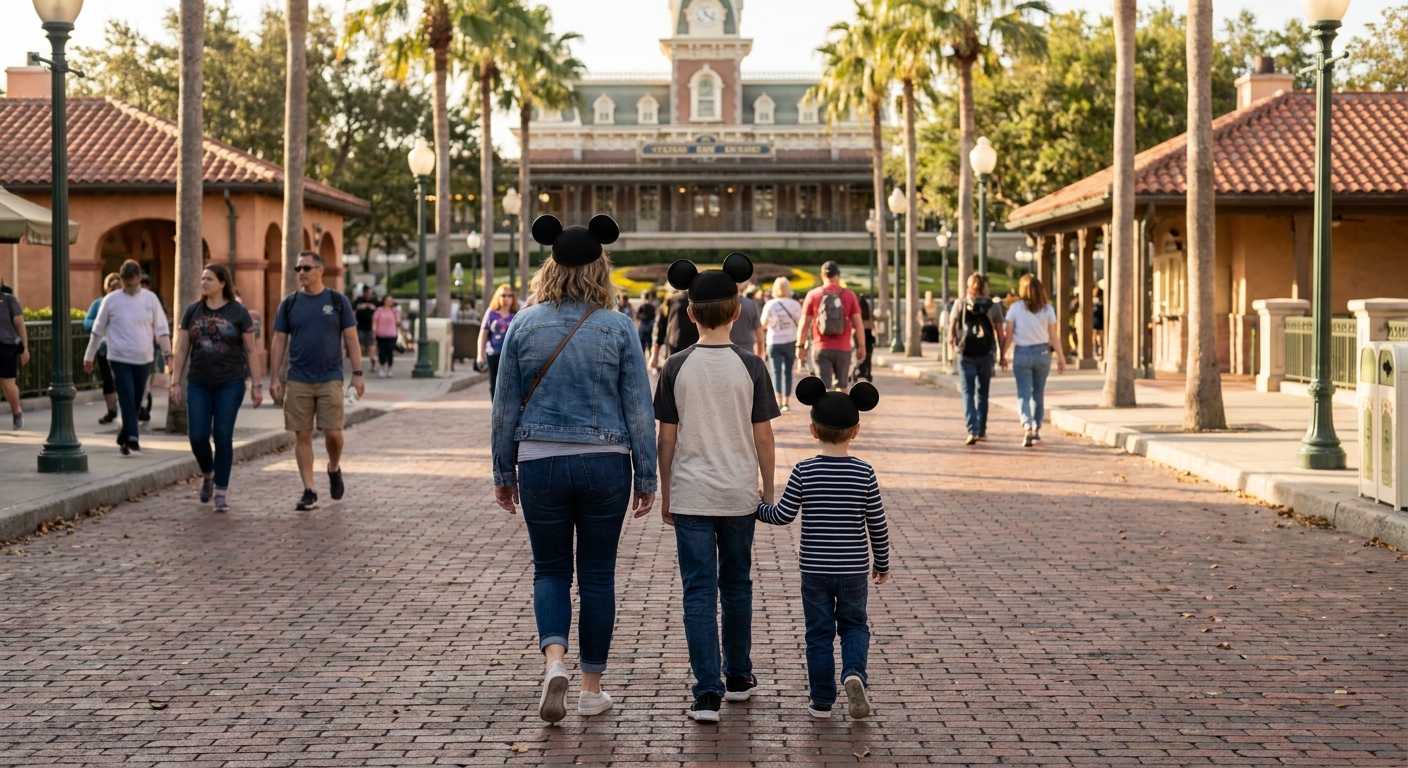
The Grazing Math: Why Two Shared Mains Beat Four Entrees
Four adults do not need four entrees at Walt Disney World — two shareable mains plus a vegetable side or a snack usually feeds the whole group, and that single swap is the biggest dining savings lever on property.
Disney portions run heavier than most first-timers expect. Barbecue platters, breakfast plates, and quick-service combos are built for people who’ve been walking since rope drop, which means half of them get picked at and abandoned. You’re not eating that food — you’re paying for it and then throwing it away. Grazing isn’t about eating less; it’s about not buying the same plate twice.
The ordering structure that actually works
| Group of 4 | Typical order | Grazing order | What changes |
|---|---|---|---|
| Table/counter main | 4 entrees | 2 shareable mains | Roughly halves the entree spend |
| Sides | Whatever’s bundled | 1–2 vegetable sides to round it out | Fills the plate for a fraction of an entree |
| Drinks | 4 fountain sodas | 4 free cups of ice water | Banks the drink money for one specialty sip |
| Result | Leftovers in the trash | One planned splurge later | Same fullness, smaller check |
The structure matters more than the specific restaurant. Two mains anchor the meal, a vegetable side keeps it from feeling like a snack, and free water carries the hydration so your beverage dollars go toward something you can’t buy at a gas station back home.
The Polite Pig: the clearest example on property
The Polite Pig at Disney Springs is where this math is easiest to see. The barbecue is genuinely good and the portions are heavy, so a main barbecue platter is plenty of meat for two adults. Where people blow it is over-ordering sides to “make it a meal” instead of adding one strategic vegetable.
- [ ] Arrive before 5:00 PM — by around 6:30 PM the ordering line can wrap outside the building as the parks wind down and Disney Springs fills.
- [ ] Split a main barbecue platter between two adults rather than ordering one each.
- [ ] Add the roasted Brussels sprouts instead of a second platter — it balances the tray without doubling the bill.
- [ ] Pay at the register, take your table ticket, then find your seat.
- [ ] Ask the counter for free cups of ice water instead of fountain sodas.
That’s a four-adult early dinner built on two platters and a vegetable. Nobody leaves hungry, and nobody pays for a plate they poke at.
The resort version: Tonga Toast
Same logic, different meal. Tonga Toast at Kona Cafe or Capt. Cook’s at Disney’s Polynesian Village Resort is dense enough that splitting it is often the smarter order — one per adult is a lot of bread, banana, and sugar before a full park day, and the mid-morning crash is real. Split it, add something savory, and you’ve bought yourself a breakfast that holds through lunch without a second check.
The kids’-meal tactic nobody uses enough
Quick-service kids’ meals are the most underrated adult lunch at Walt Disney World. They’re often larger than people expect, frequently include a side and a drink, and cost meaningfully less than an adult entree. If you’re an adult who doesn’t need a giant plate — especially mid-afternoon between a shared breakfast and a real dinner — that’s your order.
The bonus is what comes with it. Kids’ sides tend to be exactly the things that survive a backpack.
Pro tip: Pack resealable sandwich bags and bag the untouched grapes, carrots, or apple slices before you leave the table. That’s a free meltdown-prevention snack at 4:00 PM, which is precisely when a stroller-bound four-year-old would otherwise cost you a churro, a drink, and twenty minutes of goodwill.
Where grazing stops saving money
Small plates only save you money when they replace oversized meals. If you graze your way through a second lunch and then sit down for a full dinner, you’ve added a meal, not subtracted one. Controlled grazing means fewer duplicate orders, smarter timing, free water, and one planned splurge that actually feels worth it.
A workable day for a family of four looks like: share a filling breakfast or run kids’ meals, graze early or mid-afternoon rather than in the peak lunch crush, drink free water with one or two specialty beverages total, and use a single calm quick-service or resort meal when the group needs to reset.
The takeaway: order for the table, not for each person. Two mains, one vegetable, free water, and a bag of saved sides is the same satisfying day for a noticeably smaller number at the register.
The 14 Best Small-Plate Spots, Ranked by What You Want
The fastest way to eat well for half the price is to stop choosing restaurants and start choosing vibes — then order two shareable plates instead of four entrées. Every spot below is picked for a specific mood, group, and time of day. Menus rotate seasonally at nearly all of them, so treat the orders as a starting point and confirm what’s actually available when you walk up.
Disney Springs: the grazing capital
| Spot | Vibe | Order | Skip | Band | Best time | Best for |
|---|---|---|---|---|---|---|
| The Polite Pig | Fast-casual BBQ, order at register | One main platter split two ways + roasted Brussels sprouts | A second platter — portions are huge | $$ | Before 5:00 PM | Budget splitters, hungry teens |
| Jock Lindsey’s Hangar Bar | Dim, themed, adults-after-dark | Shareable bar bites + a signature cocktail | Treating it as a full dinner | $$ | After fireworks | Late-night couples, no-reservation nights |
| Wine Bar George | Grown-up, genuinely good wine program | Small plates + a glass or flight | Over-ordering plates before you taste one | $$$ | 2:00–4:00 PM lull | Date night, wine people |
| Frontera Cocina walk-up | Quick, bright, Mexican | Guacamole + one shareable plate, margarita | Waiting for a table when the walk-up is open | $$ | Mid-afternoon | Two adults, one quick stop |
| Morimoto Asia Street Food | Open-air counter under the restaurant | Bao or ribs to share, standing | Sit-down check you didn’t need | $$ | Early evening | Grazers who want upscale food cheap |
| Everglazed | Donuts + spiked cold brew | One donut per two people, cold brew | Boxing up six donuts you won’t finish | $ | Before the line spills outside | Dessert stop, caffeine fix |
Pro tip: Everglazed has its own mobile-order system, linked from their Instagram rather than built into My Disney Experience — which is exactly why almost nobody uses it. When the donut line is out the door and you only want a spiked cold brew, that’s your skip-the-line move.
Zero-proof drinkers, read this: the bartenders at walk-ups like Frontera Cocina and Jock Lindsey’s keep fresh juices, purées, and craft syrups behind the bar and will build a non-alcoholic version of a signature drink if you ask. You get the interesting beverage without the alcohol or the full price of a cocktail you didn’t want.
EPCOT: where small plates are the whole format
- Festival booths (World Showcase) — The entire point of an EPCOT festival day. Order one item per person max at any booth, keep moving, and share. Band: $–$$. Best for: adventurous eaters who hate committing to a menu.
- Connections Eatery (World Celebration) — The underrated middle ground. Italian-, French-, and Asian-inspired options plus seasonal items under one roof, which solves the “everyone wants something different” problem without a table-service check. Best for: mixed groups and picky kids.
- Spice Road Table (Morocco) — Mediterranean small plates with a lagoon view. Order a few mezze; skip stacking it on top of a big lunch. Best for: a real sit-down pause that still eats like grazing.
- Rose & Crown walk-up (United Kingdom) — Pub bites and a pint without waiting on the dining room. Best for: a 20-minute reset.
Animal Kingdom: two that punch above their weight
- Nomad Lounge (Discovery Island) — The best small-plate lounge in any park. Shareable plates, serious cocktails, shaded patio. Go mid-afternoon, not at dinner, and ask about walk-up availability rather than assuming you need a reservation.
- Satu’li Canteen (Pandora) — Build-a-bowl quick service that functions as a small plate if you split one bowl and add a side. Best for: families stretching a budget in the park’s busiest land.
- The Yak & Yeti bar (Asia) — Insider angle: there are bar-only items you won’t find on the dining-room or quick-service menu, and you have to ask at the bar inside the restaurant. The spicy garlic edamame is the model order — salty, shareable, far smarter than a heavy entrée in Florida heat. Plenty of guests burn 15 minutes asking the wrong window.
Magic Kingdom and the monorail loop
Magic Kingdom is the weakest park for true small plates — there’s no lounge culture inside. The move is to build a savory mini-crawl anchored in Adventureland and Liberty Square instead of bouncing park-wide, ask any quick-service counter with a fountain for a free cup of ice water, and save your drink dollars for something park-specific.
For actual small plates, hop the monorail. Resort lounges at the Contemporary, Polynesian, and Grand Floridian give you air conditioning, table service without a 60-day reservation fight, and shareable plates — and you can be back through the Magic Kingdom tap in under 30 minutes.
The takeaway: pick by vibe, split everything, confirm the menu on arrival, and never let grazing become a second lunch before dinner.
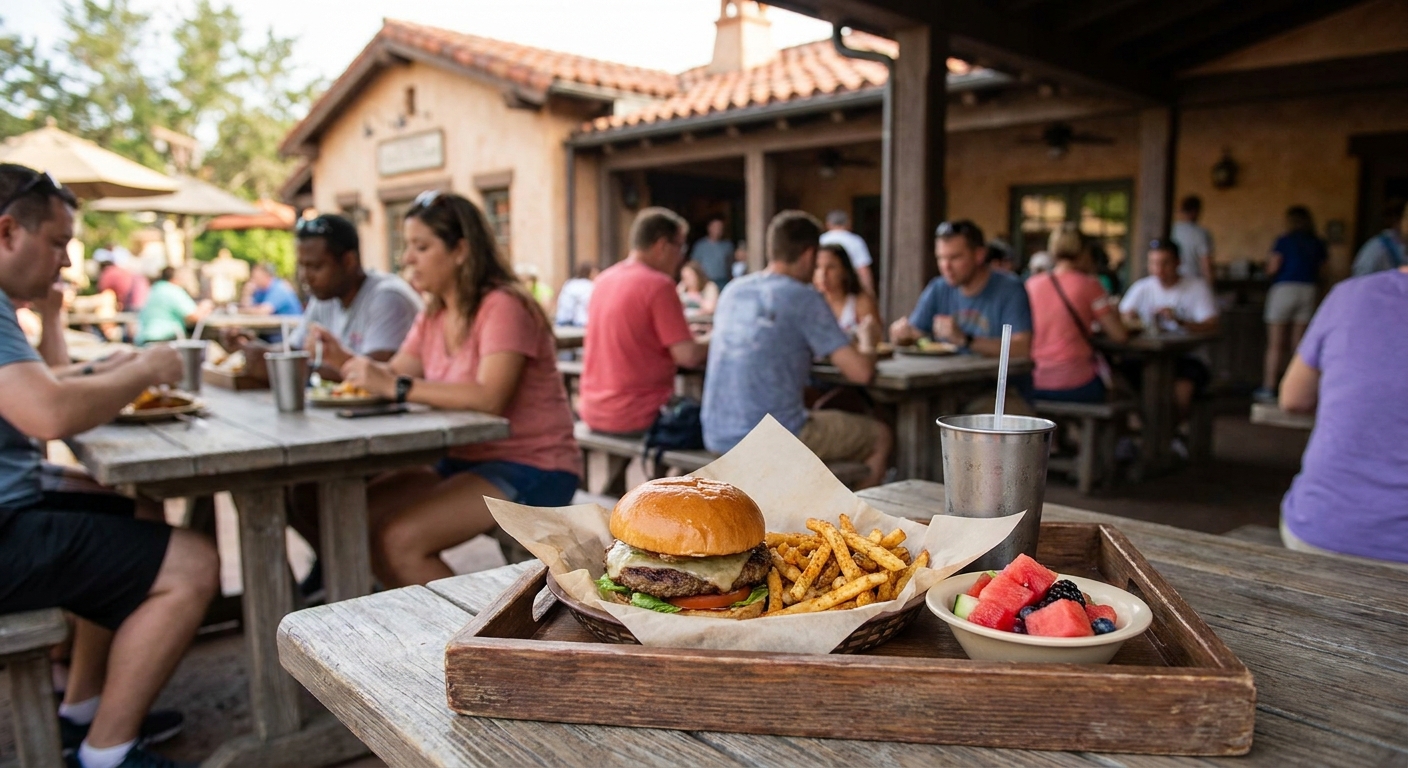
Comparison Table: Grazing Spot vs Grazing Spot
The short version: if you want one grazing meal that actually replaces dinner, go to Jaleo at Disney Springs — but if you want the cheapest and most flexible graze, EPCOT festival booths plus one bar stop wins. Here’s how the top spots stack up when you line them up side by side.
| Spot | Where | Plate price band | Portion reality | Reservation? | Noise / kids | Best window | Bar program | Shade & seating |
|---|---|---|---|---|---|---|---|---|
| Jaleo | Disney Springs (West Side) | $$–$$$ | True tapas, order 2–3 per adult | Reservation strongly advised | Loud, kid-forgiving | Early, before the Springs dinner wave | Strong (sangria, zero-proof on request) | Indoor, air-conditioned, real tables |
| EPCOT festival booths | World Showcase | $ per plate | Genuine tasting size | Walk-up only | Loud, open-air, stroller chaos | 10:30–11:30 AM or 2:30–3:30 PM | Strong, by design | Weak — hunt shade first, eat second |
| The Polite Pig | Disney Springs (Town Center) | $$ | Oversized; one platter feeds two | Walk-up (order at register) | Casual, easy with kids | Before 5:00 PM, full stop | Solid bourbon list | Covered patio, decent turnover |
| Yak & Yeti (bar, not dining room) | Animal Kingdom, Asia | $$ | Shareable bar bites | Walk-up at the bar | Quiet-ish, adults skew | Mid-afternoon heat break | Good; secret-menu items live here | Indoor and cool |
| Jock Lindsey’s Hangar Bar | Disney Springs (The Landing) | $$ | Snacky, not a meal | Walk-up | Themed, lively | After park fireworks | Strong, heavily themed | Mixed; waterfront seats are the prize |
| Frontera Cocina (walk-up) | Disney Springs (Town Center) | $$ | Splittable | Walk-up window | Low-key | Late afternoon | Strong margaritas, great zero-proof | Partial shade, limited |
| Connections Eatery | EPCOT, World Celebration | $–$$ | Full plates, splittable | Walk-up / mobile order | Family-friendly, indoor hum | Off-peak, 11 AM or after 2 PM | Light | Best-in-class: cool, bright, lots of tables |
What the table is actually telling you
- Walk-up spots are the real unlock. Yak & Yeti’s bar, Frontera’s window, and Jock Lindsey’s all get you interesting food without a 60-day-out reservation hunt.
- Quick-service is the underrated middle ground. Connections Eatery handles mixed groups better than almost any table-service pick because the Italian-, French-, and Asian-leaning options plus seasonal items live under one roof — no table-service check required.
- Price band ≠ value. The Polite Pig looks mid-priced until you split a barbecue platter between two adults and add roasted Brussels sprouts; that’s one of the lowest per-person costs in the whole table.
- Seating quality is a hidden tiebreaker with kids. Festival booths are cheap but you’re standing in the sun. Connections and Yak & Yeti’s bar buy you air conditioning, which on a July afternoon is worth more than a dollar or two saved.
Pro tip: EPCOT festival days quietly loosen up resort dining. While everyone else grazes the World Showcase booths for dinner, tables at premium spots like Capa at the Four Seasons or Narcoossee’s at the Grand Floridian tend to get noticeably easier to land — and SupaPark’s Drop Watch can catch those cancellations the moment they free up, then you book it yourself in My Disney Experience.
If you only have one grazing meal, pick this
For most families, make it Jaleo, early. Tapas format is the lowest-risk way to feed picky eaters — you order a stream of shareable bites instead of gambling on four adult entrees — and it’s the one spot here that feels like a real dinner out rather than a snack run. Book it, go before the Disney Springs rush, and let the croquetas do the heavy lifting.
For couples or adults-only groups, skip Jaleo and do a two-stop graze instead: an EPCOT festival pass in the 2:30–3:30 PM window, then the Yak & Yeti bar or Jock Lindsey’s later. More variety, lower total check, no reservation stress.
For budget-first trips, The Polite Pig before 5:00 PM is the single best dollar-for-dollar play in the table — split the platter, ask for free ice water, and put the saved beverage money toward one specialty drink that’s actually worth it.
- [ ] Pick one anchor spot, not three
- [ ] Check its reservation-vs-walk-up column before you build the day around it
- [ ] Slot it into the 2:30–3:30 PM or pre-5:00 PM window
- [ ] Order to share, then add one vegetable side instead of a fourth plate
EPCOT Festival Booths: The Purest Small-Plate Experience at Disney World
The festival booths are the only place at Disney World where the grazing format is built in — portions are already appetizer-sized, so you’re sharing by design instead of fighting a 1,200-calorie entrée. EPCOT runs festivals across most of the calendar in World Showcase and around Future World, but lineups, booth names, and dates change season to season — confirm what’s actually running before your trip.
Here’s the thing most first-timers get wrong: they treat each booth like a restaurant and order one item per person. That’s how a “cheap snack day” turns into a $200 lunch. The booths are tasting portions. Treat them that way.
Portion reality: what actually equals a meal
Most festival items land in the three-to-five-bite range — think a small dish, a slider, a dumpling pair, a scoop. Plated items run a bit bigger than dessert items.
| Appetite | Plates per adult | What that looks like |
|---|---|---|
| A real lunch | 4–5 savory | Two substantial plates + two small + a shared dessert |
| A light meal / holdover | 2–3 savory | Enough to skip quick service, not enough to skip dinner |
| Dessert-and-drink stop | 1–2 | A sweet item and one specialty sip |
| Kids (under ~10) | 1–2 shared | Pull from the adult plates; order a separate kids-size item only if they’re picky |
Rough math: budget on the order of around $7–$10 per savory plate at most booths, which means a full grazing lunch for two adults often lands near a single table-service entrée. That’s the entire value case.
How to split one plate three ways without a mess
- [ ] Grab extra forks and napkins at the first booth you hit — don’t go back for them later.
- [ ] Order the dish, then step clear of the window before dividing it.
- [ ] Split on the lid or the tray, not the plate — gives everyone a surface.
- [ ] Skip anything soupy, saucy, or built in a cone if three people are sharing.
- [ ] Order one specialty drink for the group to taste, and carry free ice water in insulated bottles for actual hydration.
Order so nobody waits twice
The single biggest time leak is sending one person to a booth, eating, then sending someone else back for the thing you forgot.
- One runner, one list. Decide all items for that booth before anyone joins the line. Write them down.
- Split the party across two booths at once. One adult queues at a booth on the left side of the walkway, one at a booth on the right; regroup at a shared table.
- Pay with one method. Fumbling with three cards at the window is where booth lines actually stall.
- Fastest booths are typically: anything pre-plated or handheld, the dessert and bakery-style windows, and booths tucked behind a pavilion rather than fronting the promenade. Slowest: anything with a cocktail built to order, anything that got viral attention this season, and anything near the World Showcase entrance.
The golden rule, and the pacing that goes with it
Eat when the crowds are riding, ride when the crowds are eating. During a festival this is worth more than any other tip in this guide.
| Window | What to do | Why |
|---|---|---|
| 10:30–11:30 AM | Start grazing | You’ll often hit roughly half the wait of peak booth lines |
| 11:30 AM–2:00 PM | Ride headliners | Everyone else is eating |
| 2:30–3:30 PM | Second grazing wave | Food lines clear out, booths restock |
| 4:30 PM onward | Lines rebuild | Dinner crowd arrives; this is the worst value window |
Pro tip: Never join a food queue right after a major attraction dumps out. Test Track, Soarin’, and Frozen Ever After empty big crowds into their surrounding areas at the same time — wait two or three minutes for that surge to pass, then step up to the window. You’ll routinely save ten minutes doing nothing but standing still.
And a sneaky corollary: because so many guests graze the booths for dinner on festival days, tables at premium resort restaurants can get noticeably easier to land that same evening. If a hard-to-get spot is on your list, a festival night is a smart night to be watching for a cancellation.
Group your stops by land, not by hype
Don’t zigzag the promenade chasing a list. Pick a direction, work it in order, and accept that you’ll skip a few booths. A one-way lap of World Showcase with six or seven stops beats a back-and-forth with ten — you’ll finish with more food, less walking, and a group that isn’t melting down.
This is exactly the kind of day where SupaPark earns its keep: live waits tell you the moment a headliner softens so you can duck out of the food zone and ride, and Drop Watch pings you if that resort table you wanted frees up from a cancellation — you still book it yourself in My Disney Experience. Details at supapark.com.
The takeaway: festival booths are tasting portions, so order for the group and not for each person — four or five savory plates per hungry adult, split three ways with forks you grabbed at stop one, eaten at 10:30 AM or 2:30 PM while everyone else is in line somewhere else.
Disney Springs Walk-Up Lounges: Great Food Without the Reservation Hunt
If you struck out on Advance Dining Reservations, Disney Springs is where you win anyway — it’s the only place on property with a deep bench of walk-up bars and lounge menus that don’t care whether you booked 60 days out.
The parks punish you for not planning. Disney Springs rewards improvisation. Bar seating at most Springs restaurants is first-come, first-served, and bar menus frequently carry the kitchen’s most shareable plates — which means a group of four can graze across three spots for less than one table-service check, with zero reservation hunt.
Why the Springs Is the Smart Audible
- Bar seats aren’t on the reservation grid. Walk up, sit, order. Lounge menus tend to be small-plate-heavy by design.
- The timing is inverted. When the parks empty after fireworks, Disney Springs is just hitting its stride. That’s the window almost nobody plans around.
- No ticket required. A Springs grazing night is a strong “rest day” dinner that doesn’t burn a park day.
Late Night at Jock Lindsey’s Hangar Bar (The Landing)
Jock Lindsey’s runs on a post-fireworks rhythm — the crowd thickens as park guests roll in, then thins as the Springs crowd turns over. The move is to arrive either well before the parks close or ride out the late window, when tables on the water open up and you’re not standing three-deep.
Order like a grazer: a couple of shareable plates and one specialty drink per adult, not an entrée each.
Pro tip: Disney bartenders at the upscale walk-ups — Jock Lindsey’s, Frontera Cocina — keep fresh juices, purees, and craft syrups behind the bar and will build zero-proof versions of their signature cocktails on request. It’s not printed as a full menu, so you have to ask. Anyone not drinking gets a drink that’s actually interesting instead of a $5 soda.
The Everglazed Workaround Most Guests Miss
When the Everglazed donut line is out the door — and at peak Springs hours, it is — you do not have to stand in it. Everglazed runs its own Instagram-linked mobile ordering system, completely separate from My Disney Experience. Because it isn’t inside the Disney app, most guests don’t know it exists.
That’s a meaningful time save if you mainly want a spiked cold brew or a single donut rather than a full box.
The Polite Pig: An Early-Dinner Destination, Full Stop
The Polite Pig serves some of the best barbecue on Disney property, and it’s counter-order, so there’s no reservation to chase. The catch: show up at 6:30 PM and the ordering line is wrapped completely outside the building. That’s the Springs dinner surge — park guests arriving as the theme parks wind down.
Treat it as an early dinner and the whole experience changes.
| Arrival time | What you’ll find | Verdict |
|---|---|---|
| Before 5:00 PM | Short line, open tables, calm | The move |
| 5:00–6:00 PM | Line forming, tables tightening | Workable |
| Around 6:30 PM | Line wrapped outside the building | Skip it |
| Late evening | Easier, but you’ve lost the dinner window | Fallback |
Portions here are heavy and genuinely massive, which makes it one of the best split-a-meal spots in the Springs.
- [ ] Arrive before 5:00 PM, before the post-park flood hits Disney Springs.
- [ ] Split one main barbecue platter between two adults — it’s plenty of meat.
- [ ] Add the roasted Brussels sprouts to round out the tray instead of ordering a second platter.
- [ ] Pay at the register, take your table ticket, then find your seat.
- [ ] Ask for free cups of ice water instead of fountain sodas — bank that money for a specialty drink later.
Build a Three-Stop Crawl Instead of One Big Check
The honest math: two shareable mains plus a vegetable side usually feeds four adults who’ve been walking since rope drop. Spend the savings on one or two drinks you can’t get anywhere else, and keep water free all night.
A workable route: early barbecue at The Polite Pig, a lounge stop for a craft or zero-proof cocktail, then Everglazed via the Instagram order link on your way out — no line, no reservation, no 6:00 AM ADR alarm.
When You Do Want a Table
If there’s one Springs reservation you actually want, it’s worth watching rather than refreshing. SupaPark’s dining Drop Watch catches the moment a hard-to-get table frees up from a cancellation and pings you — you book it yourself in My Disney Experience. Free accounts get those alerts by email at supapark.com, which is plenty for a trip that’s still weeks out.
The one thing to remember: at Disney Springs, your reservation problem is really a timing problem. Eat before 5:00 PM or after the fireworks, sit at the bar, split the big plates, and ask for the things that aren’t on the menu.
Timing Your Graze: The Hour-by-Hour Playbook
The golden rule: eat when the crowds are riding, and ride when the crowds are eating. Small plates are only half the savings — the other half is clock discipline. Order at the wrong hour and you’ll pay the same money while burning 25 minutes in a booth line you could have walked up to two hours earlier.
The grazing clock
| Window | What’s happening | Your move |
|---|---|---|
| Before 11:00 AM | Booths and bakeries just opened; staffing fresh, lines short | Start EPCOT festival grazing around 10:30–11:30 AM — often half the wait of midday |
| 11:30 AM–1:30 PM | Dead zone. Everyone eats at once; counters back up, seating vanishes | Ride headliners instead. This is your best standby stretch of the day |
| 1:30–3:30 PM | Food lines clear, kitchens are still fully stocked | The sweet spot. Hit your 2:30–3:30 PM graze now |
| Before 5:00 PM | Disney Springs still calm | Early-dinner anchor (see below) |
| Post-fireworks | Parks empty out; Disney Springs wakes up | Late walk-up bites and a specialty pour at a bar like Jock Lindsey’s Hangar Bar in The Landing |
Why 5:00 PM at Disney Springs is a hard cutoff
When the theme parks start winding down, Disney Springs absorbs the exodus — and quick-service ordering lines are the first thing to break. The Polite Pig is the clearest example: show up at 6:30 PM and the line is wrapped outside the building. Arrive before 5:00, split a main barbecue platter between two adults, add the roasted Brussels sprouts instead of a second platter, and you’re seated while the surge is still on a bus.
The flow there matters too, because it trips up first-timers:
- [ ] Order and pay at the register first.
- [ ] Take your assigned table ticket.
- [ ] Then find your seat — don’t camp a table before ordering.
- [ ] Ask the counter for free cups of ice water; bank the soda money for something distinctive later.
Stacking a graze between Lightning Lane windows
Your Lightning Lane Multi Pass return windows are the scaffolding of a grazing day — build the food around them, not the reverse.
- Graze in the gap, not in the window. If your next return opens in 20 minutes, that’s a shareable small plate, not a sit-down. Save bigger stops for after you’ve tapped in and before you add your next selection.
- Don’t buy an open drink right as a window opens. A frozen cocktail or slushie you can’t carry into a queue is money you’re about to throw in a trash can. Check your next return time before you order it.
- Never queue for food right after an attraction dumps. Test Track, Soarin’, and Frozen Ever After flush huge crowds into the surrounding lands at the same time. Let the wave pass, then order.
- Group stops by land. Two booths on the same stretch of World Showcase beats one in Mexico and one in Canada with a Lightning Lane tap in between.
Pro tip: Use an EPCOT festival evening to grab the resort table you couldn’t get all trip. While the crowds treat the booths as dinner, premium spots like Capa at Four Seasons or Narcoossee’s at the Grand Floridian get noticeably easier to land — and if the slot you want is still gone, SupaPark’s Drop Watch catches the cancellation and pings you the second it frees up, then you book it in My Disney Experience.
The late window, handled
After fireworks, the calculus flips: parks are thinning out, and walk-up bars are the path of least resistance. Two things worth knowing:
- Zero-proof is a real menu, just unwritten. Bartenders at walk-ups like Frontera Cocina and Jock Lindsey’s keep fresh juices, purees, and craft syrups behind the bar and will build a complex non-alcoholic version of a signature drink if you ask. Nobody in your party has to settle for a soda.
- Yak & Yeti’s bar bites are a bar-only ask. At Animal Kingdom, the secret-menu items — the spicy garlic edamame is the right call — come from the bar inside the restaurant, not the dining room menu or the quick-service window. Ask in the wrong place and you’ll be told it doesn’t exist.
The takeaway
Pick two eating windows for the day — one before 11:00 AM or in the 1:30–3:30 PM lull, one as an early Disney Springs dinner before 5:00 PM or a post-fireworks walk-up — and treat 11:30 AM–1:30 PM as ride time, full stop. Live wait tracking helps here: when a headliner softens during the lunch rush, SupaPark’s walk-on alerts catch it so you’re riding instead of refreshing. Find it at supapark.com.
Cost Breakdown: What a Real Grazing Day Costs per Person
A controlled grazing day usually lands 30–50% under a standard two-quick-service-plus-table-service day — but only if you kill duplicate orders and stop buying drinks. Those two leaks are where “we saved money by snacking” quietly turns into a day that costs more than a sit-down meal.
Treat everything below as planning ranges, not quotes. Disney menu prices move, vary by location and date, and festival booth pricing shifts every year. The structure of the numbers is the useful part.
Three day-shapes, modeled for a family of four
Assumes two adults, two kids, one park day, food only (no alcohol, no souvenir cups), Florida sales tax on everything and 18–20% tip on table service only.
| Day shape | What it looks like | Per person, food | Tax + tip | Per person, all-in | Family of four |
|---|---|---|---|---|---|
| A. Standard | Quick-service breakfast, quick-service lunch, one table-service dinner, a soda at each meal | $75–100 | Tax on all; tip on dinner | ~$85–115 | ~$340–460 |
| B. Controlled grazing | One split breakfast (Tonga Toast or similar), 2–3 shared small plates mid-afternoon, kids’ meals as adult lunches, free ice water all day, one planned specialty drink | $40–60 | Tax only (no tipped meal) | ~$45–65 | ~$180–260 |
| C. Festival booth day | EPCOT festival booths as lunch and dinner, 10–14 total booth items across the group, two specialty sips | $55–80 | Tax; small tip only if you add a lounge stop | ~$60–85 | ~$240–340 |
Realistic savings range: roughly $80–200 for the family on a single day versus Scenario A. Over a four-day trip, that’s a Lightning Lane Multi Pass day or two, or a real dinner you actually wanted.
Why B beats C more often than people expect
Festival grazing feels like the budget play, but booth items are priced per small portion with no sharing math baked in. Four people ordering individually at four booths is twelve to sixteen separate taxable transactions. Scenario B wins because it uses Disney’s absurd portion sizes against the menu:
- Two shareable mains instead of four entrees, plus one vegetable side — the Polite Pig platter-plus-Brussels-sprouts approach.
- Quick-service kids’ meals eaten by adults who don’t need a full plate. They often include a side and a drink and cost meaningfully less.
- Untouched sides (grapes, carrots) bagged and carried as the 4:00 PM meltdown snack instead of a second purchase.
Pro tip: Book your premium resort table on an EPCOT festival night. While everyone else grazes World Showcase for dinner, hard-to-get tables at places like Narcoossee’s at the Grand Floridian get noticeably easier to land — so your one splurge meal costs the same but is dramatically easier to get. SupaPark’s Drop Watch can ping you the second one of those tables frees up from a cancellation; you grab it in My Disney Experience.
Leak point #1: duplicate orders
The most expensive sentence at a booth is “let’s each get one.” If two people order the same item and neither finishes it, you paid twice for one portion plus tax. Run a simple rule: no item gets ordered twice until everything on the table is gone. One order, four forks, then reassess.
Leak point #2: drinks
Bottled water at every stop and a fountain soda at every meal can add $15–25 per person across a long day — more than the small plates themselves. The fix is unglamorous:
- [ ] Pack one insulated bottle per person.
- [ ] Ask any quick-service counter or fountain stand for free cups of ice water — you don’t need to buy anything.
- [ ] Pour the cups into the bottle and keep moving.
- [ ] Budget exactly one or two specialty drinks per person, per day — something you can’t buy outside Disney property.
- [ ] Skip basic soda entirely at EPCOT; Club Cool’s international samples are free a few steps away.
- [ ] Check your next Lightning Lane window before buying an open drink you can’t take into a queue.
Don’t build your plan around quick-service free refills — sit-down restaurants commonly refill standard non-alcoholic drinks, but counter-service policy is inconsistent and depends on who’s at the register. Free water is the reliable win.
The honest caveat
These ranges assume you actually share and actually drink water. A “grazing day” that becomes small plates at 11:00 AM plus a full table-service dinner at 6:30 PM will land above Scenario A, not below it. Small plates save money when they replace oversized meals — not when they become a second lunch.
One more lever before you pay: ask about discounts at table service. Annual Passholder, Disney Vacation Club, and Tables in Wonderland-style savings aren’t applied automatically, and the question costs you nothing.
The one thing to remember: budget about $45–65 per person for a disciplined grazing day versus $85–115 for a standard one — and know that the gap closes fast the moment you start ordering doubles and paying for soda.
Drinks Are Where the Budget Leaks: Free Water and Smart Splurges
Free ice water from any quick-service counter is the single highest-ROI money move in all of Walt Disney World — and it’s the one most families never make.
A bottled water here, a fountain soda there, a frozen drink in a novelty cup after lunch, and your carefully planned “cheap grazing day” quietly turns into a full-price meal. Drinks are where the budget leaks, because each individual purchase feels too small to matter. Four people, three rounds of beverages, and you’ve spent more on liquid than on the small plates you actually came for.
Ask for the cup. You don’t have to buy anything.
Any quick-service restaurant or snack stand with a fountain dispenser can usually hand you a free cup of ice water, and you don’t need to order a meal first. Walk up, ask politely, pour it into an insulated bottle, keep moving. That’s the whole system.
This matters more in Florida than almost anywhere else. If you’re rope-dropping, hopping parks, or pushing a stroller through a 2:00 PM heat wall, hydration isn’t optional — and paying for it at every stop is how you burn money without improving a single minute of your day.
- [ ] Pack one durable insulated bottle per person (ice water in a paper cup is warm in 20 minutes; in a steel bottle it lasts hours).
- [ ] Ask for free ice water whenever you pass a quick-service counter or fountain stand.
- [ ] Pour the cups into the bottles instead of drinking from the cup.
- [ ] Use refill stations when they’re convenient — they cluster near restrooms and newer areas like Star Wars: Galaxy’s Edge — but don’t build your route around hunting for them.
- [ ] Check your next ride window before buying an open drink you can’t carry into a queue.
Pro tip: Bank on free water, not free refills. Sit-down restaurants commonly refill standard non-alcoholic drinks, but quick-service refill policies are inconsistent and Cast Member answers vary. At a place like Cosmic Ray’s Starlight Café there isn’t always a hard, visible rule covering every situation — if the place isn’t slammed, asking nicely may work. Just never plan around it. Water is the reliable win.
Where your drink dollars actually earn their keep
Generic fountain soda is the weakest possible use of your beverage budget. You can buy that at a gas station on the drive in. If you’re paying Disney prices for a drink, it should be one you can’t get anywhere else.
| Drink spend | Where | Why it’s worth it (or isn’t) |
|---|---|---|
| Basic fountain soda | Any quick service | Skip. Free water does the same job for nothing. |
| Bottled water | Carts, counters | Skip. You’re paying several dollars for what’s free in a cup. |
| Frozen Coca-Cola | Drinkwallah, Asia (Animal Kingdom) | Worth it. The right icy reset after Expedition Everest, and perfectly placed for the Asia heat. |
| Frozen chai | Royal Anandapur Tea Company, Asia (Animal Kingdom) | The better pick of the two if you want a more distinctive caffeine hit than soda. |
| International Coke samples | Club Cool, EPCOT | Free. Which makes paying for basic soda nearby feel especially silly. |
| Zero-proof signature cocktail | Frontera Cocina, Jock Lindsey’s Hangar Bar (Disney Springs) | Worth it when you want the “special drink” moment without alcohol. |
Animal Kingdom is unusually strong for this because Asia puts two genuinely distinctive options within a short walk of each other. Drinkwallah is the icy-refresh play; Royal Anandapur is the one you’ll actually remember ordering.
The zero-proof move almost nobody asks for
Disney bartenders are fully equipped to build nonalcoholic versions of their signature drinks, and they’re not phoning it in. At upscale walk-ups like Frontera Cocina and Jock Lindsey’s Hangar Bar, the bar has fresh juices, purées, and craft syrups on hand — enough to assemble something layered and genuinely interesting for a kid, a designated driver, or anyone skipping alcohol. You just have to ask.
This is the single best way to give a non-drinker in your group the same “I ordered something special” experience the rest of the table is getting, usually for less than the spirited version. Ask what they can do with what’s behind the bar rather than requesting a specific recipe — you’ll get something better.
The formula that keeps the leak plugged
Let the free water carry the hydration, then make one or two deliberate specialty purchases per day that feel specific to the park you’re standing in. That’s it. The failure mode isn’t splurging — it’s splurging by accident, three dollars at a time, on drinks nobody will remember.
One timing note worth internalizing: don’t buy a frozen drink right as your Lightning Lane Multi Pass window opens. You’ll either chug it fast or throw most of it away, and either way you paid for a drink you didn’t enjoy.
Grazing with Kids: Making Small Plates Work for a Family
Small plates are the single best format for feeding kids at Walt Disney World — because nothing you order is a big enough bet to ruin the day if they reject it. Instead of committing to a full adult entree a five-year-old will push away, you order a stream of shareable bites, keep what works, and move on.
The budget math helps too. Disney portions run bigger than most people expect, so a family of four rarely needs four entrees. Two shareable mains plus a vegetable side or a snack usually feeds everyone better and cheaper.
Order Kids’ Meals Strategically (Even for Adults)
Quick-service kids’ meals are often surprisingly large, usually come with a side and a drink, and cost meaningfully less than an adult plate. For an adult who doesn’t want a mountain of food at 1:00 PM, that’s a smart, lighter lunch.
The real move is what comes with it. If the meal includes untouched grapes, carrot sticks, or applesauce, bag it before you leave the table. That’s your 4:30 PM meltdown-prevention snack, already paid for.
- [ ] Pack resealable sandwich bags (the whole hack depends on this)
- [ ] Order kids’ meals with easy-to-save sides over fries that die in 10 minutes
- [ ] Claim your seat before anyone is past the point of sitting down
- [ ] Share the signature item — skip duplicate orders of the same thing
- [ ] Ask quick-service counters for free cups of ice water, pour into an insulated bottle
- [ ] Flag allergies when you arrive, not at the register mid-order
Flag Allergies Early, Not at the Register
Disney handles allergies genuinely well, but the timing is on you. Mention it when you walk up — at table service, when you’re seated; at quick service, before you start ordering. Cast Members can pull an allergy-friendly menu and route your order through the right prep, but that takes a minute they don’t have while a line builds behind you. Flagging it at the register is how a smooth meal becomes a 15-minute stall with a hungry toddler.
Which Grazing Spots Actually Work With a Stroller
Not every small-plate spot is family-viable. The dividing line is almost always seating — real tables and shade versus standing-room-only counters where you’re balancing a tray and a toddler.
| Spot | Stroller / loud-toddler friendly? | Why |
|---|---|---|
| The Polite Pig (Disney Springs) | Yes, before 5:00 PM | Real tables, assigned table ticket, indoor and outdoor seating. After 6:30 PM the order line wraps outside the building |
| Connections Eatery (EPCOT) | Yes | Quick service with Italian-, French-, and Asian-inspired options under one roof — best bet for mixed groups and picky eaters |
| Capt. Cook’s (Polynesian) | Yes | Casual resort quick service, easy seating, low-stakes if a kid melts down |
| Jaleo (Disney Springs) | Yes, with early timing | Tapas format is ideal for picky eaters; book early and it’s calm, late it’s loud and slow |
| Kona Cafe (Polynesian) | Yes | Table service, gentle pacing, splittable Tonga Toast |
| Yak & Yeti bar (Animal Kingdom) | No | Bar seating, bar stools — the spicy garlic edamame is great, but this is an adults-splitting-off stop |
| Jock Lindsey’s Hangar Bar (Disney Springs) | Not after dark | Tight, loud, late-night crowd; fine mid-afternoon on the porch |
| EPCOT festival booths | Depends | No seating at all — plan to stand or stake out a bench before you buy |
The Tonga Toast at Kona Cafe or Capt. Cook’s is the clearest example of why splitting beats buying one per person: it is dense enough that one order genuinely feeds two, and you dodge the mid-morning sugar crash that wrecks a toddler’s afternoon.
Seat First, Order Second
With kids, seating is the constraint — not the food. At The Polite Pig you pay at the register, take your table ticket, then find your seat, which means someone in your group should be scouting a shaded table while the ordering happens. At festival booths there’s no seating at all, so pick your bench before you commit to carrying four open containers.
Pro tip: Check your next ride window before you buy an open drink. Don’t hand a kid a slushie the minute your Lightning Lane Multi Pass window opens — you’ll either be rushing them through it or tossing a full cup you just paid for. Buy the novelty drink after the ride, in a spot where everyone can sit.
The Takeaway
Treat small plates as a flexible system, not a meal plan: share the fun stuff, save the untouched sides, ask about allergies early, and choose your seat before anyone hits the wall. If one hard-to-get table — Jaleo on a busy night, say — is the thing your group actually wants, SupaPark’s dining Drop Watch pings you the second a cancellation frees it up, and you grab it in My Disney Experience. Free accounts get those alerts by email at supapark.com.
Dietary Needs, Allergies, and Picky Eaters
Small plates are the best allergy and picky-eater format at Walt Disney World, because you’re making five small bets instead of one expensive one. When a kid rejects a $20 entree, that’s a loss. When they reject a $7 shareable, you shrug and hand them the next thing. And for restricted diets, ordering by component — a protein here, a starch there, a vegetable side — gets you far more menu shots on goal than hunting for the one entree that happens to clear every restriction.
Ask Before You Order, Not After
This is the single biggest behavior change for allergy families, and it’s free.
At a festival booth or quick-service window, flag the allergy while you’re still deciding, not after you’ve paid and the tray is sliding toward you. Cast Members at food locations can typically pull up allergen information or get a manager or chef involved — but that takes a minute, and that minute is much cheaper before the transaction than after.
- [ ] State the specific allergen, not “allergies” (shellfish, tree nuts, dairy, gluten).
- [ ] Ask for the allergen guide or a chef check before ordering.
- [ ] Order one test item at a new location before committing the whole group.
- [ ] Note what worked in your phone — you’ll be back at that booth.
Pro tip: Ask about off-menu items. Kitchens often carry allergy-friendly staples that never appear on the board — the gluten-free Mickey Waffles at Kona Cafe run around $5 and aren’t on the main menu. The pattern repeats across property: the safe option frequently exists, it’s just not advertised.
Which Format Handles Allergies Best
Not all small-plate venues are equal here. The trade-off is between menu transparency and kitchen flexibility.
| Format | Allergy strength | The catch |
|---|---|---|
| Festival booths (EPCOT) | Each item is simple and single-concept, so ingredients are easy to reason about | High volume, shared prep space, limited ability to modify |
| Lounge / bar menus | Smallest items, easiest to build a safe meal from components; bartenders can do zero-proof versions of signature drinks on request | Limited seating, often first-come |
| Quick service | Allergen menus are usually accessible and consistent, and you can see the build | Less customization than a table-service chef |
| Table service | Highest ceiling — a chef can genuinely rework a dish | Costs the most and eats an hour of your day |
The honest read: quick service is the underrated middle ground. You get real allergen information and fast turnaround without surrendering a reservation slot or a table-service check.
Vegetarian and Plant-Based: Where It’s Actually Easy
Strength varies a lot by location, so pick your venue rather than fighting the menu.
- EPCOT World Showcase and festival booths — the best plant-based grazing on property, simply because so many booth items are naturally vegetable- or grain-forward.
- Asia at Animal Kingdom — the Yak & Yeti bar is a strong vegetarian stop. The spicy garlic edamame is a secret-menu item, and the insider detail matters: you have to go to the bar inside the restaurant and ask there. Guests who ask at the quick-service window or the dining room walk away empty-handed.
- Disney Springs — barbecue-heavy spots like The Polite Pig still work if you build around the sides; the roasted Brussels sprouts carry a vegetarian tray better than people expect.
When Nobody in the Group Agrees
This is the real problem on most trips: one person wants pasta, one wants noodles, one wants chicken nuggets, and nobody wants to spend 90 minutes at a table-service restaurant resolving it.
The answer is mixed-cuisine quick service. Connections Eatery at EPCOT is the cleanest fix — Italian-, French-, and Asian-inspired options under one roof, plus seasonal offerings, with no table-service commitment. Everyone orders what they actually want, nobody compromises, and you’re out in a fraction of the time.
The same logic applies to kids’ meals. Quick-service kids’ meals are surprisingly large, usually come with a side and a drink, and cost meaningfully less than an adult entree — which makes them a legitimate lighter lunch for a picky adult, not just a kid solution.
- [ ] Pack resealable bags for untouched grapes, carrots, or crackers.
- [ ] Bag those sides before leaving the table — they’re your meltdown-prevention snack at 4:00 PM.
- [ ] Let free ice water carry hydration so the picky eater’s rejected drink isn’t a sunk cost.
The Takeaway
Treat dietary needs as a sequencing problem, not a restriction. Ask early, order in components, lean on quick service and lounge menus for flexibility, and use a mixed-cuisine spot like Connections Eatery when the group splinters. If you’re trying to lock a table-service meal with a chef who can genuinely accommodate, SupaPark’s dining Drop Watch catches the cancellation the moment it frees up and pings you — you grab it in My Disney Experience.
Reservations vs Walk-Up: When Small Plates Need a Booking
The best thing about grazing is that most of it doesn’t require a reservation at all. Festival booths, lounge bars, and mobile-order windows are walk-up by design — which means a small-plates day is the one Disney World food plan you can build 20 minutes in advance instead of 60 days out. That flexibility is the whole point. Don’t throw it away by locking yourself into a table you’ll resent.
Where you genuinely don’t need a booking
Most of the grazing map is open to anyone who shows up:
- EPCOT festival booths — pure walk-up, no reservation exists. Your only lever is timing.
- Lounge and bar seating — Jock Lindsey’s Hangar Bar at The Landing takes walk-ups and is at its best after the parks empty out, when Disney Springs is just getting going.
- The Yak & Yeti bar inside the restaurant at Animal Kingdom’s Asia — ask at the bar, not the dining room or the quick-service window, for off-menu items like spicy garlic edamame. Plenty of guests burn 15 minutes asking in the wrong place.
- Mobile order and counter spots — The Polite Pig at Disney Springs is walk-up and order-at-the-register, no booking, no host stand.
- Connections Eatery at EPCOT — the underrated middle ground, with Italian-, French-, and Asian-inspired options under one roof for mixed groups who don’t want a table-service check.
Where a reservation actually earns its keep
| Situation | Book it? | Why |
|---|---|---|
| EPCOT festival booths | No | Walk-up only — timing is your lever |
| Lounge small plates, off-peak | No | Walk-up seating usually opens up |
| Lounge small plates, 6–8 PM | Yes, if offered | Peak dinner is when walk-up waits get long |
| Popular Disney Springs table service (Jaleo, for example) | Yes | High demand, limited tables, tapas format rewards a booked seat |
| Signature resort dining as your one splurge | Yes | These are the hardest tables on property |
| Quick-service or counter grazing | No | Mobile order handles it |
The honest read: you need a booking for roughly one or two meals of a trip, not all of them. Everything else is an audible you call in the moment.
How the booking window actually works
Advance Dining Reservations open 60 days before your arrival date, at 6:00 AM Eastern, in the My Disney Experience app. Not 180 days, and not the same clock as Lightning Lane Multi Pass selections, which open at 7:00 AM Eastern on your eligible day. Mixing those two up is one of the most common planning mistakes — set two alarms, an hour apart, and know which one you’re racing for.
- [ ] Confirm your arrival date, then count back 60 days
- [ ] Be logged into My Disney Experience before 6:00 AM Eastern
- [ ] Have your party size and a backup time ready to tap
- [ ] Book the one or two meals that genuinely need a table — leave the rest open for grazing
- [ ] Set a separate 7:00 AM reminder for your Lightning Lane Multi Pass window
Missed the window? Cancellations are the real door
Here’s what veterans know: the 60-day drop is not your only shot. Disney tables churn constantly as plans shift, and cancellations release back into inventory at unpredictable moments — including the day before and the day of. Refreshing manually works, but it costs you hours of park time and you’ll still miss most of them, because a desirable table can get re-booked in minutes.
Pro tip: Use an EPCOT festival day to chase a hard table. While the crowds are grazing World Showcase booths for dinner, premium resort and off-property spots tend to loosen up — that’s the night to go after a table that normally feels impossible.
This is where SupaPark’s Drop Watch does the boring part for you: set a watch on the restaurant, date, and time window you want, and SupaPark pings you the moment a table frees up so you can grab it in My Disney Experience. SupaPark only watches and alerts — the booking always happens in Disney’s own app, by you. Free accounts get Drop Watch alerts by email; paid tiers add instant push so you hear about it in seconds rather than whenever you next check your inbox.
The smart move
Build your small-plates day as walk-up first, with one booked anchor meal. That way a long festival booth line or a packed lounge is an inconvenience, not a blown plan — and if a cancellation drop lands you something better two days out, you’re free to take it.
Stacking Small Plates Around Rides and Lightning Lane
The fastest way to derail a grazing day is buying an open frozen drink or hot plate three minutes before your Lightning Lane return window begins.
Grazing turns Disney dining into an agile, low-stress experience, but only if you align your food stops with your touring schedule. A traditional sit-down reservation anchors your party to a single room for 90 minutes. Small plates, by contrast, give you total schedule control—provided you respect ride queue rules and the operational rhythm of Lightning Lane Multi Pass.
Mind the Queue: The 15-Minute Drink Trap
Cast Members will not allow you to carry open food containers or uncovered cups into attraction queues. Buying a specialty frozen drink or a hot savory snack right as your return window opens forces an unnecessary loss: chug it under pressure, throw away money, or burn valuable park time waiting outside the entrance.
Before ordering, check your return times in My Disney Experience. If your Lightning Lane window begins within 15 minutes, hold off on open food and drinks until after you tap in and exit the attraction.
- [ ] Check your next return window before stepping up to any food counter or placing a mobile order.
- [ ] Carry a personal insulated water bottle for everyone in your party.
- [ ] Ask quick-service counters for free cups of ice water to fill your bottles rather than buying single-use bottled sodas.
- [ ] Reserve beverage spending for signature, distinctive drinks (like frozen chai or specialty mocktails) rather than standard fountain sodas.
- [ ] Scout your seating area before ordering when grazing with kids or during peak lunch rushes.
Pro tip: If you do get caught with an open drink when your window starts, remember Disney’s built-in grace period: Lightning Lane tapstiles typically allow entry five minutes before and up to 15 minutes after your scheduled window, giving you a 20-minute buffer to finish your bite without stress.
Mastering the Multi Pass Refill Rhythm
Lightning Lane Multi Pass is built on advance booking and rolling refills: on-site resort guests book initial selections up to 7 days before check-in (3 days for off-site guests) at 7:00 AM Eastern, and as soon as you tap into your first selection in the park, you immediately book your next available attraction.
The insider move is using that rolling refill mechanic to manufacture 45-minute grazing gaps. Rather than stacking attractions back-to-back across opposite sides of a park, schedule your next pick for an hour out in the same land, giving your group a relaxed window to split dishes nearby.
Time your food stops around crowd momentum:
- Graze early or late: Hit snack counters and festival booths between 10:30 and 11:30 AM, or from 2:30 to 3:30 PM, to cut food lines in half.
- Dodge the exit surges: Major attractions like EPCOT’s Soarin’ or Test Track flush hundreds of guests directly into the surrounding concourse at once. Never step into an adjacent food queue right after an attraction dumps its crowd.
Pairing Headliners With High-Value Grazing Hubs
Avoid trekking across an entire park just to grab a quick bite. Group your grazing stops directly beside major ride hubs so your party can pivot between queues and food counters without wasted steps.
| Park & Zone | Nearby Attractions | Recommended Grazing Hub | Tactical Strategy |
|---|---|---|---|
| Animal Kingdom (Asia) | Expedition Everest, Kali River Rapids | Yak & Yeti Restaurant Bar | Walk straight to the indoor bar (not the quick-service window) for shareable items like spicy garlic edamame without an advance dining reservation. |
| EPCOT (World Celebration) | Spaceship Earth, Connections | Connections Eatery | Sample diverse quick-service options in the air conditioning while waiting for morning World Showcase crowds to disperse. |
| Hollywood Studios (Sunset Blvd) | Tower of Terror, Rock ‘n’ Roller Coaster | Sunset Ranch Market | Use the gap between thrill rides to split quick savory bites without leaving the land. |
| Disney Springs (The Landing) | Evening post-park hub | The Polite Pig / Jock Lindsey’s | Arrive before 5:00 PM to split a massive barbecue platter and vegetable sides before the evening crowds arrive. |
Calling the “Eat-While-They-Ride” Swap
Grazing shines brightest when your travel party has mixed ride tolerances. If half the group wants to ride Expedition Everest or Rock ‘n’ Roller Coaster Starring The Muppets, non-riders can find shaded seating and sample small plates instead of standing outside an exit shop.
SupaPark’s live waits and best-time forecaster make the eat-while-they-ride swap easy to call. When the forecaster indicates a nearby headliner is dipping to its shortest queue of the afternoon, send riders into the standby line while the rest of the crew grabs food nearby. If live wait data shows a sudden spike, you can immediately flip the plan—grabbing small plates first while waiting for the line to drop back down.
Common Small-Plate Mistakes That Cost Money and Time
Small plates save real money only when they replace a standard entree—not when they become an expensive warm-up act before a sit-down dinner.
Grazing through Walt Disney World sounds effortless until you check your spending at 4:00 PM, realize you burned a full table-service budget, and your group is still looking for food. Doing small plates well requires strategy. If you treat grazing like an unplanned, all-day nibble marathon, you spend your afternoon waiting in food lines and blowing cash on generic fillers.
1. Treating Small Plates as an Appetizer Crawl
The most common financial trap is treating festival booths, lounges, or counter-service snacks as “pre-dinner appetizers.” When you spend $25 to $35 on a couple of savory bites between 2:00 PM and 4:30 PM and then sit down for a full dinner reservation, you did not save money—you paid for two overlapping meals.
Controlled grazing works only when small plates are your meal. If you already have a full dinner booked, skip daytime grazing entirely. Interestingly, when massive crowds flood the EPCOT festival kiosks for dinner, table-service spots at nearby resorts like Narcoossee’s at Disney’s Grand Floridian Resort & S
Build Your Own Grazing Day: Three Sample Itineraries
The smartest Disney dining strategy is controlled grazing: split shareable plates during off-peak windows, anchor your hydration on free ice water, and let a single planned sit-down reset your group.
Grazing works best when it replaces oversized sit-down bills rather than piling on extra snack costs. SupaPark’s park-day builder automatically slots these food windows between your advance Lightning Lane selections, preventing the classic trap of buying a warm snack right as your ride return window opens.
Use this operational checklist before heading out:
- [ ] Pack an insulated water bottle for each person and request free cups of ice water at quick-service fountain counters.
- [ ] Graze during off-peak dining hours (10:30–11:30 AM or 2:30–3:30 PM) when ride wait times peak and food queues clear out.
- [ ] Check your next Lightning Lane Multi Pass return window before ordering open drinks or hot items that cannot enter attraction queues.
- [ ] Split massive entrees across two adults and add vegetable sides or quick-service kids’ meals to prevent food waste.
Itinerary 1: The Off-Peak EPCOT Festival Graze
Estimated cost: around $35–$45 per person
- 10:45 AM (Opening Rush Audible): Hit high-priority World Showcase festival booths right as they open. Lines are under five minutes, and you avoid the midday Florida sun.
- 1:00 PM (Hydration & Rides): While crowds swarm the lunch booths, ride your Tier 1 attractions or head to Club Cool for free international soda samples instead of spending money on fountain drinks.
- 2:45 PM (Afternoon Wave): Graze two to three regional pavilions during the post-lunch lull. Split savory plates rather than ordering individual portions.
- Backup Option: If festival lines spike after an attraction dumps crowds, audible directly to Connections Eatery. Its French, Italian, and Asian-inspired counters feed diverse tastes in high-capacity air conditioning without table-service pricing.
- Where to Rest the Group: The Odyssey pavilion (between Test Track and Mexico) or the expansive indoor seating hall inside Connections Eatery.
Pro tip: Never join a food booth line immediately after a nearby headliner like Test Track or Frozen Ever After dumps hundreds of guests into the pavilion; wait ten minutes for that surge to clear through the walkway.
Itinerary 2: Disney Springs Early Dinner to Late-Night Lounge
Estimated cost: around $30–$40 per person
- 4:30 PM (Early Dinner Anchor): Head to The Polite Pig before 5:00 PM. By 6:00 PM, the queue wraps outside the building. Split a shareable barbecue platter, add the roasted Brussels sprouts to round out the board, and ask for free cups of ice water at the register.
- 6:30 PM (Shopping & Exploration): Walk off dinner through the West Side and Town Center while Disney Springs is still manageable.
- 8:45 PM (Late-Night Lounge Reset): Grab walk-up seating at Jock Lindsey’s Hangar Bar. Order small shareable bites and craft zero-proof or signature cocktails once the park-hopper crowds begin arriving after fireworks.
- Backup Option: If Polite Pig is slammed upon arrival, pivot to Jaleo for traditional Spanish tapas (like croquetas de pollo) or walk-up bar seating at Frontera Cocina.
- Where to Rest the Group: The covered outdoor deck behind Jock Lindsey’s overlooking the water, offering cushioned seating and cool lake breezes.
Itinerary 3: Animal Kingdom Savory Bites to Monorail Resort Lounge
Estimated cost: around $25–$35 per person
- 11:15 AM (Secret Bar Graze): Head into the Asia section of Animal Kingdom. Skip standard counter burgers and walk straight to the interior bar at Yak & Yeti Restaurant. Ask the bartender for secret-menu small plates, such as the shareable spicy garlic edamame.
- 1:15 PM (Targeted Sip): Grab a frozen chai at Royal Anandapur Tea Company or an icy Frozen Coca-Cola at Drinkwallah to combat afternoon humidity.
- 2:30 PM (Resort Hop Escape): Exit the midday park heat and hop a bus toward the Magic Kingdom resort area.
- 3:45 PM (Mid-Afternoon Reset): Grab shareable comfort bites at Disney’s Polynesian Village Resort (Capt. Cook’s or Kona Cafe), where splitting dense plates keeps energy high without a post-lunch sugar crash.
- Backup Option: If the Yak & Yeti interior bar is full, head to Satu’li Canteen in Pandora for customizable protein bowls or order kids’ meals for lighter portions and packable fruit sides.
- Where to Rest the Group: The shaded waterside seating pavilion behind Flame Tree Barbecue along Discovery River, or the plush lobby lounge seating on the second floor of the Polynesian’s Great Ceremonial House.
Day-by-Day Grazing Comparison
| Itinerary | Estimated Cost | Peak Food Window | Backup Plan | Best Rest Zone |
|---|---|---|---|---|
| EPCOT Festival | ~$35–$45 | 10:45 AM & 2:45 PM | Connections Eatery | The Odyssey Pavilion |
| Disney Springs | ~$30–$40 | 4:30 PM & 8:45 PM | Jaleo or Frontera Cocina | Jock Lindsey’s Deck |
| Animal Kingdom + Resort | ~$25–$35 | 11:15 AM & 3:45 PM | Satu’li Canteen | Flame Tree River Terrace |
When building your day, let SupaPark balance these dining stops against live ride wait drops and your Lightning Lane bookings so your meals enhance your park day instead of slowing it down.
Frequently Asked Questions
Can adults order kids’ meals at quick-service locations to save money?
Yes, adults can freely order kids’ quick-service meals at Walt Disney World without any age restrictions. Ordering a quick-service kids’ meal is one of the easiest ways to graze while cutting food expenses roughly in half. These portions are surprisingly generous, bundling a main protein, two sides, and a drink without leaving you sluggish in the Florida heat.
- [ ] Pack a few resealable sandwich bags in your park bag each morning.
- [ ] Order the kids’ meal via Mobile Order or at the counter, picking durable sides like packaged applesauce, mandarin oranges, or baby carrots.
- [ ] Eat the hot entree immediately and stash the sealed sides into your pack for zero-cost snack emergencies in afternoon queues.
What is the best daily timing strategy for grazing to avoid long food lines?
The golden rule of grazing is to eat when crowds ride, and ride when crowds eat. Steer clear of standard peak dining hours (12:00 PM to 1:30 PM and 6:00 PM to 7:30 PM), which create massive ordering bottlenecks and turn finding a table into a competitive sport. Shifting your grazing schedule to shoulder hours lets you bypass the lines and grab prime seating with zero friction.
| Grazing Window | Line Intensity | Operational Advantage | Tactical Move |
|---|---|---|---|
| 10:30 AM – 11:30 AM | Walk-up / Light | Kitchens are fresh; seating areas are empty | Order early festival items or share a savory breakfast |
| 12:00 PM – 1:30 PM | Heavy Peak | Longest queues of the day; tables packed | Ride headliners while casual crowds sit down to eat |
| 2:30 PM – 3:30 PM | Light / Moderate | Post-lunch lull clears out counter queues | Graze mid-tier small plates; relax in indoor air conditioning |
| 6:00 PM – 7:30 PM | Heavy Peak | Dinner lines wrap outside popular spots | Use evening Lightning Lanes; delay dinner grazing until after 8:00 PM |
Always watch out for ride exit surges: never jump into a food line immediately next to high-capacity attractions like Soarin’ Around the World or Frozen Ever After right as a batch of hundreds of riders unloads at once.
How do you avoid overpaying for drinks while grazing around the parks?
Never pay for bottled water when any quick-service location with a fountain dispenser will hand you free cups of ice water. Relying on standard soda and bottled water will quietly drain a dining budget faster than the food itself. While quick-service soda refill rules are inconsistent and unreliable across the parks, free ice water is guaranteed property-wide.
- [ ] Bring a durable, vacuum-insulated refillable bottle for everyone in your party.
- [ ] Request multiple cups of ice water at any open counter-service window—no food purchase required.
- [ ] Pour the ice water directly into your insulated bottle to maintain cold hydration all afternoon.
- [ ] Swing through Club Cool at EPCOT to sample free international sodas whenever you want a sweet caffeine fix.
Pro tip: Check your Lightning Lane arrival window before buying open frozen drinks or specialty beverages, because Cast Members will not allow unsealed cups into attraction queues.
Where can you find secret-menu small plates without a table-service reservation?
Walk directly up to interior bar counters inside sit-down restaurants instead of trying to book reservations months in advance. Table-service dining reservations fill up 60 days out, but dedicated lounge and bar spaces inside those same venues generally operate on a first-come, first-served basis. At Disney’s Animal Kingdom, skip the outdoor quick-service window and walk directly into the indoor bar at Yak & Yeti Restaurant in Asia to order off-menu favorites like the shareable spicy garlic edamame.
Other low-key walk-up spots include:
- Kona Cafe (Polynesian Resort): Bypass oversized entrees and ask the server for off-menu gluten-free Mickey waffles (around $5) paired with a side of grilled meat for a budget breakfast.
- Jock Lindsey’s Hangar Bar (Disney Springs): Stop in during late evening hours for savory small bites and complex zero-proof craft mocktails without waiting on a table.
What is the most cost-effective way to graze through Disney Springs?
**Split oversized barbecue platters and shareable vegetable sides early in the evening instead of booking