Coral Reef Restaurant: Is It Worth It? The Honest Insider Guide to Booking, Ordering, and Scoring a Tank-Side Table
Published June 11, 2026 · Updated October 16, 2026
Live now: Coral Reef Restaurant availability
At a Glance
- Best for: Families with kids, aquarium lovers, and anyone who wants an air-conditioned sit-down break in the middle of an EPCOT day
- Time needed: 90+ minutes door to door — budget it as an event, not a pit stop
- Book: Advance Dining Reservations open 60 days before arrival at 6:00 AM Eastern in My Disney Experience (not the 7:00 AM Lightning Lane window)
- Best time to go: A later seating — the tank actually glows when the park sun isn’t at its brightest. A midday slot and a tank-side request work against each other.
- Don’t miss: Asking at check-in for a front-row, tank-side table — it’s a free upgrade you only get if you request it. And order the chocolate wave.
- Sleeper booking hack: Festival days (Food & Wine, Flower & Garden). Guests graze the World Showcase booths instead of sitting down, so table-service demand thins out even when the park feels mobbed.
- Skip: The priciest entrée on autopilot (portion-to-price isn’t always there), a tight Lightning Lane return right after your seating, and a late dinner slot with kids who fade after a long park day
- Check first: The current menu if anyone in your group is genuinely seafood-averse — there’s typically a non-seafood option, but confirm before you commit
This guide is for planners deciding whether Coral Reef earns a table-service slot on an EPCOT day, and how to play it if the answer is yes. The single biggest win: the view is the whole product, and it’s free — request tank-side at check-in and book a later seating so the aquarium reads bright against a dim room. If your ideal time is already gone, SupaPark’s Drop Watch monitors Coral Reef for cancellations and pings you the moment a slot frees up, so you can grab it in My Disney Experience instead of refreshing for an hour.
The Verdict: Who Should Book Coral Reef and Who Should Skip It
Book Coral Reef for the room, not the menu. That’s the honest call, and once you accept it, the whole decision gets easy.
The dining room is the product here. Floor-to-ceiling windows open into one of the largest aquariums anywhere, with roughly eight inches of glass between your table and the rays, sharks, and tangs cruising past. The tiered seating means even a middle table gets a real view. No other EPCOT table-service room comes close as a room. The food? Solid if you genuinely like seafood, perfectly fine if you don’t, and not the reason anyone remembers the meal.
If cuisine alone is your scorecard, World Showcase out-cooks it. Several of the pavilion restaurants will hand you a better plate for similar money. Coral Reef’s trade is different: it sells atmosphere you can’t get anywhere else on property, with competent food attached.
The three verdicts
| Your group | Verdict | Why |
|---|---|---|
| Kids (especially 3–10), aquarium-obsessed family members, seafood lovers | Book it | The tank entertains the whole meal — no screen, no meltdown. Seafood fans get dishes they’ll actually enjoy. |
| Curious foodies, retro-EPCOT fans, anyone who likes seafood but doesn’t love it | Book it once | Legit bucket-list try. The 80s decor and shell-lined entry hall are a time capsule. You may not rebook — that’s fine. |
| Date night, food-first planners, a table with a true seafood-averse eater | Skip it | It’s loud, bright, and kid-forward, not romantic. If dinner is the point, book World Showcase instead. |
Order like someone who’s been before
- The most expensive entrée is not automatically the best one. Coral Reef’s priciest plates can run small for the spend — judge by portion-to-price, not the number at the bottom of the menu.
- Do not cut dessert. The chocolate wave is the dish to spend on: crisp outside, barely-set molten middle. If you splurge once, splurge there.
- Seafood-averse at your table? Pre-scan, don’t wing it. There’s usually a chicken- or steak-style option, but pull the live menu in My Disney Experience and confirm before you lock the reservation. Better to learn at 60 days than at the table.
Timing is the hidden variable
A tank-side request and a midday booking fight each other. When the Florida sun is at its highest, the room reads washed-out and the glow you came for is gone. A later seating does more for the experience than any specific seat number.
Pro tip: If the view is why you’re booking, trade the “perfect” table for a later time slot — the glow beats the seat, every time.
Also: let the meal breathe. This is a 90-minute midday cooldown, not a pit stop.
- [ ] Leave 90+ minutes between sitting down and your next commitment
- [ ] Don’t park a Lightning Lane Single Pass return in the hour right after your seating
- [ ] If you must ride after, pick a flexible standby option, not a timed return
- [ ] Ask your host about tank-adjacent tables at check-in — it’s free, and it only happens if you ask
What happens if you wait
The decision has a deadline attached. Advance Dining Reservations open 60 days before your arrival date at 6:00 AM Eastern in My Disney Experience — distinct from the 7:00 AM Lightning Lane Multi Pass window, so don’t blur the two. Prime dinner slots and tank-side tables are the first things claimed, and “I’ll decide later” usually means you end up with a bright-noon table in the second row, which is exactly the version of Coral Reef that disappoints people.
If your window already passed, you’re not out. Late cancellations surface constantly here, and one counterintuitive opening: EPCOT festival days. During Food & Wine, Flower & Garden, and the rest, a big share of guests graze the booths for every meal, which thins table-service demand even as the park feels mobbed. A festival week is often your best shot at a same-week table.
That’s where SupaPark’s Drop Watch does the boring part — it monitors Coral Reef and pings you the second a slot frees up, so you can open My Disney Experience and claim it instead of refreshing the app for an hour. Booking always happens on Disney’s side; the watching doesn’t have to.
The one thing to remember: decide on Coral Reef the way a veteran does — if the tank is the draw, book it early, book it late in the day, and order the chocolate wave. If the food is the draw, go eat in World Showcase.
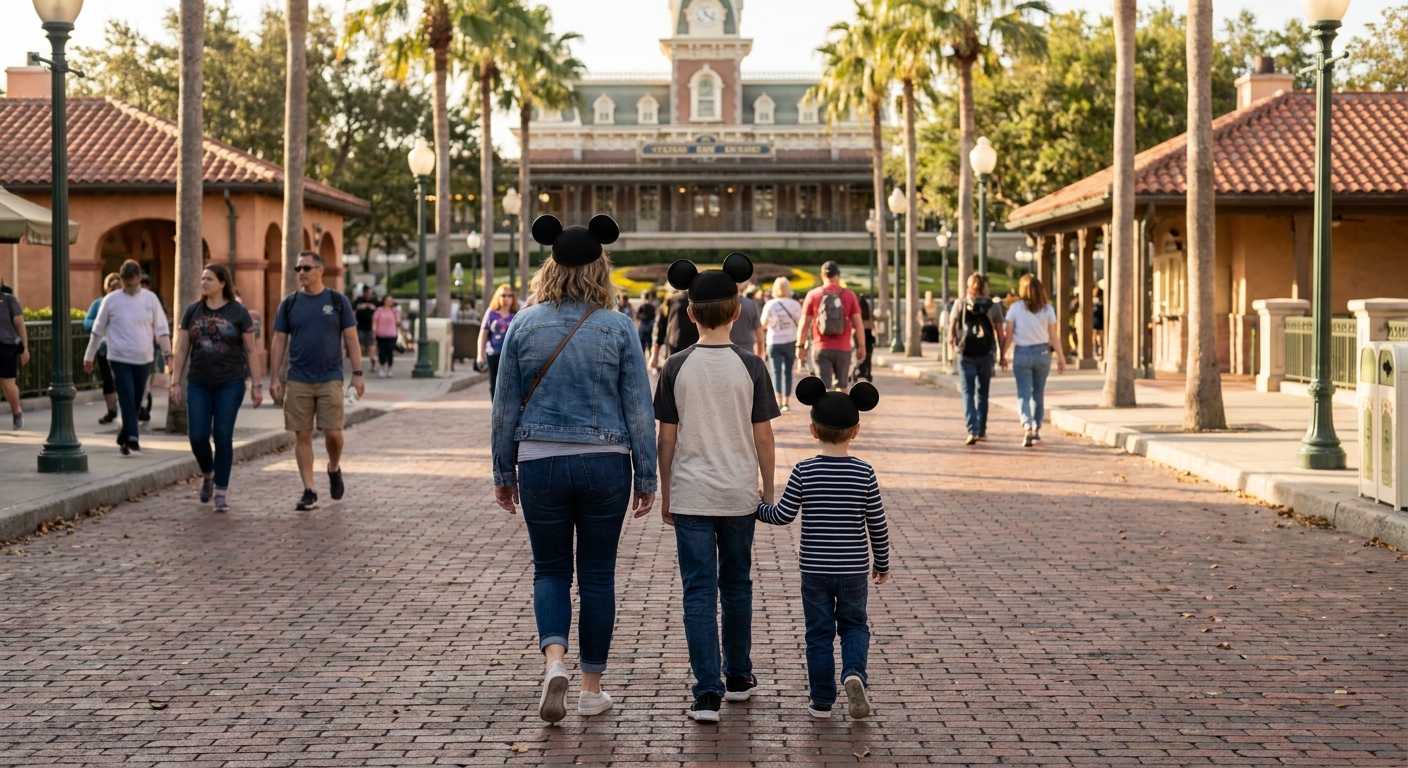
What Coral Reef Actually Is: The Room, the Tank, and the Retro-EPCOT Theming
You’re not booking a seafood restaurant. You’re booking a room — a dim, wavy, unapologetically 1980s room with a wall of living aquarium in it — and the food is the price of admission.
Understand that going in and Coral Reef makes sense. Expect a World Showcase-caliber culinary experience and you’ll leave grumpy.
The walk in sets the whole tone
Coral Reef sits inside The Seas with Nemo & Friends pavilion, and the approach is part of the show:
- [ ] The exterior reads pure original EPCOT — one of the few pockets of that design language left on property
- [ ] Inside the door, a hallway lined floor-to-wall in real seashells does the “you are now descending underwater” handoff
- [ ] An octopus greets you at the check-in counter
- [ ] The wavy architectural shapes, mosaics, patterned carpet and fabrics carry the ocean theme straight through
- [ ] Soft ceiling light effects ripple overhead like you’re looking up through water
It’s a committed theme, not a few fish decals. If your family likes being transported somewhere, the entry hallway alone is worth arriving a few minutes early for.
The tank is the actual headliner
The dining room’s far wall is floor-to-ceiling windows into one of the largest saltwater aquariums in the world. Roughly eight inches of acrylic separate you from sharks, rays, sea turtles and thousands of reef fish. Divers show up in the tank periodically, which reliably stops every kid at the table mid-sentence.
Two details most planners don’t know:
- The seating is tiered, stadium-style. It was designed so the view works from the back rows too, not just the front. A “bad” table here still sees the tank — it just sees it from farther away.
- There’s an in-room Fish Guide. A posted identification chart lets your crew actually name what’s swimming past. For a 7-year-old, this converts a long sit-down meal into a scavenger hunt. Use it.
Pro tip: The tank is a shared body of water with The Seas with Nemo & Friends next door — so ride the attraction and walk the aquarium exhibits after lunch, not before. Your kids will recognize species they just ate dinner next to, and you’ve turned one reservation into a two-hour, fully air-conditioned block of your EPCOT day.
Where you sit, honestly ranked
| Table position | What you get | Worth requesting? |
|---|---|---|
| Front row, glass-adjacent | Tank fills your view; fish are arm’s length | Yes — ask at check-in, every time |
| Mid-tier | Full tank in frame, slightly more conversation-friendly | Perfectly good; don’t wait 20 min for an upgrade |
| Back tier | Tank still visible thanks to the stadium design | Fine — the room design saves you here |
| Side/wall tables | Theming yes, tank mostly no | Push back politely if this is why you came |
The ask is free and often works if you’re flexible on a short wait. Nobody gets the glass by hoping.
Lighting: dim, and that cuts both ways
The room is genuinely dark — the tank is the brightest thing in it. Plan around it:
- Photos. Phone photos of people will be noisy; photos of the tank look great. Shoot toward the glass, don’t use flash (it bounces straight back and annoys every table around you), and let the aquarium be your light source.
- Menu reading. If you have a picky eater or anyone who needs to study ingredients, pull the current menu in My Disney Experience on the walk over rather than squinting at the table.
- Allergy conversations. Same logic — know your questions before you sit down, not in the dark with a server waiting.
- Toddlers and nap-adjacent kids. Dim + quiet + cushioned is a genuine advantage mid-afternoon. This room has talked more than one overheated 4-year-old off the ledge.
Who this room is for
| You are… | Verdict on the room |
|---|---|
| Traveling with kids 3–10 | Best sit-down environment in EPCOT for you, full stop |
| An aquarium/sea-life person | Go once minimum; nothing else on property does this |
| A retro-EPCOT nostalgia case | One of the last original-era rooms standing — go now |
| Chasing EPCOT’s best food | World Showcase is your lane, not this one |
| Looking for date-night atmosphere | Dim, yes — but it’s loud and kid-dense. Look elsewhere |
The takeaway
Coral Reef’s value is spatial, not culinary. You’re paying for an hour inside a dark, cool, 1980s-ocean fever dream with a living reef on one wall — and the two things that decide whether it lands are the table you ask for and the hour you book it. Everything else in this guide follows from that.
Seating Map: Which Tables Are Tank-Side, Which Are Fine, and Which Disappoint
Here’s the thing nobody tells you: Coral Reef’s dining room is tiered stadium seating, which means there’s no truly bad view — but there is a dramatic difference between “we watched a shark glide past our breadbasket” and “we could see the tank from here.” Know which tier you want before the host walks you anywhere.
The three tiers, honestly ranked
The room steps down toward the aquarium like a small amphitheater. That design is deliberate — it keeps sightlines open over the heads of the row in front of you. But the experience changes a lot by tier.
| Tier | What you get | Trade-off | Best for |
|---|---|---|---|
| Front (lowest) — tank-side | Tables literally touching the glass; roughly eight inches between you and the fish. Rays and sharks pass at eye level. | Loudest part of the room, most foot traffic from guests drifting down for photos, tightest table spacing. | Kids, first-timers, anyone here for the tank |
| Middle | Full, unobstructed tank views over the front row. You see the whole wall of water instead of one slice of it. | You’re a few feet back — less “swimming at you,” more “watching a documentary.” | Most groups; the quiet sweet spot |
| Back/upper + side booths | Space, padded booth seating, and a conversation you can actually hear. | Tank is scenery, not the main event. Side booths can be angled awkwardly to the glass. | Adults, big parties, anyone with a talker |
If someone in your group genuinely wants to talk, the upper tier is not a consolation prize — it’s the better room for them. The front row is a spectacle, and spectacles are loud.
Booths vs. tables
- Booths (mostly perimeter and upper tier): more legroom, better for pinning a wiggly kid between two adults, and the quietest option. Downside — you can’t pull a high chair up to a booth cleanly, and a stroller has nowhere to go.
- Freestanding tables (front and middle tiers): flexible. This is where high chairs actually fit, where a wheelchair can be accommodated, and where a server can add a seat.
- The accessibility read: step-free routing is simplest on the entry-level tiers. If you need a wheelchair-accessible table or you’re parking a stroller, say so at check-in, not after you’ve been seated — moving you later means waiting for a second table to turn.
The toddler calculus
If you have a kid under about five, the front tier earns its reputation. A toddler who can stand at the glass and press a palm against a passing fish is a toddler who is not throwing cutlery. One more thing most parents don’t realize: it’s completely fine to walk a little one down toward the glass between courses for a closer look. You don’t need the tank-side table to get the tank-side moment — just keep kids out of the servers’ path and keep the trip short.
Grab the Fish Guide at the table, too. Turning the meal into a spot-the-creature game buys you another twenty minutes of calm, and it works from any tier.
Pro tip: A tank-side seat and a midday reservation cancel each other out. When the park sun is highest, the room reads washed-out and the tank loses its glow. If the view is the whole reason you booked, prioritize a later seating over a “perfect” table number — the lighting does more for the experience than the row does.
How to actually ask (and what you’re owed)
Nothing here is guaranteed. Seating is entirely at the host’s discretion, driven by what’s turning over when you walk up. But asking costs nothing and works more often than people assume.
- [ ] Mention your preference at check-in — “front row by the glass, if one’s available” — not at the podium on the way out
- [ ] Add the real reason if you have one (a birthday, a first visit, a kid obsessed with sharks); hosts have latitude and tend to use it
- [ ] Say yes to a short wait if they offer one — ten minutes for the glass is a good trade
- [ ] Flag high chair, stroller, or wheelchair needs in the same breath
- [ ] If the answer is no, don’t sulk — take the middle tier and walk the kids down between courses
The one thing to remember: the front row is a free upgrade, but only if you ask for it — and only if you’ve booked a slot where the tank is glowing. Request it politely, accept the middle tier gracefully, and know that the upper tier is the right call for anyone who came to talk rather than stare.
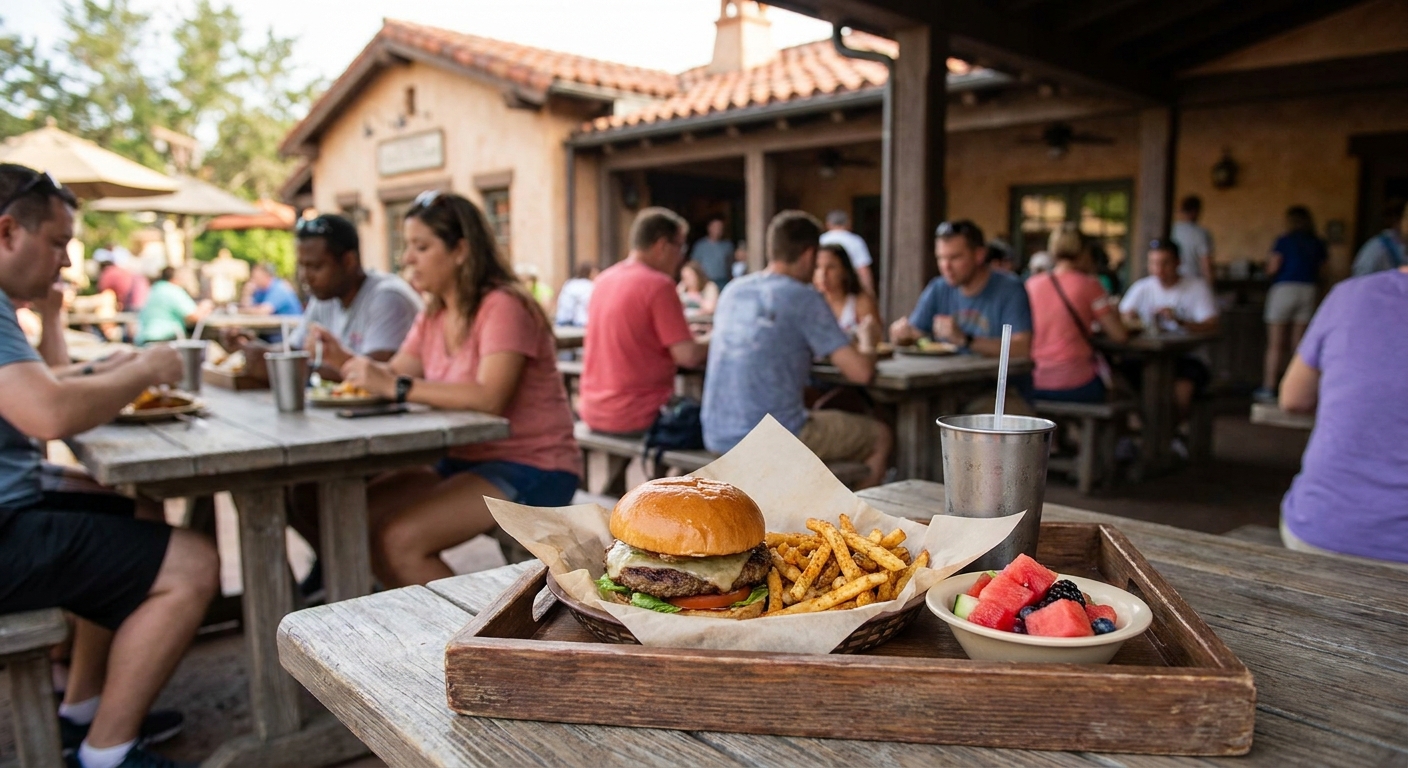
How to Actually Get a Tank-Side Table (Without Being That Guest)
Ask at check-in, not at the table — and ask like someone who’s willing to wait. The host podium controls the seating chart; your server does not. Once you’ve been walked to a back-tier two-top, the only person who can fix it is the one you already walked past.
Coral Reef’s dining room is built in tiers, stadium-style, so every seat technically “sees” the aquarium. But the front row — the tables where the glass is right there and the rays glide past at eye level — is a small slice of inventory, and it goes to whoever asked politely and showed up with a little flexibility.
The script that actually works
Say this at the podium, friendly and low-stakes:
“We’d love a table close to the glass if one’s available — totally happy to wait a few minutes.”
That’s it. Two things make it land: you asked the person who can grant it, and you pre-authorized the wait. Hosts say no to tank-side requests mostly because saying yes means stalling the rotation. Remove that problem and your odds jump.
What doesn’t work: asking your server after you’re seated (they’d have to re-fire the whole table), sighing audibly at your assigned booth, or treating the request as something you’re owed. You are asking for a free upgrade. Act like it.
Stack the deck before you arrive
- [ ] Add “would love a tank-side table if possible” as a note on your Advance Dining Reservation — non-binding, but it occasionally gets flagged
- [ ] Book a party of 2–4 if you can split a larger group across two reservations
- [ ] Target an off-peak seating (early lunch, late lunch, the gap before the dinner rush)
- [ ] Arrive 5–10 minutes early so the host has room to maneuver
- [ ] Decide in advance how long you’ll actually wait, and say that number out loud
Party size is the biggest lever
Front-row tables skew small. A two-top slides into a glass-adjacent slot the second one clears; a party of six needs a specific large table in a specific spot, and there are only a handful.
| Your party | Realistic odds at the glass | Smart move |
|---|---|---|
| 2 | Best — two-tops flex into front row easily | Ask and be willing to wait 10 min |
| 3–4 | Good at off-peak, tougher at prime dinner | Ask at check-in, arrive early |
| 5–6 | Middling — fewer large tables up front | Ask, but set expectations with your group |
| 7+ | Low — you’re getting a back tier or a split | Request two adjacent smaller tables instead |
Pro tip: A tank-side seat and a bright midday slot work against each other. The aquarium reads washed-out when the park sun is highest, so if the view is the whole reason you booked, prioritize a later seating over a “perfect” table at noon — the glow does more for the experience than the seat number does.
If you get the back tier anyway
Don’t sulk, and don’t lobby. The tiered design means your view is genuinely fine — you’re just a row or two removed from the fish. Two moves that work:
- Mention it once, then let it go. “If anything opens closer to the glass, we’d love it — no pressure.” Hosts do move people when a front table turns over early. Asking twice guarantees nothing except that you’re now That Guest.
- Walk down between courses. Nobody will stop you from strolling toward the glass for a few minutes of photos while you wait on entrées. Send the kids down for a closer look too — just keep them out of the servers’ path. Honestly, the ten minutes your kids spend nose-to-glass watching a shark cruise by is the memory, not whether your plate was eight inches from the tank.
Off-peak is where the inventory lives
A packed prime-time dinner has zero slack: every table is spoken for and the host is triaging. A quieter seating has open front-row tables sitting empty, which means the host can just… give you one. That’s the whole trick. If you’re flexible on time, you’re flexible on view.
This is also where cancellations help. If your window’s already passed or your ideal slot is gone, don’t sit there refreshing the app — SupaPark’s Drop Watch monitors Coral Reef and pings you the moment a table frees up, then you grab it in My Disney Experience. A quiet off-peak slot that surfaces from a cancellation is often a better tank-side bet than the prime-time table you originally wanted.
The one thing to remember: the view is a free upgrade you only get if you ask for it — at the podium, early, and with a smile that says you’ll wait. Didn’t land it this trip? Rebook a quieter slot next time and ask again.
When to Book: Best Times of Day, Week, and Year for Coral Reef
The move: book lunch around 11:30 AM or 2:00 PM, or an early dinner near 5:00 PM — and skip the 8:00 PM-ish slot entirely if you have kids under 10. Coral Reef’s whole value proposition is a slow, dark, air-conditioned hour in front of an aquarium. Every timing decision should protect that, not fight it.
Lunch vs. dinner: the real trade-off
| Slot | Why it works | The catch |
|---|---|---|
| Early lunch (~11:00–11:45 AM) | Easiest window to actually get; dining room is quietest; servers have time to chat about the tank | The room reads bright and washed-out when the park sun is highest — the tank doesn’t “glow” |
| Late lunch (~1:45–2:30 PM) | Same easy availability, and it doubles as your midday heat escape | You’ve already burned the morning rope-drop energy, so pace the walk back |
| Pre-dinner (~4:45–5:30 PM) | The sweet spot for families: tank looks moodier, kids aren’t fried yet, and you’re out in time for evening touring | Competes with your “one more ride before fireworks” instinct |
| Late dinner (7:30 PM+) | Best ambiance in the room, genuinely date-night pretty | Highest meltdown risk after a full park day; also the hardest slot to book |
If ambiance is the point and your group skews adult, late is right. If you have young kids, a pre-meltdown meal beats a prettier room every single time. And be honest with yourself about the brief: if you want true date night, there are better rooms in World Showcase. Coral Reef earns its keep with kids, not despite them.
Day of week
Midweek — Tuesday and Wednesday especially — tends to open up more table-service inventory than weekends, when day-guest and local traffic spikes. Sunday evenings can also be soft as weekend visitors head home. Friday and Saturday dinner is the hardest combination on the board.
Seasonal layer: when the 60-day window is forgiving
Slower stretches at Walt Disney World generally land in:
- January (after the New Year’s crowd clears)
- Early February
- Late April into mid-May
- Mid-September
In those windows you can often book a prime seating close to your date, and same-week openings appear regularly. The opposite is true for Christmas through New Year’s, Thanksgiving week, spring break, and the Fourth of July — treat those as 60-day-sharp-at-6:00-AM-Eastern bookings with zero flexibility.
Pro tip: Book Coral Reef on an EPCOT festival day. During Food & Wine, Flower & Garden, and the rest, a huge share of guests graze World Showcase booths for every meal instead of sitting down — so table-service demand actually thins on the busiest-feeling days. Counterintuitive, but it’s often your best shot at a same-week reservation at a restaurant that’s otherwise locked up.
The aquarium-activity angle
Divers do appear in the tank, and feeding activity makes some seatings noticeably livelier than others. Be realistic about this: it is not a guest-facing schedule, it isn’t published, and nobody can promise you a diver with your entrée. Two honest ways to improve your odds:
- Ask your server at check-in whether anything is expected during your seating — they’ll tell you if they know.
- Longer seatings see more. A relaxed 75-minute meal simply gives the tank more chances to do something interesting than a rushed 40-minute one.
Treat divers as a bonus, not the reason you booked.
Build the day around the meal, not the reverse
- [ ] Pick your slot: early lunch, late lunch, or pre-dinner if kids are in the party
- [ ] Book at 60 days before arrival, 6:00 AM Eastern, in My Disney Experience (that’s ADRs — separate from the 7:00 AM Lightning Lane Multi Pass window)
- [ ] Block 90+ minutes from sit-down to your next commitment
- [ ] Do not schedule a Lightning Lane Single Pass return — TRON, Cosmic Rewind, Rise of the Resistance — in the hour after your seating
- [ ] If you want to ride after, keep it flexible standby, not a timed return
- [ ] Note your cancellation cutoff when you book so you never eat a no-show fee
The whole point of a sit-down meal at EPCOT is escaping the chaos for an hour. Don’t engineer new chaos on the back end by racing out mid-dessert.
If your ideal slot is already gone
Missed the 60-day mark, or the time you wanted never appeared? Off-peak slots are exactly where late cancellations surface — and they surface at random hours, which is why manual refreshing rarely works. Set a Drop Watch on Coral Reef in SupaPark (supapark.com): it monitors the restaurant for cancellations and pings you the second a table frees up, then you confirm it yourself in My Disney Experience. Free accounts get those alerts by email; paid tiers get instant push.
Remember: the easiest Coral Reef tables are early lunch, late lunch, and festival days — and the best family experience is almost always an earlier seating than you think you want.
The Festival Hack: Why EPCOT’s Busiest Days Are Your Best Shot at a Table
The counterintuitive move: book Coral Reef on a festival day. When EPCOT is wall-to-wall for Food & Wine, Flower & Garden, or Festival of the Arts, a large share of the crowd is eating standing up at World Showcase booths — small plates, three or four stops, call it dinner. That grazing behavior pulls demand away from table service. The park feels mobbed. The dining room doesn’t fill the same way.
That gap is where same-week Coral Reef tables live.
Why the pattern holds
- Festival-goers budget their food money for booths, not a seated entrée.
- Many festival days skew toward adults and annual passholders doing a half-day — people who were never going to sit down for an hour.
- Families who did plan a sit-down meal often booked it months out at the 60-day mark, so the late inventory left over is the stuff nobody claimed.
The result: on a festival Tuesday, you can sometimes find a Coral Reef slot inside the same week that would be gone a month out on a non-festival Saturday.
How to work it
| Your situation | What to target | Why it works |
|---|---|---|
| Still 60+ days out | Book at your 60-day window, 6:00 AM ET | Always the highest-percentage play — don’t gamble on the hack if you don’t have to |
| Inside the same week | Festival weekday, especially Tue–Thu | Weekend festival days pull locals and passholders who do book tables |
| Any festival | Mid-festival, not opening weekend | Opening weekend is the hype peak; weeks three through the back half are softer |
| Nothing showing at all | Set a Drop Watch and stop refreshing | Cancellations surface at random hours; a watch catches them, you don’t |
Pro tip: Search festival weekdays for the unfashionable seatings first — an early lunch right at opening, or a late-afternoon slot after the lunch rush and before dinner. Those are the times festival grazers never want, and they’re the same slots where late cancellations tend to surface. A 2:30 PM Coral Reef on a Food & Wine Wednesday is a far easier get than 6:30 PM on a non-festival Saturday.
The step-by-step
- [ ] Identify which festival overlaps your dates and where you land in its run (skip opening weekend if you can)
- [ ] Pick two or three festival weekdays as your target days
- [ ] Search My Disney Experience for those days across a wide time band, not one perfect hour
- [ ] If nothing’s available, set a SupaPark Drop Watch on Coral Reef for your dates and let it hunt
- [ ] Book the second the alert hits — festival-day drops get claimed fast even when they’re easier to find
Remember that the booking itself always happens in Disney’s app. Advance Dining Reservations open 60 days before your arrival date at 6:00 AM Eastern in My Disney Experience — don’t confuse that with the 7:00 AM Lightning Lane Multi Pass window, which is a different system entirely. SupaPark’s job is the part you can’t do manually: Drop Watch monitors Coral Reef and pings you the moment a table frees up, so you’re not refreshing the app for an hour hoping to get lucky. Free accounts get those alerts by email; paid tiers get them pushed to your phone instantly, which matters when a prime slot is live for four minutes.
The honest caveat
This is a demand pattern, not a guarantee. Some festival days run hot for table service too — a cool-weather Flower & Garden Saturday, a holiday week overlapping Food & Wine, or a day when weather drives everyone indoors. Treat the festival hack as a tilt in your favor, not a reservation you can count on.
And festival days carry real costs you should price in:
- Walkway congestion. World Showcase promenade traffic during Food & Wine is genuinely slow-moving. Budget extra walking time to get to the Seas pavilion, especially from the back half of the loop.
- Noise and energy. The park reads louder and busier. If your reason for booking Coral Reef is a quiet, dim, air-conditioned reset, a festival day partially works against that — though the dining room itself stays calm.
- Your own temptation. You’ll walk past twenty booths on the way to a seated meal you already paid for. Plan to graze light before, or eat the entrée and skip the pre-meal snacking.
The smart move: use the festival hack as your recovery plan when you miss the 60-day window — not as your primary strategy. Book at 60 days if you can. If you can’t, target a mid-festival weekday, search the off-peak seatings, and let Drop Watch work the cancellations while you do something else. More on how SupaPark handles that at supapark.com.
Booking Walkthrough: The 60-Day Window, Step by Step
The whole game is being logged in and ready at 6:00 AM Eastern exactly 60 days before your arrival date — not 60 days before your Coral Reef meal. That one distinction is what separates people who get the 12:30 PM tank-side slot from people who get 8:45 PM on a Tuesday.
The two windows guests constantly confuse
Dining and Lightning Lane are different systems with different clocks. Mix them up and you miss both.
| What you’re booking | When it opens | Time | Where |
|---|---|---|---|
| Advance Dining Reservations (Coral Reef) | 60 days before your arrival date | 6:00 AM Eastern | My Disney Experience |
| Lightning Lane Multi Pass selections | 7 days before arrival (Disney resort) / 3 days (off-site) | 7:00 AM Eastern | My Disney Experience |
Dining is 60 days and 6:00 AM. Lightning Lane is 7-or-3 days and 7:00 AM. Set two separate alarms and stop treating “7 AM Disney booking day” as one event.
The on-site advantage that’s worth real money
If you’re staying at a Disney resort hotel, your 60-day window covers your entire length of stay — up to 10 days — from that single morning. A guest arriving on day one can book a Coral Reef lunch for day five while an off-site family staying the same week has to wait until their own 60-day mark comes around, four days later. On a popular week, those four days matter.
Off-site? You still get 60 days, just counted from your first park day, one day at a time.
Pre-work checklist: do this the night before
Being “online at 6” isn’t enough. Everything below should already be done when the clock flips:
- [ ] Confirm your exact party size — including infants if they’ll occupy a seat
- [ ] Link every ticket and every guest in your party in My Disney Experience
- [ ] Add a card on file and verify it hasn’t expired (Coral Reef holds a card to confirm)
- [ ] Pre-scan the current menu so nobody’s deciding at 6:02 AM whether a seafood-forward room works for them
- [ ] Rank three backup times in writing: your ideal slot, a shoulder slot, and a “fine, I’ll take it” slot
- [ ] Log into the app the night before so you’re not fighting a password reset at 5:58 AM
- [ ] Know your date-math: count 60 days back from arrival, don’t guess
Pro tip: Book Coral Reef on an EPCOT festival day. During Food & Wine, Flower & Garden, and the other festivals, a big share of guests graze the World Showcase booths for every meal instead of sitting down — which thins table-service demand even as the park feels mobbed. It’s the single most reliable way to land a same-week Coral Reef table at a restaurant that’s otherwise gone at 6:01 AM.
What to do the moment it opens
Have the restaurant page already open on your phone with your date and party size pre-filled. Then:
- [ ] Refresh at 6:00:00 — not 5:59, which can return “not yet available”
- [ ] Search your ideal time first; take what’s offered within about 30 minutes of it
- [ ] Book something over nothing — you can modify later, you can’t modify a reservation you don’t have
- [ ] Immediately repeat for your other park days before anything sells through
Party size changes everything
Coral Reef seats a lot of people, but availability is cut by table configuration, not headcount.
| Party size | Realistic difficulty | Smart workaround |
|---|---|---|
| 2–4 | Easiest — most tables fit this | Book your actual preferred time |
| 5–6 | Noticeably tighter | Flex the time by 30–45 minutes |
| 7+ | Hardest; may need to be split | Try two adjacent smaller bookings and ask to be seated together |
If 7+ shows nothing, drop to parties of four and two on back-to-back times — then tell the host at check-in. It often works, and it beats no table at all.
Modify. Don’t cancel and rebook.
This is where people lose the reservation they already had. Cancelling releases your table into the wild instantly, and someone with an alert running will take it before you finish typing your new search. Use the Modify option on the existing reservation — Disney holds your original booking until the change confirms, so a failed search leaves you exactly where you started.
Cancellation and no-show policy, in plain terms
Coral Reef is a card-on-file restaurant with a per-guest no-show charge. In general terms: cancel inside a same-day cutoff (typically a couple of hours before your seating) or simply don’t show, and you get billed. Policies vary by restaurant and can change, so when you book, read the cancellation terms on your confirmation screen and screenshot them. Then set a phone reminder for the morning of — if the day’s gone sideways, cancelling early costs nothing.
If your 60-day window already passed
Don’t manually refresh for an hour. Coral Reef cancellations surface constantly, especially in off-peak slots and on festival days. Set a Drop Watch in SupaPark (free members can create dining watches) and you’ll get pinged the second a table frees up — then you confirm it yourself in My Disney Experience. That’s the realistic path to a prime slot booked inside a week.
Missed the 60-Day Window? The Cancellation-Drop Playbook
Good news: Coral Reef is not Space 220 or Cinderella’s Royal Table. It’s a mid-tier EPCOT table that books up but doesn’t vanish, which means cancellations surface here regularly — and the off-peak slots you actually want (late seatings, festival days) are exactly where they surface most.
That changes the strategy. You’re not hunting a unicorn. You’re waiting for ordinary human behavior: someone’s flight shifts, a kid naps through lunch, a party rebuilds their EPCOT day around a Guardians of the Galaxy: Cosmic Rewind Single Pass return. Those tables drop back into inventory, and they drop in predictable windows.
The manual checking pattern
Random refreshing wastes your evening. Cancellations cluster, so check when people actually cancel:
- [ ] 1–3 days out — the big wave. This is when families finalize park days and dump the reservations that no longer fit.
- [ ] The evening before — second wave, as people look at tomorrow’s plan honestly for the first time.
- [ ] Morning-of, just after the cancellation cutoff passes — the sharpest window of all. Once the free-cancellation deadline expires, anyone who wasn’t going anyway bails and eats the fee, and that table hits inventory immediately.
- [ ] One party size smaller — searching for 3 instead of 4 often surfaces a table the system hides from larger parties. Ask at check-in about adding a seat; it’s frequently fine at a restaurant with this much dining-room capacity.
Also widen your time search before you widen your days. A “no availability” result for 12:30 PM often becomes a hit at 1:45 PM or 8:00 PM — and the later seating is the better table anyway, because the tank glows when the park sun isn’t washing out the glass.
Manual hunting vs. letting a watch do it
| Approach | What it costs you | What you catch |
|---|---|---|
| Refreshing My Disney Experience yourself | 20–40 min a night, repeated | Only drops that happen while you’re looking |
| Checking at the four windows above | ~5 min a day | Most of the predictable waves |
| A dining Drop Watch | One setup, then nothing | Drops at 2:14 PM on a Tuesday while you’re at work |
The gap in that table is the whole point. A cancelled table doesn’t sit in inventory politely waiting — on a reservation this gettable, someone else grabs it, sometimes within minutes. Manual refreshing only wins if you happen to be refreshing at that exact moment.
Pro tip: Stack the festival angle on top of the drop strategy. During Food & Wine or Flower & Garden, a big share of guests eat their way through the World Showcase booths instead of sitting down — so sit-down demand actually softens on the park’s busiest-feeling days. A festival-week Coral Reef table is one of the more realistic same-week ADR grabs at EPCOT.
The automated version
This is where SupaPark earns its keep: set a dining Drop Watch on Coral Reef and it monitors the restaurant for cancellations continuously. The moment a slot frees up — a prime seating, a festival-day table, that 1:00 PM you wanted — you get pinged, and you open My Disney Experience and claim it.
To be clear about the division of labor: SupaPark only alerts. It never books. The reservation is always made by you, in Disney’s own app, directly with Disney. What you’re outsourcing is the watching, which is the part no human does well.
How delivery works across plans:
| Plan | Drop Watch delivery | Watches |
|---|---|---|
| Free | Alerts by email, 10 a day | Can create dining watches |
| Silver | Instant push, unlimited emails | Unlimited |
| Gold | Instant push plus SMS | Unlimited, plus the proactive agent |
Free is genuinely usable here — you can watch Coral Reef and get the email without paying anything. The upgrade buys you speed of delivery, which matters more on a hard table than on this one. For Coral Reef specifically, email is often fast enough; if you’re also chasing something brutal like a festival-week prime slot, instant push is the difference between “I got it” and “it was gone.” SupaPark is free on the web, iPhone and Android, with push and in-park location on the apps.
What to do if the drop never comes
Have a real backup instead of burning your EPCOT day on hope. Keep a walk-up-friendly alternative in mind, or build the day so lunch can be a World Showcase graze and Coral Reef becomes a dinner you’d happily take at 8:00 PM. The tank is the reason you’re going — and a later seating serves it better than a midday table you fought for.
The one thing to remember: a missed 60-day window is not a closed door at Coral Reef. Check 1–3 days out, the night before, and right after the cancellation cutoff on the morning-of — or set a Drop Watch at supapark.com, let it do the hunting, and just confirm the catch in My Disney Experience.
What to Order: The Safe Bets, the Splurges, and the Dishes to Think Twice About
The most expensive thing on the menu is rarely the best thing on the menu here — judge by portion-to-price, not by the number at the bottom. Coral Reef’s kitchen does well with its mid-tier seafood entrées, and the priciest plates have a long history of arriving smaller than the spend suggests. Scan before you default to the top line.
One honest caveat up front: menus here rotate seasonally, so treat everything below as a category strategy, not a dish list. Pull the current menu in My Disney Experience before you build expectations — especially if someone in your group has a hard “no.”
Order by category, not by price
| Category | What to do | Why |
|---|---|---|
| Seafood entrées (mid-tier) | Your default order | This is the restaurant’s identity and where the kitchen is most consistent; mid-priced plates usually land best on portion-to-price |
| Top-dollar seafood entrée | Think twice | Premium pricing doesn’t reliably buy a premium portion — read the description for size cues first |
| Non-seafood entrée (chicken- or steak-style) | The holdout’s lifeline | There’s typically one on the menu, but confirm it before committing the reservation |
| Shareable starters | Order two or three for the table | Solves mixed appetites and buys time while everyone watches the tank |
| Dessert — the chocolate wave | Splurge here | Crisp exterior, barely-set center; the dish regulars actually single out |
If someone in your group is seafood-averse
Pre-scan, don’t wing it. Coral Reef leans hard into seafood, and “they’ll find something” is how you end up with one person eating bread and resentment with an aquarium view.
- [ ] Open the current Coral Reef menu in My Disney Experience before you lock the ADR
- [ ] Confirm there’s a non-seafood entrée that person will genuinely eat
- [ ] If the non-seafood lineup is thin, book a different room for that trip
- [ ] Check this at 60 days, not at check-in
Pro tip: The move for a mixed table isn’t everyone ordering an entrée — it’s two or three shareable starters in the middle plus entrées only for the people who actually want one. You get the full experience, the seafood-skeptic grazes, and the bill lands meaningfully lower than four full entrées.
How to order for speed
A sit-down meal here runs the better part of an hour-plus by design, and you cannot shortcut that to 35 minutes. You can trim the edges:
- Order your full party’s food at once — appetizers and entrées in the same breath, no second round of decision-making.
- Skip the cocktail course. Drinks ordered separately from food add a service cycle.
- Tell your server at the start that you’re on a schedule. They can pace courses accordingly.
- Still budget 90+ minutes from sit-down to your next commitment, and don’t put a Single Pass return window in the hour after your seating. If you must ride after, pick a flexible standby option rather than a timed return.
Honestly, though: if you’re optimizing this meal for speed, you’re using it wrong. The whole point of a Coral Reef lunch is escaping the EPCOT chaos for an hour — don’t engineer new chaos on the back end.
How to order for a lighter midday meal
This is the underrated version of Coral Reef, especially on a festival day when you’re already planning to graze World Showcase booths later.
- One shareable starter plus the chocolate wave, split. That’s a real sit-down experience in air conditioning without killing your appetite for the booths.
- Or: one entrée split between two adults, one starter each. The portions on some dishes handle this fine.
- If you’re doing both a Coral Reef lunch and a festival crawl, going full three-course means you’ll be too full to enjoy the thing you came to EPCOT for.
Don’t cut dessert
People treat dessert as the first course to trim. Wrong instinct in this room. The warm chocolate wave is the dish regulars come back for — a crisp outside giving way to a center that’s barely set, somewhere between molten and cake. If you’re going to spend beyond your entrée on exactly one thing, spend it there and skip the pricey headline fish instead.
The takeaway: order mid-tier seafood, confirm the non-seafood option exists before you book, put two or three shareable starters in the middle of the table, and protect the chocolate wave in your budget. Then verify the current menu in My Disney Experience, because seasonal rotation means the specific dish names will have moved by the time you sit down — the strategy won’t.
Coral Reef vs. Other EPCOT Table Service: A Side-by-Side Comparison
Here’s the honest read: Coral Reef wins the room and loses the plate. If you’re picking one EPCOT sit-down meal purely on food, World Showcase takes it almost every time. If you’re picking the meal your kids will still be talking about in the car ride home, nothing else in the park competes with eight inches of glass between your table and a shark.
That means Coral Reef isn’t competing with Le Cellier or Space 220 for the same slot — it’s competing for a different slot. Slot it in as your atmosphere meal, and let World Showcase handle dinner.
The side-by-side
| Restaurant | Atmosphere | Food reputation | Price band | Noise | Kid-friendly | Booking difficulty | Choose this if… |
|---|---|---|---|---|---|---|---|
| Coral Reef (The Seas) | Best in park — floor-to-ceiling aquarium, stadium seating, unapologetic 1980s EPCOT decor | Solid, seafood-forward; not the reason you came | Mid-to-upper | Moderate; the tank absorbs kid energy | Very high — built-in entertainment | Moderate; drops are common | You want a view your kids react to, and a calm hour of air conditioning |
| Le Cellier (Canada) | Dark, cozy steakhouse cellar | Among the strongest in EPCOT | Signature-level | Low–moderate | Medium | Hard — books early | Steak is the point and your group can sit still |
| Via Napoli (Italy) | Loud, bustling, wood-fired ovens on display | Genuinely good pizza, shareable | Moderate (great per-person value) | High | Very high | Easier than most | You need to feed a crowd well without a signature spend |
| Teppan Edo (Japan) | Tableside grill show, communal seating | Reliable, and the show carries it | Mid-to-upper | Moderate | High | Moderate | You want performance dining and kids who need a focal point |
| Garden Grill (The Land) | Rotating restaurant, character meals | Family-style comfort food | Upper (character premium) | Moderate | Highest | Harder — characters drive demand | Characters matter more than cuisine |
| Space 220 | Immersive “orbit” gimmick with a fixed-price hook | Divisive — pay for the concept | Highest | Low–moderate | High | Hardest in the park | The theming is worth the price to you, no hesitation |
How to slot it into a trip that already has EPCOT meals
The mistake is booking two atmosphere restaurants and no actual good meal. Balance it:
- [ ] One cuisine anchor in World Showcase — Le Cellier, Via Napoli, or a Japan/France pick
- [ ] One atmosphere meal — Coral Reef, ideally at lunch or early dinner
- [ ] Zero overlap on price band: don’t stack two signature-level bills in one park day
- [ ] Build 90+ minutes from seating to your next commitment, and no Single Pass return right behind it
- [ ] If kids are in the party, put Coral Reef before the meltdown window, not after
Two EPCOT meals in one day is the ceiling for most families. If you only get one, the tiebreaker is who you’re with: adults-only leans World Showcase, kids in tow leans Coral Reef.
Where Coral Reef quietly beats the field
- Dining Plan math. Of the mid-tier options, Coral Reef converts a credit into something that feels like an occasion. Sending a kid’s credit here instead of toward a counter-service plate is the better trade.
- Midday recovery. Via Napoli and Teppan Edo are loud; Coral Reef’s dim, aquarium-lit room is the one that genuinely resets a frazzled group.
- Availability. Space 220 and Garden Grill evaporate instantly. Coral Reef is the realistic get.
Pro tip: On festival days — Food & Wine, Flower & Garden — table-service demand actually drops across EPCOT, because the crowd is grazing the World Showcase booths instead of sitting down. The park feels mobbed, but people are eating in line. That’s your best shot at a same-week Coral Reef table, and it’s the one comparison point that doesn’t show up on any menu.
Booking reality check
All of these run through Advance Dining Reservations: 60 days before your arrival date, 6:00 AM Eastern, in My Disney Experience. (Not the 7:00 AM Lightning Lane Multi Pass window — different system, different clock.) If you missed 60 days, the harder rooms are a cancellation game, and that’s where a SupaPark Drop Watch earns its keep: it monitors Coral Reef and pings you the second a slot frees up, then you confirm it in My Disney Experience. Free accounts get those alerts by email, which is plenty for a 60-day-out hunt.
The call: book the World Showcase room for the food, book Coral Reef for the memory, and don’t pretend one restaurant has to do both jobs.
Coral Reef vs. Other Disney World Aquarium and View Restaurants
Here’s the thing almost nobody says out loud: most Disney “view” restaurants sell you a timed view — a fireworks window, a safari that rolls past, a monorail that comes and goes. Coral Reef sells you a continuous one. The tank never stops. That single difference is why it survives a 90-minute meal with a four-year-old and the others often don’t.
If you’re choosing between view-driven tables, stop comparing food first. Compare whether the view is still happening in minute 40.
The view-restaurant comparison
| Restaurant | Is the view from every table? | What the view costs you in food | Booking difficulty | Holds a young kid for a whole meal? |
|---|---|---|---|---|
| Coral Reef (EPCOT) | Mostly — tiered stadium-style seating means even non-tank-adjacent tables see the glass; front row is the prize | Moderate: solid seafood-forward cooking, but World Showcase beats it on pure cuisine | Moderate — and softest on festival days | Yes. Continuous, passive, nothing to time |
| Animal-view table service (Animal Kingdom Lodge) | No — savanna-side tables and windows only; interior seats see a dining room | Low: the food genuinely stands on its own | Hard at prime windows | Partly — animals wander off; there are dead stretches |
| Fireworks-view dining (Magic Kingdom area) | No — and only during the show | High: you’re paying a premium for timing, not plating | Hardest on property | Only for the 15 minutes the show runs |
| Monorail / water-view rooms | Varies wildly by table | Low to moderate | Moderate | Briefly — a train passes, then nothing |
| Theme-is-the-view rooms (immersive dining rooms) | Yes, structurally | Usually the highest premium | Very hard | Yes at first, then the novelty flattens |
Why “passive and continuous” is the whole argument
A fireworks table is a 15-minute payoff bolted onto a 75-minute meal. A savanna table depends on whether a giraffe feels like showing up. Coral Reef’s aquarium is doing something different: there is always a ray, always a shark, always a diver drifting past about eight inches of glass away. Nobody has to time anything. Nobody is asking “when does it start.”
That makes Coral Reef the most reliable view purchase on property for families — even though it is not the best food on property, and even though it’s not the hardest table to get.
The booking-difficulty angle other guides miss
Coral Reef sits in a sweet spot: desirable enough to be worth planning, not so locked up that you need luck. Advance Dining Reservations open 60 days before your arrival date at 6:00 AM Eastern in My Disney Experience — not 180 days, and not the 7:00 AM Lightning Lane Multi Pass window. Different system, different clock.
And then the counterintuitive one: book it on an EPCOT festival day. During Food & Wine or Flower & Garden, a big share of guests graze the World Showcase booths for every meal instead of sitting down. The park feels mobbed, but table-service demand actually thins — so a festival day is often your best shot at a same-week table.
Pro tip: A tank-side request and a midday reservation fight each other. When the park sun is highest, the room reads washed out and the glass loses its glow. Book a later seating over a “perfect” table at a bright hour — the lighting does more for the experience than the seat number.
How to pick between them in 60 seconds
- [ ] Traveling with kids under 8 who won’t sit still? Coral Reef, every time — the tank does the babysitting.
- [ ] Want the best food in EPCOT? Go World Showcase instead and treat Coral Reef as a try-it-once.
- [ ] Someone genuinely seafood-averse? Pull the current menu in My Disney Experience and confirm the non-seafood option (typically a chicken or steak-style dish) is something they’d actually eat. Know that at 60 days, not at the table.
- [ ] Chasing a specific view moment (fireworks, a show)? Accept that you’re paying a premium for timing and that the payoff is brief.
- [ ] Need a midday air-conditioned reset? Coral Reef wins on that alone, view aside.
Build the day around it, not through it
Whichever view restaurant you pick, the planning mistake is identical: treating a sit-down meal as a pit stop.
- Allow 90+ minutes from sit-down to your next commitment.
- Don’t book a Lightning Lane Single Pass return — TRON, Guardians of the Galaxy: Cosmic Rewind, that tier — for the hour after your seating.
- If you must ride after, pick a flexible standby option rather than a timed return.
- Skip the late-dinner slot with kids who melt down at the end of a park day.
The whole point of an EPCOT sit-down is escaping the chaos for an hour. Don’t engineer new chaos on the back end.
The takeaway: Among Disney World’s view restaurants, Coral Reef is the only one where the view can’t be missed, can’t be late, and can’t wander off. If you’re buying a view for a table with kids at it, buy the one that’s always on — and if your ideal time is gone, SupaPark’s Drop Watch monitors Coral Reef for cancellations and pings you the second a slot frees up, so you can grab it in My Disney Experience.
Cost Breakdown: What a Coral Reef Meal Actually Runs
You’re paying roughly double a quick-service lunch for the same calories — and the premium buys you an hour of air-conditioned aquarium, not better food. Once you accept that trade, the math gets easy to judge.
Coral Reef sits in Disney’s standard table-service band: entrées in the $30s to high-$40s, appetizers and desserts stacked on top, with seafood specials pushing the high end. Below is what a real check tends to look like once tax and a 20% tip land.
What the check actually looks like
| Party | Starters | Entrées | Dessert | Kids’ meals | Drinks | Tax + 20% tip | Realistic total |
|---|---|---|---|---|---|---|---|
| Solo | Skip or one | 1 | 1 (chocolate wave) | — | 1 soft drink | ~$12–18 | $60–85 |
| Couple | 1 shared | 2 | 1 shared | — | 2 (one cocktail) | ~$25–35 | $130–180 |
| Family of 4 (2 kids’ meals) | 1 shared | 2 | 2 shared | 2 | 4 (2 kids) | ~$35–50 | $190–250 |
| Party of 6 (4 adults, 2 kids) | 2 shared | 4 | 3 shared | 2 | 6 | ~$55–75 | $300–390 |
Ranges, not promises — menus and specials shift, and alcohol is the single biggest swing factor. Two cocktails can move a couple’s check by a third.
The same party, three ways
Here’s the comparison that actually settles the “is it worth it” argument — a family of four, one midday meal, three different EPCOT choices.
| Option | Family-of-4 ballpark | Time on the clock | What you get |
|---|---|---|---|
| Quick-service EPCOT lunch | $70–100 | 20–35 min | Food, a plastic tray, maybe an indoor seat if you’re lucky |
| World Showcase festival booth grazing | $90–140 | 45–75 min walking | Variety, small plates, standing in sun, no table |
| Coral Reef table service | $190–250 | 75–90 min | Seated, air-conditioned, floor-to-ceiling aquarium, real service |
So the room costs you somewhere in the neighborhood of $100–150 over a counter lunch for that family. That’s the number to judge — not the total.
Pro tip: Festival-booth grazing is the sneaky-expensive option. Small plates in the $7–10 range feel harmless, but four people doing three stops each lands you near table-service money with no table, no shade, and no server — and you’ll still buy drinks. If your family grazes the booths for a full meal, Coral Reef’s premium is far smaller than it looks on paper.
Where the money actually goes
Be honest about it: you are buying climate control, a seat, 90 minutes off your feet, and a view that entertains kids without a screen. The food is solid — the chocolate wave genuinely earns its spot — but nobody books Coral Reef because it’s the best plate in EPCOT. World Showcase wins that fight. The tank is the product.
That also means the cost-control levers are obvious:
- [ ] Skip the appetizer course entirely — share one or none
- [ ] Order by portion-to-price, not by the biggest number on the menu; the top-dollar seafood entrée is often a modest plate
- [ ] Keep dessert (one or two shared) — it’s the course that’s actually worth the spend here
- [ ] Hold the cocktails to one, or drink at the festival booths instead
- [ ] Book lunch over dinner where menus differ — same room, same tank, lower ceiling on the check
- [ ] On the Dining Plan, spend your kids’ table-service credits here rather than on a counter-service plate
When it’s worth it — and when it isn’t
Worth it if: you’ve got kids who need a hard reset mid-day, someone in the group is an aquarium person, it’s a birthday or a first EPCOT trip, or you’re on the Dining Plan and the credits are already paid for. The tank does the heavy lifting on all four.
Not worth it if: you’re two adults chasing the best meal in the park (go World Showcase), you’re trying to keep a day cheap (quick service plus one festival snack is half the cost), or you’re seafood-averse and banking on finding something — check the current menu in My Disney Experience before you commit.
The honest read: at $190–250 for a family of four, Coral Reef is a mid-tier table-service spend buying a top-tier room. Judge it as an attraction with lunch attached and it’s a good deal. Judge it as a restaurant and you’ll feel the premium.
Fitting Coral Reef Into Your EPCOT Day: Touring Plan and Timing Traps
Block 90+ minutes from “we’re seated” to your next commitment — and put nothing timed in the hour after. Coral Reef is a slow, dim, air-conditioned room with a wall of fish. The whole value proposition is that it stops your day for a while. If you schedule it like a pit stop, you’ll spend the meal watching the clock instead of the sharks, and you’ll still be late.
The 90-minute rule, and why it’s not padding
A table-service meal here realistically runs 60–75 minutes once you add check-in, a short wait at the host stand, and dessert you shouldn’t skip. Add walking on both ends and you’re at an hour and a half, minimum. That’s not a worst case — that’s a normal Tuesday.
- [ ] Arrive 5–10 minutes before your reservation and expect a short wait anyway
- [ ] Count 60–75 minutes at the table (longer if you asked for tank-side and they’re juggling seating)
- [ ] Add 10–20 minutes of walking to wherever you’re headed next
- [ ] Leave the next 60 minutes after your window unscheduled — no timed returns, no show, no second ADR
The Single Pass trap
Do not book a Guardians of the Galaxy: Cosmic Rewind Single Pass return for the hour after your seating. It’s EPCOT’s biggest headliner, it’s à la carte money, and a Single Pass return window is the least forgiving thing on your day — if the kitchen runs long or the table behind you is slow to turn, you’re either bolting mid-dessert or eating the cost. Same logic applies to any tightly timed commitment.
If you genuinely want to ride after lunch, pick something with a flexible standby queue instead. Soarin’ Around the World, Living with the Land, Spaceship Earth, and Journey Into Imagination With Figment all take you whenever you show up, and three of those are indoors.
| Post-meal plan | Risk if the meal runs long | Verdict |
|---|---|---|
| Cosmic Rewind Single Pass return | Window expires, money gone | Don’t |
| Lightning Lane Multi Pass return | Tight window, forces a rush | Risky |
| Standby at Living with the Land / Spaceship Earth | None — walk up whenever | Best call |
| The Seas with Nemo & Friends (same pavilion) | None | Easiest win |
| World Showcase stroll / festival booths | None | Great cooldown |
Walking reality from The Seas pavilion
Coral Reef sits inside The Seas with Nemo & Friends pavilion in World Nature, on the far side of the park from the World Showcase promenade.
- To the front of the park (and the Skyliner or monorail): roughly 8–12 minutes at adult pace, longer with a stroller or a tired five-year-old.
- To the start of World Showcase (Mexico or Canada): call it 10–15 minutes.
- To a mid-Showcase country like Germany or Japan: 20+ minutes. Plan accordingly if you’ve got a second ADR or a festival booth plan in the back half of the day.
- To Cosmic Rewind in World Discovery: 10–15 minutes — which is exactly why that return-window gamble goes wrong.
The free pairing nobody plans for
The pavilion’s aquarium walkthrough is right outside the restaurant door, and it’s the smartest thing you can do with the 20 minutes after your meal. Ride The Seas with Nemo & Friends (short, gentle, essentially always a low wait), then walk the tank galleries and look for the manatees. You’ve just extended the aquarium theme your kids were already glued to, with zero additional planning and no timed anything.
Pro tip: Build the day so Coral Reef is your natural heat break — seat it in the early-to-mid afternoon, when EPCOT’s outdoor queues peak and standby waits are worst. You’re not “losing” ride time; you’re trading the hour you’d have spent sweating in a line for the hour the park’s waits drop afterward. That’s the single best argument for this restaurant existing on your plan at all.
Let the sequencing be somebody else’s problem
This is exactly the kind of math that’s tedious to do by hand and easy to get wrong. SupaPark’s park-day builder slots your Coral Reef reservation in and sequences the rest of the day around it — so your Lightning Lane selections and headliner plans land before or well after the meal, not on top of it. The best-time forecaster tells you when each EPCOT ride tends to be shortest, which is how you confirm your lunch hour really is the right hour to be indoors. Free on the web at supapark.com, and on iPhone and Android if you want live waits in your pocket while you’re deciding whether to linger over dessert.
The one thing to remember: the meal is the commitment, not a gap between commitments. Protect 90 minutes, keep timed returns out of the hour after, and spend the back end on the aquarium walkthrough and Nemo instead of sprinting across the park.
Families, Kids, and Picky Eaters: Making the Meal Work
Coral Reef is one of the rare EPCOT table-service rooms that’s genuinely easier with kids than without — the aquarium does the babysitting for you. A floor-to-ceiling window full of sharks, rays, and sea turtles is the single best built-in distraction on property. No tablet, no crayons-and-prayer. Order, point at the glass, and buy yourself twenty minutes of actual conversation.
Why the tank beats every other distraction
Most Disney table-service rooms give kids about eight minutes before the fidgeting starts. Here, the entertainment restocks itself — something new swims past constantly, and the divers that occasionally appear reset the clock all over again.
- Ask for the Fish Guide. The restaurant has an identification guide for spotting the species in the tank. Hand it to the oldest kid and make it a scavenger hunt — it turns dead time between courses into the activity.
- Let them walk down to the glass. Between courses it’s generally fine for little ones to go down toward the window for a closer look. Keep them out of the servers’ path and it’s a non-issue.
- The seating is tiered. The stadium-style layout means even a non-tank-adjacent table has a sightline, so a “bad” table is rarely a disaster here.
Stroller and high-chair logistics in a tiered room
That tiered floor is the trade-off for the views. Plan accordingly:
- [ ] Park the stroller outside the pavilion — don’t try to navigate steps with it
- [ ] Ask for a high chair when you check in, not when you sit (it has to come to your level)
- [ ] If you need a table with no steps between you and the door, say so at check-in — a request, not a guarantee
- [ ] Carry the diaper bag in; you won’t want to walk back out to the stroller mid-meal
The pre-meltdown timing rule
Early lunch or early dinner. Not a late seating after a full park day. This is the mistake families make most often at Coral Reef: they book the 7:30 PM slot because it was available, then spend the meal managing a kid who has walked eight miles and is running on a churro.
| Slot | How it plays with kids | Verdict |
|---|---|---|
| Early lunch (~11:30 AM) | Fresh legs, calm room, fast service | Best with toddlers |
| Mid-afternoon | Doubles as an air-conditioned cooldown | Strong second choice |
| Early dinner (~5 PM) | Before the wall hits; tank starts to glow | Best all-around family pick |
| Late dinner (8 PM+) | Best tank ambiance, worst kid tolerance | Adults-only slot |
Build in 90+ minutes from sit-down to your next commitment, and don’t put a Lightning Lane Single Pass return right after. Let the meal be the event, not a thing you’re sprinting out of. If someone must ride afterward, pick a flexible standby attraction, not a timed return window.
The seafood-averse pre-scan
Coral Reef leans hard into seafood — that’s the whole identity, and no amount of hoping changes it. If someone in your group is genuinely seafood-averse (not just mildly picky), do not assume they’ll find something at the table.
There’s typically a non-seafood entrée on the menu — usually something chicken- or steak-style — but menus rotate, so verify rather than assume.
Pro tip: Pull up the current Coral Reef menu in My Disney Experience before your 60-day Advance Dining Reservation window opens, and find the specific dish your seafood-averse eater will actually touch. If the only non-seafood option is thin or doesn’t appeal, this is the wrong room for that person — and it’s far better to learn that at 60 days than at the table.
Same logic applies to the kids’ menu: it exists and it works for most children, but it’s a short list. Scan it in advance so you know whether your kid is a yes before you spend the reservation.
Allergies and the rest of the day
Note any allergy or dietary need on the reservation itself when you book in My Disney Experience, then mention it again to your server at the table — Disney’s table-service restaurants are generally well-practiced at this, and a chef will often come out to walk through options. Build in a few extra minutes for that conversation.
For everything after the meal, SupaPark’s Gold family tools carry the rest of the day: height tracking and ride eligibility so you know who can actually ride what, Rider Switch planning for the parent who gets left holding the stroller, and stroller-friendly routing. Pair that with live waits and the best-time forecaster at supapark.com and you can walk out of Coral Reef knowing exactly where to point the group next — instead of standing in the pavilion debating it.
The move: book an early-ish seating, request the glass, verify the menu works for your pickiest eater at 60 days, and leave a 90-minute buffer on the back end.
Common Complaints and How to Avoid Them
Almost every bad Coral Reef review traces back to one of seven preventable mistakes — and six of them are fixed at booking, not at the table. Here’s the honest list, plus the specific move that heads each one off.
The seven complaints, and the fix
| Complaint | Why it happens | The preventable version |
|---|---|---|
| “We got stuck in the back row” | Tank-side tables are limited and go to whoever asks | Request a front-row, tank-side table at check-in, politely, and say you’re happy to wait a few extra minutes for one |
| “Not worth it for the price” | Auto-ordering the top-dollar seafood entrée | Judge by portion-to-price, not the number at the bottom of the menu — and spend your splurge on the chocolate wave instead |
| “Our photos came out muddy” | The room is dim by design; phone cameras hate it | Sit tank-side and shoot toward the glass, not away from it; the aquarium is your light source |
| “The meal ate our afternoon” | A tight Lightning Lane return booked right after | Build 90+ minutes from sit-down to your next commitment |
| “One of us had nothing to eat” | Seafood-forward menu, assumed there’d be options | Pull the current menu in My Disney Experience before you commit the reservation |
| “The tank was boring” | Quiet stretches happen; fish don’t work on a schedule | Go at a slower slot and let the meal run long — activity comes in waves |
| “A huge party next to us was deafening” | Large groups cluster at peak dinner seatings | Book off-peak; big parties concentrate in the prime 6:00–8:00 p.m. band |
Seating: the request nobody makes
The stadium-style layout means even non-tank tables get a view — but “a view” and “eight inches of glass between you and a shark” are different meals. The glass is a free upgrade you only get by asking for it.
- Ask at check-in, not when you’re seated. Once a host walks you to a table, the leverage is gone.
- Offer flexibility: “we’d love the glass if it means waiting 10 minutes.”
- Let kids walk down toward the tank between courses for a close-up look — just keep them clear of the servers’ path. That single move defuses most back-row disappointment.
- Didn’t get it this trip? Rebook a quieter lunch slot and ask again. Lunch is a genuinely easier ask than prime dinner.
Pro tip: A tank-side table and a midday reservation work against each other. When the park sun is highest, the dining room reads washed out and the aquarium glow flattens — so if ambiance is the whole reason you booked, prioritize a later seating over a “perfect” seat number at a bright hour.
The timing mistake that actually ruins days
A table-service meal here runs the better part of an hour-plus by design. That’s the product, not a failure. The complaint “it ran long” is almost always a scheduling error upstream.
- [ ] Allow 90+ minutes from sit-down to your next fixed commitment
- [ ] No Lightning Lane Single Pass return (Guardians of the Galaxy: Cosmic Rewind, say) in the hour after your seating
- [ ] Treat it as a midday cooldown, not a pit stop
- [ ] If you must ride after, pick a flexible standby option rather than a timed return
- [ ] Skip the late dinner with kids who crater after a long park day — a pre-meltdown lunch or early dinner is far safer
The whole point of a sit-down hour at EPCOT is escaping the chaos. Don’t engineer new chaos on the back end.
Seafood-averse? Pre-scan, don’t wing it
Coral Reef leans hard into seafood — that’s the identity, not a gap. If someone in your group is genuinely seafood-averse (not merely picky), do not assume they’ll find something once they’re sitting down.
- There’s typically a non-seafood option on the menu, but confirm it on the current menu before you lock the reservation.
- If the only non-seafood pick looks thin for that eater, this isn’t the right room for them — better to learn that at 60 days than at the table.
- Menus change. Re-check a few days out, not just at booking.
When the tank is quiet
Nobody can promise you a ray gliding past during your entrée. What you can do is improve the odds: go at a slower seating when the room isn’t churning tables, stay for dessert instead of bolting, and use the in-restaurant fish guide to turn a quiet stretch into a spotting game for the kids. A slow tank at a rushed meal feels like a letdown; a slow tank at a relaxed meal just feels like an aquarium.
If your ideal slot is already gone
Advance Dining Reservations open 60 days before arrival at 6:00 AM Eastern in My Disney Experience. Miss that and the off-peak windows are exactly where late cancellations surface — which is the one problem you shouldn’t solve by refreshing an app for an hour. SupaPark’s dining Drop Watch monitors Coral Reef and pings you the moment a slot frees up, including the quiet lunch seatings that fix half the complaints above; you confirm it in My Disney Experience. Dining watches and email alerts are on the free tier at supapark.com.
The one thing to remember: the complaints aren’t about Coral Reef being bad — they’re about booking it like a quick refuel. Book off-peak, ask for the glass at check-in, verify the menu for your pickiest eater, and leave 90 minutes of air after the seating.
Photo and Experience Tips for the Aquarium Wall
Turn off your flash before the appetizers arrive. That’s the whole game. Flash bounces straight off eight inches of acrylic and gives you a white starburst where a shark should be — and it’s discouraged around the animals anyway. Kill it once, at the table, and you’ve solved 80% of the bad Coral Reef photos.
The dining room is deliberately dim so the tank reads as the light source. That’s gorgeous for your eyes and brutal for your phone, which responds to low light by slowing the shutter and turning every hand-held shot into a soft smear.
The four settings that actually fix it
- Flash off. Non-negotiable. Reflection plus animal courtesy.
- Brace, don’t hover. Press the phone gently against the glass itself, or rest your elbows on the chair back in front of you. Low light punishes shaky hands more than it punishes cheap cameras.
- Shoot video, not stills, for anything moving. Rays and sharks cruise the full width of the window. A 15-second clip gets you a usable frame plus the motion that made it worth watching; a still gets you a blurred tail.
- Expose for the tank, not the table. Tap the lit glass on your screen so the phone meters off the bright part. Your food will go dark — that’s fine, the tank is the subject.
Silhouettes beat selfies here
The single best shot in this restaurant is your kid, small and dark, facing the lit wall with a ray passing behind them. You’re not lighting their face — you’re using the tank as a giant backlight and letting them go to silhouette. Stand behind and slightly to the side, get low to their eye level, and shoot wide so the window fills the frame.
Try the face-lit version if you want it, but know the trade: with the phone metering on their face, the tank blows out to a milky blue and you lose the fish entirely.
| Shot | How to get it | Trade-off |
|---|---|---|
| Kid silhouette vs. lit tank | Meter on the glass, shoot from behind/low | Faces are dark — that’s the point |
| Faces lit, tank visible | Angle so soft room light hits cheeks | Tank washes out; fish get lost |
| Rays and sharks | Video, 10–20 seconds, braced | Takes patience; they pass on their own schedule |
| Wide room shot | From the upper tier looking down | Needs a steady brace; very dark |
If you’re seated on the upper tier
Stadium seating means even a back table sees the water — but “sees the water” and “gets the photo” are different things. The move is to walk down.
- [ ] Order first, then go — don’t disappear right when food lands
- [ ] Go between courses, not mid-entrée
- [ ] Two minutes at the glass, not ten
- [ ] Stay out of the server aisle — that’s a working lane, not a viewing area
- [ ] One adult goes with the kids; don’t send a crew of five down at once
Pro tip: The tank is quietest right after a big seating wave clears — if you’ve got an early-ish reservation, the window between your appetizer and entrée often has almost nobody standing at the glass. That’s your two-minute shot, and nobody else’s head is in it.
Make it a 20-minute game with the Fish Guide
Ask for the Fish Guide. It’s an identification card for the species in the tank, and it is the single most underrated thing in this restaurant — it converts “sit still and wait for your food” into an actual activity.
How to run it so it lasts:
- Assign species. Each kid gets three to find. First to spot all three picks the dessert.
- Score by difficulty. The big rays are easy. The small reef fish hiding near the rockwork are worth more.
- Save a round for the lull. Entrée-to-dessert is the danger zone with young kids. Start round two there, not when you sit down.
- Let the adults play too. Honestly, you’ll get into it.
This is the thing that makes Coral Reef work as a long meal. The tank plus the guide buys you the better part of an hour of genuine engagement, which is exactly why you shouldn’t stack a tight Lightning Lane return right after — let the meal be the event instead of something you’re racing out of.
Courtesy, briefly
Other people paid for this view too. Don’t stand in front of a seated table to get your shot, don’t let kids bang or press hard on the glass, and keep voices at indoor-restaurant volume — sound carries in a room with this much hard surface. The no-flash rule is as much about the animals as your photo quality.
The takeaway: flash off, brace, shoot video for the big stuff, silhouette the kids against the glass between courses, and grab the Fish Guide the moment you sit down.
Frequently Asked Questions
The short version: book at 60 days, ask for the glass at check-in, go off-peak or on a festival day, and don’t schedule anything tight right after.
How far in advance should I book Coral Reef Restaurant?
Advance Dining Reservations open 60 days before your arrival date at 6:00 AM Eastern in the My Disney Experience app, and that’s your cleanest shot at a prime window. Don’t confuse that with the 7:00 AM Lightning Lane Multi Pass window — different system, different time, and mixing them up is how people miss both.
If your 60-day mark has already passed, you’re not out of luck — you’re just playing the cancellation game instead:
- [ ] Check off-peak slots first (early lunch, early dinner) — they turn over most
- [ ] Target a festival day, when sit-down demand actually softens
- [ ] Set a SupaPark Drop Watch on Coral Reef instead of refreshing the app by hand
- [ ] Have My Disney Experience already signed in on your phone so you can confirm in seconds
Pro tip: The counterintuitive booking window is an EPCOT festival day — Food & Wine, Flower & Garden, and the rest. When the park is mobbed, a big share of guests graze the World Showcase booths for every meal instead of sitting down, which thins table-service demand. A festival day is often your best same-week shot at a restaurant that’s otherwise locked up.
Can I request a table right next to the aquarium?
Yes — and you have to ask, because it isn’t assigned automatically. Mention it to the host at check-in, be genuinely flexible on timing, and know that the dining room’s stadium-style seating means even non-front-row tables get real views.
| What you ask for | What actually happens |
|---|---|
| Tank-side table, no flexibility | Often a wait, or a polite no |
| Tank-side table, happy to wait a bit | Best odds — the host can work with you |
| No request at all | You get whatever’s open |
| Tank-side at a bright midday slot | Seat is great, glow is washed out |
A tank-side request and a noon reservation fight each other. If the view is why you booked, take the later seating over the “perfect” seat at a bright hour.
Is Coral Reef worth it if nobody in my group likes seafood?
Possibly, but verify before you commit rather than hoping at the table. The menu leans hard into seafood by design; there’s typically a non-seafood option (chicken- or steak-style), but you want to confirm that in My Disney Experience while you still have time to change plans.
- Pull the current menu before the 60-day window closes, not the night before.
- If the only non-seafood pick looks thin for a picky eater, pick a different room — World Showcase has stronger options for non-seafood eaters.
- Allergy or dietary needs? Note them on the reservation itself and expect to confirm again with your server, since menus shift.
Is Coral Reef good for kids?
It’s one of the rare calm, air-conditioned sit-down meals that’s genuinely better with kids than without — the floor-to-ceiling aquarium does the entertaining for you. The fish guide at the table gives younger kids a hunt to run between courses, and it’s fine to let them walk down toward the glass for a closer look as long as they stay out of the servers’ path.
The one caveat: skip the late dinner slot with kids who crater after a full park day. A pre-meltdown lunch or early dinner is the safer call, and it doubles as a midday cooldown when EPCOT is at its hottest.
How long does a meal here take, and can I ride right after?
Plan on the better part of an hour and a half from sit-down to walking out, and don’t book a timed return right behind it.
- [ ] Leave 90+ minutes between your seating and your next commitment
- [ ] Don’t stack a Lightning Lane Single Pass return in the hour after your reservation
- [ ] Treat the meal as the event, not a pit stop
- [ ] If you do ride after, pick a flexible standby attraction over anything with a clock on it
The whole value of a Coral Reef lunch is escaping the park chaos for an hour. Engineering a sprint on the back end undoes the reason you booked it.
What’s the one thing most people get wrong at Coral Reef?
Auto-ordering the priciest entrée and then rushing out. Judge dishes by portion-to-price rather than the number at the bottom of the menu, save your splurge for the chocolate wave dessert, and let the meal breathe — the tank is the reason you’re here, and you can’t appreciate it while watching the clock.
Booked up? Get a free dining reservation alert when a table opens, then book it in My Disney Experience.