Rope-Drop Mastery: The Best Morning Strategy for Every Walt Disney World Park
Published June 14, 2026 · Updated October 19, 2026
At a Glance
- Best for: Families and first-timers who want one or two big rides done before the lines build, without paying for every one.
- Time needed: The first 60–90 minutes of the park day. Plan to reach the gates about an hour before official opening, not just the Early Entry time.
- Typical cost: Rope drop costs nothing extra. Lightning Lane Multi Pass and Single Pass prices change by date and demand, so check the price Disney shows for your day.
- Early Entry edge: Guests at Disney Resort hotels and other qualifying hotels get 30 minutes of Early Theme Park Entry every day, including check-in and check-out days. Check the Early Entry ride list the night before and again that morning.
- First ride by park:
- Magic Kingdom: Seven Dwarfs Mine Train, Peter Pan’s Flight or Space Mountain.
- EPCOT: If you come in through International Gateway, start with Frozen Ever After or Remy’s Ratatouille Adventure. If you come in the front, start with Soarin’.
- Hollywood Studios: Slinky Dog Dash. If its wait jumps fast, switch quickly to Mickey & Minnie’s Runaway Railway or Rise of the Resistance.
- Animal Kingdom: Avatar Flight of Passage. Motion-sensitive riders can start with Na’vi River Journey or Kilimanjaro Safaris instead.
- Off-site move: Without Early Entry, don’t start at Seven Dwarfs Mine Train unless the posted wait is surprisingly low. Start on the Adventureland or Frontierland side, then head into Fantasyland once live waits drop.
- Skip: Coffee stops, snacks, photos and Mickey’s PhilharMagic before your first ride. Also skip any ride that stays short all day.
- Pre-book: Buy Multi Pass and make your first selections ahead of time: 7 days before arrival for resort guests, 3 days for off-site guests, starting at 7:00 AM ET.
- Backup plan: Pick a backup ride before you leave the room. Set a SupaPark live alert on your first ride so you hear right away if it goes down.
This guide is for families who want an easier, cheaper park day by planning the first hour instead of paying for every line. The biggest win is to pick two rides that are close together and get long waits later in the day. Ride them back to back, and let your first Lightning Lane selection carry you into the middle of the day.
Is Your Family Really a Rope-Drop Family? The Three-Question Test
Rope drop only works if your group is truly ready before the park opens. If you fake it, the “free” strategy can cost you more than a Lightning Lane would.
Rope drop is the best no-cost tool at Walt Disney World. It’s also the one families overrate most. It doesn’t fail because the strategy is bad. It fails because the group wasn’t ready at 7:15 AM. Before you set a 6:00 AM alarm, answer three questions honestly.
Question 1: Do you qualify for Early Theme Park Entry?
Guests at Disney Resort hotels and other qualifying hotels get into the park 30 minutes before official opening, every day of their stay, including check-in and check-out days. That head start is the difference between a first ride that posts around 30 minutes and one that’s closer to 75 minutes once the full park opens.
- Yes: Rope drop is your strongest lever. Make sure your hotel reservation is linked in My Disney Experience.
- No: Rope drop still works, but resort guests will have been in line for half an hour by the time you get in. Skip the headliners they hit first and go for rides they haven’t drained yet.
Question 2: Is there one ride that would ruin the trip if you missed it?
This question decides your stakes. If your 7-year-old’s whole trip is Seven Dwarfs Mine Train, or Avatar Flight of Passage is the reason you booked Animal Kingdom, you need a plan that protects that ride. Both are Lightning Lane Single Pass rides, so your real choice is paying money or paying with morning discipline.
If nobody would be crushed to miss anything, rope drop is just a nice extra. Don’t plan the whole morning around it.
Question 3: Will everyone be fed, in sunscreen, and at the tapstiles early?
This is the one that tells you the truth. “Early” means at security before the Early Entry crowd is let in. Arriving right at the posted time doesn’t count. Rope drop works great for families who are ready. It falls apart fast when one person still needs coffee, a toddler needs sunscreen, and the stroller is still folded in the hotel room.
The Rope-Drop Readiness Checklist
If you can’t check every box, you’re not a rope-drop family. Plan accordingly.
- [ ] First ride agreed on the night before (not debated at the hub)
- [ ] Backup ride picked in case the first one is down or the wait spikes
- [ ] Breakfast handled: eaten in the room, packed, or grabbed on the way
- [ ] Stroller packed, bags loaded, sunscreen on before you leave
- [ ] Transportation planned with real buffer time, not best-case timing
- [ ] Everyone willing to walk with purpose: no shops, photos, or snack stops until after ride one
- [ ] Early Entry ride list checked in My Disney Experience the night before and again that morning
Pro tip: At Magic Kingdom, don’t let one coffee run hold the whole group hostage. Send one person to Main Street Bakery while the ride crew keeps moving, then meet up after the first attraction. That small split can save the whole morning.
The Hidden Cost of a “Free” Rope Drop
Rope drop costs no money, but it isn’t free. You pay with alarms, transportation stress, stroller logistics, skipped breakfasts, and the emotional cost of hurrying people who aren’t ready.
Pretending to be a rope-drop family is the most expensive version. You get up at dawn, leave the room 25 minutes late, and arrive just as the gates open. Then you stand in the same 70-minute line you would have had at 10:00 AM, except now everyone is tired and grumpy. You gave up sleep and got nothing for it.
Have a backup ready either way. If you set a ride-status alert in SupaPark, it pings you when your target ride goes down. You can then head to your backup without standing at the entrance hoping it reopens.
The Verdict for Each Family Type
| Family type | Verdict | The move |
|---|---|---|
| On-site, early risers, one must-do ride | Rope-drop family | Use Early Entry on your must-do ride. Skip paying for Single Pass. |
| On-site, slow starters or stroller-heavy | Hybrid | Rope drop a low-stakes ride. Consider Single Pass only for the ride you’d regret missing. |
| Off-site, motivated, no single must-do | Rope-drop family (smartly) | Arrive before official opening and target rides Early Entry guests haven’t drained. |
| Off-site, relaxed, kids who sleep in | Not a rope-drop family | Sleep in. Use Multi Pass on busy days, plus the closing hour, when waits often drop. |
| One park day, one ride the trip depends on | Buy certainty | A Single Pass protects the ride and the whole morning. |
| Tight budget, flexible on headliners | Discipline over dollars | Rope drop one priority, then ride late when families leave for bedtime and fireworks. |
The rule: judge rope drop by what it protects. If it only saves you a little annoyance, sleep in. If it saves you from a 60- to 90-minute headache on the ride that matters most, set the alarm and commit fully.
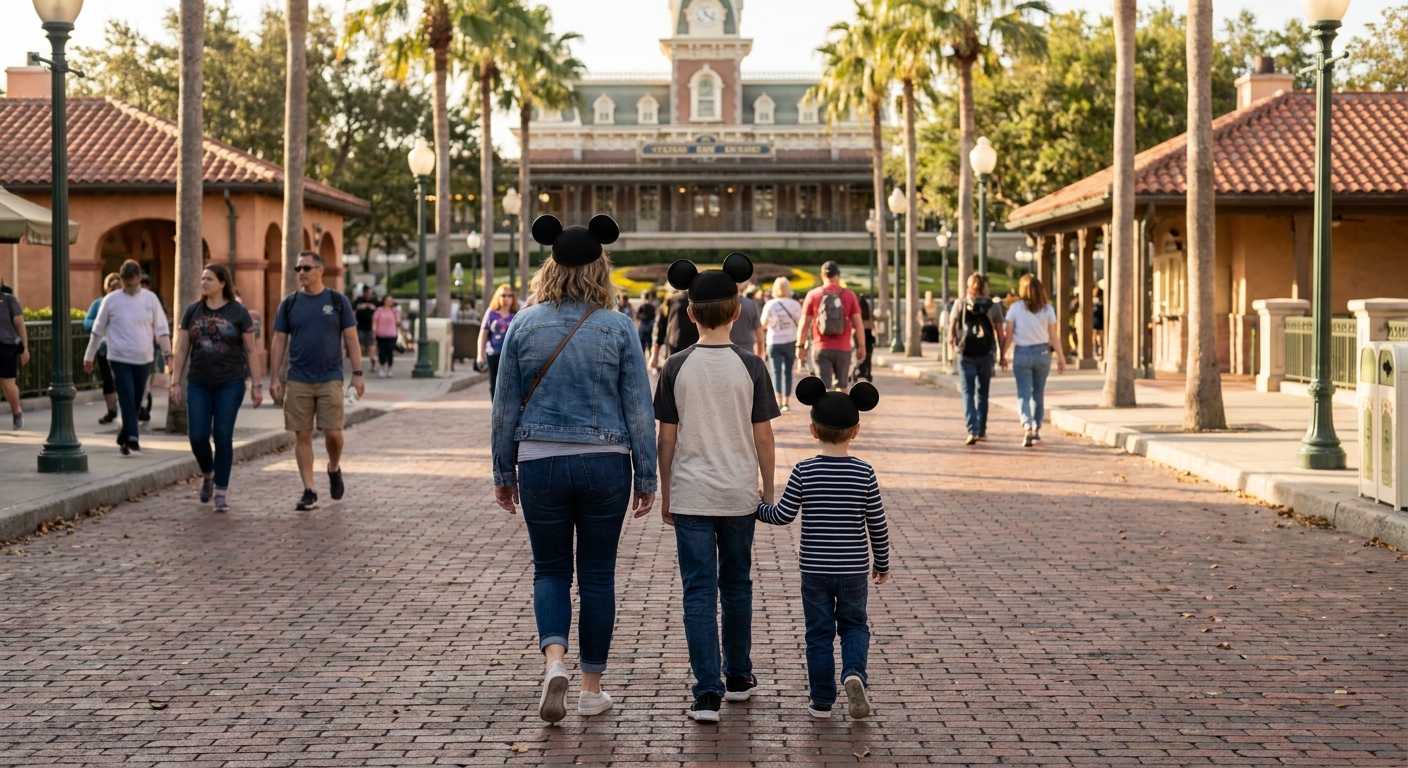
Early Theme Park Entry vs. Official Opening vs. Lightning Lane: Your Three Ways to Win the Morning
Early Entry gives you a head start, official opening rewards smart geography, and Lightning Lane gets you certainty for a price. Pick based on what your group can actually pull off before 9 AM.
All three work. They cost different things. Early Entry asks for a 30-minute head start and a disciplined group. Official opening asks you to choose your area carefully. Lightning Lane asks for money.
The Three Approaches, Side by Side
| Early Theme Park Entry | Official Opening (Rope Drop) | Lightning Lane | |
|---|---|---|---|
| Who qualifies | Disney Resort and other qualifying hotel guests, every day of the stay (check-in and check-out days included) | Everyone with a valid ticket | Anyone who buys it |
| What it costs | Free with an eligible hotel | Free, if you arrive early | Bought per day, and the price changes by date and demand |
| Typical time saved | Often the most of the three for your first ride. A headliner that may post around 75 minutes later can be closer to 30 minutes early | Moderate. One or two short waits if you pick the right area | Varies. Multi Pass smooths the middle of the day, and Single Pass protects one headliner |
| Effort | High: early alarm, transportation, a group ready to move | High: be at the gates well before opening | Low on the day, but it needs advance booking |
| Risk | Ride delays, and the Early Entry ride list can change | Resort guests may have already filled the big rides | Lowest risk, but you can overpay on a mild day |
| Best for | On-site families who are up early and move with purpose | Off-site families willing to skip the obvious first stop | Slower, stroller-heavy or nervous groups, one-day visits, must-do-or-tears kids |
Early Entry Is a Head Start, Not an Empty Park
Every eligible guest gets the same 30 minutes, and plenty of them use it. At Magic Kingdom, Seven Dwarfs Mine Train pulls a big Early Entry crowd. Avatar Flight of Passage can stack up the same way at Animal Kingdom. Showing up exactly when Early Entry starts puts you in the middle of that crowd.
- Aim to be at security and the tapstiles before Early Entry guests are released.
- Check the Early Entry attraction list in My Disney Experience the night before, then check again that morning. Not every land opens early, especially at Magic Kingdom.
- Choose your first ride before you leave the room. If you’re still debating at the hub, you’re handing your spot to the family behind you.
Pro tip: The best first ride isn’t always the most famous one. It’s the ride where arriving 10 minutes earlier cuts your wait the most.
How Off-Site Guests Still Win
If you don’t have Early Entry, don’t go where resort guests have been lining up for 30 minutes. By official opening, Seven Dwarfs Mine Train, Peter Pan’s Flight and Space Mountain may already have long lines. Go to the areas Early Entry hasn’t filled yet.
- [ ] Be at the gates about 60 minutes before official opening, not just before the Early Entry time.
- [ ] At Magic Kingdom, start in Adventureland or Frontierland if those rides are posting low, then use live waits to decide when to head back to Fantasyland.
- [ ] Skip Mine Train as your opener unless the posted wait is surprisingly low.
- [ ] At Hollywood Studios, if Slinky Dog Dash spikes right away, go to Mickey & Minnie’s Runaway Railway instead of waiting it out.
- [ ] At Animal Kingdom, if Flight of Passage is already backed up, Na’vi River Journey or Kilimanjaro Safaris can be better first rides.
- [ ] Have a backup ride ready before you walk in.
Lightning Lane: Buy Certainty Only Where It Counts
Lightning Lane is Disney’s standard skip-the-line system, and it comes in two versions:
- Multi Pass is bought per day. Disney Resort guests can start booking selections 7 days before arrival, and off-site guests 3 days before. The window opens at 7:00 AM Eastern. After you use a selection, or its window passes, you book the next one in My Disney Experience, one at a time. Book ahead. Never wait until the morning of your visit.
- Single Pass is sold separately for the top headliners: TRON Lightcycle / Run and Seven Dwarfs Mine Train (Magic Kingdom), Guardians of the Galaxy: Cosmic Rewind (EPCOT), Star Wars: Rise of the Resistance (Hollywood Studios) and Avatar Flight of Passage (Animal Kingdom).
Here’s a simple test. If paying would only save you mild annoyance, keep the money. If it saves you from a 60- to 90-minute wait that throws off the whole day, it’s worth considering. Judge a pass by what it protects, not by the posted wait.
For most families, the best value is to pay once rather than everywhere:
- Rope drop one top priority for free.
- Use Multi Pass on the park days where it saves real time.
- Buy Single Pass only for the one ride your group would hate to miss.
Set Your Safety Net
Even the best plan fails if your first ride goes down at 8:05. SupaPark’s live alerts can watch your target ride’s status and notify you when it goes down, so you can switch to your backup quickly. The best-time-to-ride forecaster at supapark.com shows when your backup rides usually have their shortest waits later in the day. SupaPark only watches and alerts you. Any Lightning Lane booking still happens in your own My Disney Experience app.
How to Pick a Rope-Drop Target: The ‘Biggest Wait Swing’ Rule
Your first ride should be the one whose wait climbs fastest after opening, not the most famous ride in the park.
Rope drop is your scarcest resource. You get one first ride per morning, so spend it where arriving 10 minutes earlier changes your wait the most. A ride that sits near 20 minutes at 9:00 AM and 70 minutes by 10:30 AM is a strong target. A ride that holds around 15 minutes all day is a waste of the morning, however much you love it.
Pro tip: Ask “how much worse does this get if I wait an hour?” before you ask “what do we most want to ride?” The ride with the biggest swing is usually the right first move. Your second-favorite ride with a huge swing beats your favorite ride with a flat line.
Good Targets vs. Bad Targets
| Ride profile | Morning value | What to do |
|---|---|---|
| Short at opening, steep climb by mid-morning (Seven Dwarfs Mine Train, Peter Pan’s Flight, Slinky Dog Dash, Space Mountain) | High | Make it your main target or backup |
| Long all day, Single Pass ride (Avatar Flight of Passage, Rise of the Resistance) | High, but contested | Target it only if you’re early in the crowd, or decide whether to pay instead |
| Big-capacity show or low-wait ride (Mickey’s PhilharMagic, Buzz Lightyear’s Space Ranger Spin) | Low | Use it as a follow-up or a midday break |
| Water ride or ride with unreliable status (Tiana’s Bayou Adventure) | Varies | Check live status first, and don’t build the whole morning around it |
The classic “bad target” is an air-conditioned, high-capacity attraction that rarely has a real line. Walt Disney’s Carousel of Progress used to be the textbook example. It’s currently closed for a reimagining and expected back in 2027, but the lesson still holds: rides like that are great around 1:00 PM when everyone is melting. They aren’t where your best minutes go. Save shows like PhilharMagic for the late-morning crush.
Always Pick One Main Target and One Backup
Rides open late, go down at opening, or post a wait that’s already spiked. If you’re still deciding at the hub, you’ve given your head start to the family behind you. Lock in both before you leave the room, and keep the backup nearby. Crossing the park for Plan B burns the time you got up early to save.
Simple pairings that work:
- Magic Kingdom: Seven Dwarfs Mine Train, then Peter Pan’s Flight if Mine Train is backed up
- Hollywood Studios: Slinky Dog Dash, then Mickey & Minnie’s Runaway Railway if Slinky misbehaves
- Animal Kingdom: Avatar Flight of Passage, then Na’vi River Journey (same land, gentler ride)
How Height, Nervous Riders, and Rider Switch Change the Math
The biggest swing doesn’t matter if half your group can’t ride it or won’t.
- Height requirements: Check every headliner against your shortest rider before the trip. Rock ‘n’ Roller Coaster Starring The Muppets, for example, requires 48 inches. If your little one is under the line, a ride everyone can enjoy is usually the better first move.
- Nervous riders: Avatar Flight of Passage is a 3D simulator with strong motion. With motion-sensitive riders, open with Na’vi River Journey or Kilimanjaro Safaris and leave Flight of Passage to the people who actually want it. Seven Dwarfs Mine Train is a gentle first “real” coaster, and a front-row request makes it feel calmer.
- Rider Switch: One adult rides while the other waits with a child who’s too short or not interested, then they swap without getting back in line. This makes a thrill ride workable as the first target for mixed-height families. The second rider skips the climbing standby line, so the early timing pays off for both adults.
Rank Your Rides Before You Land
Choose your first ride before the trip, not at the gate:
- [ ] Check SupaPark’s best-time-to-ride forecaster (free) to see which rides are shortest at opening and climb fastest after. Those are your best swing candidates.
- [ ] Use the same forecaster to see when your low-swing rides usually bottom out later, so they aren’t competing for your morning.
- [ ] Score each ride on SupaPark’s ride priority list, from 5 (Must ride) to 0 (Skip). Unranked isn’t the same as 0, so score the ones you’d actually skip. The rope-drop planner and Merlin both put rides in your priority order.
- [ ] Write down your main target and backup per park, and check them against your shortest rider’s height.
- [ ] The morning of, set a live alert on your main target. If it goes down before you get there, you’ll know in time to switch to the backup.
With a ranked list plus forecaster data, the right first ride is usually clear: your highest-priority ride with the biggest wait swing that everyone in the group can ride.
Magic Kingdom Rope Drop: Fantasyland vs. Tomorrowland vs. Adventureland/Frontierland
Choose your Magic Kingdom route before you get to the hub. At rope drop, Magic Kingdom rewards the group that commits to one land, rides two things close together and doesn’t zigzag.
Magic Kingdom has three real opening routes. Each one suits a different kind of group, and each can fall apart in its own way. Pick yours the night before, based on hotel status, heights and how much energy your group has. Then check the Early Entry list in My Disney Experience that night and again in the morning. Which lands and rides open for Early Theme Park Entry can change, and Magic Kingdom often runs only part of the park during that 30-minute window.
The Three Routes, Compared
| Route | Anchor ride | Best for | Risk | Follow-up rides |
|---|---|---|---|---|
| Fantasyland | Seven Dwarfs Mine Train | On-site families where everyone meets the height requirement | The biggest Early Entry crowd goes here, so the line can stack up fast | Peter Pan’s Flight, then nearby lower-pressure Fantasyland rides |
| Tomorrowland thrill | Space Mountain | Teens, adults, coaster-ready groups | Waits tend to jump once the whole park opens | Buzz Lightyear’s Space Ranger Spin |
| Adventureland/Frontierland | Big Thunder Mountain Railroad or Tiana’s Bayou Adventure | Off-site guests without Early Entry | Tiana’s is a water ride, so weather and downtime can wreck the plan | Pirates of the Caribbean, Jungle Cruise |
Fantasyland: Mine Train First, Peter Pan as the Pivot
Mine Train gets the classic rope-drop vote because it saves you the most waiting later in the day. That only counts if your whole group can ride. If you have a kid right at the height line, check before you go, not at the entrance.
- [ ] Go to Seven Dwarfs Mine Train first if it’s your top priority and everyone is tall enough.
- [ ] If Mine Train is already backed up or temporarily down, switch to Peter Pan’s Flight right away. Don’t wait around hoping it reopens.
- [ ] After Peter Pan, fill time with nearby lower-pressure rides. Don’t treat them as the main target.
- [ ] Save Mickey’s PhilharMagic for later. It’s a big theater that rarely builds a painful line, so it doesn’t deserve your first 30 minutes.
Pro tip: The best Magic Kingdom rope-drop ride isn’t always the one with the longest wait later. It’s the one with the longest wait that your group can actually reach, ride and recover from without wrecking the next hour.
Tomorrowland Thrill Route: Space Mountain, Then Buzz
If your group has energy, go right at the hub. Space Mountain is a big Early Entry pick when it’s on the list, and its line tends to grow once everyone else gets in. Ride it first. Then walk a few steps to Buzz Lightyear’s Space Ranger Spin, if it’s running, for an easier follow-up. Buzz is interactive and works for all ages, so it suits mixed groups where not everyone wanted the coaster.
TRON Lightcycle / Run Changes the Math
TRON is a Lightning Lane Single Pass ride, sold separately. It is not part of Multi Pass. That affects your morning in two ways:
- If you’re buying the Single Pass for TRON, don’t spend your rope drop on it. Use the morning on standby rides like Space Mountain or Mine Train, and ride TRON at your Single Pass time.
- If you’re not buying it, check the current standby setup in My Disney Experience before your park day so TRON doesn’t throw off your plan. Your Multi Pass selections won’t cover it either way.
The same logic applies to Mine Train, which is also Single Pass. If your kid’s whole trip is about that ride and your group isn’t good at early mornings, buying the Single Pass might be the calmer choice. If you’re on-site and ready to move fast, Early Entry can often get you the same ride for free.
Adventureland/Frontierland: The Off-Site Play
If you don’t get Early Entry, don’t start where resort guests have been lining up for 30 minutes. By official opening, Mine Train, Peter Pan and Space Mountain have often soaked up the fastest early arrivals. Go left at the hub instead.
- [ ] Be inside and at the rope before official opening.
- [ ] Skip Mine Train first unless the posted wait is surprisingly low.
- [ ] Start with Big Thunder Mountain Railroad, Pirates of the Caribbean or Jungle Cruise, depending on what’s open and what’s posting low.
- [ ] Watch live waits to decide when to head back to Fantasyland. Waits there often drop as the Early Entry crowd moves on.
Check Tiana’s Bayou Adventure’s status before you build your morning around it. It’s popular, but water rides are exposed to weather and operational problems. If it’s running well and your group wants it, it can be a strong first or second ride. If it’s down or unstable, skip it for now. SupaPark’s live alerts can ping you the moment a ride goes down or reopens, so you can switch plans before the people around you notice.
The Coffee Split
Don’t let one food stop take over the whole morning. If someone needs coffee, send that person to Main Street Bakery while the rest of the group heads to ride one. Meet up after the first ride. That small split can save your rope-drop head start.
EPCOT Rope Drop: Start Based on Your Entrance, Not Your Ego
At EPCOT, pick your first ride by which gate you’ll walk through, not by which ride sounds best.
EPCOT is big, and it has two entrances that lead to completely different mornings. If your plan ignores which one you’re using, you’ll end up crossing the whole park before breakfast while the families who chose the nearby ride are already on their second attraction.
Two Entrances, Two Different Plans
- Main entrance (front of the park): This is where you’ll arrive by monorail, bus, or car. You walk in through World Celebration, so Soarin’ and Guardians of the Galaxy: Cosmic Rewind are your natural opening rides.
- International Gateway (back of the park): This is the entrance between France and the United Kingdom. Guests from the BoardWalk-area hotels usually walk here, and Skyliner riders arrive here too. Remy’s Ratatouille Adventure is only a few steps away, and Frozen Ever After makes a strong second ride.
| Main Entrance | International Gateway | |
|---|---|---|
| Best first ride | Soarin’ (calm, efficient) or Cosmic Rewind (if it’s your top priority) | Remy’s Ratatouille Adventure |
| Smart second ride | Whichever of the two you skipped, or another nearby World Celebration/World Nature ride | Frozen Ever After |
| Best for | Thrill-seekers, groups arriving by monorail or bus | Families who’d rather skip the coaster and want a gentler start |
| Biggest risk | Waiting standby for Cosmic Rewind and losing your whole morning | Walking to the front for a coaster and giving up your head start |
| Walking penalty if you ignore it | Long walk around the lagoon to France | Long walk back to the front |
From the International Gateway: Remy, Then Frozen
Remy’s Ratatouille Adventure is the obvious first ride. It sits right next to the gate, it’s family-friendly, and standby lines usually grow as the day goes on. Ride it first, then head toward Norway for Frozen Ever After.
You still have to walk around part of World Showcase to get from Remy to Frozen, so move with purpose. But that walk is far shorter than marching to the front of the park and back. Both rides work for nearly every age group, so nobody has to sit out.
From the Front: Soarin’ or Cosmic Rewind?
Soarin’ is the underrated first ride. It loads lots of guests at once, it’s gentle enough for kids and nervous riders, and it gives you an easy win right away. That matters most with strollers, a slow-to-wake group, or anyone who wants a softer start.
Guardians of the Galaxy: Cosmic Rewind is a Lightning Lane Single Pass ride, so the real question is whether to spend morning effort or money:
- Try standby if you’re on-site with Early Theme Park Entry, your group is up early and fed, and Cosmic Rewind is your top priority. Arriving early can make the standby wait reasonable.
- Pay for certainty if you’re off-site, have only one EPCOT day, or have a group that won’t move fast at opening. In those cases, a standby attempt can take over your whole morning.
- Skip both if your group is only mildly interested. Spend the morning on Soarin’ and Test Track instead.
The test: if a Single Pass only saves you mild inconvenience, keep your money. If it saves the structure of your whole day, buy it.
Pro tip: At EPCOT, the best rope-drop target is usually the one that keeps you from zigzagging. Saving 15 minutes in line isn’t a win if you spend those 15 minutes walking the wrong way across the park.
Don’t Cross the Park Before Breakfast
Planning a front-entrance Cosmic Rewind ride while entering through International Gateway, or planning Remy while arriving by monorail, is a classic mistake. On a warm morning that walk will wear out kids, stroller pushers, and anyone who skipped breakfast before ride two even starts.
Your EPCOT morning checklist:
- [ ] Confirm which entrance your transportation actually uses.
- [ ] Pick one first ride and one backup near that entrance.
- [ ] Eat something before you leave, or plan a quick bite after ride one.
- [ ] Decide on Cosmic Rewind (standby, Single Pass, or skip) before your park day, not at the tapstiles.
- [ ] Check live ride status that morning. Don’t assume any ride is open.
Festival Season Changes the Afternoon More Than the Morning
When an EPCOT festival is running, crowds often build later in the day as visitors come in for food booths and World Showcase strolling. That makes your morning even more valuable. Do your ride-heavy touring early, then spend the afternoon on festival food.
Check Status Before You Commit
Rides go down, open late, or have temporary closures, and a plan built on a closed ride falls apart quickly. Check live ride status and current waits before you walk to your first target. SupaPark (supapark.com) shows live waits and sends an alert when a ride goes down, so you can switch to your backup before the crowd near you does.
Hollywood Studios Rope Drop: Slinky Dog Dash, Rise of the Resistance, or Runaway Railway?
Slinky Dog Dash is usually the safest rope-drop win, Rise of the Resistance pays off most but carries the most risk, and Runaway Railway is the easy start for groups who don’t want to rush.
When the rope drops at Hollywood Studios, the crowd tends to split three ways. Families with kids head for Toy Story Land and Slinky Dog Dash. Star Wars fans go deep into Galaxy’s Edge for Rise of the Resistance. A smaller, calmer group peels off to Mickey & Minnie’s Runaway Railway at the Chinese Theater, which is the closest of the three to the entrance. Pick your lane before you reach the tapstiles. If you’re still deciding at the end of Hollywood Boulevard, you’ve already lost your spot.
Why Slinky Is the Family Favorite
Slinky Dog Dash is a coaster that both kids and grown-ups enjoy. It’s a fun outdoor ride without being scary, and standby lines often get long early and stay long. That makes it a good rope-drop pick, because getting there 10 minutes earlier can save you a lot of waiting later. Slinky is on Lightning Lane Multi Pass, not Single Pass, so riding it standby first thing frees up one of your Multi Pass selections for something else.
Why Rise Is the Higher-Stakes Pick
Star Wars: Rise of the Resistance is a Lightning Lane Single Pass ride, sold separately. That’s why riding it standby at opening is so tempting: if it works, you skip a purchase. The catch is that Rise is long, complicated, and has a reputation for downtime, including delayed openings. If it’s loading smoothly, you get the biggest headliner in the park for free. If it stalls, you’re stuck at the back of the park while Slinky’s line grows.
Decision Table by Group Type
| Your group | First ride | Why | Second move |
|---|---|---|---|
| Thrill-seekers | Rise of the Resistance (if loading) | Biggest wait you can avoid without paying for Single Pass | Millennium Falcon: Smugglers Run, then Slinky |
| Young kids | Slinky Dog Dash (if everyone meets the height requirement) | Coaster kids can handle; standby builds fast | Toy Story Mania!, then Alien Swirling Saucers |
| Star Wars fans | Rise, with Smugglers Run as the fallback | Galaxy’s Edge is the reason you came | Stay in the land and explore |
| Short on time / one Studios day | Buy Rise Single Pass, rope drop Slinky | Covers both headliners without gambling your morning | Use Multi Pass for the next must-dos |
| Slow starters / stroller-heavy | Runaway Railway | Closest to the entrance, no rushing needed | Book Multi Pass for Slinky later in the day |
Pro tip: If Rise is your must-do and you only have one Hollywood Studios day, consider buying the Single Pass and spending your rope drop on Slinky instead. That way your free morning covers the ride that’s hard to get standby, and the money covers the ride most likely to break down.
Backup Plan If Rise Is Delayed
Don’t wait long. If Rise posts a big wait right away, isn’t loading, or is listed as delayed, move on within a few minutes:
- [ ] Want to stay in Star Wars? Walk to Millennium Falcon: Smugglers Run, which is in the same land.
- [ ] Want an easy ride the whole family can do? Head back to Mickey & Minnie’s Runaway Railway.
- [ ] Still want a coaster? Check Slinky’s posted wait. It may already be climbing, but it’s often still better than its afternoon level.
- [ ] Check back on Rise later. Once it reopens, the line usually builds again. Mid-morning and the last hour before close are worth a look.
Don’t stand around refreshing the app while the rest of the park fills up. A SupaPark ride watch can ping you when Rise goes down or comes back up, so you can switch plans quickly instead of hovering.
Good Follow-Up Rides
Toy Story Land: After Slinky, walk straight to Toy Story Mania! before its line builds. Alien Swirling Saucers is a short, kid-friendly ride to finish off the land.
Galaxy’s Edge: After Rise, Smugglers Run is the obvious next ride. It lets six people split pilot, gunner, and engineer jobs, and the interactive part often makes it a favorite with groups.
Thrill add-on: If your group wants another coaster after Slinky or Rise, Rock ‘n’ Roller Coaster Starring The Muppets on Sunset Boulevard is a good next stop (48-inch height requirement).
Check Operations Before You Commit
Which rides open early and when the park opens can change. Check the Early Theme Park Entry list in My Disney Experience the night before, then check it again in the morning. On-site guests who get the 30-minute Early Entry head start should be in position before Early Entry begins, not when it starts. If you’re off-site, assume Slinky and Rise have already taken in a wave of resort guests by official opening. Check live wait times before you head off, because Runaway Railway may turn out to be the shorter line.
Animal Kingdom Rope Drop: Is Avatar Flight of Passage Worth Your Morning?
Flight of Passage is the obvious prize, but because it’s a Single Pass ride, your real choice is between paying money and getting there early.
You can’t get Avatar Flight of Passage with Lightning Lane Multi Pass. It’s sold separately as a Lightning Lane Single Pass, and the price changes by date. So you have two ways to avoid a brutal standby line: pay for it, or arrive early. Pay if this ride is the most important thing your group wants to do at Animal Kingdom, or if mornings tend to go badly for your crew. If not, keep the money and arrive early instead. The only question is whether your group can actually be at the gate on time.
The Early Entry Trap for Off-Site Guests
Disney Resort guests get Early Theme Park Entry 30 minutes before official opening. When Flight of Passage is on the Early Entry list, a lot of those guests go straight to Pandora. If you’re staying off-site and walk in at official opening, you may find that a big crowd has been lining up there for half an hour. Instead of a short rope-drop line, you’d start your day in a long one.
The off-site move: let Pandora absorb the early crowd and go somewhere it hasn’t reached yet.
- Kilimanjaro Safaris is often a good first ride when it’s running. Animals tend to be more active in the cooler morning, and the line usually builds as the day warms up.
- Expedition Everest in Asia is a solid first ride for thrill-seekers who aren’t spending the morning on Pandora.
- Na’vi River Journey is a slow, gentle boat ride, and its standby line often gets out of proportion to how long the ride lasts. If you’re in Pandora early anyway, ride it right after Flight of Passage while the line is still short. If you skip Pandora at opening, hold it for later and check the live waits before you commit.
Pro tip: Animal Kingdom often closes earlier than the other parks, so your morning is a bigger share of the whole day. You get fewer evening hours to make up for a slow start. A wasted first hour costs you more here than it would at EPCOT or Magic Kingdom.
Pandora-First vs. Skip-Pandora at Opening
| Pandora-First Plan | Skip-Pandora Plan | |
|---|---|---|
| Best for | On-site guests with Early Entry, or groups where Flight of Passage is the must-do | Off-site guests, families with motion-sensitive riders, or groups buying Single Pass |
| First move | Go straight to Flight of Passage, then Na’vi River Journey | Kilimanjaro Safaris or Expedition Everest, then other lands |
| Main upside | Gets the hardest standby ride in the park done early, for free | Avoids the Early Entry crowd and catches wildlife at a better time of day |
| Main risk | You arrive at official opening and find a big crowd already in line | Flight of Passage stays long all day unless you pay or wait for a late-day dip |
| Cost | Free, if your morning actually goes to plan | Free, or the price of a Single Pass if you want the ride guaranteed |
| What happens if you wait | Not much: you’ve already done the hardest ride | Flight of Passage standby can stay heavy for much of the day, so plan around it on purpose |
Know Your Riders Before You Run
Flight of Passage is a 3D motion simulator with a strong flying sensation. If someone in your group gets motion sick, don’t build the whole morning around a ride they’ll skip. Start with Na’vi River Journey or Kilimanjaro Safaris and send only the people who really want Flight of Passage. Rider Switch can help if you have little ones who don’t meet the height requirement.
When the Single Pass Makes Sense
Buy it if any of these is true:
- This is your only Animal Kingdom day and Flight of Passage is the ride your group most wants.
- Your group is slow in the mornings, has a lot of strollers to manage, or is easily rattled.
- You’re off-site and expect a big Early Entry crowd to be ahead of you.
Skip it if you’re on-site, up early, and ready to head straight to Pandora. In that case Early Entry gets you the same result without paying extra. A simple test: if paying only saves you a mild annoyance, keep the money. If it saves you a 60- to 90-minute line that would wreck your morning, it’s worth considering.
Your Animal Kingdom Morning Checklist
- [ ] Check the Early Entry attraction list in My Disney Experience the night before, then check it again that morning.
- [ ] Decide between Pandora-first and skip-Pandora before you leave the room, not at the entrance.
- [ ] Pick one backup in case Flight of Passage is down or already has a long line.
- [ ] Arrive well before your entry time, whether that’s Early Entry or official opening.
- [ ] Hold off on snacks, shopping, and photos until after your first ride.
- [ ] Watch live waits and ride status so you can change plans quickly.
SupaPark at supapark.com tracks live Flight of Passage waits, shows when they tend to be shortest, and alerts you if the ride goes down or the line drops. You still buy any Single Pass in My Disney Experience, but you’ll know quickly whether you need to.
Park-by-Park Rope-Drop Cheat Sheet
The short version: pick one target and one nearby backup for each park, enter where that target is, and switch to Lightning Lane or standby once posted waits stop rewarding the early alarm.
Screenshot this table before your trip. The rows are listed in the order you’ll actually use them in the morning.
| Magic Kingdom | EPCOT | Hollywood Studios | Animal Kingdom | |
|---|---|---|---|---|
| Best Early Entry target | Seven Dwarfs Mine Train or Peter Pan’s Flight. Space Mountain if your group wants thrills. | Frozen Ever After or Remy’s Ratatouille Adventure if you come in the back. Soarin’ if you come in the front. | Slinky Dog Dash | Avatar Flight of Passage, if it’s on that day’s Early Entry list |
| Best off-site target | Adventureland or Frontierland rides, which Early Entry hasn’t already drained | Whichever headliner is closest to your entrance | Mickey & Minnie’s Runaway Railway | Kilimanjaro Safaris or Na’vi River Journey |
| Backup ride | Peter Pan’s Flight, then nearby Fantasyland rides | The other ride in your entrance’s pair | Runaway Railway, or Galaxy’s Edge for Star Wars fans | Na’vi River Journey |
| Single Pass ride here | TRON Lightcycle / Run, Seven Dwarfs Mine Train | Guardians of the Galaxy: Cosmic Rewind | Star Wars: Rise of the Resistance | Avatar Flight of Passage |
| Best entrance | Main gate (count your ferry, monorail or bus time honestly) | International Gateway for World Showcase rides, main entrance for Soarin’ | Main entrance. Turn toward your target right away. | Main entrance. Head straight back to Pandora. |
| Mistake to avoid | Making the whole group wait at Main Street Bakery | Crossing the park before your first ride | Standing in a stalled Slinky line and hoping | Arriving at official opening and walking into a Flight of Passage line Early Entry guests already filled |
| Switch to LL or standby | Usually 60–90 min after official opening, or once your target posts around 45+ min | After your first two nearby rides, roughly 60–90 min in | Usually after one or two standby rides, before the late-morning crush | Usually after Pandora, or once the Safari line starts growing |
Early Entry ride lists can change. Check them in My Disney Experience the night before and again that morning. Treat every “Early Entry target” above as conditional on that list.
How to read each column
- Early Entry vs. off-site targets are different on purpose. Resort guests may have been lining up for 30 minutes before you get in. If you’re off-site, don’t start at Seven Dwarfs Mine Train unless the posted wait is surprisingly low. Go where the Early Entry crowd hasn’t been.
- The backup has to be close by. If your backup is on the other side of the park, the walk can cost you most of what you gained by arriving early.
- The Single Pass row is a budget decision. If you buy the Single Pass for that park, take that ride out of your morning plan and use rope drop on the next-biggest ride.
- Switch times are guidelines, not rules. Once the line at the next ride is as long as it would be at midday, your early start has done its job. Move on to your Lightning Lane return times or to rides that stay short.
Park notes the table can’t fit
Magic Kingdom: Check whether Tiana’s Bayou Adventure is running before you plan around it. Water rides go down for weather and maintenance hiccups, so don’t build your first hour on it until you’ve seen it open.
EPCOT: The ride closest to your entrance usually beats the bigger ride across the park. A 15-minute shorter line doesn’t help if you spend it walking.
Hollywood Studios: Give Slinky Dog Dash about 10 minutes. If it isn’t loading or the posted wait jumps, go to Runaway Railway. Rock ‘n’ Roller Coaster Starring The Muppets (48-inch height requirement) is worth a quick live-wait check if your group rides thrill coasters.
Animal Kingdom: Flight of Passage is a 3D flying simulator with a lot of motion. If some of your group gets motion sick, send them to Na’vi River Journey or the Safari while the others ride.
Pro tip: The best rope-drop ride isn’t always the most famous one. It’s the ride where getting there 10 minutes earlier cuts your wait the most. If a ride stays short all day, save it for later and use your morning on one that doesn’t.
Morning-of checklist
- [ ] Confirm your park’s Early Entry list in My Disney Experience the night before and again that morning
- [ ] Agree on ride one and the backup before you leave the room
- [ ] Get to the tapstiles before the crowd is let in, not at the posted start time
- [ ] Let the coffee or breakfast person split off while everyone else rides, then meet up after ride one
- [ ] Turn on a live alert for your first ride so you hear right away if it goes down (SupaPark at supapark.com, free on the web, iPhone and Android)
- [ ] Check the best-time forecaster for your backup rides so you know which can wait until afternoon
- [ ] At your switch time, stop doing standby and start using your Lightning Lane return times
SupaPark only sends alerts. Any Lightning Lane change still gets booked in My Disney Experience.
Cost Breakdown: Rope Drop vs. Lightning Lane Single Pass vs. Multi Pass
Only pay for access when it protects something that matters. Saving a few minutes of annoyance isn’t worth the money.
Every faster morning costs something. Rope drop costs sleep, energy and a family that’s actually ready. Lightning Lane costs money. Disney changes Lightning Lane prices by date and demand, so a pass can be worth it on Tuesday and a skip on Thursday of the same week. Check the price for your date in My Disney Experience, and don’t assume last trip’s price still applies.
The Morning Options, Compared
| Option | What you pay | What it protects | Best for | Weak spot |
|---|---|---|---|---|
| Rope drop (free) | Early alarm, transportation stress, skipped breakfast, morning energy | One or two headliners before waits climb | On-site guests with Early Theme Park Entry and groups that move fast | Falls apart fast if your group is slow, unfed or still packing the stroller |
| Single Pass | Paid à la carte, per ride, per day | One top headliner: TRON Lightcycle / Run, Seven Dwarfs Mine Train, Cosmic Rewind, Rise of the Resistance or Flight of Passage | One-day visits, a must-do ride, nervous or late-starting groups | Covers one ride and does nothing for the rest of the day |
| Multi Pass | Paid per day, per person | A smoother middle of the day, with advance picks plus refills | Busy weeks, kids with short attention spans, Hollywood Studios and Magic Kingdom days | Easy to overpay on slow days or short park visits |
| Combination | Some sleep plus some money | Rope drop for one ride, paid access for another | Most families | Takes a little planning |
How to Run the Math
Use the real price from My Disney Experience, then check it two ways:
- Cost per ride: divide the price by the number of rides it realistically gets you. A Multi Pass that only gets you two rides on a short park day is a very different deal from one that gets you six.
- Cost per hour saved: take the typical standby wait minus your Lightning Lane wait, then turn it into hours. A pass that saves 90 minutes on one ride is worth more than one that saves 20 minutes on each of three rides, because it saves more time in total and keeps your whole plan on track.
Pro tip: Judge paid access by what it protects, not by the posted wait. A 60-minute posted wait at noon may not matter if that ride drops to 25 minutes near closing. A ride your kid has talked about for six months does matter, because your whole day depends on it.
Scenario 1: One Magic Kingdom Day
This is where a Single Pass makes the most sense. With one day, you can’t come back tomorrow if Seven Dwarfs Mine Train has a long wait or goes down mid-morning. Here’s the move: rope drop one priority for free (Peter Pan’s Flight or Space Mountain), buy a Single Pass only for the ride your group would hate to miss, and add Multi Pass if it’s a busy week. If someone needs coffee, send one person to Main Street Bakery while everyone else heads to the first ride, so a snack stop doesn’t eat your morning.
Scenario 2: A Multi-Day On-Site Trip
You get Early Theme Park Entry (30 minutes early) every day, including check-in and check-out days. Over several days, that often gives you the same advantage a Single Pass would. If you miss a ride Monday, you can rope drop it Wednesday. Save Multi Pass for your busiest park days rather than buying it every day, and treat Single Pass as an exception.
Scenario 3: A Tight Budget
Often the smartest purchase is no purchase. A trip without paid access usually looks like this:
- [ ] Arrive before official opening, not right at it
- [ ] Agree on ride one and a backup before you leave the room
- [ ] Ride two headliners that are close together before 10:00 AM
- [ ] Do shows and lower-wait rides during the late-morning rush
- [ ] Use the last hour before close, when waits often drop as families leave for bedtime, buses or fireworks
Skipping paid access is the right call when your group truly moves early, you have more than one day in a park, or the ride is only a nice-to-have.
Scenario 4: Be Our Guest vs. a Single Pass
Neither one is automatically the better buy, because they solve different problems. A sit-down meal like Be Our Guest gets you a calm, air-conditioned anchor and a meal you were going to buy anyway. A Single Pass gets you certainty on one ride. Here’s how to choose:
- Pick the Single Pass if you have one Magic Kingdom day, it’s a busy week, your family doesn’t do mornings, or the trip revolves around TRON or Mine Train.
- Pick the meal if you’re on-site with Early Entry and your group can ride the headliner at rope drop. That way you get both and only pay once.
- Book the meal smart: dining reservations open 60 days before arrival at 6:00 AM Eastern. If it’s full, SupaPark’s Drop Watch can alert you when a cancellation opens a table, and then you book it yourself in My Disney Experience.
When Skipping Is the Smart Move
You never have to spend money on ride access. Skip it when Early Entry already covers your must-do ride, when the ride you’d pay for is quieter at another time of day, or when paying only saves you mild annoyance. To check that before you pay, supapark.com shows live waits, best-time-to-ride patterns, Lightning Lane availability, and alerts when a ride’s wait drops.
When Lightning Lane Multi Pass Beats Rope Drop (and How to Combine Them)
Rope drop and Multi Pass do different jobs: rope drop wins you the first hour, and Multi Pass protects the rest of the day. The best plans use them for different rides.
Many families treat these as an either/or choice. They’re not. Rope drop gives you one or two big standby wins for free. Multi Pass smooths out the late morning and afternoon, when standby lines are at their worst. The usual mistake is overlap: buying Multi Pass and then booking the same ride you were going to rope drop anyway.
How Multi Pass Actually Works
Multi Pass is not a scramble on the morning of your visit. It works like this:
- [ ] Buy it for each park day. Prices change by date and demand, so check the price Disney shows for your day and don’t rely on what you paid last trip.
- [ ] Book your first selections in advance. Disney Resort guests can start 7 days before arrival, for the whole stay. Off-site guests start 3 days before. The window opens at 7:00 AM Eastern on your eligible day.
- [ ] Refill as you go. Once you use a selection, or its return window passes, you can add another, one at a time, in My Disney Experience.
The refill step is where most of the value is. Your advance picks get the day started, but a sharp group can keep adding rides all afternoon.
The Combined Play: Don’t Book What You’ll Rope Drop
The strongest setup follows two rules:
- Rope drop a ride that isn’t in your Multi Pass selections. Your morning standby win should be a ride you didn’t pay to skip. Otherwise you’ve used your best free hour on a ride you’d already covered.
- Set your first Lightning Lane return time for after your first hour. Rope drop is when standby lines are short. If your first return is at 9:15, you’ll leave the line you got up early for. If it starts around 10:00 or later, you’re using paid access right when standby waits climb.
| Park | Rope drop (standby) | Good Multi Pass picks for later |
|---|---|---|
| Magic Kingdom | Seven Dwarfs Mine Train (Single Pass, not in Multi Pass) or Space Mountain | Peter Pan’s Flight, Big Thunder Mountain Railroad |
| Hollywood Studios | Slinky Dog Dash | Mickey & Minnie’s Runaway Railway, Tower of Terror |
| EPCOT (front entrance) | Soarin’ | Frozen Ever After, Remy’s Ratatouille Adventure |
| Animal Kingdom | Avatar Flight of Passage (Single Pass) | Na’vi River Journey, Kilimanjaro Safaris |
Pro tip: Every Single Pass ride is a natural rope-drop target, because Multi Pass never covers it. If you rope drop TRON, Mine Train, Cosmic Rewind, Rise of the Resistance, or Flight of Passage, every Multi Pass selection goes to something else. You get two kinds of advantage without paying twice.
Who Gets the Most From Multi Pass
Multi Pass earns its cost when your morning can’t carry the whole day:
- Slower groups. If you realistically won’t be at the tapstiles before opening, you can’t count on rope drop. Multi Pass gives you back the time you lose.
- Stroller-heavy groups. Parking strollers, toddler naps and snack breaks break up the day. Scheduled return times fit that rhythm better than long standby lines.
- Busy weeks. Holidays and school breaks push mid-day waits up, so each Lightning Lane saves more time.
- One-day visits. With no second day to catch up, protecting the day you have is worth more.
When It Isn’t Worth It
Skip it, or buy it for only some days, if:
- You’re on-site with Early Theme Park Entry and your group really moves with purpose. One or two morning wins plus a strong closing hour may cover your must-dos.
- It’s a lower-crowd day and the forecast shows mid-day waits staying reasonable.
- Your must-do list is short, or it’s mostly Single Pass rides that Multi Pass doesn’t touch.
The test: compare the price to what it protects. If Multi Pass only saves you some mild annoyance, keep the money. If it saves your whole afternoon, buy it.
Let SupaPark Watch the Refills
Refilling is the hard part, because good return times on popular rides tend to go fast and then come back at odd moments. SupaPark tracks Lightning Lane availability, shows sell-out trends, and predicts when popular selections are likely to refill. You can set a watch on a ride and get an alert the moment a return time opens up. Free accounts get these alerts by email, and paid plans add instant push. Booking always happens in your own My Disney Experience app. SupaPark only alerts you so you can tap in before the time is gone.
It also helps with the morning half of the plan. If your rope-drop ride goes down before you reach it, a live status alert lets you switch to your backup before the crowd notices. The best-time forecaster shows when your standby rides are usually shortest later in the day.
The Night-Before and Morning-Of Rope-Drop Checklist
Most rope-drop wins are decided the night before. If your group is still choosing a first ride at the hub, the families who planned ahead will get there first.
Treat this as a pre-flight check. Every item you settle the night before is one less thing for a sleepy group to argue about at 6:45 AM.
The Night Before
- [ ] Link your hotel reservation in My Disney Experience. Early Theme Park Entry depends on your eligible hotel stay being attached to your account. Check it now, not at the tapstile.
- [ ] Check the Early Entry attraction list for tomorrow’s park. Not every ride or land opens early. At Magic Kingdom especially, confirm exactly which areas are open before you plan around a ride.
- [ ] Agree on a first ride and a backup. Example: Seven Dwarfs Mine Train first, Peter Pan’s Flight if Mine Train is down or already backed up. Everyone should know the plan before bed.
- [ ] Pick your route. Choose the bus stop, monorail line, Skyliner station, boat dock, or parking plan, and know which entrance gets you closest to your target. At EPCOT, the International Gateway and the main entrance lead to very different first rides.
- [ ] Pack the bags and fold the stroller. Put sunscreen on at the hotel, fill water bottles, and put ponchos in the bag. Anything you’d hunt for in the morning goes by the door tonight.
- [ ] Have your Lightning Lane selections booked already. Multi Pass selections open days ahead, at 7:00 AM Eastern: 7 days before arrival for Disney Resort guests and 3 days before for off-site guests. Rope drop isn’t the time to make your first booking.
- [ ] Set a watch on your first ride. A SupaPark live alert on your target’s status means you hear about a breakdown before you’ve walked all the way to Fantasyland.
Keep dining on its own schedule. Advance Dining Reservations open 60 days before arrival at 6:00 AM Eastern in My Disney Experience. That’s a different window from the 7:00 AM Lightning Lane window. If a table you wanted is gone, a Drop Watch can alert you when a cancellation frees one up, and you grab it in My Disney Experience.
The Morning Of: When to Leave
The goal is to get through security and the tapstiles before Early Entry begins, not to arrive when it starts. Recheck the Early Entry list when you wake up, because the lineup can change.
| Transport | Leave by (roughly) | The catch |
|---|---|---|
| Resort bus | 60–75 min before Early Entry | Early buses fill and may stop at other resorts first. If one is packed, take the next. |
| Monorail | 45–60 min before | Fast when it’s running. Station lines build at Magic Kingdom-area resorts. |
| Skyliner | 45–60 min before | Lines at the hub station can be long. Weather pauses happen, so keep a bus as a backup. |
| Boat | 45–60 min before | A pleasant ride, but it runs on a fixed schedule. Don’t miss the early launch. |
| Driving | 75–90 min before | Parking, the tram or walk, and (at Magic Kingdom) the ferry or monorail all add up. |
These are planning buffers, not official times, and busy weeks need more. If you’re moving between resorts before rope drop, allow at least 90 minutes. Off-site guests without Early Entry should still be at the gate well before official opening, not walking up as it opens.
Security and Tapstiles: Get Through Fast
- [ ] Open bags before you reach the bag check. Unzip every pocket, pull out stroller items, and take metal water bottles out of side pockets.
- [ ] Carry less. One bag for the group gets through much faster than four small ones.
- [ ] Have every entry ready. MagicBands on wrists, or phones open to My Disney Experience, before you reach the tapstile.
- [ ] Fold the stroller only if asked. Don’t make the line wait while you work out the latch.
- [ ] Adults go through first time with patience. First-time ticket use can include a finger scan. Let the adult who handles everyone’s tickets go first.
The No-Detour Rule
After the tapstiles, don’t stop until your first ride is done. That means no castle photos, no shops, no “let’s just look,” and no snack line. Every minute you spend on a detour gives your place in line to someone else.
Pro tip: If someone really needs coffee, split up. Send one adult to Main Street Bakery (or the nearest quick coffee at your park) while the rest of the group goes straight to ride one. Meet at the exit or the next ride. One person missing the first ride is a much smaller cost than everyone losing 30 minutes in a coffee line.
Quick Self-Check Before You Leave the Room
- [ ] Everyone has eaten something, or has a granola bar in hand
- [ ] First ride and backup confirmed
- [ ] Early Entry list checked again this morning
- [ ] Phones charged, battery pack packed
- [ ] Everyone knows the meet-up spot if the group splits
If you can tick all five, you’re ready for rope drop. If you can’t, Lightning Lane may serve your group better this morning than a rushed rope drop.
What to Do When Your Rope-Drop Ride Breaks Down
If your first ride is down or not loading at opening, move to your backup right away. Standing in a line that isn’t moving costs you the most valuable minutes of the day.
Rides break down in the morning more often than first-timers expect. Some open late after testing, some go down soon after loading starts, and water rides like Tiana’s Bayou Adventure can be thrown off by weather. You can’t control any of that. What you can control is how fast you react, and the families who do well at rope drop usually decided what to do about a breakdown before they reached the tapstiles.
Rule one: a line that isn’t moving is not a line
When a ride goes down, the crowd tends to make the same mistake. People stay put, keep refreshing the app and wait for word that it’s back up. Meanwhile the rest of the park fills in, and the nearby rides that were walk-ons five minutes ago start to build waits.
Give your target a short leash. If the line hasn’t moved, the ride isn’t loading, or the posted wait jumps suddenly, leave. A ride that comes back 40 minutes later will probably have a worse wait than if you’d ridden your backup first and come back once it settled.
Recovery picks by park
Your backup should be close, popular enough that riding it early saves real time, and not part of the same crowd surge. Here’s where to go:
| Park | If this is down… | Pivot to | Why it works |
|---|---|---|---|
| Magic Kingdom | Seven Dwarfs Mine Train | Peter Pan’s Flight | Steps away, slow-loading, and its wait builds fast |
| Magic Kingdom | Space Mountain | Buzz Lightyear’s Space Ranger Spin | Same land, family-friendly, keeps the Tomorrowland plan going |
| Magic Kingdom | Tiana’s Bayou Adventure | Big Thunder Mountain Railroad or Adventureland targets | Same side of the park, so you don’t walk back across the hub |
| Hollywood Studios | Slinky Dog Dash | Mickey & Minnie’s Runaway Railway | Works for the whole family, and its wait climbs mid-morning |
| Hollywood Studios | Rise of the Resistance | Millennium Falcon: Smugglers Run | You’re already in Galaxy’s Edge |
| EPCOT (front entrance) | Guardians of the Galaxy: Cosmic Rewind | Soarin’ | Short walk and a gentler start |
| EPCOT (International Gateway) | Remy’s Ratatouille Adventure | Frozen Ever After | Both sit near the Gateway, so no backtracking |
| Animal Kingdom | Avatar Flight of Passage | Na’vi River Journey or Kilimanjaro Safaris | Na’vi is right next door, and the safari is popular in the morning |
Pro tip: Choose your backup by distance, not fame. A slightly less exciting ride 90 seconds away beats a bigger one across the park, because when your first ride goes down, the walk is what costs you.
How SupaPark helps you react first
The breakdown itself isn’t what ruins the morning. Finding out late is. SupaPark watches live ride status and sends a “this ride just went down” alert when your target stops running, so you can head to your backup while other guests are still in line waiting.
It also covers the other side. When the ride comes back up, SupaPark shows the live wait. Set a wait-drop watch and you’ll get a ping when the wait falls to a walk-on, so you know when it’s worth going back. Rides that reopen in the morning sometimes post a short wait before word spreads, but that doesn’t always happen, so trust the live number over any assumption.
On the Free plan you get live status, live waits and alerts by email (plus your first three watch alerts by push). Silver and Gold add unlimited push alerts, which matter here because a breakdown alert is only useful if you see it right away. You can set it all up at supapark.com or in the free app on iPhone and Android.
Your breakdown checklist
- [ ] Choose one primary target and one nearby backup the night before
- [ ] Set a status alert and a wait-drop watch on your target in SupaPark
- [ ] Check live status as you go through the tapstiles, not after you’ve walked across the park
- [ ] If the ride isn’t loading, go straight to your backup
- [ ] Watch for the wait-drop alert and go back to your first choice once it’s running steadily
- [ ] Use the best-time-to-ride forecaster to find a later window if the morning doesn’t work out
What Disney does when a ride goes down
This is where you need to be careful. Disney’s handling of downtime depends on the situation: whether you were already in line, whether you held a Lightning Lane selection for that ride, and what the attraction team decides that day. The options can change, and they aren’t always the same from one breakdown to the next.
So don’t count on any particular compensation. If you held a Lightning Lane for a ride that went down, check My Disney Experience for any update on your selection, then ask a Cast Member at the attraction or at Guest Experience what’s available. Ask calmly and specifically, then follow what they tell you. Be suspicious of any “guaranteed” rule you read online.
What to remember: treat a breakdown as a cue to move. Agree on your backup before you arrive, let live alerts tell you when your first ride is running again, and save Disney’s downtime questions for a Cast Member.
Rope Drop With Little Kids, Strollers, and First-Timers
With little kids, rope drop isn’t about getting the most rides. It’s about one big win before anyone melts down, then a planned break.
A family of five with a stroller can’t move like two adults sprinting to Space Mountain, so don’t plan like one. The families who do well at rope drop sort out height, seating and stroller logistics the night before, then pick a target they can reach without pushing anyone too hard.
Settle Height and Eligibility Before You Leave the Room
Nothing wastes Early Entry faster than finding out at the merge point that your youngest can’t ride. Seven Dwarfs Mine Train and Slinky Dog Dash both have a 38-inch minimum. Rock ‘n’ Roller Coaster Starring The Muppets is 48 inches. Check the posted requirement for any ride you’re planning around, because a kid who’s borderline at home can come up short in sandals.
- [ ] Measure everyone in the shoes they’ll actually wear in the park.
- [ ] Mark which headliners each child can ride, can’t ride, or might not want to ride.
- [ ] Choose a rope-drop target that the most people in your group can ride.
- [ ] If someone can’t ride, decide ahead of time who rides first under Rider Switch.
Use Rider Switch to Keep the Morning Moving
Rider Switch is built for a mixed-height group. One adult rides while the other waits with the child who can’t ride. Then they swap, and the second adult skips the standby line. Ask the cast member at the ride entrance before you get in line.
On Mine Train or Slinky, this lets two parents ride a top headliner off a single early-morning wait. While the first parent rides, the waiting parent can push the stroller to the next ride or let the little one watch the train go by. Both count as a win.
Pick a Stroller-Friendly Route, Then Plan a Recovery Stop
Use routes with easy paths, and keep the kids’ energy for the rides.
| Park | Easy stroller opening | Where to recover after ride one |
|---|---|---|
| Magic Kingdom | Main Street → castle → Fantasyland for Mine Train or Peter Pan’s Flight | Shaded spots in Fantasyland. Send one adult to Main Street Bakery for coffee instead of making everyone stop. |
| EPCOT (front entrance) | Soarin’, which keeps you off the cross-park walk | The Land pavilion: indoors and air-conditioned |
| EPCOT (International Gateway) | Remy’s Ratatouille Adventure or Frozen Ever After | Nearby World Showcase pavilions before crowds build |
| Hollywood Studios | Slinky Dog Dash, then stay in Toy Story Land | Fall back to Mickey & Minnie’s Runaway Railway if Slinky isn’t cooperating |
Plan the recovery stop on purpose. A snack, a bathroom break and five minutes sitting down after ride one usually buy you a calmer second hour than heading straight to the next ride.
Make a Nervous First-Time Coaster Rider Comfortable
Mine Train is a great first “real” coaster. It’s smooth, it tells a story, and it’s not very intense. Where you sit still matters:
- Front row: the gentler version. Ask for it if anyone is anxious.
- Back row: bouncier and livelier. Skip it for a nervous rider, even if a sibling begs.
The goal is to build confidence, not to get the most thrills. A kid who comes off the front row grinning will ride again. A kid who gets scared in the back row may refuse every coaster after that.
Pro tip: If a first-timer is wavering, ride something small first, like Peter Pan’s Flight. Then go to Mine Train. Your Early Entry advantage will be smaller, but a good mood that lasts all day is worth more than an extra 15 minutes of line.
Plan Around the Nap
For toddler families, a morning-heavy day usually works best:
- [ ] Get to the park early and ride your top two targets first.
- [ ] Add one or two easy rides nearby. Don’t cross the park.
- [ ] Head back to the hotel before the late-morning crowds, heat and crankiness hit.
- [ ] Come back in the evening, when waits often drop as other families leave.
You get the park at its best twice, and the kids miss the worst stretch of the day.
When to Skip Rope Drop Completely
Some families are better off sleeping in. Skip rope drop if:
- You were out late for fireworks and the kids are already running on empty.
- Your youngest is too short for every rope-drop headliner.
- You’re staying off-site with a long commute, and the alarm would cost more goodwill than the time it saves.
- Your group simply doesn’t move fast in the morning, and that’s fine.
In those cases, a well-timed Lightning Lane or a plan built around the evening often beats a rope drop that nobody enjoys.
Let SupaPark Do the Family Math
SupaPark’s family tools track each child’s height, show which rides each child is eligible for, flag where Rider Switch can help, and map stroller-friendly routes. Those four tools are part of the Gold plan. On every plan, live waits and the best-time forecaster show when Fantasyland or Toy Story Land opens up later in the day. You’ll find them at supapark.com, and in the free iPhone and Android app.
The one thing to remember: Choose the ride your whole group can reach, ride and recover from, then plan the break. A calm family morning sets up the rest of the day.
Beyond the First Hour: Turning a Good Rope Drop Into a Great Day
Rope drop buys you a head start. What you do between 9:30 AM and dinner decides whether you keep it.
A lot of families crush their first two rides, then lose all of it with a cross-park walk, a long lunch at noon, and an afternoon with no plan. Think of the day as a chain. Each move should set up the next one.
Stack Rides by Geography, Not Fame
After your first standby win, your second ride should be close by and likely to get worse later. If ride one takes 45 minutes and you then walk across the park, you’ve spent the time you woke up early to save.
- Magic Kingdom, Tomorrowland side: Space Mountain, then Buzz Lightyear’s Space Ranger Spin as the easy, family-friendly follow-up.
- Magic Kingdom, Fantasyland side: Seven Dwarfs Mine Train or Peter Pan’s Flight. Use the nearby lower-wait rides as fillers, not as your main targets.
- EPCOT: Pick based on the entrance you came in. From International Gateway, Frozen Ever After and Remy’s Ratatouille Adventure pair well. From the front, Soarin’ is the calmer opener.
- Hollywood Studios: If Slinky Dog Dash misbehaves, go to Mickey & Minnie’s Runaway Railway or head into Galaxy’s Edge. Don’t stand there refreshing.
Plan Around the Late-Morning Crush
Crowds usually build hard from late morning into mid-afternoon. That’s when standby waits climb, the heat peaks, and patience runs out. Don’t fight it. Work around it:
| Time window | What usually happens | The smart move |
|---|---|---|
| First 60–90 min | Lowest waits of the day | Two nearby standby headliners |
| Late morning to mid-afternoon | Waits and heat peak | Lightning Lane redemptions, air-conditioned shows, early lunch |
| Late afternoon | Families start resetting | Hotel break or a slower land |
| Final hour before close | Waits often soften | Second-chance headliners |
Air-conditioned shows like Mickey’s PhilharMagic are bad first-hour targets, but they work well at midday. That’s what they’re for.
Use Closing Hour as Your Second Rope Drop
The last hour is the most underused window at Disney World. Families leave for bedtime, buses, and fireworks spots, and headliner waits often dip. That’s not guaranteed every night. Check live waits, don’t assume. If you skipped a ride this morning, closing hour is often where you get it back for free. It’s also the main reason some families can skip buying a Single Pass.
Pro tip: Book your last Lightning Lane Multi Pass return for late afternoon, then plan to ride standby during the final hour. You get one ride through the evening rush and one after it, without paying for anything extra.
Time Dining So It Doesn’t Eat the Day
- Eat lunch early, around 11:00 AM. You’ll beat the noon rush and be done before the afternoon crowds peak.
- Book table-service meals when waits are high, not right after rope drop. Sitting down at 9:30 AM gives away your best ride window.
- If someone needs coffee in the morning, split up. One person makes the Main Street Bakery run while the riders keep going.
- Dining reservations open 60 days out at 6:00 AM Eastern in My Disney Experience. If your top table is already booked, set a SupaPark Drop Watch. It alerts you when a cancellation frees a table, then you book it yourself in My Disney Experience.
Should You Park-Hop?
You can hop anytime the parks are open, as long as the park you’re heading to has capacity. Hopping makes sense when you’ve finished your must-dos by early afternoon, or when you want a different park’s evening (EPCOT’s World Showcase after a Magic Kingdom morning is a classic). Skip it if your group is tired by 2 PM. Transit time adds up, and a hop you’re too worn out to enjoy just wastes money.
Which Days Are Lighter at Magic Kingdom?
Based on general patterns, midweek days are often lighter at Magic Kingdom than weekends and holiday Mondays. These patterns shift, though. Early Entry draws on-site guests to whichever park they’re planning, Extended Evening Hours nights can pull crowds in, and school breaks or holiday weeks can override everything. Check the forecast for your actual dates. Don’t rely on a rule of thumb.
Where SupaPark Fits (and What It Costs)
- [ ] Crowd calendar and best-time-to-ride forecaster (free): pick your Magic Kingdom day and see when each ride usually has its shortest wait.
- [ ] 7:00 AM rope-drop booking board: see your morning targets, ordered by your own ride priority list.
- [ ] Park-day builder (paid): puts your rides in an order that keeps you on one side of the park.
- [ ] Merlin, “what next, right now”: checks live waits and suggests your next move. Free gets 3 questions a day, Silver gets 10, Gold is unlimited and adds the proactive agent.
- [ ] Live alerts: when a ride drops to a walk-on or goes down, Free members get alerts by email (10 a day, plus a one-time taste of 3 push alerts). Silver and Gold get unlimited push.
SupaPark never books anything. It catches the openings you’d otherwise miss, and you book them in My Disney Experience. Find it at supapark.com.
Frequently Asked Questions
Short version: get there earlier than you think, go in with a backup ride, and only pay when the money protects something your group would really hate to lose.
How early should I arrive for rope drop at Disney World?
Aim to be at the gates about 60 minutes before the official opening time, not the Early Entry time. If you’re staying on-site, be through security and at the tapstiles before Early Entry guests are let in. If you’re moving between resorts first, give yourself at least 90 minutes for the trip.
- [ ] Check the Early Entry attraction list in My Disney Experience the night before
- [ ] Check it again that morning, because lineups can change
- [ ] Agree on your first ride and a backup before you leave the room
- [ ] Skip snacks, shops and photo stops until after ride one
Pro tip: You don’t need to be first in line. You need enough cushion that one slow bus or one forgotten sunscreen doesn’t cost you your first ride.
Is rope drop worth it without Early Theme Park Entry?
Yes, as long as you don’t head for the ride resort guests have been lining up for over the last 30 minutes. At Magic Kingdom, Seven Dwarfs Mine Train, Peter Pan’s Flight and Space Mountain may have already absorbed the early crowd. Off-site guests usually do better starting in Adventureland or Frontierland, or with whatever posts low on live waits, and then working back toward Fantasyland.
Which Disney World park is hardest to rope drop?
Animal Kingdom is often the hardest for off-site guests. Avatar Flight of Passage can already have a long line of resort guests by the time the park officially opens. EPCOT comes next because geography matters so much there:
| Park | What makes it tricky | The smarter opener |
|---|---|---|
| Animal Kingdom | Flight of Passage builds up during Early Entry | Na’vi River Journey or Kilimanjaro Safaris if Flight of Passage is already long |
| EPCOT | Guests come in through two entrances | International Gateway: Frozen Ever After or Remy’s Ratatouille Adventure. Front entrance: Soarin’ |
| Hollywood Studios | Crowds split across several headliners | Slinky Dog Dash, with Mickey & Minnie’s Runaway Railway as the backup |
| Magic Kingdom | Only some lands are open during Early Entry | Check which lands are open, then pick between Fantasyland and Tomorrowland |
Should I buy a Lightning Lane Single Pass or just rope drop?
Compare the price against what it protects, not against the posted wait. A Single Pass is insurance for one headliner. It makes sense when missing that ride would really hurt. It’s usually wasted money if your group is already up early and on-site.
| Buy the Single Pass if… | Rope drop instead if… |
|---|---|
| You have only one day in that park | You’re on-site with Early Theme Park Entry |
| Your group is slow, nervous or managing strollers | Everyone will really be ready and walking with purpose |
| It’s a busy travel week | You don’t mind using the last hour before closing, when waits often ease |
| A kid’s whole trip depends on that ride | Skipping it would only be mildly annoying |
Single Pass rides are TRON Lightcycle / Run, Seven Dwarfs Mine Train, Guardians of the Galaxy: Cosmic Rewind, Star Wars: Rise of the Resistance and Avatar Flight of Passage. Prices change by date, so check what Disney shows for your day instead of going by your last trip.
Does Early Theme Park Entry apply on check-in and check-out days?
Yes. Qualifying hotel guests get the 30-minute head start every day of their stay, including arrival and departure days. Make sure your reservation is linked in My Disney Experience so it’s recognized.
What happens if my rope-drop ride is down at opening?
Don’t wait around hoping it opens. Go straight to your backup before the rest of the crowd figures out what’s happening. At Hollywood Studios, if Slinky Dog Dash isn’t loading, head to Mickey & Minnie’s Runaway Railway. At Magic Kingdom, if Mine Train is stalled, go to Peter Pan’s Flight. SupaPark (supapark.com) can watch your target ride and alert you the moment it goes down. Its best-time-to-ride forecaster shows when that ride usually has its shortest wait later in the day, so you can come back then.
Key Takeaways
A good rope drop comes down to choosing your first ride and being early enough to reach it. Waking up early only helps if you’ve done both.
The first hour gives you more room than any other part of the day, and it’s also the easiest hour to waste. Most families who say “rope drop didn’t work for us” lost the morning before they got to the tapstiles. They were still deciding where to go, someone needed coffee, or they ran across the park to a ride that stays short until lunch.
The Rules That Actually Matter
- Be honest about whether your group is ready. A relaxed, coffee-first, stroller-not-packed family isn’t a rope-drop family, and acting like one costs you a lot of stress. If your group won’t be fed, sunscreened and ready to walk early, plan a later start and use Lightning Lane or the closing hour to make up the time.
- Pick one main ride and one backup before you leave the room. If you’re still debating at the hub, the families behind you get your spot. At Magic Kingdom that could be Seven Dwarfs Mine Train with Peter Pan’s Flight as the backup, so you can switch the moment Mine Train backs up or stops loading.
- Choose the ride whose wait grows the most, not the most famous one. A good rope-drop ride is one where arriving 10 minutes earlier saves you the most time. Rides that stay short all day, like shows and slow-loading favorites, belong in the afternoon.
- Use Early Theme Park Entry if you qualify. On-site guests get a 30-minute head start every day, including check-in and check-out days. That can turn a ride that often posts around 75 minutes later into closer to 30 minutes. Check the Early Entry ride list the night before, check it again that morning, and get there before the gates release, not right at the posted start time.
- At EPCOT, pick your first ride based on where you enter. If you come in through International Gateway, start with Frozen Ever After or Remy’s Ratatouille Adventure. From the main entrance, Soarin’ is usually the smoother first move. Crossing the park on foot can easily cost more time than the line saves.
- Plan your second ride as carefully as your first. If you cross the park after ride one, you lose most of the head start you got up early for. Your first two rides should be close together and both rides that get long later.
- Judge Lightning Lane by what it protects, not by the posted wait. If it only saves you mild annoyance, keep the money. If it keeps your whole day on track (one park day, a slow group, a kid whose trip centers on one ride), it’s worth considering.
- Let live alerts watch for breakdowns and wait drops. A ride that goes down at 8:15 AM can ruin a plan, but only if you find out after everyone else.
Free vs. Paid: The Quick Read
| Your situation | Smartest morning play | Why |
|---|---|---|
| On-site, early risers, will walk with purpose | Early Entry + one standby headliner | Gives you the same head start a Single Pass would, without paying |
| Off-site, no Early Entry | Start away from the Early Entry crowd (Adventureland/Frontierland side at Magic Kingdom) | The Fantasyland and Tomorrowland headliners may already have long lines from on-site guests |
| One park day, slow or stroller-heavy group | Single Pass for the one must-do | You’re paying so one ride doesn’t control the whole morning |
| Tight budget, flexible group | Rope drop + closing-hour waits | Waits often drop late as families head out |
| Motion-sensitive riders at Animal Kingdom | Na’vi River Journey or Kilimanjaro Safaris first | Save Flight of Passage for the people who actually want it |
Your Night-Before Checklist
- [ ] Confirm your hotel is eligible for Early Entry and linked in My Disney Experience.
- [ ] Check the Early Entry ride list for tomorrow’s park.
- [ ] Agree on ride one and the backup as a group.
- [ ] Know which entrance or transportation route puts you closest to ride one.
- [ ] Plan around breakfast. At Magic Kingdom, send one person to Main Street Bakery while the others head to the first ride, then meet up afterward.
- [ ] Give yourself plenty of time to get there. If you’re moving between resorts before rope drop, allow at least 90 minutes.
- [ ] Set a watch on your first ride so you hear right away if it goes down.
Pro tip: Don’t aim to be first in the park. Aim to be early enough that one delay, like a slow bus or a security backup, doesn’t wreck your first ride. Leave a little buffer and rope drop holds up much better.
The One Thing to Remember
Rope drop is how you start the day, not the whole plan. Two strong standby rides, a smart first Lightning Lane redemption, and lunch before everyone melts down will do more for your day than a frantic run toward the biggest ride in the park.
You can plan the whole morning at supapark.com. It’s free on the web, iPhone and Android, with live waits, the best-time-to-ride forecaster, and alerts when a ride drops to a short wait or goes down. You still book everything yourself in My Disney Experience.
Check it live: real waits · best time to ride · Lightning Lane value