The Best BBQ at Disney World: Where to Eat, What to Order, and What to Skip
Published June 11, 2026 · Updated October 13, 2026
At a Glance
- Best for: Families who want big portions and real value, groups with mismatched appetites, and anyone tired of paying full price for three separate Disney entrees
- Where: Regal Eagle Smokehouse in the American Adventure pavilion at EPCOT (the main event), plus the overlooked End Zone Food Court at Disney’s All-Star Sports
- Time needed: 30–45 minutes for quick-service BBQ, including the wait and the sauce station
- Order like this: One sampler-style platter split between two adults, plus one à la carte side — more total meat than two entrees, usually for less money
- Don’t miss: The brisket (taste it clean before you hit the sauce station), and the Barbecued Beef Mac & Cheese at End Zone — one of the only genuine BBQ plays at a value resort
- Skip: The burger at Regal Eagle, fountain drinks (bring a bottle and use free water — saves roughly $5–8 per person per meal), and two bready sides on the same plate
- Best time to go: Lunch, especially on a park-hopping day, when you can eat well before the dinner rush and keep your evening touring free
This guide is for planners who want one legitimately filling meal that doesn’t blow up the food budget — BBQ is one of the few Disney categories where portions actually run large, which changes how you should order. The single biggest win: stop buying one entree per person. One shared platter plus a kid meal plus one extra side feeds a party of three better than three entrees and typically leaves enough room in the budget for dessert and drinks.
Why Disney World BBQ Is a Different Dining Decision Than Everything Else
Order BBQ for your group, not per person — it’s the one Disney cuisine where splitting an entree actually leaves you fuller and cheaper. Nearly every other Disney meal trains you to buy one entree per body. Barbecue breaks that rule, and the families who figure it out eat better for less.
Here’s why BBQ sits in its own planning category.
The portions are genuinely large — which is unusual here
Disney’s quick-service portions are mostly fine-to-small for the money. BBQ is the outlier. Sampler and combo platters come stacked with meat, and they’re paired with carb-heavy sides — mac and cheese, baked beans, cornbread, fries, slaw with sugar in it. You’re not just eating a lot; you’re eating the kind of heavy that sits on you for three hours in Florida humidity.
That changes two decisions at once: how much you order and when you eat it.
Pro tip: For two adults and one child, order one sampler-style platter, one kid meal, and one à la carte side. You end up with more total meat than three separate entrees, and you’ll usually save enough to cover dessert and drinks — while still solving the “my kid wants their own thing” problem without paying adult platter pricing twice.
The sharing moves that actually hold up
- [ ] Split the platter and add a side, rather than buying a second entree
- [ ] Skip fountain drinks at quick service — a refillable bottle and free ice water saves roughly $5–8 per person, per meal
- [ ] Share dessert, always; BBQ dessert portions are not delicate
- [ ] Order kid meals for genuinely small eaters only — some kid portions are thin for a hungry 9-year-old
- [ ] If you’re park hopping, take the BBQ meal at lunch, not dinner
That last one matters more than it sounds. A heavy smoked-meat lunch carries you through the afternoon lull, when you’d otherwise be snacking your way through $30 of impulse buys. A heavy BBQ dinner, by contrast, lands right when you want to be mobile for nighttime rides and fireworks.
Most of the best stuff isn’t in the parks
This is the structural problem with Disney BBQ: the four theme parks have limited barbecue, and the strongest, most interesting options tend to live at the resort hotels. EPCOT’s American Adventure pavilion gives you a real in-park smokehouse play, but outside that, you’re usually traveling.
So transit becomes part of the price of the meal. Treat it that way:
| Where you eat | Real cost beyond the check | Best for |
|---|---|---|
| In-park (EPCOT’s American Adventure area) | Zero transit; peak-hour lines | High-value park days you don’t want to leave |
| Deluxe-resort BBQ | 20–45 min round trip by bus, boat, or Skyliner depending on resort | Lower-pressure days, rest days, early dinners |
| Value-resort food court (All-Star Sports’ End Zone has a barbecued beef mac and cheese that almost nobody knows about) | Only worth it if you’re staying there or nearby | Budget travelers and late-return nights |
| Disney Springs | Easy by bus/boat, but parking and crowds eat time | Arrival day, departure day, no-ticket days |
The honest rule: never spend your most valuable touring window — the morning — traveling for barbecue. Mornings are when low waits and cool weather hand you free wins. Trade an afternoon for the meal instead, or build it into a resort day.
Set your expectations like a theme-park guest, not a purist
This is good theme-park barbecue. It is not a pilgrimage. If you’ve driven to Lockhart or waited in line in Kansas City, calibrate:
- Smoke ring and bark: usually present but modest. High-volume commissary cooking and holding times soften bark more than a dedicated pit would.
- Sauce: leans sweet and tomato-forward, because that’s what plays to the widest American palate. Taste the meat clean first, then sauce it — a sweet sauce can flatten whatever smoke is actually there.
- Sides: comfort-food execution rather than regional specificity. Don’t let two bready sides crowd the plate; swap one for something sharp or vinegar-based if it’s offered.
- Consistency: varies by day and time. Late-evening quick service is the likeliest to feel like it’s been sitting.
Order like you’re at a smokehouse anyway: lead with brisket or the combo, taste before saucing, and skip the burger — if you came for smoke, don’t spend the order on a sandwich you could get anywhere.
The takeaway: Decide your BBQ meal as a group order at lunch, assume you may need to travel for the best version, and judge it as solid theme-park barbecue rather than a destination meal. If you’re watching for a hard-to-get table at a resort spot, SupaPark’s Drop Watch pings you the moment a cancellation frees one up — you grab it in My Disney Experience.
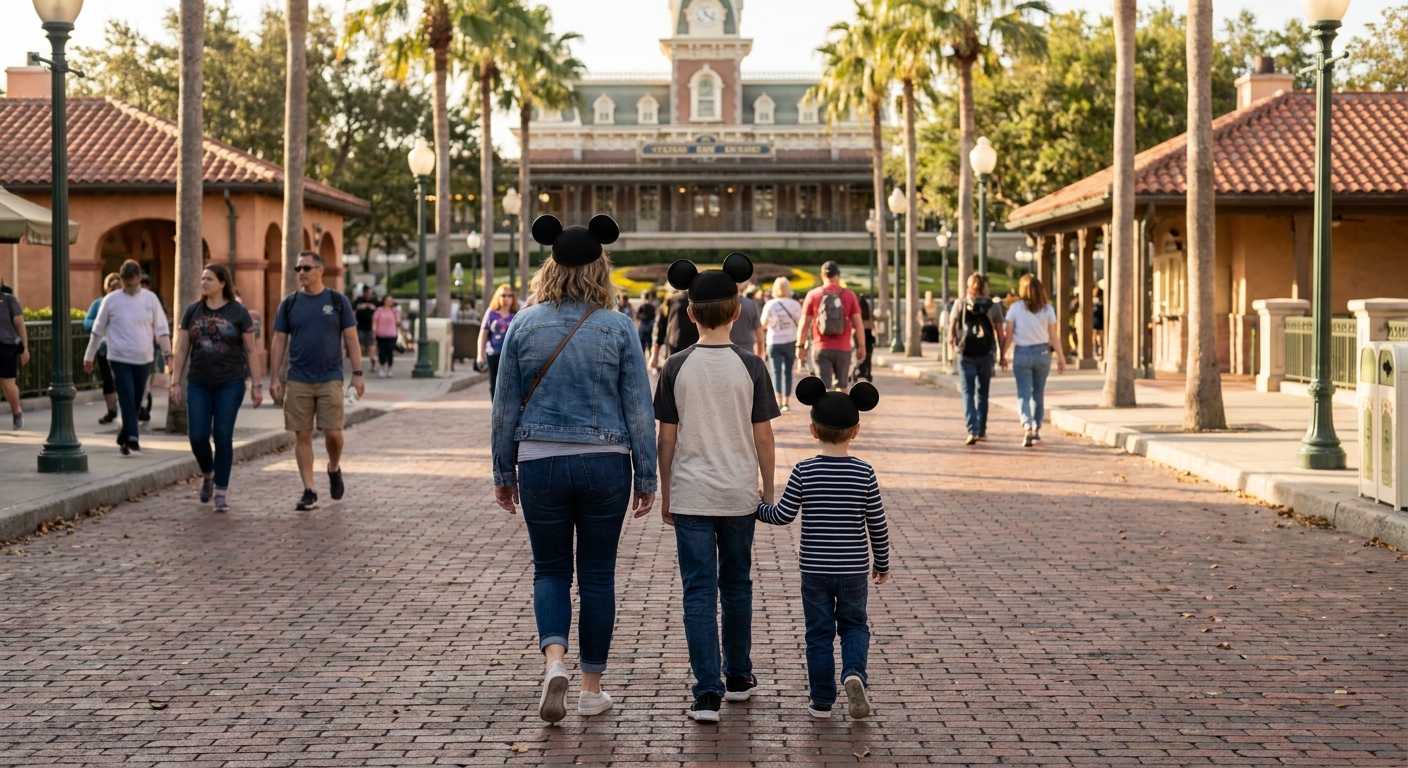
The Complete Map: Every Place You Can Get BBQ at Walt Disney World
Real BBQ at Walt Disney World is a short list, not a long one — three genuine smokehouse concepts plus a scattering of “BBQ-adjacent” menu items that get oversold on food blogs. Knowing which is which keeps you from burning a park meal or a resort trip on a pulled pork sandwich you could have skipped.
Here’s the honest inventory.
Theme Park BBQ: Quick Service
| Where | Park | Concept | Price band |
|---|---|---|---|
| Regal Eagle Smokehouse | EPCOT (The American Adventure) | Full BBQ concept — regional sauces, brisket, ribs, smoked chicken | Moderate quick service |
| Flame Tree Barbecue | Animal Kingdom (Discovery Island) | Full BBQ concept — ribs, smoked chicken, pulled pork, sampler platter | Moderate quick service |
| Smoked turkey leg carts | Multiple parks | BBQ-adjacent — one smoked item, nothing else | Snack pricing |
Those top two are the actual destinations. Regal Eagle is the one to beat on brisket and sauce variety; Flame Tree wins on seating, with shaded waterfront tables looking toward Expedition Everest that are among the best quick-service seats in any park.
Everything else inside the parks is a BBQ item, not a BBQ place. A pulled pork sandwich on a burger-and-nuggets menu is fine food — it is not a reason to cross a park.
Theme Park Table Service
There is no dedicated BBQ table-service restaurant inside the four theme parks. What you’ll find instead is smoked meat as a single line item on broader menus — a ribs entree, a brisket topping, a smoked protein in a bowl. Treat those as “I’m already here and that sounds good,” never as a planned BBQ meal.
Resort Quick Service and Food Courts
This is where veterans quietly win.
- End Zone Food Court (All-Star Sports) — Barbecued Beef Mac & Cheese. A value-resort food court is the last place anyone expects a legitimate BBQ play, which is exactly why nobody’s in line for it. Value quick-service pricing.
- Resort pool bars and lounges — frequently carry a pulled pork sandwich, smoked wings, or a brisket slider as one item. BBQ-adjacent, bar pricing, convenience-driven.
Pro tip: Resort BBQ-adjacent items are the move on a rest day, not a park day. Travel time between resorts is the hidden cost nobody budgets for — a 45-minute bus ride for a sandwich is never worth it, but a 5-minute walk from your own pool is.
Resort Table Service
Full-service resort restaurants that lean smokehouse are rare and tend to be themed around a backyard-cookout or Western feel rather than competition barbecue. Expect table-service pricing (meaningfully higher than quick service — often double or more per person), one or two smoked entrees, and a menu built to please a whole family rather than a BBQ purist. Worth it if the atmosphere is the point. Not worth it if the brisket is.
Disney Springs
Disney Springs runs on independent operators, which means its BBQ-leaning options change more often than anything on Disney property. The pattern to expect:
- A rib or brisket entree inside a broader Southern/American menu — BBQ-adjacent, table-service pricing
- Smoked items at bars and lounges
- No guaranteed, permanent dedicated BBQ house — so check the current menu before you build a plan around it
If you’re driving or busing to Disney Springs specifically for barbecue, confirm it exists that week. This is the single most menu-volatile category on the list.
Seasonal and Festival Booths
The EPCOT festivals — Food & Wine in particular — regularly feature smoked and barbecued small plates. The rules of engagement:
- [ ] Treat booth BBQ as a tasting portion, not a meal
- [ ] Expect per-plate pricing around $8–10, which adds up fast across a group
- [ ] Never plan your BBQ day around a booth — lineups rotate year to year and item by item
- [ ] If a booth item is the goal, go early in the festival run before popular items sell through
Booth barbecue is the definition of BBQ-adjacent: one smoked bite, built for sampling, priced for sampling.
How to Read This Map
Sort every option into one of three buckets before you commit a meal slot:
- Destination BBQ — worth routing your day around (Regal Eagle, Flame Tree)
- Opportunistic BBQ — order it if you’re already there (resort food courts, lounges, festival booths)
- Skip — a lone pulled pork sandwich on a menu you chose for other reasons
The Evergreen Caveat
Menus rotate, operating hours shift seasonally, and quick-service locations can close for refurbishment or run limited hours on slower days. Some BBQ spots also operate lunch-through-early-evening rather than all day. Always confirm hours and the current menu the morning of, and have a backup in the same land — the smart planner’s habit isn’t memorizing the menu, it’s knowing what’s within a five-minute walk when plan A is dark.
Head-to-Head: The Main BBQ Restaurants Compared
The short version: pick your BBQ spot by portion generosity, not by menu lust — Disney BBQ platters are big enough that one shared order plus a side usually feeds two adults better than two entrees ever will.
That single habit changes which restaurant is “right” for you, because the cheapest table isn’t always the cheapest meal. Here’s how the real contenders stack up.
The comparison table
| Spot | Location | Service style | Reservation difficulty | Price band / adult | Portions | Standout order | Best for | Main drawback |
|---|---|---|---|---|---|---|---|---|
| Regal Eagle Smokehouse | EPCOT, American Adventure pavilion | Quick service | None — walk up | $ | Very generous | Brisket, or the combo platter | Quick refuel; nervous eaters (burgers and mac exist) | Indoor seating fills fast at peak lunch; sauce station is the whole personality |
| The Polite Pig | Disney Springs | Fast casual, order at counter | None — walk up | $$ | Generous | Smoked meat plate with two sides | Big groups who all want something different | Disney Springs means a bus or drive, not a park-adjacent stop |
| Whispering Canyon Cafe | Wilderness Lodge | Table service, skillet-style | Hard — book at 60 days, 6:00 AM ET | $$–$$$ | Huge (skillets are refillable-style portions) | All-you-care-to-enjoy skillet | Big groups; hungry teens | The gag-heavy service; loud, and not every table loves being the bit |
| End Zone Food Court | All-Star Sports | Quick-service food court | None | $ | Solid | Barbecued beef mac & cheese | Quick refuel; resort-day dinner on a budget | Value-resort food court atmosphere; nobody’s calling it a destination |
| Disney Springs upscale-smokehouse route (Polite Pig bar side, late) | Disney Springs | Counter + bar seating | None | $$ | Generous | Shared plate plus a cocktail | Date night without a reservation hunt | Not a quiet room; it’s a busy shopping district |
How to actually read that table
Ignore the price band first. It’s the column everyone looks at and the one that misleads most, because it assumes one adult, one entree — and that’s the wrong way to order BBQ here. Portion generosity is the column that should decide it for most families, because a very generous platter split two ways drops your real per-person cost a full band below what the menu suggests.
Reservation difficulty is your second filter. Three of these require nothing but walking up, which means your BBQ meal can flex around your touring day instead of anchoring it. Only Whispering Canyon needs the 60-days-out, 6:00 AM Eastern ADR drop in My Disney Experience — so if you want it, treat it as a real planning task, not a maybe.
Location is the tiebreaker nobody weighs honestly. Disney World transit time is the hidden cost people don’t budget for until they’re standing at a bus stop. If your BBQ pick is in Disney Springs and you’re mid-park-day at Magic Kingdom, you’re not spending $25 on lunch — you’re spending $25 plus 90 minutes of your best touring time.
The ordering math that beats the price column
Pro tip: For two adults and one child, order one sampler-style platter, one kid meal, and a single à la carte side. You end up with more total meat than three entrees, and the savings usually cover dessert and drinks — while the kid meal quietly solves the “my kid needs their own thing” standoff without paying adult platter pricing twice.
Sharing moves that hold up across all of these:
- [ ] Split the platter and add a side instead of buying a second entree
- [ ] Skip fountain drinks at quick service — ask for water and carry a bottle; that’s roughly $5–8 per person per meal back in your pocket
- [ ] Share dessert, always — BBQ dessert portions are not delicate
- [ ] Order kid meals for genuinely small eaters only; some kid portions won’t touch a hungry nine-year-old
- [ ] If you’re hopping, schedule the BBQ meal at lunch, when the full menu is up and the room is calmer than dinner
Who should pick what
- Big group with mixed tastes: The Polite Pig or Whispering Canyon. Both handle “everyone wants something different” without a committee decision.
- Nervous or picky eaters: Regal Eagle. There’s smoke for you and familiar comfort food for them, in the same line.
- Quick refuel mid-park-day: Regal Eagle, full stop. It’s the only genuinely strong BBQ inside a park, and it doesn’t cost you transit.
- Date night: Disney Springs after dark — counter or bar seating, no reservation anxiety, shared plate.
The one thing to remember: the best BBQ restaurant for your trip is the one whose portions your group can split, in a location you were already going to be. Everything else is a menu preference.
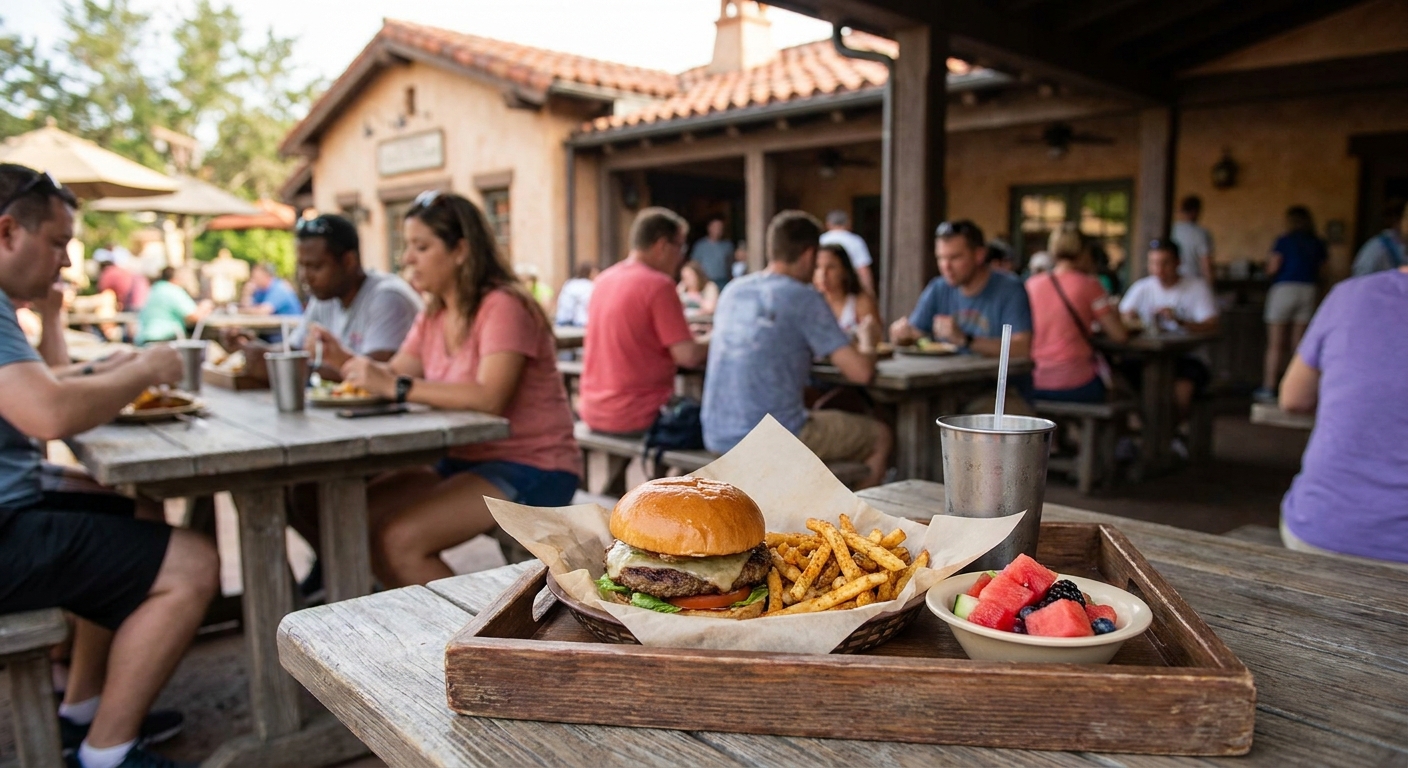
The Best Overall BBQ Pick — And Why It Wins
The move: Regal Eagle Smokehouse in EPCOT’s American Adventure pavilion. It’s the only Disney World BBQ spot where the smoke is legitimately good, the portions are genuinely large, and you don’t need a reservation won 60 days ago to eat there.
That last part is what wins it. Plenty of Disney restaurants serve a better plate of food than Regal Eagle — but almost none of them will seat you 20 minutes from now on a Tuesday in July. Quick service that’s actually worth eating is rare at Disney World, and the brisket here clears the bar.
Why it beats the alternatives
| Regal Eagle (EPCOT) | Resort-hotel BBQ | Disney Springs sit-down | |
|---|---|---|---|
| Meat quality | Real smoke flavor, brisket is the standout | Hit or miss by location | Often good, rarely BBQ-focused |
| Portion-to-price | Strong — platters feed 1.5 people | Varies | Weakest ratio |
| Getting in | Walk up, no reservation | Easy, but you have to leave the park | Book 60 days out at 6:00 AM ET |
| Hidden cost | None — you’re already in EPCOT | 30–60 min round-trip transit | Half a touring day |
| Peak-hour wait | 15–25 min ordering line at 12:30 | Short | Reservation or nothing |
What to order — and what to skip
Order like you’re at a smokehouse, not a theme park:
- Lead with the brisket, or a combo platter if you want to try more than one meat. The brisket is the reason this place has a reputation.
- Taste it clean first. There’s a sauce station with regional styles — try a bite before you pour, because the meat doesn’t need rescuing and the sauces are strong.
- Skip the burger. It’s the safe-eater default and it’s the weakest thing on the menu. If someone in your group genuinely only wants a burger, you’re at the wrong restaurant.
- Don’t double up on bready sides. Two starches crowd out the smoke. Pick one rich side, one that cuts through.
Pro tip: For two adults and one kid, order one platter, one kid meal, and one à la carte side instead of three entrees. You end up with more total meat, the kid still gets “their own thing,” and you usually save enough to cover dessert and drinks. Disney BBQ portions run unusually large — this is one of the few places where sharing isn’t a sacrifice.
Timing: the window that matters
- [ ] Eat at 11:00–11:30 AM — order line is short, tables are open, and you’re back out before the midday crush
- [ ] Or push to 2:00–3:00 PM if your morning is going well and you don’t want to break momentum
- [ ] Avoid 12:15–1:30 PM — that’s when the ordering line and the seating both go sideways at once
- [ ] Budget 40–50 minutes door to door, including finding a table
- [ ] Bring a refillable bottle and skip fountain drinks — that alone saves several dollars per person per meal
The honest trade-offs
It’s not perfect, and pretending otherwise would be useless to you:
- Location. It sits mid-World Showcase. If you’re in World Discovery chasing Guardians of the Galaxy: Cosmic Rewind, that’s a real walk — call it 15 minutes plus.
- Noise and seating. Indoor seating is a converted, echoey space that gets loud when it’s full. Outdoor tables are nicer but limited and weather-dependent.
- It’s still counter service. No one is refilling your drink or managing your kid’s patience for you.
- Peak lines are real. The food comes out fast once you’ve ordered, but the ordering line at lunch rush can swallow 25 minutes.
What happens if you wait too long
Regal Eagle is the rare Disney meal with almost no booking penalty — that’s the point of picking it. The thing you can actually lose is your touring window. If you drift into eating at 1:00 PM because nobody made a call, you’ve spent your lowest-wait morning hours in a line for food instead of a line for rides, and then eaten during the worst 45 minutes of the day. Decide the time, not just the place.
If you’d rather do a table-service BBQ-adjacent meal instead, that’s where booking pressure bites: popular tables go in the first minutes of the 60-day window at 6:00 AM ET, and after that you’re waiting on cancellations. SupaPark’s Drop Watch catches those the moment they free up and pings you so you can grab it in My Disney Experience — useful, but a worse plan than simply walking up to the smokehouse.
The one thing to remember: Regal Eagle wins on availability as much as flavor. Share a platter, lead with brisket, eat before noon, and skip the burger.
Best BBQ Inside the Theme Parks (When You Don’t Want to Leave)
The honest ranking: Regal Eagle Smokehouse at EPCOT is the only in-park BBQ worth planning around. Everything else is convenience food that happens to involve smoke.
That sounds harsh, but it’s the most useful thing anyone can tell you about BBQ inside the four parks. The resort smokehouses have the better meat and the better atmosphere. Inside the gates, you’re trading some quality for the thing that actually matters on a park day: not losing 90 minutes to a bus.
Regal Eagle Smokehouse — The American Adventure, EPCOT
This is the real one. It sits in the American Adventure pavilion in World Showcase, which makes it a natural lunch stop on any EPCOT day where you’re working the loop counterclockwise.
- Order this: the brisket, or a combo platter if you want to compare meats. Brisket is where the kitchen puts its effort.
- Skip this: the burger. You walked into a smokehouse. Don’t order the thing you can get at six other counters.
- Sauce discipline: taste the meat clean first, then hit the sauce station. Regional sauces are the point here, and dumping one on before you’ve tasted is how people decide “Disney BBQ is fine, I guess.”
- Don’t double up on bread. Two bready sides plus a bun and you’ve eaten a sandwich with sandwich accessories.
Pro tip: Regal Eagle portions run large by Disney standards. Two light eaters can split one platter and add a single à la carte side and walk out full — that’s a genuinely cheaper lunch than two entrees, and it’s the single highest-leverage BBQ money move in any park.
How the in-park options actually stack up
| Option | Where | Best order | Peak-lunch line | Verdict |
|---|---|---|---|---|
| Regal Eagle Smokehouse | American Adventure, EPCOT | Brisket or a combo platter | Builds hard roughly noon–1:30; moves steadily | Worth planning a park day around |
| BBQ-leaning counter items elsewhere | Varies by park and season | Whatever’s pulled pork–based | Standard quick-service crush | Convenience only — eat it because you’re hungry, not because it’s BBQ |
| Festival booths with smoked items | EPCOT, seasonally | Small plates, shareable | Short per booth, long cumulatively | Fun tasting, not a meal |
Menus and festival offerings rotate, so treat the bottom two rows as a category, not a promise. Check the current menu in the app before you commit your group to a walk across a park.
Mobile order: yes, and earlier than you think
Mobile order genuinely helps at the in-park BBQ counters, but only if you use it like a reservation instead of a shortcut.
- [ ] Place the order 45–60 minutes before you want to eat, while you’re still in line for something else
- [ ] Pick a window that lands before 11:45 a.m. or after 1:45 p.m. — the noon-to-1:30 block is where the seating crunch happens
- [ ] Hit “I’m here, prepare my order” only once someone in your party has physically scouted a table
- [ ] Send one adult ahead for seating while the rest finishes the nearby attraction
The failure mode isn’t the food line — it’s standing with three trays and no table.
Seating realities nobody warns you about
Regal Eagle has both indoor air-conditioned seating and covered outdoor seating with ceiling fans, plus tables out toward the lagoon. In practice:
- Indoor AC seats go first at midday and in summer. If heat relief is the real reason you’re eating here, shift your meal 30–45 minutes earlier.
- Stroller space is tight at peak. Park strollers outside the covered seating area and carry food in — don’t try to thread a double stroller between occupied tables.
- Covered outdoor seating is the realistic default. It’s fine. It’s shaded. It is not the same as sitting in cold air for 40 minutes.
When in-park BBQ is the right call — and when it isn’t
Eat in the park when:
- You’re on a high-stakes day with headliners, a show, and nighttime entertainment on the list
- Your morning ran efficiently and you want to protect momentum rather than spend an hour in transit
- You’re park hopping — lunch in-park, then hop with the whole evening intact
Hold out for a resort meal when:
- It’s a lower-pressure day, or a deliberate break day
- The meal is the point, not refueling
- You’ve already done your headliners and the afternoon is yours to spend
The hidden cost of leaving a park is never the meal — it’s the transportation. Disney World travel time is what quietly eats break days. Leaving mid-morning is the worst version of that trade, because morning is when you get the biggest wait-time wins of the whole day.
The takeaway: If you’re at EPCOT, Regal Eagle is a legitimate destination lunch — order brisket, split a platter, and eat before noon or after 1:45. Anywhere else inside the gates, eat BBQ because it’s close, not because you expect a smokehouse. SupaPark’s live waits and crowd heat maps make that call easy: if your afternoon waits are cratering, stay in the park and eat; if the park’s slammed, that’s your signal a longer resort lunch is costing you less than it looks.
Best BBQ at the Resorts (Including the Ones Non-Guests Can Visit)
You do not need a resort reservation to eat resort BBQ — and that single fact unlocks the best smoked meat on property. Disney resort restaurants are open to anybody who can get to the door. No room key, no wristband check, no questions. The only real barriers are transportation and, for the sit-down spots, a table.
The three tiers of resort BBQ
Resort barbecue sorts into three very different experiences, and knowing which one you’re chasing saves you a wasted trip.
- Deluxe table service — the full sit-down smokehouse experience at the Wilderness Lodge/Fort Wilderness corner of property. This is where the serious ribs live, and where reservations matter most.
- Moderate/value quick service — resort food courts quietly running barbecue items most guests never look for. The All-Star Sports food court’s barbecued beef mac and cheese is the classic example: a genuine find hiding in a value resort where nobody expects smoked meat.
- Lounges attached to the table-service spots — same kitchen, far easier access, smaller portions. This is the escape hatch when your reservation hunt fails.
Getting there without a car
Travel time is the hidden cost nobody budgets for. Resort-to-resort transit at Walt Disney World rarely goes direct, and that’s where dinner plans fall apart.
| From | Realistic door-to-door | Route |
|---|---|---|
| Magic Kingdom | 20–30 min | Boat or bus toward the Wilderness Lodge/Fort Wilderness area — the most direct resort BBQ run on property |
| EPCOT | 45–60 min | Monorail or Skyliner to a hub, then transfer; plan a connection |
| Hollywood Studios | 45–60 min | Skyliner or bus to a hub, then transfer toward the Magic Kingdom resort area |
| Animal Kingdom | 50–70 min | Bus to a hub, then transfer; the longest haul of the four |
| Disney Springs | 30–45 min | Bus, with a likely transfer — resort-to-resort buses are not guaranteed |
Two rules that hold up:
- Buses connect resorts to parks and Disney Springs, not reliably to each other. Resort-to-resort usually means a transfer through a park or the Springs.
- Add 15 minutes of buffer to every number above. Walking from a bus stop to the restaurant inside a sprawling Deluxe resort is its own 5–10 minute leg.
Pro tip: For a dinner reservation at a resort you’re not staying at, leave the park 90 minutes before your seating time — not 60. Transit at Walt Disney World fails in one direction only: late. Showing up early and sitting in a beautiful lobby beats losing the table.
Parking as a day guest
- Resort parking for dining guests is generally handled at the security gate: give the guard your restaurant name and reservation time.
- Guard booths at Deluxe resorts can be strict when the lot is full. A confirmed reservation is your best credential.
- If you have a rental car, driving is usually faster than Disney transportation for resort-to-resort trips — frequently half the time.
- Fort Wilderness is enormous and uses internal transportation. Budget extra time even after you’ve parked.
When you can’t get a table
Resort BBQ reservations open at the standard Advance Dining Reservations window — 60 days before arrival, 6:00 AM Eastern, in My Disney Experience. Miss it and you still have real options:
- [ ] Check the lounge first — many resort table-service spots have an attached bar serving a trimmed version of the same menu, usually walk-up only
- [ ] Try the same-day walk-up list in My Disney Experience once you’re on property
- [ ] Watch for cancellations — the 24-to-48-hour window before a date is when tables actually free up
- [ ] Have a quick-service backup at the same resort so the trip isn’t wasted
- [ ] Target a late seating; 8:30 p.m. and later opens up far more often than 6:30 p.m.
That cancellation window is where SupaPark earns its keep: Drop Watch monitors a specific restaurant, date, and party size, and alerts you the moment a table frees up. You book it yourself in My Disney Experience — SupaPark just catches the drop you’d otherwise sleep through. Free accounts get those alerts by email; paid tiers get instant push.
The honest trade-off
A resort BBQ dinner costs you an evening of park time and roughly two hours of round-trip transit. That’s a great deal on a rest day, a resort-hopping afternoon, or a late arrival day. It’s a bad deal on a day with fireworks plans and headliners left to ride.
The one thing to remember: resort BBQ is open to everyone, but transportation is the real reservation. Book the table 60 days out, then plan the trip there like it’s an attraction with its own wait time.
What to Order at Each Spot: The Specific Plates That Deliver
The rule across every BBQ counter at Walt Disney World: order a platter or combo built around brisket, split it, and add one à la carte side instead of a second entree. Disney BBQ portions run genuinely large — unusual for Disney food — so two adults ordering two full entrees almost always ends up with more money spent and more food wasted.
Regal Eagle Smokehouse (EPCOT, American Adventure pavilion)
This is the flagship, and it rewards you for ordering like you walked into a real smokehouse instead of a theme park counter.
- Lead with brisket. It’s the meat that justifies the trip. If there’s a sampler or combination platter on the board, that’s the single best-value order — it lets one person taste across styles without committing to a full rack.
- Taste it clean before you sauce it. There’s a regional sauce station, and the temptation is to drown everything on the walk to the table. Try one bite unsauced first — you’ll actually learn whether you like the smoke, and you’ll sauce more intelligently after.
- Skip the burger. Ordering a burger at the one place on property built around a smoker is the most common mistake here. If a kid in your group needs a burger, that’s what the kid meal is for.
- Don’t let two bready sides crowd the plate. Cornbread plus mac is a carb wall. Pick one.
Pro tip: For two light eaters, one shared platter plus a single add-on side — paid with a discounted gift card bought before your trip — is the cheapest way to eat genuinely well inside the American Adventure pavilion. It’s a smokehouse meal for close to snack-stand money.
End Zone Food Court (Disney’s All-Star Sports)
The move: the Barbecued Beef Mac & Cheese. This is the sleeper of the whole category — one of the only real BBQ plays at a value resort, and almost nobody knows it exists.
Value resorts are engineered for speed and price, not smoked meat, so a quick-service food court quietly topping mac with barbecued beef is a legitimate find. It’s rich, it’s heavy, and it’s shareable between two people who already ate a big park lunch. Veterans clock it; casual planners walk past it on the way to a standard burger.
Choosing Your Meat: A Decision Table
| If you want… | Order | Reality check |
|---|---|---|
| The benchmark bite | Brisket | Richest and most filling; fatty slices taste better but read heavier |
| Something to gnaw on | Ribs | Fun, messy, and the slowest to eat — bad choice right before a Lightning Lane window |
| Max value per dollar | Pulled pork | Biggest portion for the price, travels best in a to-go box |
| A lighter, kid-safe pick | Smoked chicken | Mildest flavor, least sauce-dependent, easiest for picky eaters |
| Spice and bold flavor | Sausage | Smallest portion, highest flavor-per-bite — best as an add-on, not the main event |
The Sides Worth Your Money
- Worth it: mac and cheese (shareable, filling), coleslaw (the only thing on the tray that cuts the fat and resets your palate), baked beans if they come with meat in them.
- Skip or share: cornbread. It’s usually fine, sometimes dry, and almost always the thing you stop eating halfway through because you filled up on smoke. Fine to share; not worth a dedicated slot.
- One side rule: one starchy side, one vegetable-ish side. That’s the plate that keeps you walking afterward instead of looking for a bench.
Three “Order This Instead” Swaps
- [ ] Instead of two adult entrees → order one sampler-style platter plus one à la carte side. More total meat, lower total bill.
- [ ] Instead of three entrees for two adults and a child → order one platter, one kid meal, one extra side. The kid meal solves “my kid needs their own thing” without paying adult platter pricing twice, and you’ll usually bank enough to cover dessert and drinks.
- [ ] Instead of a burger at Regal Eagle → order the brisket or combo. You can get a burger at fifty other counters.
- [ ] Instead of fountain drinks for the table → carry refillable bottles and ask for cups of ice. That’s roughly $5–8 per person per meal back in your pocket.
- [ ] Instead of one dessert each → split one. BBQ desserts here are not small.
Timing and Travel Notes
Pulled pork and brisket hold up best in a to-go container; ribs and anything sauce-heavy do not travel well across a bus ride. If you’re park hopping, eat your BBQ meal at lunch — the portions are built for a seated break, not a pre-fireworks sprint, and a heavy brisket plate at 8 p.m. is how people decide to skip the last ride. Order it when you have twenty unhurried minutes, not four.
What to Skip: The BBQ Orders That Aren’t Worth It
The single biggest money leak at Disney BBQ isn’t the meat — it’s ordering one entree per human. Disney barbecue portions run genuinely large, which is unusual for Disney food in general. Order like everyone needs their own platter and you’ll spend more, eat less of it, and end up carrying a to-go box through a park with no refrigerator.
Here’s what to cut, and what to order instead.
Skip: the single-meat plate when a sampler exists
A one-meat plate and a sampler-style platter are usually separated by a few dollars, but the sampler is the only way to find out which smokehouse item is actually good that day. Brisket quality varies more than pulled pork; ribs vary more than either. The sampler hedges you.
Do instead: order the combo or sampler, split it between two adults, and add one à la carte side. That combination almost always beats two separate entrees on both price and satisfaction.
Skip: the third adult entree
This is the classic party-of-three trap. Two adults and a kid walk up, order three adult plates, and leave a third of it behind.
Pro tip: For two adults and one child, order one sampler-style platter, one kid meal, and one extra à la carte side. You end up with more total meat than three entrees would have given you, the kid gets their own thing (which is the real issue being solved), and you typically save enough to cover dessert and drinks.
| Order for 2 adults + 1 kid | What you actually get | Verdict |
|---|---|---|
| Three adult entrees | Duplicate meats, leftovers you can’t store | Skip |
| Sampler + kid meal + one side | More meat variety, dessert budget intact | The move |
| Two adult entrees, nothing shared | Fine, but you paid for two sets of bready sides | Middling |
Skip: two bready sides on the same tray
Cornbread plus mac and cheese plus a bun is three starches crowding out the thing you came for. It’s filling in the cheapest possible way and it dulls the smoke.
Do instead: one starch, one vegetable-forward side. At Regal Eagle Smokehouse in EPCOT’s American Adventure pavilion, that single swap noticeably changes how the plate eats.
Skip: the sauce-first habit
Taste the brisket clean before you touch the sauce station. If a smokehouse is doing its job, the bark and smoke ring carry the plate on their own, and you’ll want sauce as an accent rather than a cover-up. If it needs sauce to work, that’s useful information for the rest of your trip.
Skip: the burger at a barbecue counter
If a menu has a smoker behind it, the burger is the item that exists for the one person in your group who refuses smoked meat. It’s rarely the best thing on the board. Order it only when you genuinely need it.
Skip: fountain drinks at quick service
This is the most reliable savings line on the whole list and it has nothing to do with barbecue. Ask for a cup of ice water — free at every quick-service counter — and refill the bottle you’re carrying. Across a family of four at two meals a day, you’re looking at real money for something that improves nothing about the meal.
Skip: dessert per person
BBQ dessert portions are not small. One shared dessert with extra forks is a complete ending for two or three people. Ask for an extra plate at the counter; nobody blinks.
Skip: the novelty item that photographs better than it eats
Every park has a few of these — oversized, sauce-drenched, built for a phone camera. If you want it, buy it as the group’s one shared splurge, not as somebody’s actual dinner.
The sharing checklist
- [ ] Split the platter and add a side rather than buying a second entree
- [ ] Taste the meat clean before hitting the sauce station
- [ ] One starch per tray, max
- [ ] Ask for ice water instead of a fountain drink
- [ ] Share dessert, always
- [ ] Order kid meals for genuinely small eaters only — some kid portions are thin for a hungry nine-year-old
- [ ] If you’re park hopping, take the BBQ meal at lunch rather than dinner
One overlooked order worth the opposite advice
While you’re cutting, add one thing: the Barbecued Beef Mac & Cheese at the End Zone Food Court at Disney’s All-Star Sports. A value-resort food court quietly serving a barbecued beef topping is a legitimate find — veterans clock it, casual planners walk past it on the way to a standard burger.
The one thing to remember: order for the table, not for the seat count. One shared platter, one kid meal, one extra side, water, and a split dessert feeds a family of three better than three entrees ever will.
The Sharing Playbook: How to Feed 2–6 People for Less
One sampler-style platter split between two adults plus one extra à la carte side beats two separate entrees — on price and on how full you feel walking out. Disney BBQ portions run genuinely large, which is unusual for Disney food in general. Most quick service here hands you a modest portion at a premium price. Smokehouse-style menus hand you a pile of meat. That mismatch is the whole opportunity.
The mistake families make is defaulting to “one entree per person” because that’s how restaurants work at home. At a BBQ counter, that’s how you end up with a tray of leftovers and a receipt that stings.
Why splitting works better here than anywhere else at Disney
- Meat volume is the variable, not the plate. A combo or sampler platter typically carries two or three meats. Split between two adults, each person gets more variety than a single-meat entree would have given them.
- Sides are the cheap lever. Adding one à la carte side costs a fraction of a second entree and closes the “am I still hungry” gap completely.
- Dessert portions aren’t small either. One shared dessert at a BBQ spot reads as generous, not stingy.
Pro tip: Ask for an extra plate at the counter. Nobody blinks — Cast Members hand them over constantly, and it turns “we’re sharing” from awkward into normal. Do it at the register, not after you’ve already sat down and split a tray with plastic forks.
The drink math nobody runs
Fountain drinks are the quietest money leak on a park day. Bring a refillable bottle, use the free ice water available at quick-service counters, and you save roughly $5–8 per person per meal. For a family of four eating two counter meals, that’s real money — enough to cover a whole extra snack round or the shared dessert and then some.
Party-size scenarios: exactly what to order
| Party | Order this | Why it works |
|---|---|---|
| 2 adults | 1 sampler/combo platter + 1 à la carte side + 1 shared dessert, water | More total meat than two single entrees, usually cheaper, and you both still get variety |
| 2 adults + 1 child | 1 sampler platter + 1 kid meal + 1 à la carte side | The kid gets “their own thing,” you skip paying adult platter pricing twice, and you typically save enough to cover dessert and drinks |
| 4 (2 adults, 2 kids) | 2 platters + 1 extra side, split across the table; kid meals only if the kids are genuinely small eaters | Two platters feed four surprisingly well. Four separate entrees is the overorder trap |
| 6 | 3 platters + 2 sides + 2 shared desserts, family-style on the table | Order to the table, not to the person. Three platters’ worth of meat spread across six people lands right for most mixed-age groups |
The kid-meal rule people get wrong
Order kid meals for genuinely small eaters, not out of habit. Some kid portions are tiny for a hungry nine-year-old who’s been walking since 8 a.m. — you’ll buy the kid meal, then buy a second thing an hour later, and you’ve spent more than the adult platter you were avoiding.
The honest test: if your kid regularly finishes an adult portion at home, skip the kid meal and build them into the shared platter instead.
A quick checklist before you order
- [ ] Split the platter, then add a side — never a second entree
- [ ] Ask for an extra plate at the counter before you pay
- [ ] Refillable bottle in the bag; skip fountain drinks at quick service
- [ ] Share dessert, always — BBQ dessert portions are not small
- [ ] Kid meals only for small eaters, not reflexively
- [ ] If you’re park hopping, take the BBQ meal at lunch while the full menu is up
The park-hopping wrinkle
Eat the BBQ meal at lunch. Smokehouse menus are at their best midday — full selection, fresher product, shorter counter lines than the dinner rush. Then your evening is free to hop without trying to time a heavy meal around a nighttime show. Park Hopper lets you move between parks any time the parks are open, so there’s no reason to force a late, rushed barbecue dinner.
If dining timing is part of your plan, SupaPark’s crowd forecasts and Drop Watch help you see when a park is likely to be heaviest and catch a table reservation the moment one frees up from a cancellation — you grab it yourself in My Disney Experience. Free at supapark.com.
The one thing to remember: at a BBQ counter, order to the table, not to the person. One platter plus a side is the unit that feeds two adults well — and every scenario above is just that unit, scaled.
Cost Breakdown: What a BBQ Meal Actually Runs
The short version: BBQ is one of the few Disney meals where the default “everyone orders an entree” move actively wastes money, because the portions are big enough that sharing a platter plus a side feeds people better for less.
Most Disney quick service leaves you hungry-ish and annoyed at the receipt. Barbecue is the exception — platters land heavy, sides are real sides, and desserts are not dainty. That changes the math.
Quick service vs table service: what you’re actually paying for
| Service style | Typical adult entree range | Where the money leaks | Best for |
|---|---|---|---|
| Quick-service BBQ (park or resort food court) | roughly $15–25 | fountain drinks, doubling up on entrees | families on a touring day, lunch, flexible timing |
| Table-service BBQ or smokehouse-style | roughly $25–40+ | tax, 18–20% tip, appetizers, a round of drinks | a planned sit-down meal, air conditioning, slower pace |
The gap between the two is bigger than the menu prices suggest. At quick service, the number on the board is close to the number you pay. At table service, add tax plus an 18–20% tip and a $100 food total becomes closer to $125 before anyone orders a cocktail. That’s the line most families forget to budget.
The sharing math, side by side
Model a party of two adults and one child at a quick-service BBQ spot:
| Approach | What you order | Relative food cost | Honest outcome |
|---|---|---|---|
| Default | 2 adult entrees + 1 kid meal + 3 fountain drinks | highest | Everyone has their own tray. Usually some food left behind. |
| Sharing playbook | 1 sampler-style platter + 1 kid meal + 1 à la carte side + water | noticeably lower — often enough saved to cover dessert and drinks | More total meat on the table than three separate entrees. |
That is the whole trick. One sampler platter split between two adults, with an extra side instead of a second entree, routinely delivers more food than two solo entrees — and it costs less. The single kid meal solves the “my kid needs their own thing” problem without paying adult platter pricing twice.
Pro tip: The savings from sharing one platter instead of two entrees tends to land right around the cost of a dessert and a round of drinks — so the sharing move isn’t about eating less, it’s about getting the dessert for free.
The lines people forget
- Drinks. Fountain soda at quick service runs a few dollars a head, and with refills and a second stop it quietly becomes $5–8 per person per meal. Carry a bottle, use free ice water, and that line disappears.
- Dessert. Share it. Always. BBQ dessert portions are not small, and one between two or three people is plenty after a platter.
- Tip and tax at table service. Budget roughly a quarter on top of the menu total. If you’re borderline on whether sit-down BBQ is worth it, that extra quarter is often the deciding factor.
- Alcohol. One beer each at table service can add as much as a kid’s entire meal. Not a reason to skip it — just know it’s a separate line, not a rounding error.
The sharing playbook checklist
- [ ] Split the sampler platter, then add one à la carte side instead of a second entree
- [ ] Skip fountain drinks at quick service — water bottle plus free ice water saves $5–8 per person per meal
- [ ] Share dessert, every time
- [ ] Order kid meals for genuinely small eaters only — some kid portions are thin for a hungry 9-year-old
- [ ] If you’re park hopping, take the BBQ meal at lunch when quick-service lines and menu pricing both work in your favor
- [ ] Ask for an extra plate at the counter — nobody blinks
A note on these numbers
Disney adjusts menu prices regularly, and portions and offerings shift by location and season. Treat everything above as planning ranges, not quotes — check current menus in My Disney Experience or on Disney’s site before you lock a budget. The ratios hold up better than the dollars: sharing a platter plus a side beats two entrees on both cost and satisfaction almost everywhere BBQ is served on property.
If you’re building the day around a table-service BBQ meal, the reservation is the harder part than the budget. SupaPark’s Drop Watch alerts you the moment a cancelled table frees up, so you can book it in My Disney Experience before anyone else notices — free at supapark.com.
Timing: When to Eat BBQ on a Park Day
Eat your BBQ meal at lunch, not dinner. Smoked meat is the heaviest category of food on Disney property, and a full platter sitting in your stomach at 8:45 p.m. while you stand in a crowd waiting for fireworks is a self-inflicted wound. Lunch gets you shorter quick-service lines, a calmer table-service dining room, lunch pricing at the spots that run a separate midday menu, and a long afternoon to actually digest it.
Why lunch wins on almost every axis
| Factor | BBQ at lunch | BBQ at dinner |
|---|---|---|
| Quick-service line | Short before 11:30 a.m., short again after 1:45 p.m. | Stacked 5:30–7:30 p.m. with the pre-fireworks rush |
| Table-service availability | Easier to land, including same-week drops | Prime dinner windows are the hardest slots to get |
| Menu pricing | Some table-service spots run a cheaper midday menu | Dinner pricing, usually the higher tier |
| Heat management | Doubles as your indoor cooldown | Wasted — the heat already broke |
| Rest of the night | Digested by evening; you’re free for headliners | Heavy meal right before fireworks and park exit |
The one real argument for dinner BBQ: if you’re eating at a resort and the meal is the evening plan, go for it. But don’t pay the dinner premium just to be stuck in a dining room during the best touring hour of the day.
The quick-service windows that actually work
Aim for before 11:30 a.m. or after 1:45 p.m. The counter-service crush at Walt Disney World runs roughly 11:45 a.m. to 1:30 p.m., and BBQ spots take longer per order than a burger window because platters are built to order. Ten minutes of patience on your arrival time can save twenty in line.
- Before 11:30 a.m. — best if you rope-dropped and are already running on an early breakfast. You’ll walk up to a near-empty counter.
- After 1:45 p.m. — best if you want the meal to double as your heat break. Order late, eat slow, leave when the afternoon worst has passed.
- Avoid 12:00–1:15 p.m. entirely. That’s peak everything — line, seating scramble, and the hottest part of the day outside.
Heavy meal, thrill rides, and Florida heat
Barbecue is salt, fat, and smoke. That combination plus 90-degree humidity plus a ride that flips your inner ear is how people end up sitting on a curb. Sequence it:
- [ ] Ride your intense stuff before the meal — coasters, simulators, anything spinning
- [ ] Eat, then give it 45–60 minutes before anything with big drops or heavy motion
- [ ] Fill that gap with shows, dark rides, boats, and air conditioning
- [ ] Drink water with the meal, not just soda — the salt load will dehydrate you faster than you expect
- [ ] Save a second thrill block for evening, once the food has settled and temps drop
Shows and seated attractions are the unsung post-BBQ move. A 20-minute theater gives you air conditioning and a seat, which is exactly what your body wants after a platter.
Don’t let the meal eat your Lightning Lane
This is where plans quietly break. Lightning Lane Multi Pass selections are made in advance — Disney resort guests from 7 days out, off-site guests from 3 days out, with the window opening at 7:00 a.m. Eastern — then refilled one at a time as you redeem them. If you book a return window that lands at 12:30 p.m. and you’ve also got a 12:15 table-service reservation, something has to give.
- Block your meal first, then book Lightning Lane returns around it — not the reverse
- Leave a 90-minute buffer between a table-service check-in and any return window
- For quick service, a 30–45 minute gap is usually plenty
- If a return window and your meal do collide, redeem the Lightning Lane first; counters move faster than kitchens
Pro tip: Build your park day so your next Multi Pass refill becomes available while you’re sitting down eating. You tap in, walk to BBQ, and book the next one from the table — turning the meal into productive time instead of a gap in your touring. SupaPark’s refill predictions and alerts will ping you when the good return times open so you’re not refreshing My Disney Experience between bites; you still confirm the booking in My Disney Experience.
Slotting a resort BBQ meal into a midday break
A resort BBQ lunch is one of the better midday breaks at Walt Disney World, as long as you respect transit time. Budget 45–60 minutes each way door to door, and treat that honestly — Disney travel time is the cost nobody plans for until they’re standing at a bus stop.
The structure that works: rope drop hard, leave the park around 1:00 p.m., eat BBQ at the resort, rest or swim, and head back for a 5:00–6:00 p.m. return. You get the heavy meal out of the way during the worst heat, and your evening touring block stays intact.
Skip the resort break entirely if it’s a high-stakes park day with fixed showtimes and a packed Lightning Lane lineup. On those days, eat the BBQ inside the park and keep moving.
The one thing to remember: lunch BBQ with a 45-minute digest window, booked around your Lightning Lane returns — not on top of them.
Booking It: Reservations, Walk-Ups, Mobile Order, and Drop Watch
Here’s the headline: almost none of the best BBQ at Disney World requires a reservation — and the one place where booking strategy actually matters is Disney Springs, not the parks. That single fact saves you a 60-day calendar alarm you don’t need.
Still, the mechanics are worth knowing cold, because the people who understand how tables actually open are the ones eating smoked brisket while everyone else is in a mobile-order queue.
The two morning windows people constantly confuse
These are different systems, different times, different apps screens. Mixing them up is the single most common planning mistake:
| What | When it opens | Where | Who it applies to |
|---|---|---|---|
| Advance Dining Reservations (ADRs) | 60 days before arrival, 6:00 AM Eastern | My Disney Experience | Anyone with a trip booked |
| Lightning Lane Multi Pass selections | 7:00 AM Eastern on your eligible day (7 days out for Disney resort guests, 3 days for off-site) | My Disney Experience | Guests who bought Multi Pass for that day |
Not 180 days. Not 7:00 AM for dining. If you set one alarm for your trip, set it for 6:00 AM Eastern on your 60-day mark — and know that it’s 60 days from your arrival date, which covers your whole stay in one sitting if you’re on-site.
Pro tip: BBQ is the rare Disney food category where the 60-day scramble barely matters — most of it is counter service. Spend your 6:00 AM energy on the character meals and signature restaurants that genuinely vanish, then slot BBQ in as your flexible, no-reservation safety meal on a day when plans go sideways.
Which BBQ spots are hard to get — and which you can just walk into
- Disney Springs table service with a barbecue menu — this is where you need a plan. Weekend evenings and holiday weeks are the pinch points. Lunch on a weekday is dramatically easier than 7:00 PM on a Saturday.
- Regal Eagle Smokehouse (EPCOT, American Adventure pavilion) — quick service. No reservation, ever. You walk up or mobile order.
- Resort food-court BBQ, like the Barbecued Beef Mac & Cheese at End Zone Food Court at Disney’s All-Star Sports — walk up, any time it’s open. Nobody is competing with you for it.
Translation: your “hard to get” list is short, and your fallbacks are strong. That’s an unusual luxury at Disney World.
How the walk-up list actually works
For table-service spots, My Disney Experience has a Walk-Up Waitlist that typically opens the morning of and runs while the restaurant has capacity. A few things veterans know:
- [ ] You generally have to be near the restaurant to join — it’s a day-of, in-the-area tool, not a backup reservation
- [ ] Join early in the service window; lists fill and close, sometimes well before closing time
- [ ] Your whole party doesn’t have to be standing there, but you do need to be ready to walk in when the text lands
- [ ] Odd party sizes (2, or 5+) behave differently — twos often get seated faster than you’d expect
Mobile order is the real BBQ hack
At quick service, mobile ordering in My Disney Experience is not a convenience — it’s a strategy. Order from the ride queue, pick an arrival window, and tap “I’m Here” when you get to the restaurant.
Why it matters for BBQ specifically: smokehouse-style counter service draws long single-file lines right at peak, and portions are large enough that you’re often ordering for a group. Placing that order 30–45 minutes ahead and timing it to just before the noon wall means you sit down while the standby line stretches out the door.
- [ ] Browse the menu the night before so you’re not deciding in the app at 11:55
- [ ] Choose an arrival window earlier than you think you need — you can usually tap in later
- [ ] Split platters at the order screen (one platter, one extra side) rather than three entrees
- [ ] Skip fountain drinks and refill water — a durable few-dollars-per-person-per-meal save
Where SupaPark fits: Drop Watch
If the Disney Springs table you want is gone, you have two options. Refresh My Disney Experience manually every few hours for days, or let software do it.
SupaPark’s dining Drop Watch monitors a restaurant, date, and time window and pings you the moment a cancelled table frees up. Cancellations happen constantly — people re-plan, trips shift, groups shrink — and those tables reappear with no warning at random hours. A watch is just better coverage than your thumb.
The honest limits, stated plainly:
- SupaPark watches and alerts; it never books. When the alert lands, you grab the table in My Disney Experience, directly with Disney.
- On the free plan, Drop Watch alerts arrive by email (10 a day), and the account’s first three watch alerts ever come through as push as a one-time taste. Paid tiers add unlimited push delivery and unlimited watches — what you pay for is delivery speed, not the data.
- Set the watch as soon as you know you want the table, not the week of. More days watched, more cancellations caught.
The same logic applies to rides: live waits, best-time forecasts, walk-on alerts, and Lightning Lane refill predictions tell you whether something like Seven Dwarfs Mine Train is worth a Single Pass purchase that day. SupaPark flags the opening; you handle the booking. Start at supapark.com — it’s free on the web, iPhone, and Android.
The one thing to remember: set your 6:00 AM Eastern alarm for the restaurants that genuinely sell out, put a Drop Watch on anything you missed, and treat BBQ as your walk-up-friendly ace — the meal you can always get when the rest of the day falls apart.
Families, Kids, and Picky Eaters at a BBQ Meal
BBQ is quietly one of the most family-friendly food categories at Walt Disney World — because the portions are huge, the food is hand-friendly, and nobody expects your table to be quiet. That last part matters more than any kid menu.
The honest framing: BBQ spots are loud, casual, fast, and built on shareable food. That’s close to a perfect match for a party with a toddler, and a mediocre match for a party that needs a calm, slow, air-conditioned reset.
The ordering math that actually saves you money
Disney BBQ portions run large, which is genuinely unusual for Disney food. Two separate adult entrees plus a kid meal is almost always over-ordering.
Pro tip: For two adults and one child, order one sampler-style platter, one kid meal, and one à la carte side. You get more total meat than three entrees, the kid still gets “their own thing,” and you usually save enough to cover dessert and drinks.
Other sharing moves that hold up:
- [ ] Split the platter and add a side instead of a second entree
- [ ] Skip fountain drinks at quick service — a refillable bottle plus free ice water saves roughly $5–8 per person, per meal
- [ ] Share dessert, always; BBQ dessert portions are not small
- [ ] Order kid meals only for genuinely small eaters — some kid portions are thin for a hungry nine-year-old
- [ ] If you’re park hopping, take the BBQ meal at lunch when the line and the room are both calmer
Kid menu honesty
Kid BBQ meals skew toward one small protein plus a starchy side. That’s filling for a four-year-old and not remotely filling for a kid who just did three hours of walking. The fix isn’t a second kid meal — it’s letting the kid graze off the adult platter and using the kid meal as the anchor they feel ownership over.
Picky eaters usually do fine here for one reason: sauce is almost always on the side or at a station, not pre-slathered. Order the meat clean, hand the kid a plain portion, and sauce your own. That single habit solves most “my kid doesn’t like spicy” problems before they start.
| What your kid is like | Order this way |
|---|---|
| Hates heat or strong flavors | Meat plain, sauce on the side; let them dip once to test |
| Will only eat familiar basics | Mac and cheese or cornbread as the main event, meat as a bonus |
| Big eater, 8+ | Skip the kid meal, split the adult platter three ways |
| Toddler, unpredictable | Kid meal plus one shared side — low stakes if it goes untouched |
Noise, strollers, and seating reality
Quick-service BBQ is your friend with a stroller: you park it, one adult orders, and you’re not negotiating a 90-minute reservation with a kid who’s done. Outdoor and covered patio seating is common at BBQ spots, which means more room beside the table and less “please fold that stroller” friction.
The noise level is a feature. A melting-down toddler is invisible in a busy counter-service pavilion and extremely visible at a quiet table-service dining room.
How long each format holds a restless kid
| Format | Realistic time at the table | Best for |
|---|---|---|
| Quick-service BBQ counter | 25–40 minutes | Toddlers, tight touring days, post-ride refuel |
| Resort food court BBQ | 30–45 minutes | Afternoon break, nap-adjacent timing |
| Table-service BBQ | 60–90 minutes | Older kids, rest days, split-party plans |
If your kid’s table limit is 30 minutes, do not book a table-service BBQ meal and hope. Go counter service and spend the saved time somewhere with a breeze.
The split-party play
Counter-service BBQ is where split-party dining actually works, because nothing is time-locked to a reservation.
- [ ] Adult A orders and claims a table; Adult B walks the tired kid nearby
- [ ] Adult A eats first — 15 minutes, no rush, no guilt
- [ ] Swap: Adult B sits and eats while Adult A takes the lap
- [ ] Order the kid’s food with the second shift so it’s not cold
This is nearly impossible at a table-service restaurant, where a half-empty table and a wandering party member slow the whole meal down.
Mess management
BBQ is messy by design. Grab extra napkins at the counter before you sit — you will not want to get up again. Ask for an extra plate when splitting a platter; nobody blinks. And if your kid is in a light-colored outfit for photos, put the sauce-heavy order on the adult side of the table.
The takeaway: For families, the smart BBQ move is counter service, one shared platter, sauce on the side, and a kid meal only if the kid is genuinely small. You’ll eat better, spend less, and be back out the door before anyone hits the wall.
Dietary Needs: Gluten-Free, Vegetarian, and Allergy-Aware BBQ
BBQ is one of the easier Disney cuisines for gluten-free guests and one of the harder ones for vegetarians — plan in that direction and you’ll have a much better meal. Smoked meat is, at its core, meat plus salt plus smoke. Strip away the bun and the mac and cheese and a lot of a BBQ plate is naturally free of the big allergens. The plant-based side of the menu is where you need a backup plan.
What tends to be naturally gluten-free
Smoked proteins are usually the safest part of the tray. Rubs are typically spice-and-sugar based, and sauces at Disney BBQ spots are more often vinegar-, tomato-, or mustard-forward than thickened with flour. That said, formulations change, so treat this as a starting point for your conversation with the kitchen, not a guarantee.
| Menu item | Usual gluten outlook | What to confirm |
|---|---|---|
| Brisket, pulled pork, smoked chicken, ribs | Often naturally gluten-free | Rub ingredients, whether it’s held in a shared pan |
| Barbecue sauce | Varies by recipe | Soy/malt vinegar or thickeners; ask for sealed single-serve if available |
| Coleslaw, baked beans, collard greens | Frequently fine | Shared utensils at a self-serve station |
| Mac and cheese, cornbread, buns, fried sides | Assume not gluten-free | Whether a GF bun or substitute side exists |
The pattern: meat and vegetable sides are your friends; anything bready or fried is where the risk lives. That’s also why the standard “share a platter, add a side” BBQ move works well here — you can build a plate out of the safe components instead of negotiating a whole entree.
Cross-contact questions worth asking out loud
Smokehouse kitchens are high-volume and tong-heavy, which is exactly the setup where cross-contact happens even when every ingredient is compliant.
- [ ] Is the meat sliced or pulled on a shared board with bread or buns nearby?
- [ ] Are the tongs and serving pans dedicated, or shared across items?
- [ ] Is there a fryer, and does it handle breaded items alongside fries?
- [ ] Can the sauce come on the side in a sealed container rather than ladled on?
- [ ] For dairy or egg allergies: is there butter on the cornbread, mayo in the slaw, or a cream base in the beans?
- [ ] For nut allergies: any pecans or nut-containing desserts prepped on the same surfaces?
Pro tip: Ask for your protein unsauced, straight off the cutting board, with sauce in a cup on the side. It’s a single sentence that eliminates the most common contamination point at a BBQ counter, keeps the sauce question completely separate from the meat question, and — bonus — lets you actually taste the smoke before you decide how much sauce you want.
Vegetarian and plant-based: what actually exists
Be honest with yourself here. A BBQ-forward menu is built around smoked animal protein, and the vegetarian offerings are usually one dedicated item plus a handful of sides. Some Disney BBQ spots do carry a plant-based barbecue entree, but availability varies by location and menu cycle — don’t build a meal plan around a specific item you read about once.
- Usually workable: a plate of vegetable and starch sides, a plant-based entree where one exists, salads, and whatever the location’s dedicated vegetarian option happens to be that season.
- Plan around: baked beans (often cooked with pork), collard greens (same issue), and anything the kitchen cooks in meat drippings. These read vegetarian on a menu and frequently aren’t.
- The real move for mixed groups: if one person in your party is vegetarian and the rest want brisket, pick a BBQ spot with a broader quick-service neighborhood around it, or eat BBQ where a non-BBQ option sits within a short walk. One happy omnivore and one person eating a side salad is not a win.
How to flag it when booking and at the table
Allergy handling at Disney is genuinely strong, but it works best when you give the kitchen lead time.
| When | What to do |
|---|---|
| At booking (ADRs open 60 days out, 6:00 AM ET in My Disney Experience) | Add the allergy to the reservation profile — it flags the ticket for the kitchen |
| A day or two before | Call the restaurant directly for anything complex or multi-allergen |
| At the table or counter | Say it again, out loud, every single time — don’t assume the note traveled |
| Before you eat | Ask for a manager or chef if the answer feels vague or rushed |
That last line matters more at a smokehouse than at most Disney restaurants. A chef at a table-service kitchen can usually swap a preparation on the spot. A smoked brisket was seasoned and cooked hours ago — the rub is already on it. So the question stops being “can you make this for me” and becomes “what’s already safe,” which is a conversation you want with someone who knows the recipe, not whoever’s at the register.
The takeaway: recipes, suppliers, and menus change without notice. Verify current allergen details with the restaurant for your actual meal, not from any guide — including this one.
BBQ Beyond the Restaurants: Festival Booths, Turkey Legs, and Grab-and-Go Smoke
Most of the “BBQ” you’ll encounter at Disney World isn’t at a BBQ restaurant — it’s a turkey leg, a pulled pork sandwich hiding on a non-BBQ menu, or a festival booth that exists for six weeks a year. Some of those are real meals. Some are snacks priced like meals. Knowing which is which is where people actually save money.
Smoked turkey legs: a shared snack, not lunch
The turkey leg is the most famous smoke-adjacent item in the parks, and it’s also the most misunderstood. It’s enormous, salty, and heavy on the hands — closer to a novelty share than an entrée. It runs in the snack-price neighborhood (around $14–15 at most carts, and it has crept up over the years), which puts it uncomfortably close to a real quick-service platter.
Here’s my honest read: one turkey leg split between two people, with a pretzel or fruit alongside, is a fine late-afternoon hold-over. One turkey leg per person as “dinner” is a bad trade — you’ll pay platter money for a single protein, no sides, and no sauce options.
Pro tip: If your group is eyeing turkey legs because the sit-down wait looks long, check the actual quick-service line first — a real BBQ platter at a counter-service spot usually costs only a few dollars more than two turkey legs and feeds the same two people with sides, sauce, and a place to sit. The turkey leg wins on walkability, not on value.
The hidden pulled pork problem (and opportunity)
Pulled pork turns up constantly on menus that have nothing to do with barbecue — food courts, lounges, festival stalls, even Latin-leaning quick service like Animal Kingdom’s Smiling Crocodile, where pulled pork and pulled chicken cheese arepas run around $13 and are open only during a narrow midday window (roughly 11 a.m.–3 p.m., so time your walk-by). That’s a legitimate light lunch for one adult or a shareable snack for two.
The pattern to learn:
- Pulled pork on a bun at a food court — usually a real meal, usually the cheapest “BBQ” in the park.
- Pulled pork as a topping (mac and cheese, fries, nachos, arepas) — snack portion, meal price. Great to split, weak as a solo entrée.
- Pulled pork at a lounge — smallest portion of all, built to pair with a drink.
EPCOT festival booths: when they’re running
EPCOT’s festivals rotate through the year, and when they’re running, the marketplace booths occasionally carry smoked items — brisket, smoked sausage, pulled pork sliders, smoked fish dips. Menus change festival to festival and even week to week, so treat any specific item as “check the current lineup,” not a guarantee.
The economics are the thing to understand. Booth portions are tasting-sized and priced per plate. Three or four booth plates per adult will quietly cost more than a sit-down meal, and you’ll be standing up the whole time.
| Option | What you actually get | Best for | Watch out for |
|---|---|---|---|
| Turkey leg cart | One big protein, no sides | Sharing while you walk | Platter price, snack value |
| Food-court pulled pork sandwich | Full sandwich + side | Cheapest real BBQ meal | Limited to resort hotels |
| Pulled pork as a topping | Snack portion | Splitting two or three ways | Reads like a meal, isn’t one |
| EPCOT festival booth (seasonal) | Tasting plate | Variety, trying smoke styles | 3–4 plates = sit-down money |
| Resort grab-and-go case | Pre-made, cold or reheated | Early mornings, late nights | Quality varies by day |
Resort grab-and-go cases
Most resort food courts and markets keep a refrigerated case with pre-made sandwiches and sides, and pulled pork or smoked meat shows up in the rotation. This is the right call in exactly two situations: you’re leaving before the counters open, or you’re back after they close and nothing hot is available. Otherwise, order it fresh — smoked meat does not improve under plastic.
How to split the fringe stuff
- [ ] Share one turkey leg between two adults; never buy one each as a meal
- [ ] Treat any booth or topping-style pulled pork as a split, not an entrée
- [ ] Cap EPCOT festival booths at two or three plates per adult, then eat a real meal
- [ ] Ask for an extra plate or napkins at the counter — nobody blinks
- [ ] Skip fountain drinks; refillable water saves $5–8 per person per meal
- [ ] If smoke is the point of the day, spend your money at an actual BBQ counter and use the fringe items as snacks between
The takeaway: fringe BBQ is for filling gaps, not anchoring meals. Pulled pork sandwiches at resort food courts are the genuine value play; turkey legs and festival booths are shareable extras that feel like meals and price like them. Decide which role you’re filling before you get in line, and you’ll stop paying entrée money for a snack.
Building a BBQ Day: Three Sample Plans
The real skill isn’t picking the BBQ spot — it’s picking the hour. Smoked meat is heavy, slow to eat, and almost always better at an off-peak time. Build the meal around the park’s wait curve instead of jamming it into the 12:30 crush, and the same lunch costs you a fraction of the touring time.
Here’s how three different day shapes actually play out.
Plan 1: BBQ lunch without leaving the park
Best for a full-throttle day where headliners, shows, and nighttime entertainment are all in play. You never cross a transportation gap.
- [ ] Arrive 30–40 min before Early Theme Park Entry; head to your single hardest ride first
- [ ] Ride two more headliners before official open, then peel away from the crowd flow
- [ ] 10:45–11:15 — eat. Yes, that early. Order at the counter before the line triples
- [ ] Order one sampler-style platter to split plus one à la carte side; add a kid meal only for a genuinely small eater
- [ ] 11:45–1:30 — this is your refilled Lightning Lane window and your indoor-show block while everyone else queues for food
- [ ] Mid-afternoon — a seated show or air-conditioned ride as a reset, not as a rope-drop target
Cost runs around $25–35 for two adults sharing a platter and a side, less if you skip fountain drinks and carry a refillable bottle — that alone is $5–8 per person per meal.
Pro tip: Eating BBQ at 10:45 isn’t about beating the restaurant line — it’s about owning the 12:00–1:30 ride window, which is one of the few mid-day stretches where posted waits soften as thousands of people go sit down.
Plan 2: Midday resort BBQ break between two park sessions
Best for families with a young kid, a hot forecast, or a park-hopper ticket. The hidden cost here is transit, and it’s the thing nobody budgets for until they’re standing at a bus stop.
| Block | Time | What’s happening |
|---|---|---|
| Morning session | Open–11:30 | Rope drop + 3–4 attractions while waits are lowest |
| Transit out | 11:30–12:15 | Budget 30–45 min door to door, not 15 |
| Resort BBQ lunch | 12:15–1:30 | Slower, cheaper, air-conditioned, no queue |
| Rest / pool | 1:30–3:30 | The actual point of the break |
| Transit back | 3:30–4:15 | Build in the same 45 min, including security |
| Evening session | 4:15–close | Lightning Lane refills, fireworks, late walk-ons |
That’s roughly 90 minutes of pure transportation. Worth it on a long park day with a kid who melts at 2 p.m.; not worth it on a day with a hard-ticket evening or a 7 p.m. reservation you can’t miss.
A value-resort food court is the sleeper pick here — a barbecued beef mac and cheese or a pulled-meat platter runs well under a sit-down check, and you’re never waiting for a table.
Plan 3: Disney Springs or resort BBQ dinner on a travel or rest day
Best for arrival night, departure morning, or a no-park day. Low stakes, no touring clock, and you can eat at a human pace.
- [ ] Book the table 60 days before arrival at 6:00 a.m. Eastern in My Disney Experience — that’s the ADR window, separate from the 7:00 a.m. Lightning Lane window
- [ ] Target 4:45–5:15 p.m. for the shortest wait and easiest parking at Disney Springs
- [ ] Share one large smoked platter, add a vegetable side instead of a second bready one, and split dessert — BBQ dessert portions are not small
- [ ] Budget around $60–80 for two adults with one shared entrée, a side, and drinks
What to skip: using a Disney Springs dinner as an excuse to leave a park during your most valuable touring window. Morning is where the outsized wins live — lower waits, cooler weather, momentum. Don’t trade that for a reservation unless the meal is the point of the day.
How to time the meal with SupaPark
The eat-early trick only works if you know the curve for your park on your date. SupaPark’s best-time forecaster shows when each ride usually bottoms out, the live wait board tells you whether the lull arrived early, and the day builder lays the meal into the gap instead of on top of a headliner. Free covers live waits, the forecaster, and the crowd calendar; paid tiers add instant push alerts and the day builder.
For the Plan 3 version, Drop Watch is the one to set — SupaPark pings you the moment a booked-solid table frees up from a cancellation, and you grab it in My Disney Experience. Free gets those alerts by email. Start at supapark.com, or on the free iPhone and Android app.
The takeaway: pick your plan by how much transportation you can afford to lose, then let the wait data choose the hour.
Frequently Asked Questions
The short version: Disney BBQ is one of the few food categories where portion size works in your favor — order to share, taste before you sauce, and keep your BBQ meal at lunch.
Where is the best BBQ at Disney World?
Regal Eagle Smokehouse in the American Adventure pavilion at EPCOT is the strongest all-around pick, because it’s a real smokehouse menu at quick-service pricing with a self-serve sauce station that lets you tune every bite. The sleeper is End Zone Food Court at Disney’s All-Star Sports, where the Barbecued Beef Mac & Cheese is one of the only genuine BBQ plays at a value resort — almost nobody walking past the burger line knows it’s there.
What should I order the first time?
Lead with brisket, or a sampler-style combo platter if you want to figure out which meat your group actually likes. Taste it unsauced first — the sauce station is there to adjust, not to rescue, and dumping sauce on before you’ve tried the meat means you never learn whether you’re a vinegar person or a sweet-sauce person.
| Your situation | The order | Why it works |
|---|---|---|
| First visit, want the benchmark | Brisket plate | Smoke-forward, easiest to judge the kitchen by |
| Two people, one meal | One sampler platter + one extra side | More total meat than two entrees, lower spend |
| Two adults + one kid | One platter + one kid meal + one à la carte side | Kid gets “their own thing” without adult platter pricing twice |
| Value resort, no park food plan | Barbecued beef mac & cheese | Real BBQ flavor at food-court speed |
How do I keep a BBQ meal from blowing the food budget?
Share the platter and add a side instead of buying a second entree — BBQ portions at Disney run unusually large, so two separate entrees is often just more food than your group finishes.
- [ ] Split one platter between two adults, then add a single side
- [ ] Skip the fountain drink at quick service; refill a bottle at the water station instead
- [ ] Share dessert — BBQ dessert portions are not delicate
- [ ] Order kid meals for genuinely small eaters only; some kid portions are thin for a hungry nine-year-old
- [ ] Don’t let two bready sides (cornbread and a roll) crowd out the thing you came for
Pro tip: Buy discounted Disney gift cards before your trip and pay with those. It’s a quiet few-percent discount on every counter-service meal of the trip, and on a shared BBQ platter it effectively covers the extra side.
Is BBQ better as a lunch or a dinner?
Lunch, almost always. Quick-service BBQ menus are typically identical at lunch and dinner, but midday is when you’re already looking for an indoor, sit-down-ish break — and spending your evening in a counter-service line costs you the part of the day when waits soften and nighttime entertainment lands. If you’re park hopping, slot the BBQ meal into the middle of the day and keep your evening free to move.
Can I get a BBQ table at a sit-down restaurant on short notice?
Sometimes, but you’ll want to be watching rather than refreshing. Advance Dining Reservations open 60 days before your arrival date at 6:00 AM Eastern in the My Disney Experience app — and when a hard-to-get table frees up from a cancellation, SupaPark’s Drop Watch catches it and pings you so you can grab it in My Disney Experience. Free accounts get those drop alerts by email at supapark.com; booking itself always happens on Disney’s side.
Do I need Lightning Lane planning around a BBQ meal?
Only in the sense that meals and Lightning Lane windows compete for the same hour. Lightning Lane Multi Pass selections are made in advance — Disney resort guests starting 7 days before arrival, off-site guests 3 days, with the window opening at 7:00 AM Eastern — so if you know you want a long BBQ lunch, build your return windows around it rather than discovering the conflict while you’re holding a tray.
The one thing to remember: order one platter and an extra side instead of two entrees, taste before you sauce, and eat it at lunch. That’s most of the BBQ game at Disney World right there.