The Best Sushi at Disney World Resort Hotels: Where It's Actually Worth It (and What to Order)
Published June 11, 2026 · Updated October 16, 2026
At a Glance
- Best for: Adults and older kids who actually like sushi, EPCOT-area resort guests who can walk or boat over, and sushi-curious first-timers who want cheap entry rolls to experiment with
- Time needed: 90 minutes at the table, plus 30–45 minutes of buffer each way on Disney transportation — resort-to-resort trips rarely run direct
- Typical cost: Wildly variable at the same table — basic rolls at Kimonos (Walt Disney World Swan) can run single digits, while wagyu and premium fish are often listed at market price, which means nobody tells you the number until the check lands
- Best time to go: Evening, as the end of a park day — park in the morning, sushi at night, no return trip. A 4:45 PM table that pulls you out of a park mid-afternoon is the version people regret
- Booking: Know your system first — Disney-operated restaurants book in My Disney Experience (reservations open 60 days before arrival at 6:00 AM Eastern); the Swan and Dolphin side often does not live in MDE at all. Get this wrong and you’ll refresh a screen that will never show your table
- Don’t miss: Asking what “market price” is tonight before you order it, and ordering in two rounds instead of one — rolls fill you up slower than they look
- Skip: Restaurant dessert if it’s optional (a DOLE Whip or resort shop treat is cheaper and better timed), and the whole plan if half your table is hunting chicken nuggets
This guide is for anyone weighing whether a resort sushi dinner is worth the trip across property — and for the planner trying to book one without burning a park afternoon or a surprise triple-digit plate. The biggest win: treat it as a destination evening meal, not a mid-day refuel, and if your ideal time is already gone, don’t settle for a bad slot. SupaPark’s dining Drop Watch pings you the second a cancellation frees up the time you actually want, and you grab it in My Disney Experience.
The Short Answer: Who Should Book Resort Sushi (and Who Shouldn’t)
Book resort sushi only if at least one person at the table will genuinely light up when it hits — otherwise you’re paying a destination-meal premium for a table of people pushing rice around.
That’s the whole test. Resort sushi at Disney World isn’t a refuel stop; it’s an evening. The restaurants are dinner-leaning, lounge-ish, and located where you have to go rather than where you happen to be. That math works beautifully for the right table and falls apart fast for the wrong one.
The four calls, in plain terms
| Your situation | The move | Why | If you wait to decide |
|---|---|---|---|
| Committed sushi fan, wants the best version on property | Book the real sushi bar — the Swan’s Kimonos is the benchmark, and ask about the chef’s selections when you sit | Dedicated sushi kitchen, broad roll list, entry rolls in the single digits so you can experiment without a triple-digit swing | Prime 6:30–8:00 PM slots are the first to go; you end up with a 4:45 PM table |
| Mixed table — one sushi lover, three skeptics | Book a sushi-forward spot with real cooked coverage (noodles, grilled items, tempura) and verify the non-sushi menu before you commit | Nobody has to be a martyr, and the lover still gets their meal | You get locked into a sushi-only room and buy four kids’ rolls out of desperation |
| Already sleeping in the EPCOT resort area | Default to the Swan/Dolphin sushi bar you can walk or boat to | Zero transportation risk, and you can bail for the room in ten minutes if a kid craters | Nothing — this is the low-stakes call. Walk-up bar seats often work for parties of two |
| Doing it because it’s “on a list” | Skip it. Spend the money on something your group already loves | A sushi dinner nobody wanted is the most expensive meal of the trip | Honestly, waiting helps — the slot you didn’t book frees up for someone who’ll enjoy it |
The “one person will light up” test
Before you touch a reservation screen, go around your party out loud. Is there one person who will text a photo of the plate to someone? Book it and build the evening around them — park morning, resort sushi at night, no return trip. Is the answer “I mean, we’d try it”? That’s a no. Lukewarm tables don’t produce good sushi dinners; they produce a quiet hour and a check nobody feels good about.
Who should flat-out skip it
- [ ] You have young kids who need an early, fast, quiet dinner — dinner-only hours plus a lounge room plus a long sit equals the worst hour of your day
- [ ] You’re optimizing dining-plan value above all else
- [ ] You want a silent, conversation-focused meal — these rooms have a bar and some noise, and some nights have entertainment
- [ ] You need lunch; most of these are built for the evening
- [ ] Your table is resort-hopping from the far side of property on buses with two transfers
Don’t compromise on the time slot
The single most common regret isn’t the restaurant — it’s the hour. A 4:45 PM sushi dinner forces you out of a park mid-afternoon, which is exactly when your Lightning Lane refills and your shortest standby waits are stacking up. You’ll eat early, feel rushed, and lose the back half of your park day.
Pro tip: If your ideal slot is gone, don’t settle — wait for a cancellation. Hard-to-get tables churn constantly, and SupaPark’s dining Drop Watch pings you the second the slot you actually want frees up; you grab it in My Disney Experience. Free accounts get Drop Watch alerts by email, so there’s no reason to book a time you’ll resent. Waiting beats compromising here, because a badly timed sushi dinner is the version people regret — not the one they couldn’t get.
Before you book, run this
- [ ] Confirm one person at the table is genuinely excited (not just agreeable)
- [ ] Check the menu for real non-sushi coverage if anyone at the table doesn’t eat raw fish
- [ ] Pick the sushi bar closest to where you’re already sleeping
- [ ] Target a 6:30–8:00 PM seating and treat earlier slots as a last resort
- [ ] Confirm the last seating time before you plan transportation
- [ ] If your slot isn’t available, set a Drop Watch instead of accepting a worse time
The takeaway for this section
Resort sushi is a yes when it’s somebody’s highlight and you’ve built the evening around it. It’s a no when it’s a box you’re ticking. And when the right table exists but the right time doesn’t, the answer isn’t “book whatever’s left” — it’s “watch for the cancellation and book the night you’ll actually enjoy.”
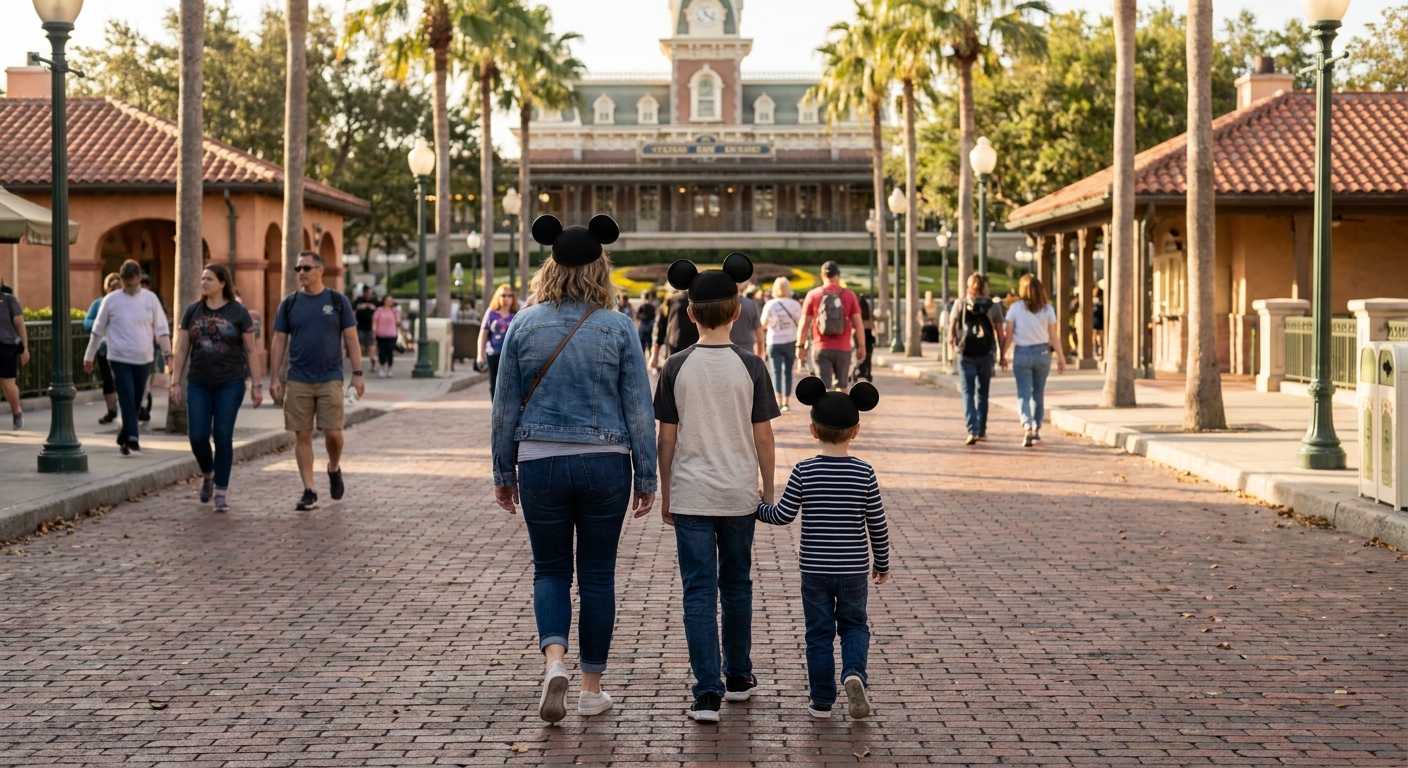
Where You Can Actually Get Sushi at Disney World Resorts
There is exactly one true resort sushi bar on property — Kimonos at the Walt Disney World Swan — and everything else is a restaurant that happens to serve raw fish. Knowing which category you’re walking into is the whole game, because they book differently, cost differently, and fail differently.
The three tiers of resort sushi
Not all “sushi” on a resort menu means the same thing. Sort your options before you sort your schedule.
| Tier | What it means | What to expect | Best for |
|---|---|---|---|
| Real sushi bar | Sushi is the menu, with a chef working a counter | Full nigiri/sashimi/roll range, bar seats, dinner-only hours | A destination dinner |
| Sushi-adjacent | Signature or lounge menu with a genuine raw-fish section | A handful of rolls, maybe sashimi or crudo, alongside a full non-sushi menu | Mixed tables |
| Grab-and-go | Packaged rolls in a resort market or quick-service case | Cold, simple, fine — not a meal you brag about | 9:30 PM balcony dinners |
Kimonos at the Swan is the only property-resort option that sits cleanly in tier one. It’s a sushi bar with karaoke in the evenings, entry-level rolls in the single digits, and premium items that can run several times that. The rest of your “resort sushi” options live in tier two: signature restaurants and resort lounges at places like the Grand Floridian and the Contemporary area, where a sashimi starter or a couple of rolls show up on an otherwise broad menu. That’s not a knock — a mixed table is often better served by tier two, because the non-sushi eaters get real food instead of a cucumber roll and a sigh.
How to tell a sushi bar from “has a roll on the menu”
- [ ] Is there a visible sushi counter with chefs working it? (Bar seats = real sushi bar.)
- [ ] Does the menu have a nigiri/sashimi section, or just three rolls under “starters”?
- [ ] Are there market-price items? Those usually signal a kitchen sourcing fish seriously.
- [ ] Is it dinner-only? Sushi bars usually are; broad-menu restaurants usually aren’t.
- [ ] Does the menu have real cooked coverage — noodles, grilled proteins, kids’ options?
That last box is the one most groups skip, and it’s the reason a lot of sushi dinners go sideways. One omakase enthusiast plus three people hunting chicken nuggets is an expensive, tense hour.
Pro tip: Before you order anything marked “market price,” ask what it is tonight. Servers field that question constantly, and it’s the difference between a reasonable sushi dinner and one plate that quietly adds a triple-digit line to your check — especially on wagyu preparations and premium fish, where the number moves and nobody announces it.
Why resort sushi is a different decision than Disney Springs or in-park
This guide deliberately stays inside the resort hotels, and that’s not an arbitrary line. Resort sushi is a logistics decision as much as a food one:
- Resort meals fold into your day. You park in the morning, come back, eat where you sleep. No return trip, no third bus.
- Disney Springs and in-park sushi add a leg. Springs means driving or a bus both ways at the end of a long day; in-park means burning touring hours on a sit-down meal.
- Resort-to-resort travel is the hidden tax. Disney transportation between two hotels almost never runs direct. The Swan and Dolphin sit in the EPCOT area — walkable or a boat ride to EPCOT and Hollywood Studios — but getting there from Animal Kingdom Lodge can mean two legs and a transfer.
- Booking systems differ. Disney-operated resort restaurants live in My Disney Experience; the Swan/Dolphin side often does not. That distinction decides your entire reservation strategy.
The fallback tier nobody plans for
Some resort quick-service spots and market cases carry packaged sushi rolls. Is it the same as a counter meal? Obviously not. But at 9:30 PM with a melted-down kid and a 6:45 AM rope drop ahead of you, a roll and some edamame on your balcony is the correct call — and you’ll be asleep an hour before the people who drove to Disney Springs.
The move is to rank your fallbacks before the trip, not at 7 PM when you’re hungry and annoyed:
- [ ] Pick the real sushi bar closest to where you’re sleeping
- [ ] Identify one tier-two restaurant or lounge in your resort area that serves raw fish
- [ ] Know which market or quick-service case near your room stocks packaged rolls
- [ ] Confirm last seating times before you commit to a cross-property trip
Parties of two can usually solve a same-night craving with a walk-up bar seat or a lounge starter. Parties of six can’t — you need a table, and the table you want is already taken. That’s where SupaPark’s dining Drop Watch earns its keep: it pings you the moment a cancellation frees up the slot you actually want, and you grab it in My Disney Experience. Free accounts get those alerts by email at supapark.com.
Kimonos at the Walt Disney World Swan: The Honest Review
If one person at your table genuinely loves sushi, this is the reservation to build an evening around — and if nobody does, it’s an expensive room-tone experience you’ll regret. Kimonos is the flagship pick on property for a reason, but it earns that spot on fish quality and atmosphere, not on convenience or value math.
What the room actually feels like
It’s a lounge first, a restaurant second. Dark wood, low light, a proper bar you can sit at, and — most nights — karaoke once the evening gets going. That last part is not background music. It’s a real volume shift, and it’s the single most misunderstood thing about this restaurant.
- Bar seating is the underrated play. It’s where walk-up parties of two actually get in, and it’s the fastest version of the meal.
- Early seating ≠ late seating. The same restaurant at 5:30 PM and 8:30 PM are two different rooms. Early is calmer; late is a party.
- Dinner only. There’s no lunch service, which means it can’t rescue a midday hole in your plan — it has to be the destination at the end of your day.
Why dinner-only reshapes your whole day
A resort sushi dinner is not a refuel between rides. Treat it like one and you’ll surrender two hours of park time for a meal you’re too tired to enjoy.
- [ ] Park in the morning and early afternoon, sushi at night — no return trip to the park
- [ ] Or go park-free that evening entirely: no touring pressure, no fireworks-crowd exit scrum
- [ ] Confirm the last seating before you leave your resort
- [ ] If you’re coming from outside the EPCOT area, add 30–45 minutes of buffer — resort-to-resort transportation almost never runs direct, and a trip from, say, Animal Kingdom Lodge can be two legs
- [ ] Price a rideshare before you commit to a two-transfer bus plan
Guests staying in the EPCOT resort area have an enormous advantage here: you can walk or take the boat. If that’s you, this is close to a no-brainer. If it isn’t, the travel time is a real cost you should price into the meal.
The quality-to-price read
The menu has unusually wide range, and that’s the thing to exploit. Basic rolls run in the single digits, while premium items — certain fish, wagyu preparations — are often listed at market price. Two people at the same table can produce wildly different checks.
| What you’re ordering | Rough cost shape | Who it’s for |
|---|---|---|
| Entry-level rolls, vegetarian summer roll (historically around $5–6) | Single digits | Sushi-curious guests testing the water cheaply |
| Mid-tier specialty rolls | Moderate | The default order for most tables |
| Market-price fish and premium cuts | Unlisted, can be steep | Committed sushi fans who want the best on property |
Pro tip: Before you order anything marked “market price,” ask what it is tonight. Servers field that question constantly, it’s not rude, and it’s the difference between a reasonable sushi dinner and one plate that lands as a surprise triple-digit line on the check.
Service pacing is lounge pacing — relaxed, order-in-waves, nobody rushing you out. Order a starter round and reassess rather than firing everything at once; rolls fill you up slower than they look, and groups reliably over-order for the hunger they feel at minute one instead of minute twenty.
Best for / skip if
- [ ] Best for: committed sushi fans who want the strongest version available on property
- [ ] Best for: sushi-curious first-timers — the cheap entry rolls make experimenting low-risk
- [ ] Best for: an adults’ night, a date night, or a group that wants a bar and some noise
- [ ] Best for: EPCOT-area resort guests who can walk or boat over
- [ ] Skip if: you’re optimizing dining-plan value above everything else
- [ ] Skip if: you have young kids who need an early, fast, quiet dinner
- [ ] Skip if: you want a silent, conversation-focused meal — karaoke nights are emphatically not that
- [ ] Skip if: you need lunch; build it into your evening instead
The kids question, answered honestly
Dinner-only hours plus a lounge environment plus a sushi-forward menu plus evening entertainment adds up to a long sit at precisely the hour when little kids are fried. There are rolls a five-year-old will happily eat — the room just isn’t built around keeping one occupied. Treat this as an adults-and-older-kids reservation and everyone has a better night.
If the time slot you want is gone, don’t settle for a 4:45 PM table that yanks you out of a park mid-afternoon. A SupaPark dining Drop Watch pings you the moment a cancellation frees up the slot you actually want, and you grab it in My Disney Experience. Waiting beats compromising here, because a badly timed sushi dinner is the version people regret.
The takeaway: book Kimonos as the main event of an evening, not a stop inside a park day — and go in knowing you’re paying for fish quality and atmosphere, not efficiency.
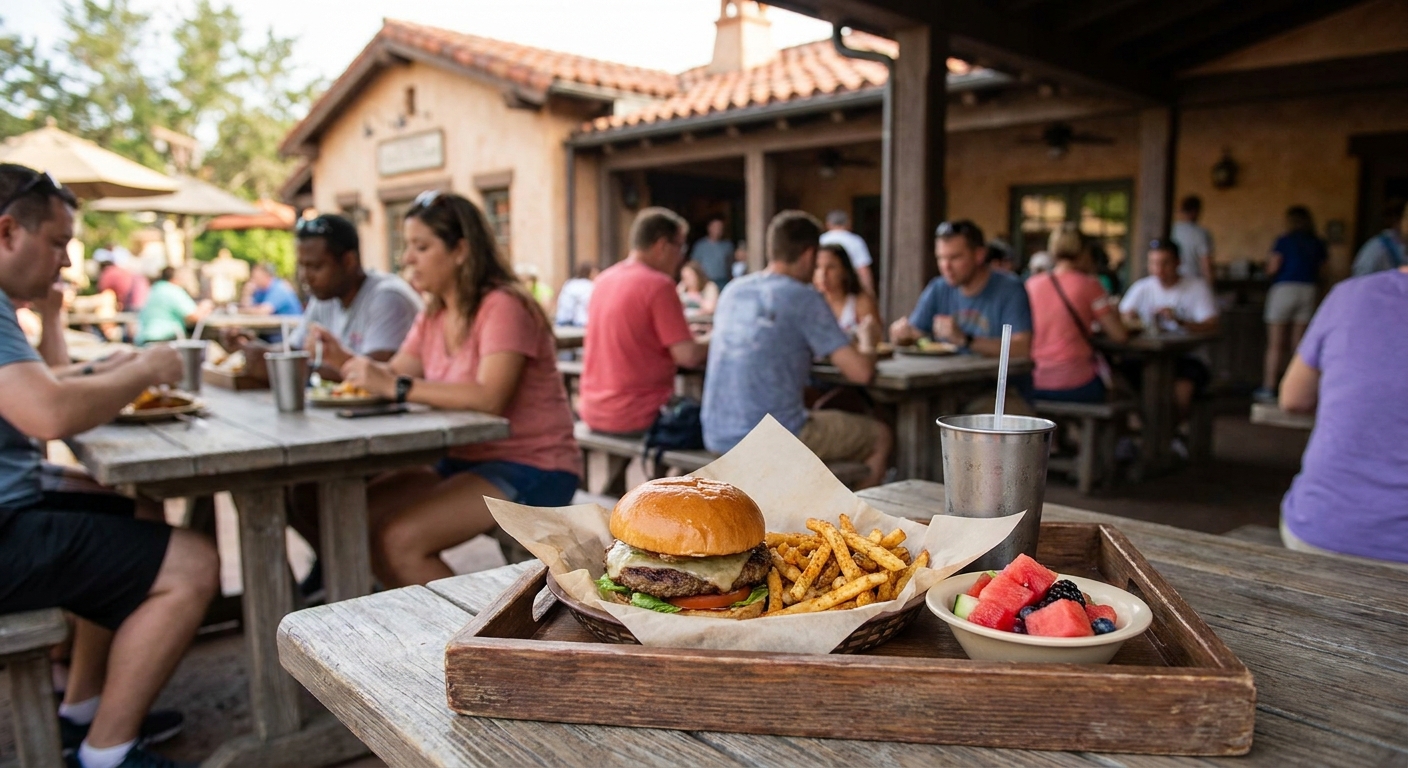
What to Order at Kimonos: A Build-Your-Table Game Plan
Order in two rounds, not one — a starter set, then reassess once the first plates land. Sushi arrives in waves and fills you up slower than it looks, so groups routinely order for the hunger they feel at minute one and regret it at minute twenty. You can always add. You can never un-order.
Kimonos sits at the Walt Disney World Swan, in the EPCOT resort area — walkable or a boat ride from EPCOT and Hollywood Studios. Menus and prices change, so treat everything below as a pattern that has held up, not a guarantee.
Round One: The Starter Set
Build your first order so every seat at the table has something, and nothing is a commitment.
- [ ] One or two cheap entry rolls (cucumber, avocado) — the low-risk way for a sushi-curious person to find out if they like it
- [ ] The vegetarian summer roll — historically one of the cheapest things on the menu, often around $5–6, and the single best filler for a non-sushi eater
- [ ] One specialty roll for the table to split — this is where the kitchen actually shows off
- [ ] One cooked or hot item for the person who won’t touch raw fish
- [ ] Edamame or a shared starter to slow the table down while the rolls come out
- [ ] Water for everyone, before anybody orders a second drink out of thirst
Then stop. Eat. Decide.
What to Share vs. What to Order Solo
| Item type | Share or solo | Why |
|---|---|---|
| Basic rolls (cucumber, avocado) | Share | Cheap, 6–8 pieces, easy to pass around |
| Signature/specialty rolls | Share | Richest per bite; one is usually plenty for 2–3 people |
| Cooked/hot items | Solo | The non-sushi eater needs their own full portion, not two bites |
| Nigiri or sashimi pieces | Solo | Order what you want; nobody shares their favorite fish |
| “Market price” items | Solo, and ask first | Priced by the night — see below |
The Market-Price Trap
Pro tip: Before you order anything listed at “market price,” ask what it is tonight. Premium items — wagyu preparations, certain fish — float with cost, and nobody volunteers the number until the check lands. Basic rolls here can run in the single digits, so the exact same table can produce wildly different bills depending on one plate. Servers field this question constantly; asking is normal, and it’s the difference between a reasonable sushi dinner and a surprise triple-digit line item.
Covering the Person Who Doesn’t Eat Raw Fish
This is the quiet trip-killer: one person who loves omakase plus three people hunting chicken nuggets equals an expensive, tense hour. Before you book, scan the menu for real non-sushi coverage — cooked items, noodle dishes, hot plates — not just “they’ll find something.”
If the answer is thin, the move is to give that person the summer roll plus a cooked item and let them graze, rather than hoping a specialty roll converts them mid-meal. There are rolls a kid will eat here, but the room is a dinner-only lounge with evening entertainment, not a place built to keep a five-year-old occupied.
Dietary Asks: Be Specific, and Ask About the Sauces
Vague requests get vague answers. Give the kitchen something to work with.
- Vegetarian/vegan: Ask whether the sushi rice is seasoned with anything fish-based, and whether the roll’s sauces are.
- Gluten: Standard soy sauce contains wheat, so a “gluten-free roll” served with house soy is not a gluten-free meal. The usual hiding spots are eel sauce, spicy mayo, and ponzu — ask about all three by name.
- The traveler’s workaround: Some guests carry single-serve gluten-free tamari packets and use them at the table. Ask first, but it’s a common and generally welcomed move at sushi counters where GF tamari may not be stocked.
The One Dish That Makes It Feel Special
If you want the meal to land as an occasion rather than dinner, add one signature/specialty roll beyond your sharing roll and treat it as the centerpiece — order it deliberately, let the table taste it, don’t bury it under four other plates. One standout beats three merely-fine rolls, and it costs less.
Skip the Restaurant Dessert
Round two is for more sushi if you want it, not a dessert course on reflex. A DOLE Whip or a Mickey Premium Bar back in the park — or a treat from a resort shop — is cheaper, easier to split, and better timed to when you’re actually hungry again, which is usually 40 minutes later, not at the table.
The takeaway: two rounds, one shared specialty roll as the centerpiece, the cheap summer roll as insurance for your non-sushi eater, and a direct question about anything marked market price. That’s the whole game.
Resort Sushi Compared: Quality, Price, Vibe, and Kid-Friendliness
The honest summary: resort sushi at Walt Disney World splits into two camps — destination sushi bars you build an evening around, and sushi-adjacent menus where a few rolls ride along with a broader lounge or restaurant list. Knowing which camp you’re booking is the whole game.
Treat a resort sushi bar like a park attraction and you’ll lose. These are sit-down, evening-weighted meals in rooms built for adults and older kids — not a refuel stop between Lightning Lane windows.
The Comparison Grid
| Option | Resort | Meals | Sushi depth | Typical roll band | Noise & vibe | Kid-friendly? | Booking system | Difficulty | Best for |
|---|---|---|---|---|---|---|---|---|---|
| Kimonos | Walt Disney World Swan | Dinner only | Full sushi bar | Basic rolls in the single digits; premium/market items much higher | Lively lounge; karaoke nights get loud | Older kids yes, young kids no | Swan/Dolphin’s own system — usually not My Disney Experience | Moderate; prime slots go first | Sushi fans and sushi-curious first-timers who want a real bar scene |
| Deluxe-resort signature restaurants with raw-fish starters | Monorail-area and other Deluxe resorts | Dinner (some lunch) | Partial — a handful of rolls or raw starters inside a bigger menu | Appetizer-priced, often market-price fish | Polished, quieter, conversation-friendly | Mixed tables do fine; real non-sushi coverage | My Disney Experience, ADRs at 60 days / 6:00 AM ET | Varies by restaurant; signature slots are the tight ones | A mixed table where one person wants sushi and three don’t |
| Resort lounges with a few rolls | Deluxe and EPCOT-area resorts | Afternoon into late evening | Shallow — a few rolls, edamame, cooked sides | Small-plate pricing | Loud-ish, casual, fast | Depends on the room; short sit helps | Mostly walk-up | Easiest — parties of two walk in | Two adults who decided at 8 PM |
| Packaged rolls at resort markets / quick service | Across resorts | All day until close | Grab-and-go cases | Cheapest tier by far | Zero ambiance, zero wait | Very — eat on the balcony | None | None | The 9:30 PM meltdown night before a rope drop |
Pro tip: Before you order anything listed at “market price” — wagyu preparations, certain fish — ask what the number is tonight. Servers field that question constantly, and it’s the difference between a reasonable sushi dinner and one plate that lands as a triple-digit line item on a check you didn’t see coming.
Best Overall Quality
If you want the best version of sushi on property, a dedicated sushi bar beats a few rolls bolted onto a steakhouse menu — and Kimonos at the Swan is the reference point. A real sushi counter, a kitchen that makes rolls all night, and a crowd that came for exactly this. The catch is the room: dinner-only hours, lounge noise, and karaoke mean this is not a quiet, conversation-focused meal. Book it as an adults’ night or a date night and it’s a highlight. Book it for a five-year-old at 7:45 PM and you’ve engineered a long sit at the worst hour of the day.
Best Value
Entry-level rolls at a spot like Kimonos running in the single digits is the quiet value story nobody mentions — it makes experimenting cheap for a first-timer. The vegetarian summer roll has historically sat near the bottom of the menu price-wise, often around $5–6, which also makes it a legitimate filler for the one person at the table who doesn’t eat fish. Where value dies is over-ordering: rolls fill you up slower than they look, so groups order for minute-one hunger and regret it at minute twenty.
- [ ] Order a starter round, then reassess — you can always add
- [ ] Ask what’s market price before it hits the ticket
- [ ] Decide drinks up front (“two rounds, then water”); ask for iced water early
- [ ] Skip restaurant dessert if it’s optional — a DOLE Whip or Mickey Premium Bar later is cheaper and better timed
Best for a Mixed Table
A signature restaurant with raw-fish starters inside a broader menu wins here, every time. One adult who loves omakase plus three people hunting cooked food equals a tense, expensive hour at a pure sushi bar. Check for real non-sushi coverage — cooked entrées, noodles, something a kid will actually eat — before you commit the group. And if you need gluten-free, know that standard soy sauce contains wheat, so a “gluten-free roll” with house soy isn’t a gluten-free meal; ask about eel sauce, spicy mayo, and ponzu too, since those are the usual hiding spots. Plenty of guests carry single-serve gluten-free tamari packets and ask to use them at the table — ask first, but it’s a common and generally welcomed workaround.
Best for Convenience
Walk-up bar seats and lounge rolls solve a party of two tonight. A party of six needs a reservation, and that’s where booking system matters most: Disney-operated restaurants live in My Disney Experience (ADRs at 60 days, 6:00 AM ET), while the Swan/Dolphin side often does not — refreshing the wrong screen on 60-day morning is the classic unforced error. If your ideal time is gone, don’t take a 4:45 PM table that yanks you out of a park mid-afternoon. Set a SupaPark dining Drop Watch and you’ll get pinged the second a cancellation frees the slot you actually want, then grab it in My Disney Experience. Waiting beats compromising here — a badly timed sushi dinner is the version people regret.
Cost Breakdown: What a Resort Sushi Dinner Actually Runs
Resort sushi can be a $40 dinner or a $300 dinner at the same table on the same night — and the thing that decides it is almost never the rolls. It’s the market-price plates, the drink count, and whether you ordered a second round of food you didn’t need.
Here’s the honest math, built from how these menus are actually structured: a few entry-level rolls in the single digits, specialty rolls a tier up, and premium items — wagyu preparations, certain fish — that carry no printed number at all.
Three realistic tables
| Scenario | What’s on the table | Rough food + drink | The variable that blows it up |
|---|---|---|---|
| Solo, sitting at the bar | Two rolls (one basic, one specialty), edamame, one beer | Lowest-cost version of this meal by a wide margin | Adding one market-price plate “to try” |
| Two adults, date night | Four rolls, a shared starter, a sake flight or two cocktails | Mid-range; the drinks often rival the food | Second drink round + dessert |
| Family of four, two non-sushi eaters | Two rolls, two cooked/noodle items, a cucumber or veggie roll (often around $5–6), four drinks | Highest total, lowest satisfaction per dollar | Four sodas on reflex; over-ordering rolls |
The pattern worth internalizing: the solo bar seat is the best value-per-bite on property, and the family-of-four version is the one most likely to feel like a bad trade — because you’re paying sushi-bar prices for chicken and noodles.
Pro tip: Before you order anything marked “market price,” ask the server what it is tonight. They field that question constantly, nobody is offended, and it is the single line between a reasonable sushi dinner and one plate that lands triple digits on your check. Market price means the number moves and no one volunteers it until the bill does.
The line items planners forget
- Tax and tip. Add roughly a quarter on top of your food-and-drink subtotal before you decide whether this fits your budget. On a date night that’s real money, not rounding.
- Drinks. Easily the fastest-growing line. Kids drink water — ask for iced water cups and pour them into your own insulated bottle, the same move that saves you in the parks.
- Dessert you don’t need. Rolls fill you up slower than they look. Skip restaurant dessert and grab a DOLE Whip or a Mickey Premium Bar later — cheaper, splittable, and timed to when you’re actually hungry again.
- Transportation. This is the hidden cost nobody models. Resort-to-resort transit on Disney buses rarely runs direct; getting from Animal Kingdom Lodge to the Swan can mean two legs. A one-way rideshare across property typically costs less than you’d guess and saves 30–45 minutes each direction — price it before you commit to a two-transfer bus plan.
How it stacks up against your other dinner options
| Option | Relative cost per adult | What you’re buying |
|---|---|---|
| Resort quick service or a packaged roll from a resort market | Lowest | Speed, zero travel, in bed an hour earlier |
| Resort sushi bar (basic + one specialty roll, one drink) | Moderate | Real sushi, a bar seat, no park-time loss if you schedule it at night |
| Resort sushi with market-price items and a drink flight | High | A genuine special-occasion meal — if you chose it on purpose |
| Signature park restaurant | High, and more predictable | Fixed menu pricing, atmosphere, but a mid-day or fireworks-hour time commitment |
The read: resort sushi with restrained ordering lands near or below a signature park meal, and it costs you less park time because you’re eating after you’ve already left. Resort sushi with two market-price plates and a round of cocktails passes a signature meal easily.
Keep the bill where you want it
- [ ] Ask tonight’s market price before anything unpriced goes on the order
- [ ] Order in two rounds — a starter set, then reassess; you can always add
- [ ] Decide your drink count up front (“two rounds, then water”)
- [ ] Start with one flight or one carafe for the table instead of individual pours
- [ ] Ask for water refills early so nobody orders a third drink out of thirst
- [ ] Price a rideshare against your transit plan before you leave
- [ ] Skip the restaurant dessert and treat yourself back at the resort
The takeaway: budget this meal as food + drinks + about 25% + transportation, and treat every market-price item as an unknown until you’ve asked. A table that orders in two rounds and drinks deliberately usually spends meaningfully less — and remembers the meal better.
Dining Plan and Discounts: Where Resort Sushi Lands
Here’s the honest math: a sushi-forward order is usually one of the weakest ways to spend a dining-plan credit, and the fix isn’t a workaround — it’s deciding you’re paying out of pocket and being fine with that.
Dining plans tend to reward meals built around a single, clearly-priced entrée. Sushi doesn’t work that way. You order four small things, share them, add edamame, maybe a starter, and the “entrée” the plan is designed to cover barely exists on the menu in that shape. You can absolutely use a credit at a Disney-operated table-service spot that serves sushi — you just often leave value on the table compared to burning that same credit at a steak-and-sides restaurant.
Why Sushi Ordering Fights the Credit Math
- Rolls are à la carte by nature. The way people actually eat sushi — a few rolls across the table — rarely maps cleanly onto a one-credit entrée.
- Market-price items blow past any credit value. Wagyu preparations and certain fish are listed at market price, meaning the number moves and nobody announces it. One plate can dwarf what a credit is worth.
- The cheap stuff is genuinely cheap. Basic rolls at a spot like Kimonos at the Swan can run in the single digits, and a vegetarian roll often lands around $5–6. Spending a premium credit on a table of inexpensive rolls is the worst trade in the building.
- Lounges and bars often aren’t credit territory at all. Bar seating, lounge menus, and walk-up service frequently sit outside plan participation even at restaurants that otherwise accept it.
Pro tip: Before you order anything marked “market price,” just ask what it is tonight. Servers field that question constantly, and it’s the single line between a reasonable sushi dinner and one surprise triple-digit item on the check — no dining plan, discount, or budget survives that unasked.
Swan and Dolphin Are a Different Animal
This is the part that catches people. The Swan and Dolphin sit squarely in the EPCOT resort area — boat or walking path to EPCOT and Hollywood Studios — but they are not Disney-operated hotels. They run under a separate hospitality brand, which changes more than you’d expect:
| What you’re assuming | What’s often actually true at Swan/Dolphin |
|---|---|
| It books in My Disney Experience | Many of its restaurants book through the hotel’s own system instead |
| Disney dining plans apply | Participation varies and has changed over time — verify, don’t assume |
| Annual Passholder dining discount applies | Not automatic; these are independently operated restaurants |
| DVC member discount applies | Same — treat it as a separate program, not a Disney one |
| It’s “a Disney resort restaurant” for perks | It’s an EPCOT-area hotel with Disney transportation, not Disney operations |
None of that makes it worse — Kimonos remains one of the better sushi experiences on property. It just means the perk logic you’ve internalized for Disney-operated restaurants doesn’t transfer, and you should confirm current terms directly with the restaurant before you build a budget around a discount.
When a Discount Actually Changes the Call
Annual Passholder and Disney Vacation Club dining discounts, where they apply, are typically a percentage off the food portion of the check at participating table-service locations. That matters most on exactly the kind of bill sushi produces — a sprawling, shared, multi-item order rather than a tight one-entrée meal.
- A percentage discount scales with your total, so it’s worth more on a $150 table than a $60 one.
- Discounts generally don’t stack with a dining plan credit on the same meal — you’re picking one lane.
- Participation lists change. “My pass worked here last trip” is not a plan.
Verify These Before You Build a Budget
- [ ] Which booking system the restaurant uses — My Disney Experience, or the hotel’s own
- [ ] Whether it currently accepts Disney dining plans at all
- [ ] Whether your Annual Pass or DVC discount is honored there right now
- [ ] Whether the discount applies to bar/lounge seating or only the dining room
- [ ] Whether alcohol is included or excluded from the discount
- [ ] What the market-price items run tonight, asked at the table
The Smart Move
Decide upfront which bucket this meal is in. If it’s a credit meal, pick a restaurant whose menu is built around real entrées and save the sushi night for cash. If it’s a cash meal, order the way you actually want to eat, ask about market price, and check whether a discount applies before you tip-calculate.
And if the timing is the obstacle rather than the money — the 4:45 PM table is all that’s left, and it would torch your afternoon — don’t compromise. SupaPark’s dining Drop Watch pings you the second a cancellation frees up the slot you actually want, and you grab it in My Disney Experience. Waiting beats settling here, because a badly timed sushi dinner is the version people regret.
Reservations: How and When to Book Resort Sushi
The biggest resort-sushi mistake isn’t ordering wrong — it’s booking in the wrong app entirely. Disney-operated restaurants live in My Disney Experience. The Swan and Dolphin side often doesn’t. If you spend 60-day morning refreshing My Disney Experience looking for a Swan sushi table, you can refresh until your thumb cramps and it will never appear, because it was never going to be there.
That one distinction decides your whole strategy.
Know Which Booking System You’re In
Walt Disney World resort restaurants fall into two camps, and they behave completely differently.
| Disney-operated resort restaurants | Swan & Dolphin side | |
|---|---|---|
| Where you book | My Disney Experience (app or website) | The hotel’s own reservation channel — often a third-party booking platform or by phone |
| When it opens | Advance Dining Reservations, 60 days before arrival, 6:00 AM Eastern | Typically a longer, looser window; not tied to Disney’s 60-day drop |
| Dining plan / Disney discounts | Generally yes | Often not — these hotels aren’t Disney-operated |
| Day-of inventory | Cancellations trickle back all day | Cancellations trickle back, plus real walk-up and bar-seat odds |
- [ ] Confirm which camp your target restaurant is in before you build a booking plan
- [ ] Set a calendar alert for 60 days before your arrival date — not before the meal date
- [ ] Be logged in and in the app by 5:55 AM Eastern, with your party size and date pre-loaded
- [ ] For the Swan/Dolphin side, check the hotel’s own channel as soon as your dates are firm
- [ ] Re-check both channels 7–10 days out, when the big cancellation wave hits
The 60-day, 6:00 AM Eastern window is for Advance Dining Reservations only. Lightning Lane Multi Pass selections open at 7:00 AM Eastern on your eligible day — seven days before arrival for Disney resort guests, three for off-site. Two different systems, two different clocks. Don’t let one alarm cover both.
Pro tip: You don’t need a 60-day booking to get a good resort sushi table — you need a cancellation. Dinner-only sushi spots sit in exactly the window where plans collapse: parties get stuck at a park, kids melt down, someone books three dinners and keeps one. The inventory that frees up at 48 hours out is often better-timed than what was available at day 60.
Walk-Ups and Bar Seats Are the Real Back Door
For a party of two, sushi bar or lounge seating is the most underrated reservation hack on property. Counters hold seats for walk-ups, and a pair can usually slide in where a table of six has no chance. Show up early in service, not at peak. The move:
- Arrive right at opening or in the 8:00–9:00 PM lull, not at 7:00 PM
- Ask specifically for bar or lounge seating, not “a table”
- Order from the full menu where allowed — bar seats often get the same list
- Split up: two people eat at the bar now, rather than all six waiting for nothing
Parties of four or more should treat walk-ups as a fallback, not a plan.
Last Seating Is the Number Nobody Checks
Resort sushi is dinner-service food, and last seating comes earlier than guests expect — often well before the restaurant’s posted closing time, because the kitchen stops seating before it stops serving. If you’re leaving a park at 8:15 PM, crossing property on Disney transportation, and hoping to be seated by 9:00, verify the last seating time before you commit to that plan. A two-leg bus trip to a closed kitchen is a genuinely miserable end to a park day.
- [ ] Check last seating, not closing time
- [ ] Add 30–45 minutes of buffer for resort-to-resort transportation
- [ ] Have one quick-service or grab-and-go fallback picked in advance
Don’t Settle for the Wrong Time Slot
Here’s where most planners go wrong. The 7:30 PM table is gone, so they grab the 4:45 PM — and now they’re leaving a park mid-afternoon, mid-day, right when they’ve already paid for the ticket. A badly timed sushi dinner is the version people regret.
Waiting beats compromising here. Rather than camping on the reservation screen, let SupaPark’s dining Drop Watch do it: you get pinged the second a cancellation frees the slot you actually want, then you book it yourself in My Disney Experience. Free accounts get Drop Watch alerts by email; paid plans add instant push. Either way, you’re not refreshing — you’re riding something while the alert finds you. Details at supapark.com.
The takeaway: identify the right booking channel first, set your alarm for 60 days before arrival at 6:00 AM Eastern if it’s a Disney restaurant, and if your ideal time is already gone, watch for the drop instead of accepting a time that wrecks your day.
The Best Time to Go: Timing Your Sushi Night Around Park Days
The single best scheduling rule for resort sushi: it goes at the END of your day, never in the middle of it. Most of these restaurants are dinner-only lounge environments with evening entertainment — which means the meal is naturally a two-hour sit, not a refuel. Treat it like a destination and the night works. Treat it like a pit stop and you’ve burned your afternoon park hours on a table you were too fried to enjoy.
Why end-of-day beats mid-day, every time
Dinner-only hours do you a favor if you let them. There’s no 11:30 AM sushi window to tempt you out of a park, so the only real question is how late you push the table.
- No return trip. Park morning, resort evening, bed. You never pay the transportation tax twice.
- You skip the fireworks crush. A 7:30 PM sushi table means you’re not fighting the post-show exodus on a monorail or bus platform.
- Nobody’s rushing you. The worst version of this meal is checking your watch because you want to be back in the park before closing.
Pro tip: If your ideal time is gone, do not settle for a 4:45 PM table. That slot forces a mid-afternoon park exit — you lose the best touring hours of the day and you’ll still be eating before anyone’s hungry. Set a SupaPark dining Drop Watch instead; it pings you the second a cancellation frees up the slot you actually want, and you grab it in My Disney Experience. Waiting beats compromising here, because a badly timed sushi dinner is the version people regret.
Early vs. late seating: the real trade-off
| Seating | What you get | Watch out for |
|---|---|---|
| ~5:00–6:00 PM | Quietest room, fastest service, easiest walk-up bar seats | Pulls you out of a park mid-afternoon; entertainment usually hasn’t started |
| ~6:30–7:30 PM | The sweet spot — park morning done, room has energy, you’re home by 9:30 | Highest-demand slots; book or Drop Watch these |
| ~8:30 PM and later | Full lounge atmosphere, karaoke-night peak at spots like Kimonos | Long sit at a bad hour for kids; confirm last seating before you travel |
Nights matter too. Weeknights early in the week tend to run calmer than Friday and Saturday, when resort bars fill with locals, conference crowds in the EPCOT area, and park guests who’ve hopped over. If you want conversation, go early and midweek. If you want the room loud and fun, go late on a weekend — just know karaoke nights are not a quiet, conversation-focused meal, and that’s a feature, not a bug.
Who this hour is wrong for
A sushi-forward menu, a bar environment, and live entertainment add up to a long evening at exactly the hour little kids are done. There are rolls a five-year-old will eat, but the room isn’t built to keep one occupied. This is an adults-and-older-kids reservation. If your group needs early, fast and quiet, book something else and save sushi for a night when the kids are with a sitter — or grab packaged rolls and edamame from a resort market and eat on your balcony before a 6:45 AM rope drop.
Sample Plan A: EPCOT-area park morning + sushi night
- [ ] Rope-drop EPCOT or Hollywood Studios; take your Lightning Lane Multi Pass selections early and keep refilling through the morning
- [ ] Hard stop around 3:00–4:00 PM — back to the resort, shower, actual rest
- [ ] Walk or boat to your sushi spot for a ~7:00 PM table (Swan and Dolphin sit on the EPCOT-area walking and boat paths)
- [ ] Order in two rounds, not one; share a flight instead of individual pours
- [ ] Optional nightcap: stroll the BoardWalk instead of re-entering a park
Sample Plan B: full resort day, sushi as the anchor
- [ ] Sleep in — no park, no Lightning Lane, no 7:00 AM alarm
- [ ] Pool or a boat ride in the morning; light lunch at a quick-service spot
- [ ] Afternoon recreation or a nap, deliberately
- [ ] 7:30 PM sushi with zero touring pressure and no rush to beat fireworks crowds
- [ ] Budget 30–45 minutes of buffer if you’re crossing resorts on Disney transportation — resort-to-resort almost never runs direct, and a two-transfer bus plan is often worth pricing a rideshare against
The one thing to remember: pick the sushi bar closest to where you’re already sleeping, put it at the end of a park day or in the middle of a park-free evening, and confirm the last seating before you leave your room. Good timing is most of what makes this meal worth the money.
Getting There: Transportation to Resort Sushi Bars
The rule that saves the whole evening: pick the sushi bar closest to where you’re sleeping, not the one that scored highest on someone’s list. A resort sushi dinner is a destination meal, and Disney transportation was never designed to move you resort-to-resort. Get the geography wrong and you’ll spend more time in transit than at the counter.
Why resort-to-resort travel is the trap
Disney’s buses radiate out from the parks and Disney Springs, not between hotels. There is almost never a direct resort-to-resort route. That means a trip from, say, Animal Kingdom Lodge to the Swan or Dolphin — which sit in the EPCOT resort area — typically becomes two legs: get to a hub, wait, then get on the next thing. Each transfer adds a wait you can’t control, and the waits stack at exactly the hours everyone else is also moving.
The flip side: if you’re already in the EPCOT resort area, the Swan and Dolphin are one of the easiest dinners on property. Friendship boats and well-marked walking paths connect that whole pocket to both EPCOT and Hollywood Studios, so you can walk off a park day and be seated without touching a bus.
The honest travel-time picture
| Your situation | Realistic approach | What to expect |
|---|---|---|
| Staying in the EPCOT resort area | Walk or take the Friendship boat | Shortest, most reliable option — boats pause in storms, paths don’t |
| Coming out of EPCOT or Hollywood Studios | Boat or walking path to the Swan/Dolphin area | Easy if you end your park day there, rather than leaving mid-day and coming back |
| Staying at a monorail or Skyliner resort | Your line to a hub, then a second leg | Two-leg trip; the transfer is where the time disappears |
| Staying somewhere like Animal Kingdom Lodge | Price a rideshare first | A two-transfer bus plan can eat an hour-plus each way |
| Any resort, any plan, bad weather in the forecast | Have a backup leg in mind | Skyliner and boats can pause; buses keep running |
Build the evening so there’s no return trip
The scheduling fix is simpler than the routing fix: do your park in the morning, do resort sushi at night, and don’t go back. Leaving a park mid-afternoon to travel across property for a 4:45 PM table is how people burn two hours of park time on a meal they were too tired to enjoy.
The other version that works beautifully: make it your park-free evening entirely. No touring pressure, no racing fireworks crowds back onto a boat with three thousand other people, no 6:45 AM alarm guilt. Resort-hopping to dinner is genuinely pleasant when it’s the point of the night instead of an interruption.
The pre-departure checklist
Run this before you leave the room — it takes two minutes and prevents the three things that actually go wrong:
- [ ] Pick the sushi bar closest to where you’re already sleeping
- [ ] Add 30–45 minutes of buffer on any Disney transportation leg
- [ ] Price a rideshare before committing to a two-transfer bus plan
- [ ] Confirm the restaurant’s last seating before you leave — several resort sushi spots are dinner-only and stop seating earlier than you’d guess
- [ ] Check that the line you’re counting on is actually running right now
- [ ] Have one backup route in your head (usually: bus instead of boat/Skyliner)
Pro tip: Price the rideshare for the return trip too, not just the outbound. Outbound you have time and patience; at 9:30 PM with a full table and a tired kid, a 20-minute car ride for around the cost of a couple of specialty rolls is the best money you’ll spend that day. Decide that before dinner, while you’re still thinking clearly.
Weather and downtime are not edge cases
Skyliner, boat and monorail service all pause — Skyliner for lightning and high wind, boats for storms, monorail for occasional technical issues, and any of them for scheduled refurbishment. Central Florida afternoon storms are routine, not unusual.
Buses are the fallback that almost always keeps moving, so the practical habit is: know which bus stop serves your route before you need it. If your plan has exactly one way to get there and one way to get back, you don’t have a plan — you have a hope.
The takeaway: geography beats enthusiasm. Choose the sushi bar you can reach on one leg from your own resort, make it the end of the day so there’s no return trip, and keep a rideshare quote and a bus backup in your pocket. The best resort sushi dinner is the one you arrive at relaxed and on time.
Dietary Needs: Gluten-Free, Vegetarian, Vegan, and Allergy Ordering
A “gluten-free roll” served with the house soy sauce is not a gluten-free meal — standard soy sauce is brewed with wheat, and that one detail trips up more guests at Disney World sushi counters than any menu item does.
This is the part most sushi roundups skip entirely. Sushi looks like naturally safe food — rice, fish, vegetables, seaweed — so guests relax exactly where they should be asking questions. The rice is seasoned. The sauces are thickened and sweetened. The crunchy topping is fried batter. Almost every allergen risk at a sushi bar lives in something drizzled, dusted, or stirred in after the fish was sliced.
The soy sauce problem, and the workaround people actually use
Gluten-free tamari exists, but it isn’t stocked everywhere, and a busy sushi bar on a Friday night may not have a bottle behind the counter. Plenty of traveling guests solve this by keeping single-serve gluten-free tamari packets in a bag and using them at the table.
Pro tip: Ask before you open your own tamari packets — it’s a common, generally welcomed move at sushi counters, and asking also prompts the server to double-check whether the kitchen has its own gluten-free bottle, which is better than guessing.
The usual hiding spots — ask about these by name
Vague questions get vague answers. “Is this gluten-free?” invites a shrug. Naming the component forces a real check with the kitchen.
| Item | What’s usually in it | Ask about |
|---|---|---|
| Eel sauce (unagi) | Soy-based, reduced and sweetened | Gluten, soy |
| Spicy mayo | Mayonnaise + chili paste | Egg, soy, dairy-adjacent swaps |
| Ponzu | Soy sauce + citrus, often with bonito | Gluten, soy, fish |
| Tempura flakes / crunch | Fried wheat batter | Gluten |
| Imitation crab | Processed whitefish with starch binders | Gluten, fish, shellfish labeling |
| Miso soup | Broth frequently built on dashi | Fish |
| Seasoned sushi rice | Vinegar, sugar — sometimes fish-derived additions | Fish, for strict vegetarians |
Imitation crab is the sneakiest of the group, because it shows up in California rolls and plenty of house specialty rolls where nobody expects a processed-wheat binder or a fish base.
Vegetarian and vegan: usually available, always worth a question
Most resort sushi menus carry at least a cucumber roll, an avocado roll, and some version of a vegetable or summer roll. At Kimonos at the Walt Disney World Swan, a vegetarian summer roll has historically sat at one of the cheapest price points on the menu — often in the $5–6 range — which makes it a genuinely useful filler plate for the non-sushi eater stuck at a sushi dinner.
Two questions decide whether “vegetarian” is actually vegetarian here:
- Is the sushi rice seasoned with anything fish-based?
- Is the miso made with dashi? (It very often is, which quietly disqualifies the soup.)
For vegans, add a third: is there egg or mayo in anything on the plate, including the sauce drizzle you didn’t order?
How to ask so you get a real answer
- [ ] Flag the allergy or restriction when you book — in My Disney Experience for Disney-operated restaurants, by phone or the restaurant’s own system for the Swan and Dolphin side
- [ ] Say it again at the table, to your server, before anyone orders
- [ ] Name the allergen, not the diet: “wheat, including soy sauce” beats “gluten-free, please”
- [ ] Ask specifically about sauces and toppings, separately from the roll itself
- [ ] Request sauces on the side so you can see what’s going on the plate
- [ ] Confirm whether the kitchen has gluten-free tamari, and ask before using your own
- [ ] For a severe allergy, ask about shared fryers and prep surfaces — tempura and fried items share equipment
The honest expectation to set
Disney World kitchens handle allergy requests constantly and are generally very good at it, but a sushi bar has more unlabeled components per plate than almost any other restaurant type on property. The more specific you are, the better the answer gets — and the more time you give the kitchen, the more they can actually adapt rather than just subtract.
If your group has real restrictions, build the sushi meal into a night when you aren’t rushing. A server who has ten minutes to go check with the sushi chef is worth more than any menu symbol. Save the allergy conversation for a 7:30 PM table on a park-free evening, not a 4:45 PM squeeze between rides — SupaPark’s dining Drop Watch can ping you when a better time frees up so you’re not negotiating allergens against a clock.
The one thing to remember: bring your own tamari packets, and ask about the eel sauce, spicy mayo, ponzu, tempura crunch, and imitation crab by name — those five items account for most of the surprises.
Bringing Kids: What Works, What Doesn’t, and What They’ll Eat
Treat resort sushi as an adults-and-older-kids reservation. Not because kids won’t eat sushi — plenty will — but because the format is wrong. Dinner-only hours, a lounge-style room, a menu built around raw fish, and some form of evening entertainment add up to a long, loud sit at exactly the hour a five-year-old is done being a person. The room isn’t designed to keep a young kid occupied, and no amount of cucumber roll fixes that.
Here’s the honest cut: if your youngest is around 8 and up and reasonably food-curious, this is a great night. Under that, you’re paying destination-meal money for a rushed meal and a stressed table.
The Pacing Problem, Specifically
- No lunch service at most resort sushi counters, so you can’t swap in a 12:30 PM table when everyone is fresh.
- Dinner-only means the late shift. By the time you’re seated, traveled, and ordered, you’re well past the window where young kids hold it together.
- Sushi arrives in waves. Rolls come out as they’re made, not all at once — great for adults pacing a meal, brutal for a kid who’s been promised “food is coming.”
- Entertainment cuts both ways. Karaoke nights at Kimonos are genuinely fun, and genuinely not a quiet place to negotiate with a toddler.
What a Cautious Eater Will Actually Eat
Most resort sushi menus carry real non-raw coverage. The trick is ordering it in the first round so there’s food on the table within minutes.
| Order this | Why it works for kids | Ordering note |
|---|---|---|
| Edamame | Salty, warm, finger food, arrives fast | The single best stall tactic on the menu |
| Cucumber roll | No fish, mild, familiar crunch | Ask for it cut smaller for little hands |
| Avocado roll | Creamy, no fish, filling | Often among the cheapest items |
| Vegetarian/summer roll | Veg-forward filler; Kimonos has historically listed one around $5–6 | Confirm the rice and wrapper aren’t fish-based |
| Steamed rice | The universal fallback | Not always on the menu — just ask |
| Noodle dish | Reads as “normal dinner” | Check spice level before it lands |
| Cooked items (tempura, teriyaki-style, grilled skewers) | Hot, recognizable protein | Your best bet for a true non-sushi eater |
Chicken nuggets are not the move here. If someone at your table will only eat nuggets, that’s a signal to pick a different restaurant entirely — one adult with an omakase habit plus three people hunting nuggets equals an expensive, tense hour.
Pro tip: Order the whole kid portion of the meal at the same moment you order drinks, before the adults have even settled on rolls. Edamame plus one cucumber roll hitting the table five minutes in buys you the twenty minutes of goodwill you need to actually enjoy your own order. Waiting to “see what they want” is how the meal goes sideways.
Evening Logistics (The Easy Part)
Good news: there’s no Rider Switch choreography at dinner, no height requirements, no one sitting out. The only real logistics are travel and timing.
- [ ] Make it the end of the day — park in the morning, resort sushi at night, no return trip to a park afterward.
- [ ] Or make it a park-free evening entirely: no touring pressure, no racing fireworks crowds out of a gate.
- [ ] Pick the sushi bar closest to where you’re sleeping. Resort-to-resort transportation almost never runs direct — Swan and Dolphin sit in the EPCOT area (walk or boat to EPCOT and Hollywood Studios), but getting there from somewhere like Animal Kingdom Lodge can mean two legs.
- [ ] Build in 30–45 minutes of buffer on Disney transportation, and price a rideshare before committing to a two-transfer bus plan.
- [ ] Confirm the last seating before you leave. Nothing worse than arriving with a tired kid to a closed counter.
- [ ] Order in two rounds. Starter set, then reassess — you can always add, and you won’t be stuck paying for rolls nobody touched.
- [ ] Skip restaurant dessert. A treat from a resort shop on the walk back is cheaper, easier to split, and better timed to when anyone is actually hungry again.
Better Calls If Your Table Skews Young
- Split the night. One adult does the sushi bar; the other does an early, fast dinner with the kids. Trade off on another night.
- Lounge seats for two. Walk-up bar seating and lounge starters solve this instantly for a party of two — often no reservation needed.
- Packaged rolls as the correct answer. Some resort quick-service and grab-and-go cases carry packaged sushi. At 9:30 PM with a melting-down kid and a 6:45 AM rope drop ahead, a roll and an edamame on your balcony is the right decision, and you’ll be asleep an hour before the people who drove to Disney Springs.
- Push it to a non-park night later in the trip when everyone’s rhythm has settled and you’re not stacking it on top of twelve hours of touring.
If the ideal early seating is gone, don’t accept a 4:45 PM table that yanks you out of a park mid-afternoon — SupaPark’s dining Drop Watch pings you the second a cancellation frees up the slot you actually want, and you grab it in My Disney Experience. Waiting beats compromising, because a badly timed sushi dinner is the version people regret.
The takeaway: rolls a kid will eat exist; a room built for a kid to wait in does not. Book it for the table you have, not the table you wish you had.
7 Mistakes That Ruin a Resort Sushi Night
The biggest resort-sushi mistake isn’t ordering wrong — it’s scheduling wrong. A sushi bar at the Swan, in the Grand Floridian area, or near the Contemporary is a destination meal. Treat it like a quick refuel between rides and you’ll burn two hours of park time on a dinner you were too tired to enjoy.
1. Booking it mid-day and gutting a park afternoon
A 2:15 PM resort sushi reservation sounds efficient. In practice you leave the park at 1:30, eat, and get back at 4:00 — right as afternoon Lightning Lane refills and shorter standby windows are doing their best work.
- Do this instead: make it the end of the day. Park morning, resort sushi at night, no return trip.
- Or make it your park-free evening entirely — no touring pressure, no rushing to beat the fireworks exodus.
2. Underestimating resort-to-resort travel
Disney transportation between two resorts almost never runs direct. Swan and Dolphin sit in the EPCOT area with boat and walking access to EPCOT and Hollywood Studios; getting there from, say, Animal Kingdom Lodge can mean two legs and a transfer you didn’t budget for.
- [ ] Pick the sushi bar closest to where you’re already sleeping
- [ ] Add 30–45 minutes of buffer on Disney transportation
- [ ] Price a rideshare before committing to a two-transfer bus plan
- [ ] Confirm the restaurant’s last seating before you leave
3. Bringing a table that doesn’t actually eat sushi
This is the quiet trip-killer. One adult who loves omakase plus three people hunting chicken nuggets equals an expensive, tense hour.
- Check for real non-sushi coverage first — cooked items, noodles, rice dishes, something fried.
- Cheap vegetable rolls help: a cucumber, avocado, or vegetarian summer roll often lands at the bottom of the price list and works as filler for a reluctant eater.
- If the menu is sushi-forward with thin cooked options, this is an adults-and-older-kids reservation. Split the party instead of forcing it.
4. Ordering “market price” without asking tonight’s number
Premium items — wagyu preparations, certain fish — are frequently listed at market price, which means the number moves and nobody tells you until the check lands. Meanwhile basic rolls at a spot like Kimonos at the Swan can run in the single digits, so the same table can produce wildly different bills.
Pro tip: Before you order anything marked “market price,” just ask what it is tonight. Servers field this constantly, and it’s the difference between a reasonable sushi dinner and a surprise triple-digit line item on one plate.
5. Over-ordering rolls, then adding dessert
Sushi arrives in waves, and rolls fill you up slower than they look. Groups order for the hunger they feel at minute one, not minute twenty.
- Order in two rounds: a starter set, then reassess. You can always add.
- Skip restaurant dessert if it’s optional. A DOLE Whip or a Mickey Premium Bar back in the park — or a treat from a resort shop — is cheaper, easier to split, and better timed to when you’re actually hungry again.
| Approach | What happens |
|---|---|
| One big order up front | Leftover rolls, no room for dessert, highest check |
| Two rounds, then reassess | Right amount of food, lower spend, easy to add |
| Rolls + restaurant dessert | Most expensive version of a meal you’re too full for |
| Rolls + park or resort treat later | Cheaper, shareable, timed to real hunger |
6. Booking in the wrong reservation system
Disney-operated restaurants live in My Disney Experience — Advance Dining Reservations open 60 days before arrival at 6:00 AM Eastern. The Swan and Dolphin side often does not book there. Get this wrong and you’ll spend your 60-day morning refreshing a screen that will never show the table you want.
- [ ] Confirm which system the restaurant uses before your 60-day mark
- [ ] Set a 6:00 AM Eastern alarm only for the My Disney Experience ones
- [ ] For Swan/Dolphin venues, book through the hotel’s own channel and check walk-up bar seating
7. Settling for a badly timed table
If your ideal time is gone, don’t accept a 4:45 PM table that drags you out of a park mid-afternoon. A badly timed sushi dinner is the version people regret.
- Walk-up bar seats and lounge starters solve this for parties of two tonight.
- For a party of six, watch for the cancellation instead. SupaPark’s dining Drop Watch pings you the second your slot frees up — you grab it in My Disney Experience. Free accounts get those alerts by email; paid tiers add instant push.
The one thing to remember: rank your fallbacks before your trip, not at 7 PM when you’re hungry and annoyed. Waiting for the right table beats compromising on the wrong one.
Is Resort Sushi Worth It? The Verdict by Traveler Type
Resort sushi is worth it when at least one person at the table genuinely wants it — and a waste of a dinner slot when nobody does. That’s the whole test. It’s not about the fish quality or the price per roll; it’s about whether the meal is the point of your evening or a box you’re checking.
Here’s the honest read by who you’re traveling with.
The Decision Matrix
| Traveler type | Worth it? | Where to go | If no, do this instead |
|---|---|---|---|
| Solo adult | Yes — best value in the category | Sit at the bar at Kimonos (Walt Disney World Swan); one person gets seated fast | — |
| Couple, date night | Yes — this is the use case | Kimonos for the room and the energy; it’s a bar with noise and personality | — |
| Mixed-age family (young kids) | No | — | Resort quick-service or a packaged roll from a market case; save the sit-down for a character meal |
| Mixed-age family (teens) | Yes, with a plan | Order entry rolls plus cooked items so nobody stares at the table | — |
| Large group (6+) | Conditional | Only with a reservation you actually wanted; walk-ups don’t work at this size | Split into a bar party of two and a quick-service party; rejoin after |
| Sushi obsessive | Yes, without hesitation | Kimonos — the best version on property, and worth building the night around | — |
| Sushi skeptic | Yes, surprisingly | Cheap entry rolls make experimenting low-risk; a vegetarian roll runs in the single digits | — |
| Dining-plan maximizer | No | — | Spend plan credits on a buffet or signature where the per-credit math is obvious |
| Budget traveler | Conditional | Go for a couple of rolls and water, not a full omakase run | Market-case sushi on your balcony costs a fraction |
| EPCOT-area resort guest | Yes — the easiest version | Walk or boat over; no transportation math | — |
| Off-site guest | No, usually | — | Keep resort sushi for a trip when you’re sleeping nearby; the drive plus parking eats the appeal |
Why “Conditional” Keeps Showing Up
Two things flip a yes into a no, and neither is the food:
- Travel legs. Disney transportation rarely runs resort-to-resort direct. Coming from Animal Kingdom Lodge can mean two transfers. Add 30–45 minutes of buffer, or price a rideshare before you commit.
- Timing. A sushi bar is a destination meal, not a refuel between rides. Park morning, resort sushi at night, no return trip — that’s the version people remember fondly.
Pro tip: If your ideal time is gone, don’t take a 4:45 PM table that yanks you out of a park mid-afternoon. Set a SupaPark dining Drop Watch instead — it pings you the second a cancellation frees up the slot you actually want, and you grab it in My Disney Experience. Waiting beats compromising here, because a badly timed sushi dinner is the version people regret. Free accounts get Drop Watch alerts by email; paid plans add instant push on the iPhone and Android app (supapark.com).
Pre-Book Gut Check
Run this list before you take any sushi reservation:
- [ ] At least one person at the table actively wants sushi (not “is fine with it”)
- [ ] The reservation time leaves your park day intact — late, not mid-afternoon
- [ ] You’re sleeping within one transportation leg of the restaurant
- [ ] The menu has real cooked and non-sushi coverage for anyone who won’t touch raw fish
- [ ] Nobody at the table needs an early, fast, quiet dinner
- [ ] You’ve checked the last seating time before you leave the park
Six checks. Miss two or more and the answer is probably no.
Where Families Get This Wrong
The quiet trip-killer: one adult who loves omakase plus three people hunting chicken nuggets. That’s an expensive, tense hour, and it’s nobody’s fault — the room just isn’t built to keep a five-year-old occupied through dinner-only hours in a lounge environment. There are rolls a kid will eat. That’s different from the meal working for a kid.
If that’s your table, the honest move is a split: one party of two takes bar seats, everyone else does quick service nearby, and you reconvene for a shared dessert back at the resort. You get the meal and nobody melts down.
The Takeaway
If one person at the table will light up when the plates land, book it and build the evening around it — late reservation, no park return, let the meal be the event. If you’re only doing it because it showed up on a best-of list, skip it and put the money toward something your group already loves. Resort sushi rewards intention and punishes obligation, and no amount of good fish fixes a table that didn’t want to be there.
How to Automate the Annoying Parts of Booking Resort Sushi
Stop refreshing My Disney Experience at 11 PM. Set a watch on the exact restaurant and time window you want, and let the cancellation come to you.
Here’s the pattern that trips up every resort-sushi plan: your 60-day morning goes fine, but the 7:15 PM table you wanted is gone and all that’s left is 4:45 PM. So you take it, and now you’re walking out of a park mid-afternoon for a sit-down meal nobody’s hungry for. That’s the version of this dinner people regret.
Waiting beats compromising here, because resort sushi tables cancel constantly. People change parks, people get tired, people rebook. Those slots reappear — usually at hours nobody is watching.
What a Drop Watch actually does
SupaPark watches dining availability and pings you the second a cancellation frees up a slot that matches what you asked for. Then you book it yourself in My Disney Experience. SupaPark never books, holds, or confirms anything — Disney owns that part, and always will.
The whole point is that you’re not the one staring at a screen.
- [ ] Pick the restaurant and the party size you actually have (6 is a different problem than 2)
- [ ] Set the time window you’d genuinely be happy with — not “any time,” or you’ll get pinged for 4:45 PM
- [ ] Add a second, wider window as a backup watch if your dates are tight
- [ ] Turn on notifications so the alert reaches you while you’re in a park, not three hours later
- [ ] Book it in My Disney Experience the moment the alert lands — drops don’t sit around
Pro tip: Set your watch window narrow on purpose. A watch that accepts 4:30–9:00 PM will fire on the tables you already decided you didn’t want, and after the third useless ping you’ll stop trusting the alerts. Two tight windows (say 6:30–7:30 PM on your resort night, 7:00–8:00 PM the night after) beat one sloppy one.
Which tier gets you what
| Free | Silver | Gold | |
|---|---|---|---|
| Dining Drop Watches | Yes, with email alerts | Unlimited | Unlimited |
| Alert emails | 10 a day | Unlimited | Unlimited |
| Push alerts | First 3 ever, then email | Unlimited | Unlimited |
| SMS alerts | — | — | Yes |
| Merlin (the in-app AI) | 3 questions a day | 10 a day | Unlimited + proactive agent |
The honest version: all the data is free forever. What the paid tiers buy is delivery speed — instant push instead of email — and more Merlin. For a popular resort sushi bar at 7 PM, speed genuinely matters, because a dropped table can be claimed in minutes. For a less-contested slot or a weekday in a slow season, email is usually fine.
Let Merlin do the setup
If you’d rather talk than tap through screens, Merlin can set up, edit, or pause your watches when you ask — “watch Kimonos for four people, 6:30 to 7:30 PM, the 14th through the 16th” is a complete instruction. It can also remember your family profile if you share it (party size, who eats what, your trip dates) so you’re not re-explaining every time.
Merlin doesn’t book either. Nothing in SupaPark does. It’s a watcher and an advisor, and the handoff to My Disney Experience is deliberate.
Where this fits in the strategy from earlier
Remember the one distinction that decides everything: Disney-operated restaurants live in My Disney Experience, and the Swan/Dolphin side often does not. A Drop Watch is for the My Disney Experience side — that’s the inventory it can see. For hotels booking outside that system, your tools are a direct call, the restaurant’s own booking channel, and walk-up bar seats.
That split maps cleanly onto party size, too:
| Your situation | The move |
|---|---|
| Party of 2, tonight | Walk-up bar seats or lounge starters — don’t bother waiting on a watch |
| Party of 4–6, specific night | Drop Watch on a tight window; this is where it earns its keep |
| Flexible on date, rigid on time | Watch two or three nights in the same hour band |
| Nothing hits by your travel day | Fall back to a packaged roll from a resort market and an early bedtime |
The takeaway
Set the watch the day you realize your ideal slot is gone — not the night before, when there’s no runway left for a cancellation to show up. SupaPark is free on the web, iPhone and Android; supapark.com is the front door. Build the watch, forget about it, and go enjoy the park day you’re actually there for.
In the mood for pasta instead? See the best Italian food at Disney World resort hotels.
Frequently Asked Questions
The short version: resort sushi is real, it’s bookable, and the only thing that reliably ruins it is booking through the wrong system or at the wrong hour.
Is there a real sushi bar at a Disney World resort hotel?
Yes — Kimonos at the Walt Disney World Swan is the one most sushi fans point to, with a dinner-only, sushi-forward menu, a lounge feel, and evening entertainment that includes karaoke. It’s the closest thing on property to a dedicated sushi bar in a hotel, and it’s walkable or a short boat ride from the EPCOT resort area.
Do Swan and Dolphin restaurants book through My Disney Experience?
Often not — and this is the single most expensive assumption in resort sushi planning. Disney-operated resort restaurants live in My Disney Experience, but the Swan and Dolphin side frequently books through its own channels, so always confirm which system a restaurant uses before you plan your booking morning around it.
| Where you’re eating | Booking home | What that means for you |
|---|---|---|
| Disney-operated resort restaurant | My Disney Experience | 60-day window, 6:00 AM ET, high competition |
| Swan / Dolphin restaurant | Often the hotel’s own system | Different window; MDE refreshing won’t help |
Pro tip: Verify the booking channel the same day you lock your resort, not the night before your 60-day mark. Guests who spend that 6:00 AM window refreshing My Disney Experience for a table that was never listed there don’t get a second shot at a prime hour.
How far in advance do resort dining reservations open?
Advance Dining Reservations open 60 days before your arrival date at 6:00 AM Eastern in My Disney Experience — not 180 days, and not 7:00 AM. Keep that time mentally separate from the 7:00 AM ET Lightning Lane Multi Pass window; they’re different systems on different clocks, and conflating them is how people miss both.
- [ ] Note your 60-day date the moment your trip is booked
- [ ] Set an alarm for 5:50 AM ET, not 6:00
- [ ] Know your top two time slots before you log in
- [ ] Have a backup restaurant decided in advance
- [ ] If your window is a bust, set a Drop Watch instead of settling
If your ideal time is gone, don’t take a 4:45 PM table that yanks you out of a park mid-afternoon. SupaPark’s dining Drop Watch catches the cancellation the second it frees up and pings you, and you grab it in My Disney Experience — waiting usually beats compromising here, because a badly timed sushi dinner is the version people regret. Free accounts get those Drop Watch alerts by email; paid plans add instant push.
Is resort sushi good value on the dining plan?
Usually not, if value is your top priority. Sushi menus lean heavily on à la carte rolls and premium items listed at market price, which means the number changes nightly and you won’t know it until the check arrives — the opposite of what you want when you’re trying to maximize a plan credit.
- Basic rolls at a spot like Kimonos can run in the single digits, so a careful table spends modestly
- One wagyu or specialty fish order at market price can blow past any credit’s value in a single plate
- A character buffet or a signature steakhouse converts a credit far more predictably
Ask what “market price” means tonight before you order it. Servers field that question constantly, and it’s the difference between a reasonable dinner and one surprise triple-digit line item.
Can you get gluten-free sushi at Disney World?
Generally yes with advance notice, but the roll is only half the problem — standard soy sauce contains wheat, so a gluten-free roll served with house soy isn’t a gluten-free meal. Mention your needs when you book, remind the host at check-in, and ask specifically about the sauces, not just the fish.
- [ ] Flag the allergy at booking and again at the table
- [ ] Ask about eel sauce, spicy mayo, and ponzu — the usual gluten and soy hiding spots
- [ ] Confirm whether gluten-free tamari is stocked
- [ ] Bring single-serve gluten-free tamari packets as backup — ask first, but it’s a common and generally welcomed workaround at sushi counters
- [ ] For vegetarians, ask whether the rice or any dressing is fish-based
Most resort sushi menus carry a cucumber roll, an avocado roll, and some version of a vegetable or summer roll. Kimonos has historically listed a vegetarian summer roll at one of the cheapest price points on the menu — a reasonable filler for the non-sushi eater at your table.
Is Kimonos OK for kids?
Honestly, it’s an adults-and-older-kids reservation. There are rolls a child will happily eat, but the pacing works against young children: dinner-only hours, a lounge environment, a sushi-forward menu, and evening entertainment add up to a long sit at exactly the hour little kids are fried — and the room isn’t built around keeping a five-year-old occupied.
- Book it if: your party is adults, teens, or a genuinely adventurous older kid
- Skip it if: you need an early, fast, quiet dinner, or someone at the table needs a silent room — karaoke nights are not that
- The fix: make it a park-free evening or the tail end of a park morning, so nobody’s racing a bedtime
Key Takeaways
If you only remember one thing: resort sushi is an evening destination meal, not a mid-park refuel — and the booking system you’re in decides everything else.
Get the structure right and this is one of the better value dinners on property. Get it wrong and you’ve burned two hours of park time on a meal nobody was awake enough to enjoy.
The Decision, In One Table
| The call | What to do | Why it matters |
|---|---|---|
| Which one to plan around | A sushi bar in the EPCOT resort area (Kimonos at the Swan is the benchmark — cheap entry rolls, real sushi, bar energy) | Low-cost rolls make experimenting cheap, and you can walk or boat back from EPCOT or Hollywood Studios |
| Who it’s for | Committed sushi fans, sushi-curious first-timers, adults’ nights, older kids | Dinner-only hours and a lounge room aren’t built around a fried five-year-old |
| Who should skip | Dining-plan optimizers, groups needing an early quiet meal, anyone who wants silence | Karaoke nights are not a conversation dinner |
| When to go | End of your park day, or a park-free evening | No return trip, no fireworks-crowd rush |
The Ordering Formula
- [ ] Start with two or three cheap entry rolls for the table — single-digit basics exist and they’re how you sample without committing
- [ ] Add exactly one specialty or premium item as the centerpiece
- [ ] Order in two rounds: starter set, pause, reassess. Rolls fill you slower than they look
- [ ] Ask what “market price” is tonight before you say yes to wagyu or a seasonal fish
- [ ] Decide your drink count up front — “two rounds, then water,” and ask for iced water cups early
- [ ] Skip the restaurant dessert if it’s optional; a shop treat back at the resort is cheaper and better timed
Pro tip: The same four-person table can produce a wildly different bill depending on one line item. A basic roll runs in the single digits; a market-price plate can run triple digits by itself. Asking “what’s it priced at tonight?” takes four seconds and servers answer it constantly — it is the single highest-leverage question of the meal.
The Booking Rule
Know which system you’re in before you start refreshing anything:
- Disney-operated restaurants live in My Disney Experience. Advance Dining Reservations open 60 days before arrival at 6:00 AM Eastern. Keep that separate in your head from the 7:00 AM Lightning Lane Multi Pass window — different time, different app screen, different purpose.
- Swan and Dolphin side often books outside My Disney Experience entirely. If you spend your 60-day morning hunting a table there, you’ll refresh a screen that will never show it.
That one distinction is the whole strategy. Confirm it first, then set your alarm for the right system.
The Timing And Travel Rule
- Make it the end of the day: park morning, resort sushi at night, no second trip out
- Or give it a park-free evening and remove the clock entirely
- Resort-to-resort Disney transportation almost never runs direct — budget 30–45 minutes of buffer, or price a rideshare before committing to a two-transfer bus plan
- Confirm the last seating time before you leave your room
- Pick the sushi bar closest to where you’re already sleeping when the choice is close
The Dietary Questions To Ask
Vague requests get vague answers. Ask specifically:
- Standard soy sauce contains wheat — a “gluten-free roll” served with house soy is not a gluten-free meal. Ask about the eel sauce, spicy mayo, and ponzu too; those are the usual hiding spots. Some guests bring single-serve gluten-free tamari packets and use them at the table — ask first, but it’s a common and generally welcomed workaround.
- For vegetarian and vegan tables: is the rice seasoned with anything fish-based, and what’s in the sauces? Cucumber, avocado, and vegetable or summer rolls are usually on the menu and usually among the cheapest items — a reasonable filler for the non-sushi eater.
- Check real non-sushi coverage before you book a table that doesn’t actually eat sushi. One omakase adult plus three nugget-hunters is an expensive, tense hour.
The Honest Skip-It Signal
If one person at the table will genuinely light up, book it and build the evening around it. If you’re booking it because it appeared on a list, put the money toward something your group already loves. And have your fallbacks ranked before the trip — packaged rolls and edamame from a resort market, eaten on your balcony at 9:30 PM with a rope drop ahead of you, is sometimes the correct answer.
One last thing: don’t settle for a 4:45 PM table that yanks you out of a park mid-afternoon. A badly timed sushi dinner is the version people regret. Set a dining Drop Watch on the slot you actually want — SupaPark pings you the second a cancellation frees it up, and you grab it in My Disney Experience. Waiting beats compromising here.
Check it live: dining drop odds and hardest reservations