Magic Kingdom With a Toddler: The Complete Ride, Break, and Rider Switch Playbook
Published June 14, 2026 · Updated October 12, 2026
At a Glance
- Best for: Parents and grandparents touring Magic Kingdom with a toddler who needs naps, breaks, and a flexible pace — and at least one ride-loving adult who doesn’t want to miss the headliners.
- Time needed: A full but break-heavy day; plan one mid-afternoon return-to-resort or stroller nap built in.
- Best time to go: Tuesday–Thursday. Skip arrival day, Friday, weekends, and Monday — the busiest stretches for families.
- Best move: Tap into Early Theme Park Entry (30 minutes early for on-site guests) and hit a low-capacity favorite before the standby lines build.
- Secret window: During Happily Ever After (8:30 PM after Daylight Saving begins March 10), rides like Astro Orbiter and Buzz Lightyear’s Space Ranger Spin often drop to ≤5-minute waits.
- Don’t miss: Rider Switch — one adult waits with the toddler while the other rides a height-restricted headliner, then they swap with no second standby wait. Use SupaPark’s live alerts to time the handoff.
- Skip: Country Bear Musical Jamboree (closed for retheming) — pull it from any show or Rider Switch plan.
- Hidden gem: The low-traffic restroom inside Tortuga Tavern for a quick, calm diaper or potty break.
This guide is for families navigating Magic Kingdom with a toddler in tow, where the real challenge isn’t the rides — it’s syncing naps, breaks, and height limits without anyone missing the good stuff. The single biggest win is mastering Rider Switch so both adults ride the headliners while one always stays with your little one, no double waits required.
Why Magic Kingdom Is the Best Disney Park for Toddlers
If you only have one park day with a toddler, make it Magic Kingdom — nowhere else packs this many short, gentle, height-free rides into this small a footprint. The other parks have great toddler moments, but they’re spread out and built around headliners your two-year-old can’t ride. Magic Kingdom is the rare park where the little kid is the target audience, not an afterthought.
Why the math favors little ones here
Magic Kingdom wins on three things toddlers actually care about:
- The most no-height-requirement rides of any park. A huge share of the attractions have no height minimum at all — the Fantasyland dark rides, “it’s a small world,” the Magic Carpets, the PeopleMover, the train. Your toddler can ride almost everything you’d want to do together.
- Character density. Mickey, Minnie, the princesses, Tinker Bell, Winnie the Pooh — the highest concentration of meet-and-greets and pop-up entertainment (the Dapper Dans on Main Street, cavalcades) at any park. For a toddler, ten minutes of waving at Mickey can outrank any ride.
- Fantasyland clustering. This is the secret weapon. The bulk of the toddler-perfect rides — Winnie the Pooh, Little Mermaid, Dumbo, the carousel, Mad Tea Party, Peter Pan, small world — sit in one tight cluster. You can rack up rides without long walks or a meltdown between them.
| Park | Toddler-friendly density | The catch |
|---|---|---|
| Magic Kingdom | Highest — most no-height rides, clustered | Crowds and size |
| EPCOT | A few gems, lots of walking | Spread out, headliner-heavy |
| Hollywood Studios | Limited; most rides have height mins | Thrill-focused |
| Animal Kingdom | Animals + a couple of rides | Big distances, midday heat |
Dark-ride pacing is built for nap-schedule kids
Most Magic Kingdom toddler rides are slow, indoor, air-conditioned, and 3–5 minutes long. That pacing matters more than people realize: it gives you frequent, low-stimulation wins, shade between the Florida sun, and natural pause points to feed a snack or change a diaper. Stack a few dark rides back-to-back and you’ve bought yourself a calm stretch right when a toddler needs one.
Pro tip: Magic Kingdom waits actually drop during the day on Mickey’s Not-So-Scary Halloween Party dates — the park closes to regular guests at 6 PM, so afternoons can run shockingly light, with some rides near walk-on well into the day. If your toddler day lands on a party date you don’t have tickets for, that’s a feature, not a bug.
Set expectations honestly
Magic Kingdom is the best park for toddlers — it is not an easy park for toddlers. Go in clear-eyed:
- Crowds. It’s the busiest park at Disney World. The Fantasyland clustering that helps you also concentrates strollers and foot traffic.
- Walking distances. It’s big. Main Street to Fantasyland with a tired toddler and a stroller is a real trek. Learn the shortcuts — the Frontierland-to-Adventureland breezeway (between Aloha Isle and Country Bear Musical Jamboree) is quieter, and the path past Tomorrowland Terrace, to the right of Cinderella Castle, gets underused.
- Stimulation. Noise, sun, and constant motion add up fast. Plan to leave before the meltdown, not after it.
Plan around the rhythm, not the ride list
The single biggest mistake is treating a toddler day like a checklist. Toddlers run on a rhythm — fed, rested, not overheated — and the day collapses the moment you fight it. Build around that instead:
- [ ] Rope drop the easy wins. Be at the gate before opening; do your top 3–4 Fantasyland rides while waits are near zero.
- [ ] Bank a real midday break. Head back to the hotel (or a quiet spot) for nap and the afternoon heat — this is non-negotiable, not optional.
- [ ] Use dead-time windows. Lines drop during meal times, parades, and fireworks; ride then, or save those for the toddler if they’ll watch.
- [ ] Quit while you’re ahead. A great half-day beats a miserable full one.
The takeaway: Magic Kingdom gives you more toddler-perfect rides, more characters, and gentler pacing than any other park — but only if you plan around your kid’s rhythm and respect the size and crowds. Win the morning, protect the nap, and let the checklist go.
Understanding Height Requirements: Who Can Ride What
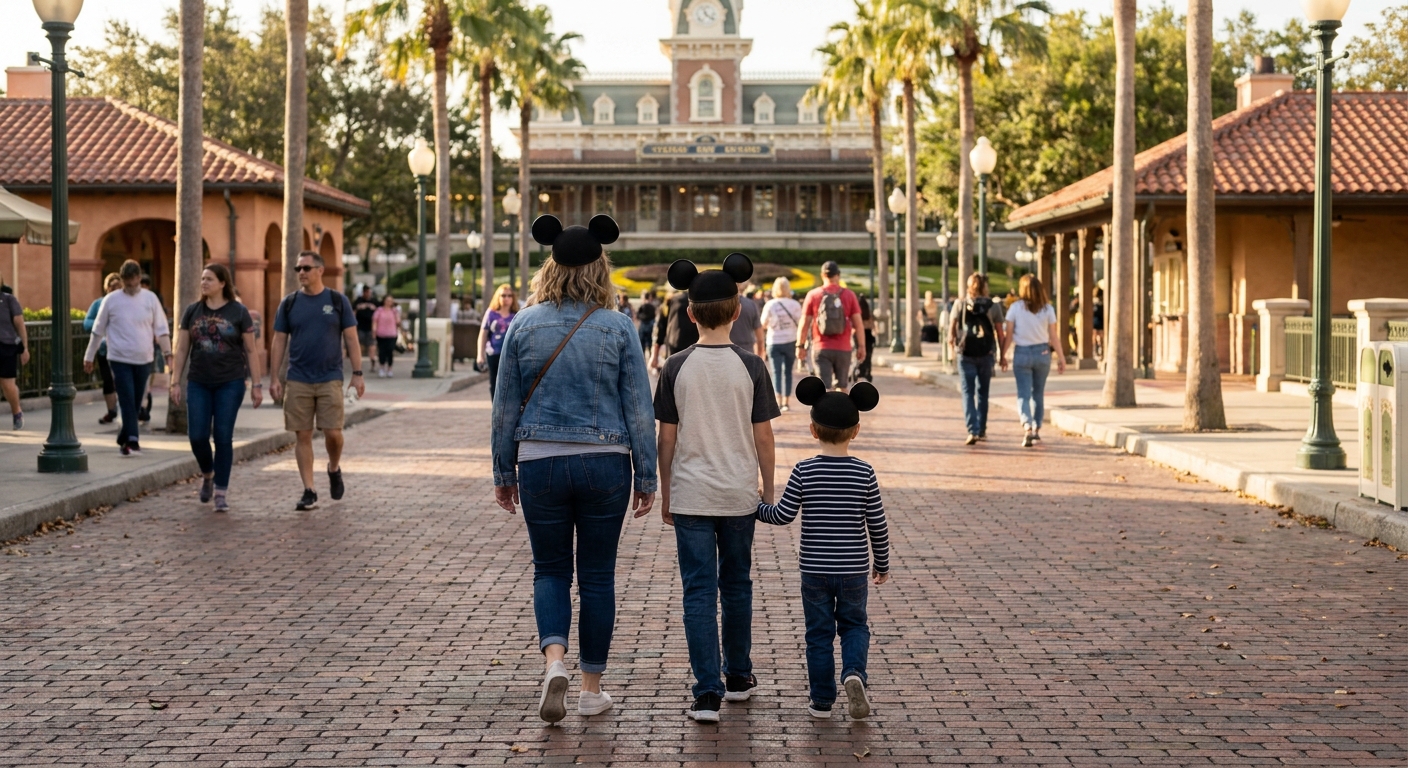
The good news: most of Magic Kingdom’s classic dark rides have no height minimum at all — your toddler can ride Pirates, Haunted Mansion, “it’s a small world,” and Peter Pan’s Flight on day one. The height walls only show up on the coasters and thrill rides, and there are fewer of those here than at any other Disney World park. That makes Magic Kingdom the most toddler-friendly park, period.
The height chart, by threshold
Heights are measured in shoes at the park, so what your kid measures barefoot at home isn’t what counts.
| Minimum height | Attractions | Notes |
|---|---|---|
| No minimum | Pirates of the Caribbean, Haunted Mansion, “it’s a small world,” Peter Pan’s Flight, Jungle Cruise, Buzz Lightyear’s Space Ranger Spin, Under the Sea, Winnie the Pooh, Mad Tea Party, Dumbo, Astro Orbiter, PeopleMover, the Railroad | The toddler core of the day. Any child who can sit up with an adult can ride. |
| 32 in | Tomorrowland Speedway (as a passenger) | A real milestone ride — most toddlers clear this before the bigger ones. |
| 35 in | The Barnstormer | A pint-sized “starter coaster.” Great first thrill. |
| 38 in | Seven Dwarfs Mine Train | A Lightning Lane Single Pass ride — book à la carte, not part of Multi Pass. |
| 40 in | Big Thunder Mountain Railroad, Tiana’s Bayou Adventure | The 40-inch club is where many toddlers get stuck for a while. |
| 44 in | Space Mountain | Genuinely intense; most toddlers are years away. |
Note: TRON Lightcycle / Run sits at 48 inches and is also a Single Pass ride — not on the toddler radar, but worth knowing if older siblings are along.
What toddlers ride vs. what triggers Rider Switch
Sort every attraction into two buckets and your day plans itself:
- Everyone rides together: the entire “no minimum” list above. Build your itinerary around these.
- Rider Switch territory: Big Thunder, Seven Dwarfs Mine Train, Tiana’s Bayou Adventure, Space Mountain, TRON. One adult waits with the toddler, the other rides, then they swap without re-queuing.
The classic mistake is assuming the spooky-looking rides need a height minimum — they don’t. Haunted Mansion and Pirates are no-minimum rides; the only question is whether your toddler is okay with the dark and the dips. You know your kid better than the chart does.
Measuring smart — at home and at the park
- [ ] Measure barefoot at home, then again in the actual shoes your child will wear that day (sneakers can add a half-inch).
- [ ] If they’re within an inch of a threshold, pack the chunkiest-soled closed-toe shoes you own — no platform tricks, just real footwear.
- [ ] Expect a cast member to measure at the entrance; a fudged barefoot number leads to heartbreak at the front of the line.
- [ ] Re-measure every few months — toddlers cross the 38- and 40-inch lines faster than you’d think.
Pro tip: A child who’s borderline on a 40-inch ride should get measured first thing in the morning — kids are measurably taller earlier in the day before gravity compresses them, and the rope-drop cast member’s measurement carries for the day at that attraction.
Let SupaPark do the sorting
Tracking who-can-ride-what across a growing toddler is exactly the kind of mental math that eats your park day. SupaPark’s child height tracking stores each kid’s current height, and the ride-eligibility filter instantly shows only the attractions they clear — so you’re not walking your stroller across the park to a ride your 36-inch toddler can’t board. As they grow, new rides unlock automatically in your view.
Pair that with the best-time-to-ride forecaster for the no-minimum classics and you’ll knock out Peter Pan and Pirates at their lowest waits while saving the Rider Switch rides for when the second adult can break away.
The one thing to remember: Magic Kingdom’s best toddler rides have no height rule at all — plan your day around that no-minimum list, save Rider Switch for the five thrill rides, and let SupaPark’s height filter tell you exactly what your kid can board today.
The Best Toddler Rides at Magic Kingdom, Ranked by Land
The toddler-friendly gold is concentrated in Fantasyland — but the smartest move is mixing in low-stimulation classics across the park so you’re never marching a cranky two-year-old past three lands to reach the next slow boat ride. Below is the land-by-land read: what each ride is, what spooks little kids, how the wait usually behaves, and where to sit.
Fantasyland (your home base)
This is toddler central — gentle, slow, mostly dark-but-not-scary.
| Ride | Toddler factor | Wait pattern | Seat/positioning tip |
|---|---|---|---|
| The Many Adventures of Winnie the Pooh | Slow, bright, friendly | Builds fast mid-morning | Sit your toddler on the inside, away from the open side |
| “it’s a small world” | Cool, dark-ish boat, no drops | Stays low much of the day | Front row = best sightlines for short kids |
| Prince Charming Regal Carrousel | Classic carousel, zero surprises | Near walk-on most days | A stationary chariot if your kid dislikes the up-down |
| Under the Sea ~ Journey of the Little Mermaid | Dark but gentle clamshells | Usually short | Pull them close in the dark Ursula scene |
| Mad Tea Party | You control the spin | Short except midday | Don’t spin the wheel — toddlers hate the fast version |
- Skip for now: Seven Dwarfs Mine Train. It’s a Lightning Lane Single Pass ride with a real (if mild) coaster drop and a 38" height minimum — too much for most under-3s, and you’d burn an à-la-carte pass.
Adventureland
- Jungle Cruise — Slow boat, corny jokes, no drops. Fine for toddlers, though some get restless. Waits climb by late morning; ride it early.
- Pirates of the Caribbean — Mostly gentle, BUT flag the small drop early in the ride and a few darker, louder cannon-fire scenes. Sensitive toddlers can startle. Hold them on your lap-side and warn them the “little splash” is coming.
- The Magic Carpets of Aladdin — A Dumbo-style spinner that’s near walk-on most of the day. You control the height; keep it low.
Pro tip: Use the quiet Frontierland–Adventureland breezeway (Aloha Isle on one side, Country Bear Musical Jamboree on the other) to move between those lands. It’s not a huge shortcut, but it’s consistently less mobbed — a real win when you’re pushing a stroller past parade crowds.
Frontierland
- Country Bear Musical Jamboree — Air-conditioned animatronic show, perfect for a mid-day reset and stroller break. No scares.
- Tom Sawyer Island — Free-roam space to let a walking toddler burn energy; reachable only by raft.
- Skip: Big Thunder Mountain Railroad and Tiana’s Bayou Adventure (the old Splash Mountain) — both have height minimums and real thrills. These are your Rider Switch rides, not toddler rides.
Liberty Square
- Haunted Mansion — The big judgment call. No drops and a slow ride, but it’s dark, has sudden loud organ stings, and the stretching room can frighten little kids. Many toddlers are fine; some are not. Sit them between two adults, narrate that “it’s all pretend ghosts,” and bail on the stretching room mentally if they’re already nervous.
- Liberty Square Riverboat — Calm, open-air, breezy. A genuinely underrated toddler reset with stroller parking nearby.
Tomorrowland
- The Barnstormer — A junior coaster with a 35" minimum and a tiny drop; great first coaster for a confident older toddler, too much for a timid one.
- Tomorrowland Speedway — Kids love “driving,” but the 32" minimum to ride and 54" to drive plus engine noise can overwhelm. Pass holds the wheel.
- Buzz Lightyear’s Space Ranger Spin — Dark, but slow and interactive; great for toddlers who like buttons and blasters.
- Stitch’s Great Escape area / Monsters / Carousel of Progress — Carousel of Progress is a calm, seated show. ⚠️ Flag any Stitch experience for sudden darkness and loud noises — skip it with sensitive little ones.
Main Street, U.S.A.
- Walt Disney World Railroad & Main Street Vehicles — Slow, novelty rides toddlers adore, and the train doubles as transport to Fantasyland. Low stress, low wait.
When to ride: the wait pattern that matters
Toddler attractions stay short at rope drop and during parades/fireworks, then spike late morning through early afternoon.
- [ ] Rope drop the slow-loaders (Pooh, small world) first — they back up fastest.
- [ ] Bank a midday show (Country Bear, Carousel of Progress) during peak heat.
- [ ] Re-ride the dark rides during the nighttime spectacular, when waits crater to near walk-on.
The one thing to remember: Fantasyland early, A/C shows midday, dark rides during fireworks — and treat Haunted Mansion, the Pirates drop, and anything Stitch as “test the temperament first” rides, not automatic yeses.
Rides to Skip or Save for Later With a Toddler
The smartest toddler day isn’t about riding everything — it’s about cutting the attractions that burn 45 minutes and end in tears. Disney World gives you ~10–12 good hours before a toddler melts down. Spend them on wins, not on rides that fight you.
Here’s the honest list of what to skip (or push to a Rider Switch / nap-recovery window), why it backfires with little ones, and the better-use-of-time swap.
The skip-or-save shortlist
| Attraction | Why it’s rough with a toddler | Do this instead |
|---|---|---|
| Seven Dwarfs Mine Train | Small coaster drops + a frequently long, exposed standby; it’s Lightning Lane Single Pass only, so no quick Multi Pass fix | Send adults via Rider Switch; toddler rides the Prince Charming Regal Carrousel or Mad Tea Party nearby |
| TRON Lightcycle / Run | Motorbike-style restraints + speed; intense even for big kids, and also Single Pass à la carte | Astro Orbiter or the Tomorrowland Transit Authority PeopleMover — calm, scenic, near-walk-on |
| Space Mountain | Pitch-black indoor coaster — the dark alone undoes most toddlers | Buzz Lightyear’s Space Ranger Spin: same land, shoot lasers, low wait |
| Big Thunder Mountain | 40" height wall stops most toddlers at the gate after a long wait | Walk on the Walt Disney World Railroad or the Liberty Square Riverboat |
| Country Bear Musical Jamboree / Mickey’s PhilharMagic | Long seated shows test the patience of a 2-year-old | Keep shows to short, high-energy ones; use the time for a snack break instead |
| Tiana’s Bayou Adventure | A real flume drop and a 40" height requirement — formerly Splash Mountain | Rider Switch for the adults; toddler does “it’s a small world” while you wait |
Why the queues matter more than the rides
For a toddler, the line is the hard part, not the 90 seconds of ride. Long, winding, hot standby queues with no stroller are where the day falls apart.
- Single Pass rides (Mine Train, TRON) can’t be smoothed with a Multi Pass, so the standby is your only “free” option — brutal with a little one in tow.
- Indoor-dark and big-drop rides (Space Mountain, Tiana’s, Big Thunder) reliably produce tears even when a child technically can ride.
- Long-form shows look like a “break” but a restless toddler turns 12 quiet minutes into a wrestling match.
Pro tip: Don’t waste a Lightning Lane Multi Pass slot on a ride your toddler will skip via Rider Switch anyway — Rider Switch lets the second adult ride without re-queuing, so you effectively get the headliner and keep your Multi Pass picks (think Peter Pan’s Flight, Haunted Mansion, “it’s a small world”) for rides the whole family actually boards together.
The better-use-of-time playbook
When you cut a ride above, don’t just stand around — redirect the time:
- [ ] Bank a low-wait toddler win nearby (Carrousel, PeopleMover, Magic Carpets of Aladdin)
- [ ] Take the snack/restroom break during the ride you skipped — you’re already stopped
- [ ] Use a parade or fireworks window to walk onto a calm ride; waits across the park crater during shows
- [ ] Save the intense headliners for a Rider Switch hand-off so no adult misses out
Let the data make the call for you
Wait times swing wildly hour to hour, so “skip it” sometimes flips to “go now.” A ride that’s a hard pass at a 70-minute standby becomes worth a quick Rider Switch when it drops to a near walk-on at the end of the night.
This is where SupaPark earns its keep: set a live alert and you’ll get a push the moment a headliner craters to a walk-on or a Single Pass refills — so you grab the low-stress window instead of gambling on a long line with a tired toddler. You confirm any Lightning Lane purchase in My Disney Experience; SupaPark just makes sure you don’t miss the opening. Check it at supapark.com.
The one thing to remember: With a toddler, every long queue you skip is a meltdown you prevent. Trade the big-drop, pitch-black, and long-show attractions for near-walk-on classics and Rider Switch hand-offs — and let live alerts tell you the rare moment a skipped ride is suddenly worth it.
Rider Switch, Step by Step
Rider Switch (Disney calls it Rider Switch or “child swap”) lets two adults take turns riding a height-restricted attraction without anyone waiting the standby line twice — and your toddler never has to ride. Done right, it’s the single biggest time-saver of a Magic Kingdom toddler day. Done wrong, you burn a return window or send the wrong people in.
Here’s the whole workflow, plus the one trick most parents miss: the waiting parent shouldn’t guess when to swap back — let live data tell them.
Where it works at Magic Kingdom
Rider Switch is offered on the rides with height requirements — the ones your toddler can’t ride anyway. The big ones to plan around:
| Attraction | Why request Rider Switch |
|---|---|
| Seven Dwarfs Mine Train | Long standby + a Single Pass ride; switch saves a full re-queue |
| Big Thunder Mountain Railroad | 40" requirement; frequent toddler-day swap |
| Space Mountain | Long waits, dark coaster — adults take turns |
| TRON Lightcycle / Run | High demand; coordinate with your Single Pass |
Gentle, no-height-rule rides (Haunted Mansion, “it’s a small world”, Buzz, the Carrousel) don’t need it — just ride those together with your toddler.
The numbered walkthrough
- [ ] 1. Both adults check in together. At the entrance, tell the Cast Member at the tapstile (or the Lightning Lane scanner) you want Rider Switch. Everyone in the party — both adults, toddler, and any older kids — taps in or is counted.
- [ ] 2. First group rides now. Adult A (plus any older children who meet the height rule) goes through the standby or Lightning Lane line and rides.
- [ ] 3. The waiting adult holds the toddler nearby. Adult B stays with the little one — grab a snack, hit a restroom, find shade.
- [ ] 4. Swap on the return. When Adult A comes back, Adult B rides using the Rider Switch pass — through the Lightning Lane entrance, not the full standby line again.
- [ ] 5. Older kids can ride twice. This is the underused perk: up to a couple of older, tall-enough kids can ride with the first adult AND go again with the second adult. Built-in re-ride, no extra wait.
How the return window works
When you request Rider Switch, the second rider gets a pass (in My Disney Experience or as a physical card, depending on the attraction) good for a return window — typically valid for the rest of the day, not a tight 60-minute slot. You don’t have to swap back-to-back. Ride something gentle with your toddler, take a break, then redeem when it suits you.
Pro tip: Set a SupaPark live wait alert on the Rider Switch ride before Adult A even gets in line. The moment that ride craters to walk-on or near walk-on, SupaPark pings the waiting parent — so Adult B redeems the swap when the line is shortest instead of standing around guessing. On a coaster that swings from 55 minutes to 10 over the afternoon, that one notification is the difference between a 5-minute ride and a wasted half hour.
Common mistakes that cost you
| Mistake | Fix |
|---|---|
| Both adults walk up separately | Check in together at the start — the whole party must be present to set up the swap |
| Assuming it’s only for two people | Older tall-enough kids can ride both times; count them in |
| Treating the pass as use-it-now | The return window is generous — bank it, take your break, redeem later |
| Forgetting it stacks with Lightning Lane | You can Rider Switch a ride you also hold a Multi/Single Pass for — use the Lightning Lane entrance for the swap |
| Guessing when to head back | Let a live wait alert call the moment for you |
The one thing to remember
Rider Switch isn’t a consolation prize — it’s a tool. Set it up at the entrance with everyone present, let your older kids double-dip, hold the pass until the wait drops, and let a live alert tell the waiting parent the exact second to swap. That’s how two adults each ride Seven Dwarfs Mine Train and Space Mountain on a toddler day without anyone losing an hour to a line.
Rider Switch Ride-by-Ride Cheat Sheet
The move: knock out the tallest height requirement first, ride Single Pass headliners early, and let Rider Switch turn one wait into two turns with zero re-queuing. Rider Switch (Disney’s official “one adult waits with the kid, then swaps in without standing in line again”) works on every height-restricted ride below — but the smart order matters as much as the swap itself.
The cheat sheet
| Ride | Height | Lightning Lane type | Thrill | When to hit it |
|---|---|---|---|---|
| TRON Lightcycle / Run | 48" | Single Pass | High (fast, intense) | Buy early, ride first |
| Space Mountain | 44" | Multi Pass | Medium-high (dark, jerky) | Mid-morning |
| Seven Dwarfs Mine Train | 38" | Single Pass | Low-medium (tame coaster) | Buy early, ride first |
| Big Thunder Mountain | 40" | Multi Pass | Medium (bouncy, fun) | Rope drop or late |
| Tiana’s Bayou Adventure | 40" | Multi Pass | Medium (one drop) | Multi Pass mid-day |
| The Barnstormer | 35" | Multi Pass | Low (kiddie coaster) | Anytime, low priority |
Two key things families get wrong: TRON and Seven Dwarfs Mine Train are Single Pass, meaning you buy them à la carte, separately from your Multi Pass. Everything else on this list is included in your one Multi Pass purchase. The four headliners with the longest standby lines are exactly the two Single Pass rides plus Space Mountain and Big Thunder — so that’s where Rider Switch saves you the most.
Smartest order to tackle them
- [ ] Pre-trip: Buy Lightning Lane Single Pass for TRON and Seven Dwarfs Mine Train if your child clears 38"/48". These sell out on busy days.
- [ ] Rope drop: Send the riding adult straight to TRON or Big Thunder while the other handles the stroller and toddler.
- [ ] Mid-morning: Use Multi Pass for Space Mountain and Tiana’s, refilling your next selection the moment you tap in.
- [ ] Anytime gaps: Barnstormer is a walk-on filler — don’t burn a Lightning Lane on it.
How the swap actually plays out
Tell the cast member at the ride entrance you want Rider Switch before the first adult rides. Adult A rides (via standby or Lightning Lane); when they’re back, Adult B rides with no second wait, and an older sibling who already rode can usually go again as the swap partner. You’re effectively buying one Lightning Lane and getting two adults through.
Price reality check
Multi Pass for Magic Kingdom runs roughly $30 on a normal day and climbs toward $35+ on peak dates like the days around July 4th — Disney uses surge pricing, so the price itself is a crowd thermometer. Single Pass is extra on top: expect somewhere around $12–$20 per person for Seven Dwarfs Mine Train or TRON, higher on holidays. Prices shift daily, so check before you commit.
Pro tip: On a toddler day, you often don’t need Single Pass for both parents. Buy ONE Single Pass for the adult who rides, then use Rider Switch to send the second adult through the Lightning Lane return without a second purchase — the swap covers the line, not the ticket. That can cut your TRON/Mine Train spend roughly in half.
Match the ride to your kid
- Just cleared 35"–40"? Start with Barnstormer and Big Thunder — gentle intros that build coaster confidence.
- 40"–44" and game for more? Add Tiana’s Bayou Adventure (one real drop) and Seven Dwarfs Mine Train (tame for a “mountain”).
- 44"+ and fearless? Space Mountain and TRON are the payoff — but TRON’s motorcycle-style seating and speed make it the most intense on the list.
The one thing to remember
Sort these six rides by what’s included versus what costs extra: TRON and Seven Dwarfs Mine Train are separate Single Pass buys, the other four come with your Multi Pass. Buy the Single Pass headliners in advance, ride the longest lines first, and lean on Rider Switch so a single Lightning Lane carries both adults — that’s how you ride everything with a toddler in tow without paying twice or waiting twice.
Lightning Lane Strategy for Toddler Families
For a toddler day, Lightning Lane Multi Pass is mostly about saving your legs and your kid’s patience — not skipping the headliners they can’t ride anyway. Used right, it shaves the longest mid-day standby waits on the rides your toddler actually loves, and it pairs beautifully with Rider Switch when the grown-ups want a turn on the big stuff.
How Multi Pass works now
This is not the old day-of scramble. You buy Lightning Lane Multi Pass per day, then pick your attractions in advance:
- Staying at a Disney resort hotel? You can make selections up to 7 days before arrival, for your whole trip.
- Off-site? Your window opens 3 days before.
- Either way, the booking window opens at 7:00 AM Eastern on your eligible day.
You lock in an initial set of attractions, then once you tap into one (or its return window passes), you add the next — one at a time — through the day in My Disney Experience. So the mental model is: buy it, front-load your picks, then keep refilling.
Which Magic Kingdom rides are worth a toddler selection
Don’t burn selections on rides that are usually walk-ons with a toddler. Spend them where the standby line gets genuinely painful by late morning.
| Ride | Lightning Lane | Worth it for toddlers? |
|---|---|---|
| Peter Pan’s Flight | Multi Pass | Yes — notoriously long standby all day |
| The Many Adventures of Winnie the Pooh | Multi Pass | Often, on busier days |
| Under the Sea — Journey of the Little Mermaid | Multi Pass | Only on peak days; line moves fast |
| Buzz Lightyear’s Space Ranger Spin | Multi Pass | Situational — drops to short waits often |
| “it’s a small world” | Multi Pass | Usually skip; high capacity, short waits |
| Seven Dwarfs Mine Train | Single Pass | See below — height + thrill matter |
| TRON Lightcycle / Run | Single Pass | Adults only on a split-rider day |
Pro tip: Peter Pan’s Flight is the one Fantasyland classic that almost never has a short standby line — make it your first Multi Pass selection of the day and you’ve already justified the cost.
Stacking Multi Pass with Rider Switch
Multi Pass and Rider Switch solve different problems, and together they’re a cheat code for split-riding parents.
- Use Multi Pass to cut the wait on the family rides everyone does together.
- Use Rider Switch (free, ask the cast member at the entrance) so both adults get a turn on a ride the toddler can’t or won’t do — without re-queuing.
- When you book a Lightning Lane for a ride that offers Rider Switch, the second adult typically rides via the return/Lightning Lane side, so your skip-the-line value covers both grown-ups, not just one.
When Single Pass is worth it
Seven Dwarfs Mine Train and TRON are Single Pass — bought à la carte, not part of Multi Pass — and they’re the two Magic Kingdom rides where a split-rider family gets the most out of paying once to skip a long line.
- [ ] If one adult will ride Mine Train or TRON while the other stays with the toddler, a Single Pass keeps that solo turn quick instead of eating 45+ minutes of standby.
- [ ] Pair it with Rider Switch so the second adult gets a turn too.
- [ ] Skip Single Pass entirely if your group has no interest in the headliners — there’s no toddler payoff.
Prices move with crowds — Multi Pass at Magic Kingdom has run around the high-$20s to mid-$30s per person depending on the date, with Single Passes a smaller add-on. Holiday weeks like July 4th sit at the top of that range, which itself is a crowd signal: when the price spikes, expect a packed park.
Where SupaPark does the watching
The hardest part of all this is timing — knowing when a Lightning Lane will sell out and when it refills. That’s SupaPark’s core strength:
- Sell-out and refill forecasting tells you whether to grab that Peter Pan’s Flight selection now or whether it’ll still be there after lunch.
- Live alerts ping you the moment a refill drops or a ride craters to a walk-on, so you can pivot mid-nap-break.
- One-tap booking hand-off means SupaPark surfaces the bookable window; you confirm it in My Disney Experience in seconds.
The one thing to remember: spend Multi Pass on the family rides with the worst standby (start with Peter Pan’s Flight), use Single Pass + Rider Switch to keep adult turns on Mine Train and TRON quick, and let SupaPark tell you exactly when to book.
Building Your Toddler Park Day: A Sample Hour-by-Hour Itinerary
The winning toddler day isn’t about doing more — it’s about front-loading the hard rides, protecting the nap, and coming back when everyone else is leaving. A toddler runs out of patience long before the park runs out of lines, so build the day around their battery, not Disney’s hours.
Two templates below. Pick the one that matches your stamina, then let SupaPark’s day builder and “what should I ride next, right now?” guidance adjust it live as waits shift.
The non-negotiables (both versions)
- Arrive before rope drop. Be at the tap-stiles 45–60 minutes before official open. On-site guests get Early Theme Park Entry (30 minutes before everyone else) — that half hour is the single biggest crowd advantage you’ll get all day.
- Headliners and Rider Switch rides first. The standby walls go up fast. Hit the big-ticket and height-restricted rides in the first 90 minutes while waits are near walk-on.
- Protect the midday break. Plan to be out of the park during the brutal 12–4 PM heat-and-crowd window. Nap or pool, then return refreshed.
- Come back for the evening low-wait window. When day guests leave for dinner and bedtime, waits crater.
Pro tip: During the nighttime fireworks, a bunch of nearby attractions quietly drop to 5-minute waits — think Astro Orbiter and Buzz Lightyear’s Space Ranger Spin. If your toddler can stay up, skip the crowd staring at the castle and ride instead.
Version A: Full day (with midday break)
| Time | Move | Why |
|---|---|---|
| ~30 min pre-open | Tap in for Early Theme Park Entry | Lowest waits of the entire day |
| Open–10:00 AM | Knock out 2–3 headliners + your Rider Switch ride | One adult rides, the other waits with the toddler — no re-queuing |
| 10:00–11:30 AM | Character meets + gentle classics | Lines are shorter mid-morning than midday |
| 11:30 AM | Early lunch, then exit | Beat the noon dining rush |
| 12:30–4:00 PM | Nap / pool break at the hotel | Reset everyone before the meltdown |
| 4:30–7:00 PM | Return; ride during dinner hours | Crowds thin as families leave to eat |
| 7:00 PM–close | Evening low-wait window + fireworks-window rides | The best ride-to-wait ratio of the day |
Version B: Park-hopping / half day
Better for shorter attention spans or a packed trip. Park Hopper lets you switch parks anytime the parks are open — the old “no hopping before 2 PM” rule is gone, so you’re free to leave the second your toddler is done.
| Time | Move | Why |
|---|---|---|
| ~30 min pre-open | Early Entry at your morning park | Same rope-drop advantage |
| Open–11:00 AM | Headliners + Rider Switch + one character meet | Front-load everything that matters |
| 11:00 AM | Light lunch | Exit before the worst of the heat |
| 12:00 PM | Hop to a second park OR head back to rest | Follow the toddler’s mood, not a schedule |
| Afternoon | Low-key park (or pool) | Avoid forcing a second headliner sprint |
The smart play if you’re flexible: Animal Kingdom opens at 8 AM, so on a multi-park morning you can grab a low-wait hour there before sliding into Magic Kingdom. And Magic Kingdom often runs lower daytime waits on Mickey’s Not-So-Scary Halloween Party days, when the park closes early to non-party guests — a quiet-day window worth checking.
Rider Switch, slotted in cleanly
For height-restricted rides like the bigger coasters, do this in the first hour:
- [ ] Adult #1 rides while Adult #2 waits with the toddler nearby
- [ ] Request Rider Switch at the attraction entrance before #1 boards
- [ ] Adult #2 redeems the return pass later — no second standby wait
- [ ] Let SupaPark ping you the moment that ride drops to walk-on, so #2 slips back without guessing
Lightning Lane: front-load it too
Buy Lightning Lane Multi Pass per day and pick your selections in advance (on-site guests up to 7 days out, off-site 3 days out; the window opens 7:00 AM ET), then refill one at a time as you go. Stack your first selections in that morning headliner window so you’re skipping lines while patience is highest. Seven Dwarfs Mine Train and TRON are Single Pass — buy those à la carte if they’re priorities.
The one thing to remember: Hard rides and Rider Switch in the morning, nap in the middle, back for the evening crater. Let SupaPark’s “what should I ride next” tell you the exact next move so you’re never standing in the park guessing while a toddler melts down.
The Nap and Break Question: In-Park vs. Back to the Hotel
If your toddler still naps hard, your hotel’s location decides this — everything else is negotiable. A midday break is non-negotiable with little kids (the meltdown at 3 PM is real), but where you take it makes or breaks your afternoon.
The two strategies, head to head
| Factor | Back to the hotel | Stay in-park |
|---|---|---|
| Round-trip transit | ~60–90 min (bus/Skyliner/monorail + walking + security re-entry) | ~0–15 min |
| Nap quality | Best — dark room, crib, real sleep | Decent — stroller nap in shade, but lighter |
| Pool reset | Yes — huge for hot afternoons | No |
| Cost to re-enter | Free, but eats park time | Free, keeps you in the action |
| Best for | Monorail/Skyliner-adjacent resorts, deep nappers, multi-day tickets | Off-property/far resorts, stroller nappers, single-day tickets |
Go back to the hotel if…
- You’re at a monorail (Contemporary, Grand Floridian, Polynesian) or short-transit resort — you can be in your room in 20–30 minutes.
- Your toddler only sleeps in a crib/dark room and a stroller nap won’t cut it.
- You have a multi-day ticket, so sacrificing two midday park hours barely dents your trip.
The pool reset is the underrated win here. A swim plus a real nap buys you a happy kid for the entire evening — and Magic Kingdom’s nighttime fireworks window is when many rides drop to near walk-on.
Stay in-park if…
- You’re off-property or at a far resort where the round trip swallows 90+ minutes.
- Your kid naps fine in the stroller with motion and shade.
- You’re on a single-day ticket and every park hour counts — leaving and returning is pure loss.
Pro tip: A stroller nap doesn’t require leaving — push a shaded loop or park near an air-conditioned show and let the kid sleep through it. Carousel of Progress and the Country Bear Musical Jamboree are ~20-minute, dark, seated, A/C shows where a sleeping toddler can ride out a full nap while you actually rest your feet.
Where to take an in-park break
The Baby Care Center near the Crystal Palace (end of Main Street, toward Adventureland) is the toddler-parent secret weapon: A/C, low lighting, private nursing rooms, changing tables, a microwave, and a quiet feeding area. It’s the best reset spot in the park for a frazzled little one.
For shade and lower foot traffic without leaving the action:
- Tomorrowland Terrace — near the front, just right of the Castle; frequently underused and easy to grab a table.
- The Frontierland-to-Adventureland breezeway — the covered path past Aloha Isle; fewer crowds and a shortcut bonus.
- Tortuga Tavern’s interior — quiet seating and a low-traffic restroom for a stress-free diaper change.
- Dark, seated shows (Carousel of Progress, Country Bear Musical Jamboree, the Hall of Presidents) — instant A/C and a chance for everyone to sit.
A no-meltdown midday checklist
- [ ] Time the break for the 1–3 PM heat-and-crowd peak, not after the meltdown starts.
- [ ] Pack the stroller with a muslin shade cover and a small fan for stroller naps.
- [ ] Refill water bottles before you settle in — Florida afternoons are brutal.
- [ ] Hit the Baby Care Center for diaper changes and bottle warming before the nap, not mid-meltdown.
- [ ] If heading back to the hotel, leave by ~12:30 PM so you’re returning rested before the evening surge.
Make the system do the watching
The smartest break is one you take while waits are bad anyway — then return exactly when the park softens. SupaPark’s best-time forecaster and live walk-on alerts are built for this: set them before you break, and you’ll get a push the moment a headliner craters to a near walk-on or a ride you’ve been eyeing goes short — so you re-enter on a tip, not a guess. On Mickey’s Not-So-Scary Halloween Party days (park closes to regular guests at 6 PM), daytime waits often run lower than you’d expect — another window worth watching.
The one thing to remember: match the break to your transit time and your kid’s nap style. Close resort + crib sleeper = go back and use the pool. Far resort + stroller sleeper = stay, find shade, and let the data tell you when to ride.
The Baby Care Center and Practical Toddler Logistics
The move: treat the Baby Care Center as your reset button, not a last resort — knowing where it is before you melt down saves the whole day.
Magic Kingdom’s Baby Care Center sits at the end of Main Street, U.S.A., tucked next to the Crystal Palace (between there and the Tomorrowland bridge). It’s the calmest, most underused space in the park, and it’s free.
What’s inside the Baby Care Center
- Quiet, low-lit nursing room with private spaces and a comfy place to feed
- Changing tables and a separate feeding area with high chairs
- Real air conditioning — a genuine refuge when a toddler overheats mid-afternoon
- Emergency supplies for sale (diapers, wipes, formula, pacifiers, basic OTC items) if you run out
- A small play/sitting area to regroup without strollers and crowds
It’s the one place you can lower the stimulation, cool down, and feed without juggling a stroller in a sweaty queue.
Diaper and restroom strategy
The center is ideal, but it’s a hike if you’re across the park. Don’t trek back to Main Street every time — map the low-traffic restrooms instead.
| Spot | Why it’s worth it |
|---|---|
| Tortuga Tavern restroom (Adventureland) | Small, tucked-away, rarely crowded — great quick change |
| Frontierland–Adventureland breezeway restrooms | On the shortcut path most guests skip; usually fewer people |
| Tomorrowland Terrace area (near the castle) | Underused, close to the front for an exit-time change |
| Baby Care Center | The full reset — save it for naps, feeds, and overheating |
Pro tip: The Frontierland-to-Adventureland breezeway (Aloha Isle on one side, the Country Bear building on the other) doubles as a shortcut and a quieter restroom stop — you cut walking time and skip the lines at the big central restrooms in one move.
Stroller parking and the nap window
Disney groups strollers in marked parking areas outside each land’s attractions. A few habits keep yours findable and your toddler rested:
- [ ] Tie a bright ribbon or scarf to the handle so you spot it instantly in a sea of identical rentals
- [ ] Never leave anything you’d hate to lose — Cast Members move parked strollers to tidy rows, so it may not be exactly where you left it
- [ ] Recline the seat and use the canopy + a clip-on shade to turn the stroller into a rolling nap bed during the early-afternoon slump
- [ ] Pick a shaded, lower-stimulation pocket (the Frontierland/Liberty Square edges, paths near the breezeway) so a stroller nap actually sticks
A toddler who naps in the stroller around the 1–3 PM heat-and-crowd peak is a toddler who lasts until fireworks. That single nap is worth more than two extra rides.
Stroller swaps that keep Rider Switch moving
Rider Switch lets one adult ride while the other waits with the toddler, then swaps in without re-queuing. The bottleneck is usually the handoff — where do you park the stroller and trade off without losing 10 minutes?
| Single Pass headliner | Smart swap/wait spot |
|---|---|
| Seven Dwarfs Mine Train (Fantasyland) | Stroller parking by the nearby restrooms; toddler can watch the queue waterfall while you wait |
| TRON Lightcycle / Run (Tomorrowland) | Tomorrowland walkways have shaded benches near the entrance for the waiting adult |
For Multi Pass rides like Big Thunder Mountain Railroad (toddler must be 40 inches to ride), park together in the Frontierland stroller zone and trade at the exit so the second rider walks straight in.
Time the waits to your handoffs
The handoff is smoothest when the standby line is short — so you’re not stuck guessing how long the first adult will be gone. SupaPark’s live alerts ping you the second a ride craters toward walk-on, so you can line up the second rider’s turn instead of standing around. The best-time forecaster also tells you when a headliner usually bottoms out, so you can plan Rider Switch around the dip rather than fighting the peak.
The one thing to remember: scout the Baby Care Center location and one quiet restroom per land before you need them, protect the stroller nap, and let live wait data — not a crying toddler — dictate when you swap.
Dining With a Toddler: Where, When, and What to Order
The move: lean quick-service for 90% of meals, save table-service for one anchor character meal a day — and book that meal 60 days out at 6:00 AM Eastern. A toddler’s patience is the scarcest resource in the park, and a 75-minute sit-down lunch burns it faster than any line.
Quick-service vs. table-service: pick the right tool
| Quick-service | Table-service | |
|---|---|---|
| Wait to be seated | None — mobile order ahead | Even with a reservation, 10–20 min |
| Total time at table | 20–35 min | 60–90 min |
| Toddler escape route | Easy — grab and go | Trapped in a booth |
| Best for | Most meals, naps before/after | One planned highlight (characters) |
| Reservation needed | No | Yes — ADR 60 days out |
With a toddler, quick-service wins most days because you control the clock. The one table-service worth the hassle is a character meal — it doubles as entertainment, so your kid is being amused instead of asked to sit still for nothing.
When to eat (this matters more than where)
Crowds eat on the clock, so you shouldn’t. Eating off-peak does two jobs at once: shorter food lines and shorter ride lines while everyone else is eating.
- Eat lunch at 11:00 or after 1:30 — not noon to 1:00.
- Eat dinner at 4:30–5:00 or after 7:30, especially on a fireworks or parade night when crowds pull to Main Street.
- Mealtimes are secretly the best ride windows. When the park is eating, standby waits dip — sometimes to walk-on. A kid who naps through a 1:00 lunch crowd can ride at 1:15 with no line.
Pro tip: Magic Kingdom party days (Mickey’s Not-So-Scary nights) push the daytime crowd lower — the park clears regular guests by early evening, so the hours before close on a party day often run lighter than a normal afternoon. If you don’t have party tickets, a non-party-ticket day-guest can still ride a lot before close.
Kid-friendly menu standouts
You’ll find toddler-pleasing options almost everywhere, but a few quick-service spots punch above their weight:
- Pinocchio Village Haus (Fantasyland) — flatbreads and a window overlooking “it’s a small world”; closest to the toddler-ride cluster.
- Cosmic Ray’s Starlight Café (Tomorrowland) — big menu, plain options, indoor A/C for a meltdown reset.
- Snacks that travel — applesauce pouches, fruit, and pretzels keep a toddler fed between meals so you’re never racing a hangry clock. Pack them; in-park versions cost a premium.
- The DOLE Whip — the universal toddler bribe, and an easy mobile-order pickup.
Most quick-service spots will split or simplify a kids’ meal, and Disney is generous with allergy accommodations — flag it in the app or at the register.
Mobile order is non-negotiable
The My Disney Experience mobile order feature lets you order and pay from your phone, then tap “I’m here” when you arrive. With a toddler, it turns lunch from a 20-minute line into a walk-up.
- [ ] Open mobile order before anyone melts down — ideally an hour ahead.
- [ ] Pick your arrival window to line up with a ride exit or a nap-time gap.
- [ ] Tap “I’m here” only when you’re actually steps away — the kitchen starts then.
- [ ] Grab a table before you collect food on busy days; one adult holds seats, one runs.
Character meals and the reservation reality
Character meals (think Cinderella’s Royal Table in the castle, or Crystal Palace’s Winnie the Pooh breakfast) are the highest-value table-service for little kids — the characters come to you, so there’s no separate meet-and-greet line. The catch: the good ones vanish.
- ADRs open 60 days before arrival at 6:00 AM Eastern in My Disney Experience. Set an alarm — the marquee toddler meals book out in minutes. (Don’t confuse this with the 7:00 AM Lightning Lane window; different time, different system.)
- Missed the 60-day window? Don’t pay a resale site. Cancellations free up constantly as plans change.
This is where SupaPark earns its keep: dining Drop Watch monitors those sold-out character meals and pings you the instant a cancellation frees one up, so you can jump into My Disney Experience and grab it before it’s gone. You don’t refresh the app for an hour — SupaPark catches the drop and finds you.
The one thing to remember
Eat early or late, mobile-order everything, and treat exactly one character meal as your daily sit-down anchor — booked at the 60-day mark or sniped later via Drop Watch. Protect the toddler’s patience for the rides, not the restaurants.
Beating the Crowds: Rope Drop, Meal Times, and the Fireworks Window
The fastest way to skip Magic Kingdom lines costs nothing: be early, ride during the big shows, and pick the right day. Toddler families have a built-in edge here — your nap schedule already pushes you toward the low-wait windows. Lean into it.
Rope drop, toddler-paced
Getting to the gate before official opening is the single highest-return move of the day. With Early Theme Park Entry, all Disney hotel guests get in 30 minutes early — use it. Off-site? Still aim to be tapped in and walking by opening.
The first 60–90 minutes routinely deliver near-zero waits while the rest of the park is still on Main Street taking photos. Build a tight, in-order sequence so you’re not crisscrossing the park with a stroller:
- [ ] Tap in 30 min early (Early Entry) or right at opening
- [ ] Head straight to one headliner before the crowd lands — Seven Dwarfs Mine Train tends to build fastest (it’s a Lightning Lane Single Pass ride, so standby is the only “free” route)
- [ ] Roll into Fantasyland for back-to-back low-wait kid rides — the Mine Train area clusters well with Peter Pan, the carrousel, and Little Mermaid
- [ ] Bank your toddler-friendly classics before 10:30 AM, when waits climb
Pro tip: Early in the day, Big Thunder Mountain Railroad is often a true walk-on — but it’s a 40-inch ride, so it’s a parent-swap or older-sibling pick, not a toddler attraction. Slot it into a Rider Switch instead of burning your best toddler hour on it.
The parade and fireworks window
Here’s the trick most first-timers miss: when the entertainment starts, the lines empty. Thousands of people pack Main Street and the hub for the parade and nighttime show, and standby waits across the park crater — often to 5 minutes or walk-on.
Best rides to hit during a parade or fireworks (lower-stimulation, toddler-appropriate, and reliably quick in these windows):
| Ride | Land | Why it works in the window |
|---|---|---|
| Buzz Lightyear’s Space Ranger Spin | Tomorrowland | Drops to ~5 min; interactive, toddler-safe |
| Astro Orbiter | Tomorrowland | Walk-on territory once the show starts |
| Mad Tea Party | Fantasyland | Spins down to near-zero waits |
Nighttime show timing shifts seasonally (it moves later once Daylight Saving Time starts in spring), so check the day’s schedule. If your toddler is fading at night, the afternoon parade gives you the same line-dropping effect on an earlier clock.
A note on party season: on nights with Mickey’s Not-So-Scary Halloween Party (select Tuesdays, Fridays, and Sundays, plus the occasional Thursday, roughly August through October), the park closes to regular guests at 6 PM. Counterintuitively, daytime waits on party days run lower — some rides stay walk-on well into the afternoon because the crowd is thinner. If you don’t have party tickets, a party day can still be a great low-wait day to ride until close.
Best days of the week
| Day | Crowd read for toddler families |
|---|---|
| Tuesday–Thursday | Best. Lightest, most predictable midweek waits |
| Friday | Avoid — weekend arrivals start flooding in |
| Saturday–Sunday | Busiest, skip if you can |
| Monday | Front-loaded busy; not ideal |
Also skip your arrival day at the parks — travel fatigue plus a toddler is a rough combo, and you’ll get more out of a rested midweek day.
Let SupaPark watch the waits for you
You can’t stare at a wait-times screen while wrangling a stroller — so let the data do it.
- Crowd forecasts and heat maps tell you which day and which park to pick before you go, and which corners of Magic Kingdom to avoid at peak.
- The best-time-to-ride forecaster pinpoints when each ride is usually shortest, so you sequence rope drop around real patterns, not guesses.
- Walk-on alerts push you a notification the moment a ride craters — exactly what happens when the fireworks crowd clears Tomorrowland. Instead of guessing whether Buzz just went walk-on, you get pinged and walk straight on.
The one thing to remember: the three free crowd-beaters — rope drop, ride-during-the-show, and midweek days — do more for your toddler day than anything you can buy. SupaPark just makes sure you catch the moment a line drops instead of finding out after it’s gone.
Characters, Shows, and Non-Ride Magic Toddlers Love
The shows and characters aren’t filler between rides — for a toddler, they’re the day’s pressure-release valve. Build the schedule around them, not the other way around.
Toddlers melt down from overstimulation, not boredom. A walk-on character greeting and a sit-down, air-conditioned show give little ones the reset they need — and they often read as the most magical moments of the trip, no 40-inch height requirement attached.
Characters: where to find them and when to go
Meet-and-greets swing wildly. The same character can be a 10-minute wait at 9:15 AM and 45 minutes by lunch. Two rules cover most of it:
- Go in the first 90 minutes after park open, while everyone else sprints to headliners. Lines are shortest before ~10:30 AM.
- Hit indoor greetings during the hottest part of the afternoon — they double as a cooldown.
Pro tip: Use the fireworks window as your stealth play. After Daylight Saving Time begins (March 10), Happily Ever After shifts to roughly 8:30 PM, and while crowds pack Main Street, character lines and nearby rides crater. Astro Orbiter and Buzz Lightyear’s Space Ranger Spin routinely drop to ≤5-minute waits during the show — a perfect low-stakes ride for a toddler who’s past bedtime but not done yet.
Shows: the rest stops that still feel like magic
These are your scheduled downtime. Seated, dark, cool, and forgiving of a wiggly kid — no one notices one more squirmer in a theater.
| Show | Why it works for toddlers | Best time to go |
|---|---|---|
| Mickey’s PhilharMagic | Short 3D film, big characters, low intensity (3D glasses optional for littles) | Midday heat / right after lunch |
| Tomorrowland Terrace stage shows | Open-air, music-and-dance energy, easy in-and-out with a stroller | When wait times spike park-wide |
| Walt Disney’s Enchanted Tiki Room | Fully seated, gentle, classic — true decompression | Afternoon reset |
A note on the source intel: Country Bear Musical Jamboree has been part of toddler show rotations, but the original Country Bear Jamboree closed in early 2024 for retheming — confirm it’s open and what the current version is before you build it into your plan rather than assuming the old run-time.
Parades and pop-up entertainment
Parades are the best free crowd-thinning trick you have. While families line Main Street, ride waits drop noticeably elsewhere — so you choose: park the stroller for the parade or exploit it for a near-walk-on ride. Don’t try to do both well.
- Stake a curb spot ~20–25 minutes early in shade; toddlers don’t last long standing.
- Don’t overlook unscheduled magic: the Dapper Dans, Main Street ducks, character cavalcades, and roaming performers. These cost nothing, require no line, and toddlers often remember them more than the rides.
Play areas: let them run
A toddler who’s been strapped in a stroller for two hours needs to burn energy or you’ll pay for it later. Build in unstructured movement:
- Casey Jr. Splash ‘N’ Soak Station (Storybook Circus) — pack a swim diaper and a change of clothes if you’re stopping here.
- The Storybook Circus area in general has open space and lower thrill density — a good toddler home base.
How to balance rides with downtime
Pace the day so every 2–3 rides is followed by a true rest beat. A simple loop that works:
- [ ] Rope-drop 2–3 toddler rides before the crowds build
- [ ] Indoor show (PhilharMagic or Tiki Room) as the first reset
- [ ] Character greeting before 10:30 AM while lines are short
- [ ] Midday: leave the park or find shade/play area during peak heat
- [ ] Afternoon parade — watch it or ride during it
- [ ] Evening: one calm character meet or pop-up show before the fireworks-window ride grab
The one thing to remember: Plan the rests as deliberately as the rides. The shows, characters, and parades aren’t what you do when there’s nothing else — they’re how a toddler (and you) makes it to the fireworks without a meltdown. SupaPark’s live alerts handle the timing math: you’ll get pinged the moment a nearby ride drops to walk-on during a show or parade, so you can trade downtime for a low-wait ride without staring at your phone all day.
Packing and Gear: The Toddler Park Bag Checklist
Pack for two emergencies you’ll definitely hit — a meltdown and a mess — and leave everything else in the room. A toddler day at Magic Kingdom lives and dies on whether you can fix a hungry, hot, or soaked kid in under two minutes without trekking back to the car.
The non-negotiable bag
Build around fast fixes, not “just in case.” Everything here earns its weight.
- [ ] Refillable water bottle per person — every quick-service spot and fountain gives free cups of ice water, so you’re refilling, not buying. Summer days mean a lot of sweating; staying ahead of dehydration prevents half your meltdowns.
- [ ] Snacks that survive a backpack — pouches (applesauce, yogurt), crackers, fruit. Buy them at home; in-park snack prices add up fast for grazers.
- [ ] Sun protection — sunscreen applied before you leave, plus a stick for reapplying, a wide-brim hat, and clip-on stroller shade. Buy sunscreen online ahead of time; hotel and convenience-store prices are inflated for the captive audience.
- [ ] Rain gear — a cheap poncho per person and a stroller rain cover. Central Florida storms blow through most summer afternoons, and ponchos pack flatter and cost less than the in-park souvenir version.
- [ ] One full backup outfit (plus extra socks) in a gallon zip bag — the bag doubles as the wet-clothes container after Tiana’s Bayou Adventure or a juice disaster.
- [ ] Noise-reducing headphones — toddler-sized ear protection. Fireworks (Happily Ever After), Country Bear–style shows, and the sudden-loud moments on dark rides are a common cause of unexpected tears.
- [ ] A comfort item — the lovey/blanket/pacifier. Skipping this is the rookie mistake that ends a day at 2 p.m.
- [ ] Disposable changing kit — diapers/pull-ups, wipes, a small changing mat, and a couple of grocery bags for trash.
Stroller: bring vs. rent
Decide before you arrive — this is the single biggest comfort lever of the day.
| Option | Best for | Trade-off |
|---|---|---|
| Bring your own | Daily naps in the stroller, your kid’s familiarity, no daily fee | You haul it through airport/transport; risk of damage |
| Disney park rental | Light packers, one-off days | Hard plastic, no recline for naps, can’t take it to your hotel, costs add up daily |
| Third-party Orlando rental delivery | Multi-day trips, nap-heavy toddlers | Reserve ahead; nicer models with recline and shade, delivered to your resort |
Pro tip: If your toddler still naps in the stroller, the rigid Disney rental is the wrong tool — a reclining personal or third-party stroller turns a midday nap into bonus park time instead of a forced trip back to the room.
Tag it so you find it again
Strollers get relocated by Cast Members into tidy rows while you’re riding — yours will rarely be exactly where you left it.
- Tie a bright ribbon, bandana, or balloon to the handle so you spot it from a distance in a sea of identical strollers.
- Add a luggage tag with your name and cell number — easy reunion if it’s moved far.
- Never leave anything valuable in the storage basket. Phones, wallets, and tablets ride with you; assume the basket is public.
What to leave behind
Lugging your whole life through the park is its own kind of misery. Leave these in the car or hotel:
- The double-supply mentality — refill water and grab snacks in-park rather than carrying a full day’s stock at once.
- Big-ticket valuables and extra cash — your phone handles payment, photos, and the My Disney Experience app.
- Bulky toys and the “what if” pile — one comfort item beats a backpack of distractions you’ll never unzip.
- Anything you’d cry over losing — strollers and benches are not secure storage.
The one thing to remember
A lean bag built around water, snacks, sun, rain, and a fast outfit-change beats an overstuffed one every time. Tag your stroller, keep valuables on your body, and let the room hold everything you only might need — a toddler day rewards mobility over preparedness theater.
Toddler Day Cost Breakdown
The single biggest line item at Magic Kingdom with a toddler isn’t the ticket — it’s the stuff you didn’t have to buy. Skip-the-line passes you don’t need, a stroller you could’ve brought, and resort-priced snacks add up faster than anything. Here’s where the money actually goes, and where the real ROI hides.
Sample family-of-three day (2 adults + 1 toddler)
A toddler under 3 is free — no ticket, no Lightning Lane, no meals required. That changes the math completely.
| Line item | Who pays | Ballpark | Smart-money note |
|---|---|---|---|
| Theme-park ticket | 2 adults | Single-day adult tickets, varies by date | Toddler under 3 is free — no ticket needed |
| Lightning Lane Multi Pass | per adult (optional) | around $30/person on a typical day, more on holidays | Surge-priced; often skippable on a toddler day (see below) |
| Lightning Lane Single Pass | per adult, per ride | a la carte, varies | Toddlers can’t ride most Single Pass headliners anyway |
| Stroller | per family | rental ~$15–18/day single, ~$31/day double | Bring your own and save every day |
| Meals + snacks | 2 adults (toddler shares) | budget what you’d spend anywhere, plus park markup | Pack pouches/snacks; toddlers rarely finish a kids’ meal |
| Baby Care Center | everyone | Free | A/C, changing tables, nursing room, microwave — use it |
The takeaway: on a toddler-paced day, your two genuinely fixed costs are adult tickets and food. Almost everything else is optional or avoidable.
Is Lightning Lane Multi Pass worth it for a toddler?
Usually not — and that’s the contrarian call most families overpay to ignore. Multi Pass is priced by demand (it surges to $35+ on holidays like July 4th and drops toward the high $20s on quieter dates), so you’re paying a premium exactly when you can least translate it into rides.
Here’s why a toddler day breaks the usual ROI:
- Your pace is the bottleneck, not the line. Naps, snack meltdowns, and bathroom runs mean you’re hitting fewer rides regardless. Fewer rides = less line to skip = less value squeezed from the pass.
- The headliners are off the table. TRON and Seven Dwarfs Mine Train (both Lightning Lane Single Pass, bought separately) have height requirements a toddler can’t clear. You’re left using Multi Pass on low-wait toddler rides that often don’t need it.
- Rider Switch is free. It lets both adults ride the big stuff without buying anything — covering the exact attractions a paid pass can’t help your toddler with.
When it does pay off
| Buy Multi Pass if… | Skip it if… |
|---|---|
| You’re there on a peak/holiday day with 60+ min waits | You’re visiting Tue–Thu in a slower season |
| Both adults want to tag-team thrill rides fast | Your toddler sets a nap-heavy, slow pace |
| You’re doing one packed day and want maximum rides | You have multiple days and can rope-drop instead |
Pro tip: Lightning Lane prices are a free crowd forecast. Before you commit, check the Multi Pass price for your date — a high price means high crowds (Disney surge-prices it), which tells you whether you even need it and warns you the day will be packed. SupaPark’s sell-out and refill predictions plus the best-time forecaster let you see that trend before you pay.
Where the real ROI lives
The money that actually buys you a better day:
- [ ] Bring your own stroller — saves the daily rental on every park day, and your toddler already knows it
- [ ] Pack snacks and a refillable water bottle — buy sunscreen, pouches, and water in advance, not at resort prices
- [ ] Use Rider Switch instead of paying twice — free skip-the-standby for the second adult
- [ ] Build the day around rope drop — the first hour is free walk-on time; get there at opening before paying to skip anything
- [ ] Bank on the Baby Care Center — free A/C reset that saves a meltdown (and a $7 snack bribe)
The bottom line
Tickets and food are fixed. Everything else is a choice. On a toddler-paced day, the smart move is to rope drop, lean on free Rider Switch, bring your own gear, and treat Lightning Lane Multi Pass as a peak-crowd-only upgrade — not a default. Let SupaPark’s price-and-crowd intelligence tell you which kind of day you’re walking into before you spend a dollar on skipping lines you may never see.
Common Toddler-Day Mistakes and How to Avoid Them
The toddler day that goes sideways almost always loses to the same six mistakes — and every one is preventable before you ever tap your MagicBand. A Magic Kingdom day with a little one isn’t about doing more; it’s about protecting the few hours when your kid is actually happy. Here’s where families go wrong, and the better move each time.
The six pitfalls, ranked by how much they cost you
| Mistake | Why it backfires | The better move |
|---|---|---|
| Over-scheduling | Toddlers melt down when rushed; you blow past the one good window | Plan ~3–4 must-dos, leave the rest loose |
| Skipping the nap | Afternoon crowds + an overtired kid = the worst combo | Bank a midday break back at the hotel or in a quiet zone |
| Checking height at the queue | A “no” at the front of the line means tears and a wasted wait | Confirm height the night before, route around the gaps |
| Forgetting Rider Switch | One parent rides, the other waits twice — or skips the ride | Request it at the entrance before the first adult rides |
| Arriving late | You forfeit the calm, low-wait first hour | Be tapped in for Early Theme Park Entry, 30 min before open |
| Picking a weekend or arrival day | Peak crowds, jet-lagged kid, longest waits | Go Tuesday–Thursday instead |
Don’t over-schedule — protect the good hours
The morning window before about 11 AM is gold: shorter lines, cooler temps, a fresh toddler. Cram it with ten attractions and you’ll spend it herding instead of riding. Pick a handful of priorities and treat everything else as bonus.
Pro tip: Use the Happily Ever After window to clean up rides you missed. After Daylight Savings (starting March 10), the fireworks shift to 8:30 PM, and as crowds pack Main Street for the show, attractions like Astro Orbiter and Buzz Lightyear’s Space Ranger Spin routinely drop to 5-minute waits or less. SupaPark’s best-time forecaster flags exactly when those dips hit so you’re not guessing.
Don’t skip the nap
The 1–4 PM stretch is the hottest, most crowded part of the day — the worst time to push a tired toddler. A midday reset (hotel nap or stroller snooze in a quiet zone) buys you a genuinely pleasant evening instead of a 6 PM meltdown. Build the break in on purpose; it’s not lost time, it’s the trade that saves the day.
Check height requirements before you’re in line
Few things sting like waiting 30 minutes only to get turned away at the load platform. Big Thunder Mountain Railroad, for example, has a 40-inch minimum — great as a near-walk-on at rope drop if your kid clears it, off the table if they don’t.
- [ ] Measure your toddler at home (in the shoes they’ll wear)
- [ ] List which headliners they clear and which they don’t
- [ ] Pair every “too short” thrill ride with a Rider Switch plan
Use Rider Switch — and ask before the first adult rides
Rider Switch lets one adult ride while the other stays with your toddler, then swap without re-queuing. The catch is you have to request it at the attraction entrance up front. Forget, and your second parent either skips the ride or eats the full standby line twice.
- Start with a high-demand attraction (e.g., Seven Dwarfs Mine Train, a Single Pass ride) so the longest wait is behind you.
- Ask the Cast Member at the entrance for Rider Switch before adult #1 enters.
- Let SupaPark ping you when the standby wait craters to walk-on, so adult #2 slips in at the perfect moment.
Arrive early and pick the right day
Being inside the gates for Early Theme Park Entry (30 minutes before official open, for on-site guests) is the single biggest free win of the day. One more angle: Animal Kingdom opens at 8 AM, so some families grab a low-wait hour there, then head to Magic Kingdom — but only if hopping fits your toddler’s stamina.
And the calendar matters more than any hack. Tuesday through Thursday are your friends. Avoid weekends, Fridays, Mondays, and your arrival day, when families flood in and waits run longest.
The one thing to remember: plan less, protect the nap, and lock in the day and the early arrival — those decisions are made at home, and they’re what separate a smooth toddler day from a survival mission.
Key Takeaways
A great Magic Kingdom toddler day isn’t about doing more — it’s about timing it right and letting the data do the watching. If you remember nothing else, remember this: go midweek, get there before the gates open, know your height numbers cold, lean on Rider Switch, protect the nap, and ride the headliners while everyone else stares at fireworks. Everything below is the playbook in one place.
The seven moves that make the day
- [ ] Go Tuesday–Thursday. Skip Fridays, weekends, Mondays, and your arrival day — those are the family-heavy slots. Midweek is the single easiest crowd lever you control.
- [ ] Beat rope drop. Be at the tap-styles before official open. On-site guests get Early Theme Park Entry (30 minutes early) — use it to bank a low-wait ride or two before the park fills.
- [ ] Know your height numbers. Check your toddler before you leave the room so you’re not discovering ride eligibility in line. It determines who rides what and where Rider Switch even applies.
- [ ] Run Rider Switch on the headliners. One adult rides while the other waits with the toddler, then they swap in without re-queuing. Start with the longest-wait attraction so it’s behind you.
- [ ] Plan the nap, don’t hope for it. Build a midday break into the schedule. A fried toddler at 3 PM costs you more than the hour you “lose.”
- [ ] Ride during the fireworks. When Happily Ever After is on, gentler attractions drop to near walk-on — that’s your window for things like Astro Orbiter or Buzz Lightyear’s Space Ranger Spin.
- [ ] Let SupaPark watch the gaps. Live alerts ping you the second a ride craters to walk-on and Drop Watch catches dining cancellations, so you’re moving on data instead of guessing.
Where to spend effort vs. where to relax
| Decision | The smart move | If you wait / skip it |
|---|---|---|
| Park day | Lock a Tuesday–Thursday | Weekend crowds erase most of these tactics |
| Rope drop | Arrive pre-open, use Early Entry | First hour’s walk-ons are gone by mid-morning |
| Single Pass headliners | Decide on Seven Dwarfs Mine Train / TRON up front | They sell out fastest; later windows shrink |
| Nap | Scheduled midday break | Afternoon meltdown derails the back half |
| Fireworks | Ride instead of watch (or trade off) | You pay full standby for rides that go near-empty |
Note the height-gated picks: Big Thunder Mountain Railroad (40") is a strong early-morning, low-line target if your toddler clears it. Seven Dwarfs Mine Train and TRON Lightcycle / Run are Lightning Lane Single Pass rides bought à la carte — separate from Multi Pass — so budget for them as their own line items.
Two clocks to keep straight
- Advance Dining Reservations open 60 days before arrival at 6:00 AM Eastern in My Disney Experience.
- Lightning Lane Multi Pass selections open at 7:00 AM Eastern (7 days out for on-site guests, 3 for off-site), then refill one at a time through the day.
Different mornings, different times — don’t blur them.
Pro tip: The fireworks window and the nap can be the same strategic block. Do your midday break, then come back rested right as the nighttime show clears the queues — you get a calmer toddler and the shortest waits of the day in one move.
Let the data carry the load
You can’t refresh wait times while pushing a stroller and holding a juice pouch. That’s the job SupaPark does in the background:
- Walk-on alerts ping you the moment a ride drops to near-zero — so the second adult on Rider Switch knows exactly when to slip back in.
- Drop Watch catches hard-to-get dining reservations the instant a cancellation frees one up; you grab it in My Disney Experience.
- The best-time forecaster tells you when each ride usually runs shortest, so the schedule is built on patterns, not luck.
The one thing to remember: plan the structure — midweek, early, nap, fireworks, Rider Switch — and let SupaPark catch the live openings inside it. That trade is what turns a frazzled toddler day into one where you spend less time in line and more time actually with your kid.