Walt Disney World With Little Kids: The Complete Survival Guide
Published June 14, 2026 · Updated September 9, 2026
At a Glance
- Best for: Families with kids under 5 (toddlers and preschoolers) tackling Walt Disney World for the first or second time
- Time needed: Plan for shorter, split park days — a morning rope-drop push, a midday break back at the hotel, then an evening return
- Best parks for littles: Magic Kingdom (most rides toddlers can actually do) and Animal Kingdom; EPCOT and Hollywood Studios skew older
- Biggest free time-saver: Rope drop — be at the gate before opening; on-site guests get Early Theme Park Entry (30 min early) on top of that
- Worth paying for: Lightning Lane Multi Pass on a busy day so a tired toddler isn’t stuck in standby; book selections in advance (7 days out on-site, 3 days off-site, from 7:00 AM ET)
- Don’t miss: Rider Switch (both adults ride headliners like Seven Dwarfs Mine Train without re-queuing), free meals for kids under 3 at table-service spots, and Disney’s free in-park high chairs and stroller-friendly routes
- Skip: Cramming all four parks, late fireworks every night, and paying for kids’ meals you can split from an adult plate
- SupaPark edge: Drop Watch and live walk-on alerts catch the moment a hard-to-get character meal frees up or a headliner craters to a toddler-friendly wait — you grab it in My Disney Experience
This guide is for parents navigating Disney World with little kids who want fewer meltdowns and more actual rides. The single biggest win: shape your day around toddler energy — rope drop the rides that matter, retreat for a midday nap, and let SupaPark ping you when the next short-wait or freed-up reservation is worth chasing.
Setting Expectations: What a Day With Toddlers Actually Looks Like
You will ride less than you think — and that’s the win, not the failure. With kids under 6, the families who have the best days are the ones who plan for half the park and protect the good moments instead of chasing a ride count.
A common rookie mistake is building an adult-paced itinerary and then bolting a stroller onto it. Toddlers run on a different clock: shorter battery, lower heat tolerance, zero patience for a 50-minute standby. Plan around their limits and the day flows. Fight them and you’ll spend it managing meltdowns.
The realistic day shape
Think half-days with a real break in the middle, not open-to-close.
| Time block | What it’s for | Why it works |
|---|---|---|
| Park open–11:00 AM | Rope drop the headliners and family rides | Lowest waits, coolest temps, kids freshest |
| 11:00 AM–noon | Early lunch | Beat the rush, refuel before the crash |
| Noon–4:00 PM | Leave the park — nap, pool, hotel | Skips peak heat and peak crowds at once |
| 4:00 PM–close | Return for a few rides, dinner, fireworks (if it fits) | Cooler, calmer, and you’re not pushing an exhausted kid |
That midday break is non-negotiable for the under-6 crowd. The morning hours are when you bank your “must-do” rides; the afternoon is bonus. If you only get the morning, you still had a good day.
Know the four meltdown triggers
Almost every toddler breakdown traces back to one of these — and all four are preventable:
-
Heat — Central Florida afternoons are brutal. Build shade and AC into the plan, not as an emergency.
-
Hunger — Tantrums often hit right before a meal. Snack before the hangry, not after.
-
Overstimulation — Crowds, noise, characters, and lights stack up fast. Quiet resorts like Animal Kingdom Lodge and Polynesian Village have genuine calm zones for a reset.
-
Missed naps — The single biggest one. A skipped nap can torch the whole evening, which is exactly why the midday break exists.
-
[ ] Pack water and a snack stash you can reach without stopping
-
[ ] Have a built-in nap plan (stroller, hotel, or quiet corner)
-
[ ] Eat lunch by 11:00 AM, before the crowds and the crash
-
[ ] Pick a low-stimulation home base for downtime
-
[ ] Pad your schedule — assume bathroom runs and slow walks
Pro tip: Snack before the meltdown, not after. Hunger and a missed nap usually arrive together around midday, so loading the stroller basket with portable bites lets you head off the crash instead of negotiating with a sobbing 3-year-old in a ride queue.
Shift the mindset: protect the good moments
The families who leave happy aren’t the ones who rode the most. They’re the ones who decided in advance what actually matters — a single character meeting, one signature ride, the look on a kid’s face at the castle — and let the rest go.
A few reframes that change the whole trip:
- Pick two or three “anchor” wins per day. Hit those early. Everything after is gravy.
- A walk-on at the right moment beats a 60-minute wait for something “better.” Tired kids don’t care about the marquee ride; they care about moving.
- Build in nothing-time. A splash in a fountain or a Dole Whip on a bench is often the memory, not the headliner.
This is exactly where SupaPark’s live wait times and best-time forecaster earn their keep: when you’ve only got a tight morning window, you want to know which family ride is walk-on right now and when each one usually bottoms out — so you spend your limited toddler energy on the shortest lines, not the longest.
For overwhelmed first-timers
If this all feels like a lot — breathe. You do not need to see everything. Disney World will still be there next trip, and trying to cram it all in is the fastest route to a bad day with little kids.
The takeaway: plan a great morning, protect the nap, and treat every extra ride as a bonus. Do that, and you’ll come home with the moments you actually wanted instead of a step count and a sunburn.
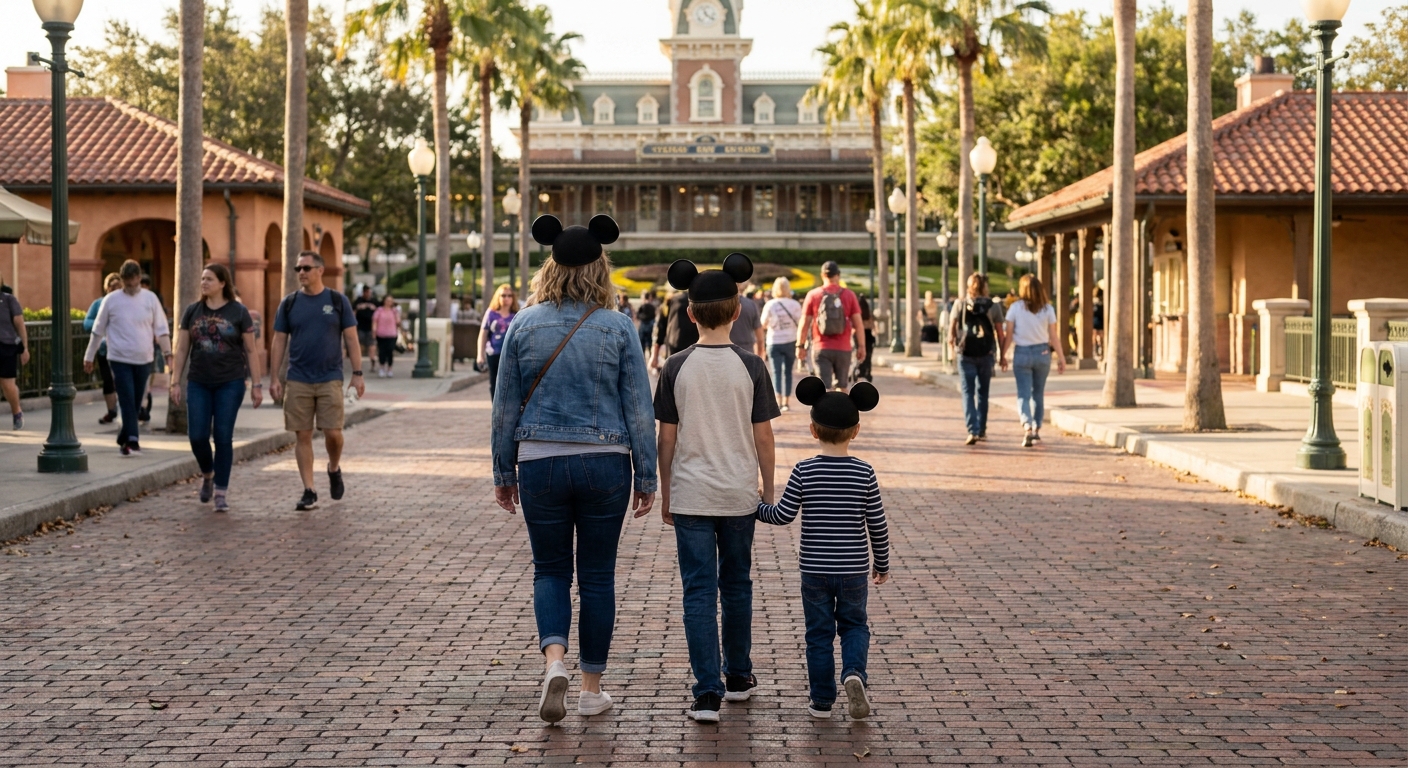
Which Park Is Best for Little Kids — and When to Go
For most families with under-6 kids, Magic Kingdom is the easy winner — but the smart move is matching the park to your kid’s energy, not just hitting the headliners. Magic Kingdom has the highest density of slow, gentle, no-height-requirement rides, the most character run-ins, and the shortest gaps between “things a 3-year-old can actually do.” The other parks each have a real case, but they ask more patience from little legs.
How the four parks stack up for little kids
| Park | Toddler ride density | Walkability | Shade | Character density | Toddler patience needed |
|---|---|---|---|---|---|
| Magic Kingdom | Highest — Dumbo, Peter Pan, Barnstormer, it’s a Small World, Winnie the Pooh, Carousel | Compact, but big crowds | Moderate | Highest | Low |
| Animal Kingdom | Moderate — Kilimanjaro Safaris, Na’vi River Journey, TriceraTop Spin | Lush, shaded paths | Highest | Moderate | Low–moderate |
| EPCOT | Lower — gentle dark rides, lots of walking | Sprawling, long hauls | Low (open World Celebration) | Moderate | High |
| Hollywood Studios | Lowest for little kids — most rides have height limits | Tight, congested | Low | Moderate (Toy Story Land) | High |
The read on each park
- Magic Kingdom — The default first day. Fantasyland alone can fill a morning of walk-on or short-wait rides for kids too small for thrill rides. Characters are everywhere, and the parades and castle stuff land hardest with this age.
- Animal Kingdom — The most stroller-pleasant park: shaded, green, and calm. Kilimanjaro Safaris and the walking trails buy you stress-free downtime. It also tends to run shorter hours, which fits a nap schedule.
- EPCOT — Beautiful, but the distances are brutal on small legs and there’s less shade in the central areas. Best as a half-day or a character-meal stop rather than a full toddler marathon.
- Hollywood Studios — The toughest for under-6: most marquee rides have height requirements, and the crowds are dense. Toy Story Land and a few shows are the saving grace. Consider skipping it entirely on a short trip with little ones.
Recommended park order across a trip
Front-load the easy wins while everyone’s fresh, and keep the highest-patience parks for when kids have found their rhythm.
- [ ] Day 1 — Magic Kingdom. Biggest payoff, lowest patience cost. Sets the tone.
- [ ] Day 2 — Animal Kingdom. Shady, calmer, naturally lower-key for recovery legs.
- [ ] Day 3 — EPCOT (half-day) or a rest/pool day. Pair with an early character dinner.
- [ ] Day 4 — Hollywood Studios, only if your kids tolerate crowds and a few height limits; otherwise loop back to Magic Kingdom.
Build a buffer day if you can. With little kids, a midday return to the resort for naps beats pushing through, and a pool afternoon often saves the whole trip.
Pro tip: The single biggest lever for a low-stress toddler day isn’t which park — it’s which day. A moderate-crowd Magic Kingdom day feels twice as easy as a packed one, and parks rotate good and bad days based on hours, events, and Early Theme Park Entry. Pick the calendar before you pick the gate.
Let the data choose the day
This is where guessing fails most families — crowd levels shift week to week, and the “obvious” day is often the worst.
- SupaPark’s crowd forecasts and heat maps flag which parks are projected to be lightest on your travel dates, so you can slot Magic Kingdom on its calmer day instead of its mob day.
- The “Which park today?” recommendation reads live wait times and operational status each morning and tells you the lowest-stress option right now — useful when a park you planned on is suddenly slammed or a key kid ride goes down.
- The best-time-to-ride forecaster tells you when Dumbo, Peter Pan’s Flight, or Kilimanjaro Safaris usually hit their shortest waits, so you spend nap-window hours wisely.
The one thing to remember
Magic Kingdom first, Animal Kingdom for recovery, EPCOT and Hollywood Studios only as much as your kids’ patience allows — and let the crowd forecast, not the calendar square that’s convenient, decide which day you do each. The right park on the wrong day is still a hard day with a toddler.
Best Rides and Attractions for Toddlers and Preschoolers (No Height Requirement)
The good news: the vast majority of Disney World’s gentle, slow-moving rides have zero height requirement — so your 2-year-old can ride almost everything the family classics offer. The only catch is “scary,” not “tall.”
Little kids get shut out of the thrill rides, but they can do dozens of attractions across all four parks. The real planning problem isn’t height — it’s which rides go pitch-dark, loud, or jump-scare a sensitive kid into a meltdown. Here’s the park-by-park breakdown, with the intensity flag that matters.
Magic Kingdom
The single best park for this age group — most of Fantasyland is built for them.
| Ride | Height | Sensitive-kid notes |
|---|---|---|
| “it’s a small world” | None | Bright, slow, gentle — the safest bet of all |
| Dumbo the Flying Elephant | None | You control the height; great first “thrill” |
| The Many Adventures of Winnie the Pooh | None | A few bouncy, breezy moments; otherwise mild |
| Peter Pan’s Flight | None | Dark and dimly lit, but slow and sweet |
| Mad Tea Party | None | You spin the teacup — go easy or skip the wheel |
| The Magic Carpets of Aladdin | None | Outdoor, Dumbo-style, very mild |
| Prince Charming Regal Carrousel | None | Classic carousel, zero intensity |
| Tomorrowland Transit Authority PeopleMover | None | Slow, breezy, narrated — and air-conditioned stretches |
| Walt Disney’s Carousel of Progress | None | Sit-down show, fully indoors, total reset for hot feet |
Note: Seven Dwarfs Mine Train is a Lightning Lane Single Pass coaster with a 38" requirement — not part of the no-height group, and its dark mine drops can spook younger riders.
EPCOT
| Ride | Height | Sensitive-kid notes |
|---|---|---|
| Gran Fiesta Tour (Mexico pavilion) | None | Boat ride, slow, colorful, often a walk-on |
| The Seas with Nemo & Friends | None | Gentle, characters, real aquarium at the end |
| Spaceship Earth | None | Long, slow, dark — the dark may bother the very little |
| Living with the Land | None | Calm boat ride; nap-friendly |
| Journey Into Imagination with Figment | None | A few quick honks/flashes, otherwise mild |
Disney’s Animal Kingdom
| Ride | Height | Sensitive-kid notes |
|---|---|---|
| Na’vi River Journey | None | Stunning, slow boat ride — bioluminescent and dark, but no scares |
| The Wildlife Express Train | None | Real train to Rafiki’s Planet Watch |
| TriceraTop Spin | None | Dumbo-style spinner |
| Kilimanjaro Safaris | None | Bumpy truck, real animals — usually a hit |
Disney’s Hollywood Studios
This park skews older, but the toddler set still has wins:
| Ride | Height | Sensitive-kid notes |
|---|---|---|
| Toy Story Mania! | None | Indoor 4D shooting game — fun for all ages, no scares |
| Alien Swirling Saucers | None | Whip-style spinner, short and mild |
| Slinky Dog Dash | 38" | A real (gentle) coaster — eligible for many preschoolers; airtime is small but present |
Pro tip: Build a “cool-down loop” into your Magic Kingdom afternoon — ride the PeopleMover, then walk straight into Carousel of Progress. Both are long, fully air-conditioned, almost never have a line, and buy you 35+ minutes of stroller-free sitting while a sweaty toddler decompresses. Veterans use these as scheduled rest stops, not afterthoughts.
Which “mild” rides actually scare little kids
Slow does not mean un-scary. The usual triggers:
- [ ] Peter Pan’s Flight — dark, and you’re “flying” with no floor below
- [ ] Spaceship Earth — long stretches of darkness near the top
- [ ] Na’vi River Journey — beautiful but dim, with a glowing shaman finale that can startle
- [ ] The Haunted Mansion (no height limit) — not gory, but genuinely spooky; skip with timid kids
Skip-the-research move
Wait times on these family rides swing hard with park crowds and parade timing — Peter Pan and Gran Fiesta can be a walk-on at one hour and 40 minutes the next. SupaPark’s best-time forecaster flags the low-wait windows for each, and the live alerts ping you the second a ride craters to walk-on, so you can grab it before the next nap meltdown hits.
The one thing to remember: height is rarely the barrier for this age — sensitivity is. Plan around the dark rides, lock in two or three air-conditioned shows as built-in rest stops, and you can fill a whole day without your toddler missing out.
Understanding Height Requirements and Rider Switch
Bottom line: height limits aren’t a “no” — they’re a “not yet,” and Rider Switch means a too-short kid never costs an adult their turn on the headliners.
Walt Disney World measures kids in stockinged feet at the ride entrance, and Cast Members are strict about it — borderline kids get re-measured, so there’s no fudging it. The smart play is to know your child’s height before you arrive and plan which rides are realistic, which need a Rider Switch, and which are an easy “let’s grow another inch and come back next trip.”
Common height thresholds
Most attractions cluster around a handful of cutoffs. Heights can shift, so confirm at the entrance — but these are the durable benchmarks families plan around:
| Height | Unlocks (examples) | Vibe |
|---|---|---|
| Any height | Most dark rides, boats, slow-movers | Toddler-friendly |
| 32" | Slinky Dog Dash (Hollywood Studios) | First “big” coaster |
| 35" | Frozen Ever After, Cosmic Rewind (EPCOT) | Gentle-ish thrill |
| 38" | Seven Dwarfs Mine Train (Magic Kingdom) | Mild family coaster |
| 40" | Big Thunder, Space Mountain, Star Tours, Flight of Passage | Real thrill tier |
| 44" | Rise of the Resistance, Expedition Everest, TRON Lightcycle / Run | Tallest cutoffs |
A child who clears 40" can ride a huge share of the park’s headliners; 44" is the gate to the most intense ones.
How SupaPark flags eligibility for you
Punch each kid’s height into SupaPark’s child height tracking once, and it does the math the rest of the trip:
- Marks every attraction as ride / can’t ride / borderline per child, so you’re not squinting at signs in the queue.
- Surfaces the eligibility cutoff next to each ride’s wait time and best-time forecast — you see in one glance whether the whole crew can board or you need a Rider Switch.
- As kids grow between trips, update the number and the whole ride list re-sorts.
Pro tip: Measure at home in the shoes your kid will actually wear in the park, then add nothing — Disney measures in those same shoes flat on the ground. A chunky sole has pushed more than one borderline kid over a 40" line, so don’t count on barefoot height.
Rider Switch, step by step
Rider Switch (sometimes called Rider Swap) lets both adults ride a height-restricted attraction while one always stays with the little one — without anyone standing in the standby line twice.
- [ ] At the ride entrance, tell the Cast Member you want to use Rider Switch. The whole party (including the non-riding adult and child) needs to be there.
- [ ] Adult #1 — and any kids tall enough — rides first through the normal line or Lightning Lane.
- [ ] Adult #2 waits with the short kid nearby (grab a snack, hit a nearby toddler ride, find shade).
- [ ] When Adult #1 returns, Adult #2 enters through the Lightning Lane / return path — no second standby wait.
- [ ] Bonus: a tall sibling who already rode can usually ride a second time with Adult #2.
That last point is the underrated win — your older kid gets a re-ride on Slinky Dog Dash or Mine Train while the toddler never knows the difference.
Make Rider Switch painless
- Stack it with Lightning Lane. Use Multi Pass (or Single Pass for Mine Train, Flight of Passage, Rise, TRON, Cosmic Rewind) for the first rider, and the swap return is fast on both ends.
- Pick swap-friendly rides. Attractions with a toddler option nearby — Slinky Dog Dash sits by Toy Story Land’s spinners; Big Thunder is steps from the Magic Kingdom riverboat area — let the waiting adult keep the little one entertained.
- Confirm the window. Some Rider Switch passes hold for the rest of the day, others are tighter — ask the Cast Member when you set it up so you don’t lose it.
The one thing to remember
Height limits don’t shrink your day if you plan around them. Load every kid’s height into SupaPark so you know the realistic ride list before you walk in, then lean on Rider Switch at the headliners so neither parent sits one out. A 38"-or-39" kid this trip is often a 40"-and-up kid the next — so treat the “not yet” rides as next year’s reward, not today’s disappointment.
Rope Drop, Naps, and Timing Your Day Around Tiny Humans
With little kids, your real currency isn’t crowd level — it’s their energy. Spend the good hours on headliners, bank a midday nap, and you’ll out-ride families twice your size.
A toddler has roughly one great window per day, and it’s the first three hours after they wake up. That’s also, conveniently, when wait times are lowest. Stack those two facts on top of each other and the whole day plans itself: hit the hard stuff early, retreat before the meltdown, come back recharged.
Why the early window is the whole game
The lowest waits of the day are almost always at opening. We’ve watched mornings at Disney’s Hollywood Studios where Slinky Dog Dash and Star Wars: Rise of the Resistance — two of the most demanded rides in all of Walt Disney World — opened with posted waits around 35 minutes. By noon those same rides routinely sit at 90+. The standby line you skip at 9 a.m. is a line you’d never survive with a 4-year-old at 1 p.m.
If you’re staying on-site, Early Theme Park Entry gets all Disney resort guests in 30 minutes before official open. That half hour is gold — but it also means lines start forming before “rope drop” time, so don’t stroll up at opening and expect to be first.
| Guest type | Early access | Best use of it |
|---|---|---|
| Disney resort (any tier) | Early Theme Park Entry, 30 min early | One headliner walk-on before official open |
| Deluxe / Club-level | + Extended Evening Hours (select nights) | A second walk-on lap after littles are in bed (if anyone’s awake) |
| Off-site | None — arrive 45+ min pre-open | Still beats midday; line up early |
Build the day around the nap, not against it
The biggest rookie mistake is powering through midday because you “paid for the ticket.” That’s how you get a 3 p.m. stroller meltdown and a wasted evening. Build the retreat in on purpose.
- [ ] Rope drop → ~11:30 a.m.: knock out 2–3 headliners during the walk-on window
- [ ] Late lunch in the park or on the way out
- [ ] Resort nap / pool break, ~12:30–4 p.m. — the parks are hottest and most crowded anyway
- [ ] Return ~4:30–5 p.m. refreshed for dinner, a second wave of rides, and fireworks
Midday is when waits peak and temperatures spike — leaving isn’t quitting, it’s trading your worst park hours for a calm pool and a kid who’s pleasant at dinner.
Let the data tell you when to pounce
You don’t have to guess the walk-on windows. SupaPark’s best-time-to-ride forecaster shows the hours each ride usually bottoms out, so you can line up your morning hit list — and its live wait alerts ping you the moment a headliner craters to a walk-on or an attraction goes down (which often dumps a nearby ride to near-zero). That’s the difference between standing in a 70-minute line and getting a text that says Seven Dwarfs Mine Train just dropped — go now.
Pro tip: Some of the lowest mid-morning waits show up on days a park closes early — when daily hours are short, crowds thin out fast, so an early-close day is secretly one of the best days to bring little kids and rope drop hard.
Where Lightning Lane fits
You won’t ride everything before the nap, so protect the rides that are worst to wait for. With Lightning Lane Multi Pass, you buy it per day and pick your selections in advance (resort guests up to 7 days out, off-site 3 days out, window opening 7:00 a.m. ET), then refill one at a time through the day — no day-of scramble.
- The toddler-headliners with their own Single Pass (bought à la carte) are worth real consideration: Seven Dwarfs Mine Train and TRON Lightcycle / Run at Magic Kingdom, and Avatar Flight of Passage at Animal Kingdom if your kid clears the height.
- Save Multi Pass selections for the early-afternoon hours you’d otherwise be napping through — so the line keeps moving even while you’re not there.
The one thing to remember: ride the headliners in the first three hours, leave before the wheels come off, and let the forecaster and live alerts decide your next move — not the posted wait board.
Lightning Lane Strategy for Families
The move with little kids: buy Multi Pass for your headliner-heavy days, book your selections the morning your window opens, and treat Single Pass as a surgical strike on one or two rides — not a blanket purchase. Lines are the enemy of a good toddler day, and a well-played Lightning Lane buys you the one thing money can’t usually buy at Disney World: a kid who’s still in a good mood at 2 p.m.
How Multi Pass actually works (it’s not a 7 a.m. scramble)
Lightning Lane Multi Pass is purchased per day, and you pick your attractions in advance — not in a panic at rope drop.
- [ ] On-site Disney resort guests: make selections up to 7 days before arrival (for your whole trip).
- [ ] Off-site guests: up to 3 days before.
- [ ] The booking window opens at 7:00 AM Eastern on your eligible day.
- [ ] Book your first set of selections, then refill one at a time — once you tap into a ride (or its window passes), you add the next one in My Disney Experience.
For families, the refill mechanic is the whole game: stack your morning with the rides your kids will melt down over, then keep feeding in fresh selections all day. Toddler-friendly Multi Pass picks worth grabbing early include Peter Pan’s Flight, The Many Adventures of Winnie the Pooh, and Jungle Cruise at Magic Kingdom — gentle, high-demand, and brutal in standby.
Pro tip: Don’t burn your morning Multi Pass selections on walk-on rides like the PeopleMover or Tomorrowland Speedway. Use them on the rides where standby routinely tops 40 minutes, and rope-drop the low-wait stuff. A Lightning Lane only “pays” when the standby line it skips is genuinely long.
Single Pass: which headliners are worth it with kids
Single Pass is bought à la carte for the top headliners, separate from Multi Pass. With little ones, height limits and intensity matter more than the skip itself — there’s no point paying for a ride half your group can’t board.
| Single Pass ride | Park | With little kids? |
|---|---|---|
| Seven Dwarfs Mine Train | Magic Kingdom | Often worth it — family coaster, mild thrills, but standby is punishing. The classic “buy it so you ride it.” |
| TRON Lightcycle / Run | Magic Kingdom | Depends — 48" height limit and a fast launch; skip for younger/timid kids. |
| Guardians of the Galaxy: Cosmic Rewind | EPCOT | Skip for little ones — 42" and a true thrill coaster (it launches and spins). |
| Star Wars: Rise of the Resistance | Hollywood Studios | Older kids only — long, intense, can frighten toddlers. |
| Avatar Flight of Passage | Animal Kingdom | Older kids only — 44" height limit and an intense simulator. |
If you’ve got preschoolers, Seven Dwarfs Mine Train is usually the one Single Pass that earns its keep. The rest are calls for your bigger kids or a Rider Switch situation — not a default buy.
Where SupaPark takes the stress off
The hard part isn’t the strategy — it’s the timing, and timing with a stroller in one hand is rough. That’s the gap SupaPark fills.
- Sell-out trends tell you which Single Pass rides tend to vanish first, so you know whether Seven Dwarfs Mine Train is a “book it at 7 a.m. sharp” or a “you’ve got time” on your date.
- Refill predictions flag when a Multi Pass attraction is likely to free up later in the day — handy when your toddler naps through your 1 p.m. window and you need a Plan B.
- One-tap booking hand-off: SupaPark pings you the second a selection becomes bookable; you confirm it yourself in My Disney Experience. SupaPark never books for you — it just makes sure you’re not the parent who refreshed too late.
The one thing to remember: Lightning Lane is a tool, not a tax — spend it on the long-standby rides your kids actually love, keep the refills coming, and limit Single Pass to the one or two headliners that fit their height and nerves. Let SupaPark watch the clock so you can watch the kids.
Characters, Shows, and Parades Without the Stress
The move with little kids: treat character meets and shows as scheduled rest, not lines to conquer. A toddler standing in a 50-minute character queue is a meltdown waiting to happen. The trick is meeting characters where the wait is short, and using shows as built-in sit-down breaks while everyone else fights the standby lines.
Meet characters with the least waiting
Character waits aren’t random — they spike at park open and after parades, and quiet down mid-afternoon and during fireworks. The biggest lever is where you meet, not just when.
| Where to meet | Typical wait | Why it works for toddlers |
|---|---|---|
| Character dining (e.g. 'Ohana, Crystal Palace) | None — they come to you | Characters rotate table to table; no line, kids stay seated and fed |
| Indoor meet spots (air-conditioned) | Shorter, climate-controlled | No sun, no overheating mid-wait |
| Mid-afternoon or during a parade/fireworks | Lowest of the day | Crowds pull away to the show |
| Park open / right after a parade | Longest | Avoid these windows |
Pro tip: Character meet-and-greets report live wait times just like rides, so they show up in SupaPark’s data — watch a long-wait character drop to near walk-on during the afternoon parade or fireworks, and SupaPark pings you the second it craters so you can swoop in.
Character dining is the genuine shortcut: one reservation gets you a meal and several characters with zero queueing. Book those ADRs 60 days out at 6:00 AM Eastern in My Disney Experience — the popular ones go fast.
Managing a shy or scared toddler
Plenty of little kids freeze (or sob) when a life-size character looms over them. That’s normal — don’t force it.
- [ ] Start with “face” characters who talk (princesses) before the big costumed ones (Mickey, Chewbacca) — they’re less overwhelming
- [ ] Let your child watch another family go first from a few feet back
- [ ] Hold the meet for later in the trip, once they’ve warmed up
- [ ] Stay close and crouch to their level; characters take the cue and slow down
- [ ] Have a comfort item or snack ready for the reset afterward
If it’s a hard no, walk away — there’s always another character, another day.
Picking toddler-friendly shows and parades
Shows are the most underrated tool for a little-kid day: they’re seated, shaded or indoors, and they reliably buy you 20–30 minutes of calm. The daytime parade and stage shows are gentle. Save the loud, dark, late stuff for when your kid is older.
| Show type | Toddler verdict | Smart move |
|---|---|---|
| Daytime parade | Great — bright, musical, short | Find a curb 20–30 min early in shade |
| Indoor stage/animated shows | Great — AC, seated, low intensity | Use as a midday nap-adjacent break |
| Nighttime fireworks | Mixed — loud, late, big crowds | See below |
Best viewing spots for the smallest guests
- Parades: grab a curb spot in shade along the route 20–30 minutes ahead, ideally near the start of the route so you’re not waiting as long for it to reach you. Curb height puts little ones at eye level.
- Avoid the hub crush: the deepest crowds pack the central viewing zones. Side streets along the parade route get the same floats with room for a stroller.
- Stroller reality: you’ll usually park the stroller away from the curb, so factor in carrying a tired kid.
When to skip fireworks (or watch from somewhere calmer)
Fireworks are loud, late, and end with thousands of people funneling out at once — a rough combo for an overtired toddler. There’s no shame in skipping.
- [ ] If bedtime matters more than the show, skip it and ride the near-empty headliners instead — waits crater during fireworks
- [ ] Want the show without the crush? Watch from a calmer vantage: a resort beach, the edges of the park, or a spot with an exit at your back
- [ ] Bring ear protection for noise-sensitive kids
- [ ] Leave 5 minutes before the finale to beat the stampede
Pro tip: Fireworks are the single best time to ride. While the crowd is locked onto the sky, SupaPark’s forecaster flags which nearby attractions go walk-on — trade the show for short lines and a happier kid.
The one thing to remember
With little kids, characters and shows are your pacing tool, not your checklist. Meet characters where there’s no line (dining beats standby), use seated shows as scheduled breaks, and don’t be a hero about fireworks — let the live data tell you when a character or ride just went walk-on, and spend the saved time on a kid who’s still smiling.
Strollers: Renting, Bringing, Parking, and Navigating
Bring your own lightweight, foldable stroller if you already own one — it’s almost always cheaper and comfier than renting, and the in-park rental can’t leave the park with you. That single rule covers most families. The exceptions are worth knowing, so here’s the real breakdown.
Bring vs. rent vs. third-party
| Option | Roughly costs | Best for | The catch |
|---|---|---|---|
| Bring your own | $0 on top of what you packed | Families who already own a compact, fold-flat stroller | You haul it through the airport and onto Disney transport |
| Disney in-park rental | Around $15–$30/day (single vs. double; length-of-stay discount) | Last-minute decisions, no checked stroller | Hard plastic, no recline, stays inside the park — you can’t take it to your resort or to dinner |
| Third-party (City/Kingdom-style local rentals) | Often less per day, big multi-day savings | Longer trips, families wanting a plush stroller with recline | Must arrange delivery/pickup; some require you to meet the driver |
- Disney’s rental strollers are rigid and don’t recline — fine for a 4-year-old who just needs a seat, rough for a napper.
- Third-party rentals deliver a real stroller (often a brand-name model with a sunshade and recline) to your resort, and you keep it the whole trip — park, resort, and Disney Springs included.
The stroller is a bed
A reclining stroller is the single biggest nap-saver for toddlers. Disney’s in-park rental can’t do this, which is the main reason to bring your own or rent third-party if you’ve got a kid who still naps.
- [ ] Pack a clip-on sunshade or muslin to drape for shade and darkness
- [ ] Bring a small fan and a fitted liner for the Florida heat
- [ ] Plan a midday return to a quiet, low-traffic land (Rivers of America walkways, EPCOT’s World Showcase in early afternoon) for an easier on-the-go nap
Parking, tags, and the queue trick
Strollers are not allowed in queues, shows, or restaurants — you park them in designated stroller corrals near each attraction, and cast members often consolidate or tidy rows, so your stroller may move a few feet from where you left it.
- Clip on a bright ribbon, bandana, or luggage tag so you can spot yours in a sea of identical black strollers.
- Never leave anything valuable in the basket — bring phones, wallets, and a small bag with you.
Pro tip: Stop by Guest Relations and ask for a “stroller as a wheelchair” tag. If your child can’t easily wait in a standard line in a stroller, this red tag lets you roll the stroller through queues right up to the boarding area instead of parking it outside — a game-changer for kids who melt down standing in a 40-minute line.
Stroller-friendly routes and where you must fold
Getting around the resort with a stroller is mostly smooth, with a few hard rules on transport.
| Transport | Stroller rule |
|---|---|
| Disney buses | Must be folded before boarding — get your kid out and collapse the stroller as you approach the line |
| Skyliner gondola | Folded for loading; cabins handle folded strollers fine |
| Monorail | Can usually roll on, but be ready to fold if it’s crowded |
| Boats | Folded for most launches |
| Walking paths | Fully stroller-friendly between parks/resorts where paths exist |
- A one-handed, self-standing fold is worth its weight in gold at the bus stop — practice it before you go.
- Inside the parks, stick to main thoroughfares and ramps; every attraction area has a stroller-accessible path, but shortcuts through shops can get tight at peak times.
The bottom line
If you own a compact reclining stroller, bring it — you get naps, comfort, and zero rental fees. If you don’t, a third-party rental beats Disney’s in-park option for any trip longer than a day or any kid who still sleeps midday. Grab the stroller-as-wheelchair tag if it applies, tie a ribbon on the handle, and rehearse your fold for the bus line.
Dining With Little Kids: Reservations, Free Meals, and Quick Wins
The single biggest dining win for toddler families is free: kids under 3 eat at no charge — and your job is mostly grabbing the right tables before they vanish.
Children under 3 aren’t counted as paying diners, so they eat free off the buffet or share from your plate at virtually every Disney World restaurant — yes, even the upscale, hard-to-book spots. That alone can erase a meal’s worth of cost per day. Pair that with smart booking and a few quick-service escape hatches and dining stops feel less like a battle.
Lock in ADRs the moment your window opens
Advance Dining Reservations (ADRs) open 60 days before arrival at 6:00 AM Eastern in the My Disney Experience app. The tough tables — character meals especially — can be gone in minutes, so be logged in and ready at 5:59.
- [ ] Note your 60-day date and set a 5:55 AM alarm
- [ ] Have payment + party details saved in My Disney Experience the night before
- [ ] Book your one must-do character meal first, then fill in the rest
- [ ] Keep a backup time/restaurant in mind in case your first pick is gone
Don’t confuse this with the Lightning Lane Multi Pass window (7:00 AM) — different feature, different clock.
Character meals that actually work for toddlers
The goal with little kids is short waits, easy food, and characters that come to your table so nobody loses a stroller spot in a meet-and-greet line. Buffets and family-style service win because the food arrives fast and picky eaters have options.
| What to prioritize | Why it helps with toddlers |
|---|---|
| Buffet or family-style service | Food hits the table immediately — no 30-min wait with a hungry 2-year-old |
| Characters that circulate the room | Photos happen at your seat; no separate queue |
| Breakfast slots | Kids are freshest, restaurant is calmest, frees the day for naps |
| Under-3s in your party | They eat free, so a pricier character meal stings less |
Pro tip: Book character meals for breakfast, not dinner. Toddlers melt down by evening, morning crowds are thinner, and an early seating lets you bank a midday nap instead of scrambling for one.
Look for the Mickey Check
Menu items marked with the Mickey Check icon meet Disney’s nutrition guidelines for kids — balanced portions, sensible sides. It’s a fast filter when you’re scanning a menu with a restless preschooler and don’t want to overthink it. Order it as listed; the check applies to the item as built.
Skip the sit-down: lounges and quick-service
Full table-service meals eat 60–90 minutes you may not have with little ones. Lounges and counter spots get you fed without the commitment — many lounges take walk-ups, so there’s no reservation to win.
- Rose & Crown Pub (EPCOT) — pub-style plates, usually calmer than the dining room next door, walk-up seating
- Tutto Gusto (EPCOT) — Italian small plates and a quieter room; good for grazing rather than a formal meal
- Any park quick-service — order ahead via Mobile Order in My Disney Experience so food’s ready when you arrive
For counter meals, an adult entrée is often plenty to split with a toddler — chicken tenders, a grilled cheese, a fruit-and-cheese plate — which trims cost and waste at the same time.
How SupaPark Drop Watch lands the “impossible” table
The best character breakfasts and signature dinners book out fast, but cancellations happen constantly as plans shift — usually in the days right before a trip. The trick is being the first to know.
That’s what SupaPark’s Drop Watch does: tell it the restaurant, date, and party size you want, and our system watches availability around the clock. The instant a cancellation frees a table, SupaPark pings you so you can jump into My Disney Experience and grab it before anyone else spots it. You do the booking with Disney directly — SupaPark just catches the opening you’d otherwise miss while you’re on a ride.
The one thing to remember: book the few tables that matter at your 60-day, 6 AM window — and let Drop Watch chase the ones that were already gone.
Feeding Toddlers and Handling Food Allergies
You can bring your own food into every Walt Disney World park — no special pass, no questions asked — and Disney’s allergen handling is genuinely best-in-class once you know how to flag it. That combination means toddler feeding and food allergies are two of the least stressful parts of a Disney day, if you set it up right.
Bringing your own food (and high chairs)
You’re allowed to bring snacks, sandwiches, pouches, and refillable water bottles through bag check. No glass, and no loose dry ice (use ice packs). This is the single biggest money- and meltdown-saver for little kids — a stocked stroller basket beats hunting for a snack stand mid-tantrum.
- [ ] Spill-proof snack containers + a few shelf-stable favorites (crackers, pouches, energy bites)
- [ ] Refillable water bottle — quick-service counters give free cups of ice water all day
- [ ] Silicone bib and a compact spoon/fork set
- [ ] A portable booster or clip-on high chair if your child is picky about seating
High chairs are stocked at essentially every table-service and quick-service location — even fine dining. Tell your server early whether you’re using one or holding the baby so they can pre-stage it.
How to flag an allergy the right way
Disney chefs take allergies seriously, and the system works best when you start the conversation before you order.
| Where | What to do | Why it works |
|---|---|---|
| Table service | Tell the server at sit-down; ask for the chef | Chefs routinely come to the table to walk you through safe options |
| Quick service | Ask for the allergy-friendly menu binder at the register | Most counters have one; many menu boards also list common allergens |
| Mobile order | Use the allergy filter in My Disney Experience | Flags items free of the top allergens before you commit |
Disney labels for the most common allergens, but “labeled” isn’t the same as “verified for your kid” — always confirm with a Cast Member or chef rather than trusting a sign alone.
Nut-free and dairy-free treats worth seeking out
Allergen-conscious doesn’t mean joyless. A few reliably labeled standouts:
- Oreo Mickey cupcakes at Landscape of Flavors (Art of Animation) — the wrapper lists every ingredient, so it’s easy to verify on the spot.
- Pumpkin treats (seasonal) — pumpkin pancakes at Kona Café (Polynesian), mini pumpkin cheesecakes at Boma (Animal Kingdom Lodge), and pumpkin ice-cream sandwiches at Sleepy Hollow (Liberty Square). All carry allergen info. Note the Kona version comes with maple-pecan butter, so ask for it plain if you’re nut-free.
- Dole Whip at the Polynesian’s Pineapple Lanai — dairy-free by default.
Holiday party candy swaps
If your trip overlaps a hard-ticket party, the candy-swap booths are a quiet win:
- Mickey’s Not-So-Scary Halloween Party: a candy-exchange booth (often near City Hall) swaps standard trick-or-treat candy for sugar-free, nut-free, and other dietary-friendly alternatives. Bring a quick list of your child’s allergens — staff can match against a pre-approved list.
- Mickey’s Very Merry Christmas Party: follow the colored balloons to free cookie-and-cocoa stations; Cast Members can point you to nut-free or dairy-free options.
Pro tip: Hand your toddler a sticky-note “balloon checklist” of the treat-station colors at the Christmas party — it turns the walk between rides into a game and keeps little hands busy while you stay on schedule.
How SupaPark takes the guesswork out
Reading every label with a hungry toddler in tow is the real challenge. SupaPark closes that gap:
- Ingredient lookup: search an item like “Oreo Mickey cupcake,” set your child’s top allergens, and SupaPark tells you whether it’s clear of your flagged ingredients — no menu-board squinting.
- Allergy-safe Drop Watch: when a location runs out of a nut-free or dairy-free item, SupaPark pings you the moment a fresh batch is back, so you’re not making repeat trips across the park.
Both run off SupaPark’s live data at supapark.com — you still confirm and order with Disney directly; SupaPark just catches the moment the safe option is available.
The one thing to remember
Pack your own snacks, name the allergy out loud to a Cast Member or chef before you order, and let SupaPark’s ingredient lookup and Drop Watch do the label-reading — that trio turns the scariest part of toddler dining into the easiest.
Choosing the Right Resort for Young Families
The honest take: with little kids, your hotel isn’t where you sleep — it’s where you nap, swim, and decompress between meltdowns. Pick for the pool, the transportation, and the room layout, in that order. Theming is the bonus, not the deciding factor — a toddler who’s overtired doesn’t care that the wallpaper has Nemo on it.
Every on-site Disney resort, from the cheapest Value to the priciest Deluxe, gives all guests Early Theme Park Entry — 30 minutes in the parks before everyone else. That half hour is gold for families: you can walk onto a headliner before the standby line builds, then be back at the pool by lunch. Deluxe and Club-level guests also get Extended Evening Hours on select nights, but most families with preschoolers will never use them — the kids are asleep.
How the tiers actually compare
| Art of Animation (Value) | Port Orleans Riverside (Moderate) | Animal Kingdom Lodge / Polynesian (Deluxe) | |
|---|---|---|---|
| Room space | Family Suites sleep 6, two bathrooms, kitchenette | Standard rooms; some sleep 5 | Standard rooms; larger Deluxe footprint, savanna/water views |
| Pool | Big Blue Pool — largest resort pool on property | Pool with kiddie zone, quieter | Themed pools (lagoon/lava-style), generally calmer |
| Theming kids love | Cars, Nemo, Lion King, Little Mermaid courtyards | Riverboat/bayou; gentler | Live savanna animals (AKL); island/Moana vibe (Poly) |
| Transport to parks | Bus (and Skyliner to EPCOT/Hollywood Studios) | Bus + boat to Disney Springs | Bus; Poly has the monorail to Magic Kingdom |
| Price tier | $ | $ | $$ |
Where each one wins
- Art of Animation is the value play for bigger families. The Family Suites genuinely sleep six with a separate bedroom and two bathrooms — meaning you’re not tip-toeing in the dark after bedtime. The Big Blue Pool is enormous, and the Skyliner gondola to EPCOT and Hollywood Studios is a hit with kids (and skips bus lines). Trade-off: it’s a sprawling Value resort, so it can feel busy and the walk to your room can be long with a stroller.
- Animal Kingdom Lodge is the secret weapon for toddlers who burn out on rides. A savanna-view room means giraffes and zebras outside your window — free entertainment on a no-park rest day. The catch: it’s the farthest-flung resort, so budget extra bus time to every park except Animal Kingdom.
- Polynesian Village is the convenience king. The monorail to Magic Kingdom means a sleeping kid goes straight from stroller to bed with no transfer — huge when you’re leaving after fireworks. You pay Deluxe prices for that, and Magic Kingdom proximity only.
The under-3 perk nobody budgets for
Kids under three are free at virtually every Disney table-service restaurant — including character meals and fine dining. So your resort choice quietly shapes your food bill: a Deluxe with a great in-house character breakfast can be worth more than the nightly rate suggests if you’ve got a 2-year-old eating off your plate for free.
Pro tip: If you’re choosing between a Moderate and a Deluxe purely for the pool, look at the Moderate — Port Orleans and Caribbean Beach have themed pools with kiddie splash zones that rival Deluxe pools at a meaningfully lower nightly rate, and the room is often roomier than a Deluxe standard.
Quick decision checklist
- [ ] Need to sleep 5–6? Start with Art of Animation Family Suites before pricing two Deluxe rooms.
- [ ] Doing mostly Magic Kingdom? Polynesian’s monorail pays for itself in stroller-free transfers.
- [ ] Want a built-in rest-day attraction? Animal Kingdom Lodge’s savanna keeps toddlers happy for hours, no park ticket needed.
- [ ] On a budget? Any Value still gets you Early Theme Park Entry — the single most valuable on-site perk.
The one thing to remember: every on-site resort gives you that 30-minute Early Entry head start, so don’t overpay for “perks” your little kids will sleep through. Buy the room layout and the transportation that fit your family’s nap schedule — that’s what actually saves your day. SupaPark’s best-time forecaster tells you exactly when to cash in that head start at each park, so the half hour lands on a walk-on instead of a wasted lap.
Packing the Ultimate Toddler Park Bag
The right bag isn’t the biggest one — it’s the one that solves a meltdown in under 30 seconds. Pack for the three things that derail a toddler day: heat, rain, and an empty stomach. Everything else is backup.
The non-negotiables
These earn their weight every single park day:
- [ ] Refillable water bottles — every quick-service counter gives free cups of ice water, so refill all day for nothing
- [ ] Sun protection — high-SPF sunscreen (reapply midday), a wide-brim or clip-on stroller hat, and a stroller sunshade or muslin to drape over the canopy
- [ ] Rain ponchos from home — buy a multi-pack of disposables before your trip
- [ ] A clip-on portable fan or misting fan for stroller naps and ride lines
- [ ] Snacks you control — pouches, crackers, fruit, anything that buys you ten quiet minutes
- [ ] One full change of clothes per kid, sealed in a zip bag (which doubles as your wet-clothes bag)
- [ ] More diapers and wipes than you think — a half-day estimate, doubled
- [ ] A portable charger, fully charged the night before
- [ ] Hand sanitizer and a travel pack of wipes for tables, hands, and ride restraints
- [ ] The comfort item — lovey, pacifier, small blanket. A lost lovey ends the day; bring a backup if you have one
Why Disney ponchos aren’t the move
Afternoon storms are a near-daily summer event in Central Florida, and the in-park poncho is one of the worst values on property.
| Option | Approx. cost | Reusable? | Verdict |
|---|---|---|---|
| Disney adult poncho | around $12 | Rarely — they tear easily | Skip |
| Disposable multi-pack from home | a few dollars each | Sometimes | Best value |
| Packable rain jacket | one-time buy | Yes | Best for frequent visitors |
Disney ponchos run about $12 each, rip the first time you wrestle one over a squirming toddler, and you’ll be buying another in two parks. Pack a cheap multi-pack from home instead and toss them guilt-free.
Pro tip: Charge your portable charger the night before — the most common battery fail is a dead backup battery, not a dead phone. Your phone is your park map, Lightning Lane booker, mobile-order tool, and stroller-finder; if it dies at 2 p.m., your strategy dies with it.
Lean on the Baby Care Centers
Here’s the part most first-timers don’t know: every park has a free, air-conditioned Baby Care Center, and they cover a lot of what you’d otherwise haul.
What they typically offer:
- Quiet, dim nursing and feeding rooms with comfortable seating
- Private changing tables and toddler-height toilets
- A microwave and sink for warming bottles and food
- High chairs and a small kid-friendly TV area for a cool-down break
- A stocked shop for the stuff you forgot — diapers, wipes, formula, baby food, and over-the-counter basics (you pay for these, but you won’t pay theme-park-gift-shop prices for a missing diaper crisis)
Locations to memorize: near First Aid by Casey’s Corner at Magic Kingdom; in the Odyssey building at EPCOT; near Guest Relations at the entrance of Hollywood Studios; and on Discovery Island at Animal Kingdom.
Because the Centers stock emergency diapers and wipes, you can pack a reasonable half-day supply rather than a bunker’s worth — just know where the nearest Center is before you’re in trouble.
Pack-smart logic
- Keep a “go bag” inside the big bag. A small pouch with one diaper, travel wipes, sanitizer, and a snack lives up top so you’re not excavating during a line.
- Freeze your water bottles overnight. They thaw into cold water by midday and keep snacks cool in the meantime.
- Skip the bulky cooler. Disney allows small soft coolers, but a single insulated pouch plus free counter ice does the job without the bulk.
- Stash everything wet-prone in zip bags. Phones, the charger, and spare clothes survive both surprise storms and water rides.
The one thing to remember
Pack for heat, rain, and hunger first — those three cause most toddler meltdowns — and let the Baby Care Centers be your safety net for everything else. A lighter, smarter bag beats a heavy one you dread carrying by noon.
Beating Heat, Rain, and Meltdowns
The takeaway: with a toddler in Florida, the afternoon is your enemy — plan to be indoors and air-conditioned from roughly 1–4 PM, every single day. Heat and overstimulation are what actually end Disney days with little kids, not the rides. Build the cool-down into your plan instead of reacting to the first meltdown.
Hydration and cooling, on a schedule
Don’t wait for “I’m thirsty” — toddlers won’t tell you until they’re already cranky. Any quick-service counter gives you a free cup of ice water, so you never need to buy bottled.
- [ ] Refill a free cup of ice water at every meal and snack stop
- [ ] Pack a small spray bottle or battery fan for stroller misting
- [ ] Stash electrolyte packets and a damp cloth in the stroller basket
- [ ] Schedule a sit-down AC break every ~2 hours, not “when someone cries”
Your hot-afternoon indoor list
When the sun peaks, pivot to long, cool, seated experiences. These run AC and eat up time:
| Park | Cool-down picks (mostly indoor/AC) |
|---|---|
| Magic Kingdom | Carousel of Progress, Hall of Presidents, “it’s a small world”, Mickey’s PhilharMagic, Monsters Inc. Laugh Floor |
| EPCOT | Spaceship Earth, Living with the Land, The Seas with Nemo & Friends, Frozen Ever After |
| Hollywood Studios | Mickey & Minnie’s Runaway Railway, Toy Story Mania, Star Tours, Walt Disney Presents |
| Animal Kingdom | Na’vi River Journey, Festival of the Lion King (covered theater), Finding Nemo show |
Pro tip: The theater shows — Carousel of Progress, Hall of Presidents, Festival of the Lion King — are the secret weapon. They’re 20+ minutes of dark, cold, seated rest with near-zero wait, which is exactly what a fried toddler (and parent) needs.
Rain days are a gift, not a ruin
Light rain thins crowds dramatically while most rides keep running, so a drizzly afternoon is often the shortest-wait window you’ll get all trip. Skip the ride-prone Disney ponchos (around $12 and they tear after one use) and bring your own from home.
- Bring reusable rain ponchos and a stroller rain cover — cheaper and sturdier than buying on-site.
- Lean into the indoor list above; covered queues like Spaceship Earth and Haunted Mansion keep you dry while you wait.
- Real thunderstorms briefly pause outdoor rides — that’s your cue to bank an indoor attraction or an early dinner, not to leave the park.
Baby Care Centers and quiet resets
Every park has a Baby Care Center, and they’re the most underused toddler resource on property. They’re fully air-conditioned with comfy seating, private nursing areas, changing tables, a microwave for warming food, and a small shop for diapers, wipes, and formula if you run out. Magic Kingdom’s sits near First Aid at the end of Main Street, U.S.A.
Use them as a planned reset, not an emergency room. Twenty quiet minutes off the stroller in a dim, cool space resets a kid far better than pushing through. Quieter corners — the back of World Showcase, Tom Sawyer Island, resort lobbies if you’re staying on-site — work the same way.
Spotting and defusing the meltdown
Meltdowns are almost always hunger + heat + overstimulation stacking up. Catch the early signs — rubbing eyes, going quiet, refusing the next thing — and break the cycle before the full crash:
| Signal | What it usually means | Fast fix |
|---|---|---|
| Eye-rubbing, zoning out | Overtired | Stroller nap during a long indoor show |
| Sudden refusals, whining | Hungry/low blood sugar | Snack + cold water now, not in 30 min |
| Flushed, sweaty, irritable | Overheating | Baby Care Center or AC ride immediately |
A snack stash and a no-questions cool-down beat any toy bribe.
How live status helps you pivot
The trick to all of this is reacting fast — and that’s where SupaPark earns its keep. Live ride status and wait times let you find the closest cool, walkable indoor option the moment a kid hits the wall, instead of trekking across the park to a ride that’s down. If a covered attraction suddenly drops to a near walk-on, SupaPark’s live alerts ping you so you can duck inside while everyone else is still standing in the sun. On a rainy afternoon, the same data shows you which rides are still running so you spend the dip indoors and productive — not soaked in a stalled standby line. Check current waits and status at supapark.com before you commit to a walk.
Remember this one thing: protect the 1–4 PM window. An air-conditioned reset every afternoon is the difference between a magical week and a series of meltdowns.
A Sample Toddler-Friendly Day at Magic Kingdom
The winning toddler day isn’t packed — it’s a tight morning, a real nap, and an early exit before the meltdown. With a 3-year-old, you get roughly one strong burst of energy in the morning and a shorter one after nap. Plan around those two windows and you’ll do more, wait less, and skip the 8 p.m. stroller tears.
Here’s how a SupaPark day builder turns the usual “get there early” advice into an actual hour-by-hour plan.
The Plan, Hour by Hour
| Time | Move | Why it works |
|---|---|---|
| ~Park open (rope drop) | Fantasyland: Peter Pan’s Flight, then the Many Adventures of Winnie the Pooh and Mad Tea Party | First 60–90 min is when toddler-favorite lines are shortest. Hit Peter Pan first — it builds a long line fast. |
| Mid-morning | Dumbo, the carousel, Under the Sea | Low-intensity, no height limits, stroller parking right there |
| ~10:30 a.m. | Snack break | Beat the 11 a.m. quick-service rush; refuel before the morning crash |
| ~11:30 a.m. | Head back to resort | Leave before you need to, not after the meltdown |
| ~12:30–3:00 p.m. | Real nap in a real bed | The single biggest difference-maker for a young kid’s afternoon mood |
| ~4:00 p.m. | Return for characters + a Fantasyland re-ride | Crowds thin, afternoon light is kinder, lines drop as day-trippers fade |
| ~5:00 p.m. | Early dinner | Beat the dinner rush and a tired toddler’s hunger window |
| ~6:30 p.m. | Low-key exit before fireworks | Skip the crowd crush and the loud finale a 3-year-old won’t love |
Rope Drop Is Your Free Lightning Lane
Getting to the park right at (or just before) opening is the cheapest skip-the-line trick there is — no extra cost. Other free line-savers: ride during meal times, parades, or fireworks, and ride late as families leave.
- If you’re staying at a Disney resort, Early Theme Park Entry gets all on-site guests in 30 minutes early — a meaningful head start on Fantasyland.
- Deluxe and Club-level guests can also use Extended Evening Hours on select nights.
- Not on-site? Rope drop alone still gets the littles on Peter Pan and Dumbo before the waits balloon.
For the two Magic Kingdom headliners with a height limit, Seven Dwarfs Mine Train and TRON Lightcycle / Run are Lightning Lane Single Pass (bought à la carte). With a 3-year-old, you’ll likely skip both anyway — Mine Train requires 38", TRON 40" — so don’t burn money there. Lightning Lane Multi Pass covers the rest if your group wants it.
The Nap Break Is Non-Negotiable
Pro tip: Build the midday return into the plan as a fixed appointment, not a “we’ll see.” Families who treat nap as optional are the ones melting down by dinner. A 3-year-old who naps gets a genuine second wind for characters and dinner; one who powers through does not.
- [ ] Leave the park by late morning, before the crash
- [ ] Nap in the hotel room — a stroller nap rarely lasts long enough
- [ ] Return mid-afternoon when crowds and waits ease
Snacks, Characters, and an Early Dinner
- Snack timing: A mid-morning snack heads off the pre-lunch crash. Aim for ~10:30, before the quick-service counters jam at 11.
- Afternoon characters: Post-nap is prime character time — a rested toddler actually engages instead of hiding behind your leg. Fantasyland and the meet spots near the hub are easy stroller loops.
- Early dinner (~5 p.m.): Beats the rush and the hangry window. Book your Advance Dining Reservation at the 60-day mark (6:00 a.m. Eastern in My Disney Experience) for a calmer sit-down like Liberty Tree Tavern.
Exit Before Fireworks
A nighttime fireworks show is loud, late, and crowded — a lot for a 3-year-old at the end of a long day. Leaving around 6:30 means you beat the post-show exit crush at the gates and on transportation. If your kid is a night owl, watch from a quieter spot like the path toward the exit rather than the packed hub.
Where SupaPark Does the Work
The plan above is static; a park day isn’t. SupaPark’s day builder sequences your morning by live waits, and its alerts find you mid-day:
- A toddler ride drops to walk-on → you get pinged and reroute.
- A hard-to-get dining table frees up from a cancellation → Drop Watch catches it instantly and you grab it in My Disney Experience.
- A Lightning Lane you want refills → SupaPark forecasts it so you’re not refreshing all day.
The one thing to remember: structure the day around one morning burst and one post-nap burst, leave before fireworks, and let SupaPark adjust the order in real time so a closed ride or a long line never blows up the plan.
Cost Breakdown: Budgeting a Disney Trip With Little Kids
The biggest savings with little kids aren’t coupons — they’re the line items you can skip entirely because your toddler is too small to need them. Kids under 3 are free on tickets and free at the dining table, so your real budget is two adults plus a handful of avoidable extras. Here’s where the money actually goes, and where a veteran cuts it.
Where the dollars land
| Line item | Where families overspend | The smarter move |
|---|---|---|
| Tickets | Buying kid tickets for an under-3 | Under 3 = free admission. No ticket needed. |
| Lightning Lane | Full Multi Pass on a short-stamina day | Often not worth it with toddlers (see below). |
| Stroller | Daily in-park rental, multi-day trip | Bring your own or rent offsite for longer stays. |
| Dining | Buying a separate meal per kid | Under 3 eat free off your plate; share adult portions. |
| Souvenirs | Impulse plush, ponchos, light-up toys | Free buttons, free water, pre-bought from home. |
Lightning Lane: skip it more than you think
With little kids you ride fewer attractions, take midday breaks, and bail early — which quietly kills Lightning Lane ROI. A full Multi Pass only pays off when you’ll redeem enough selections to beat standby. On a half-day, low-ride toddler schedule, you frequently won’t.
| Your day | Lightning Lane call |
|---|---|
| Full day, older preschooler, 6+ rides | Multi Pass can pay off if waits are heavy |
| Short-stamina day, lots of breaks | Skip Multi Pass — rope-drop instead |
| One must-do headliner (e.g., a Single Pass ride) | Buy that Single Pass à la carte, skip the rest |
Remember the structure: Multi Pass is purchased per day and you pick attractions in advance (on-site guests 7 days out, off-site 3 days, window opens 7:00 AM ET), then refill one at a time. The true headliners — TRON Lightcycle / Run, Seven Dwarfs Mine Train, Guardians: Cosmic Rewind, Rise of the Resistance, Avatar Flight of Passage — are Single Pass only, bought separately. For a kid who’ll do one or two big rides, à-la-carte Single Pass usually beats a whole-day Multi Pass.
Pro tip: Rope drop is free Lightning Lane. Walk on to two or three headliners in the first hour, then let SupaPark’s best-time forecaster tell you the next low-wait window — and skip paying for skips you won’t use.
Stroller: rent or bring?
- Disney’s in-park rental is charged per day — fine for a single park day, expensive over a week.
- Bringing your own (or an inexpensive umbrella stroller) almost always wins for 3+ day trips.
- Third-party offsite rentals deliver to your resort and beat Disney’s daily rate for longer stays.
Dining: the under-3 superpower
- [ ] Skip kid meals where you can — most quick-service entrées (chicken tenders, grilled cheese, a fruit-and-cheese combo) easily split with a toddler.
- [ ] Order one adult plate to share rather than a separate child plate; you’ll cut waste and a few dollars per meal.
- [ ] Under-3s eat free at table service off your plate — even at upscale spots — so don’t budget a meal for them.
- [ ] Refill free ice water at any quick-service counter instead of buying bottled drinks all day.
Souvenirs and the impulse-buy trap
The merch is engineered to catch tired kids at exit. Defend the budget:
- Celebration buttons are free — grab birthday, first-visit, or anniversary buttons at Guest Relations or your resort. Instant souvenir, zero cost.
- Free ice water doubles as the cure for the “I’m thirsty, buy me that” cycle.
- Ponchos are the classic trap — around $12 each, they tear easily and aren’t reusable. Pack a few cheap rain ponchos from home instead.
- Buy big-ticket plush or light-up toys before the trip if you know they’re coming; in-park prices carry the convenience markup.
Build the budget, then let alerts protect it
Set a per-category cap before you go (tickets, one dining splurge, a souvenir allowance per kid) and the day-to-day spend manages itself. SupaPark’s free tier — live waits, the best-time forecaster, the crowd calendar — helps you skip paid skips you don’t need, and on paid tiers Drop Watch pings you the second a hard-to-get reservation frees up so you grab the meal you actually wanted in My Disney Experience. Find it at supapark.com.
The one thing to remember: with kids under 3, your money is best spent on experience (one great character meal, one headliner Single Pass) and saved everywhere the toddler perks already cover you — tickets, table food, and a free button beats a $40 plush every time.
Key Takeaways
The whole game with little kids is rhythm, not rides: protect naps and snacks, let the data pick your timing, and you’ll do more with way less meltdown. Here’s everything from this guide distilled into moves you can act on tomorrow.
The 10 smartest moves
| # | Move | Why it matters |
|---|---|---|
| 1 | Rope-drop one headliner, then slow down | The first hour is your only true walk-on window before strollers and heat pile up |
| 2 | Plan around the nap, not against it | A midday resort break beats a 4 p.m. tantrum every time |
| 3 | Kids under 3 don’t need their own meal or ticket | They eat off your plate or the buffet free — real savings at table service |
| 4 | Use Rider Switch on big rides | Both adults ride without re-queuing; the waiting parent holds the kid |
| 5 | Book ADRs at 60 days, 6 a.m. ET | Calm family spots like Liberty Tree Tavern go fast |
| 6 | Buy Lightning Lane Multi Pass and pre-pick selections | On-site guests choose up to 7 days out; refill one at a time all day |
| 7 | Skip Single Pass for the littlest kids | TRON, Seven Dwarfs, Cosmic Rewind, Rise, and Flight of Passage are height- and thrill-heavy à-la-carte buys |
| 8 | Share an adult entrée instead of a kids’ meal | Same food, less waste, a few dollars saved per kid |
| 9 | Ride during parades, fireworks, and mealtimes | Standby lines crater when everyone’s watching or eating |
| 10 | Bank quiet zones into the day | Use shaded lounges and play areas to reset before the next push |
Pro tip: A lightweight fold-flat stroller with a portable booster seat in the basket solves two problems at once — you skip the high-chair hunt and have a familiar nap spot on wheels.
Day-of checklist
- [ ] Check tomorrow’s crowd forecast and pick your park the night before
- [ ] Confirm your Lightning Lane Multi Pass selections are loaded for the morning
- [ ] Pack: refillable water, silicone bib, spill-proof snacks, sunscreen, a portable charger, a change of clothes
- [ ] Set a hard nap/break time and treat it as non-negotiable
- [ ] Note one show or parade as your built-in downtime
- [ ] Keep a couple of ADRs as anchors; fill the rest with quick-service
The biggest mistakes to avoid
- Over-scheduling. Three rides done happily beats eight done in tears.
- Standing in standby at peak. Let the best-time data move you instead.
- Assuming you must “reserve” your park day. Standard date-based tickets don’t need a separate park reservation, and Park Hopper works anytime the parks are open — no 2 p.m. rule.
- Buying Single Pass for kids who can’t ride. Check heights first; most of those headliners are big-kid territory.
- Skipping the midday break to “get your money’s worth.” That’s the choice that ends the day early.
How SupaPark turns each tip into a calmer day
| Feature | What it does for your family |
|---|---|
| Live alerts | Pings you the second a ride drops to walk-on, so you can pivot mid-stroll |
| Drop Watch | Catches a cancelled hard-to-get table the moment it frees up — you grab it in My Disney Experience |
| Best-time forecaster | Shows when each ride is usually shortest, so you skip the worst lines |
| Day builder | Sequences rides, meals, and that all-important nap into one realistic plan |
The point isn’t more notifications — it’s fewer wasted minutes. SupaPark watches the parks so you can watch your kids.
The one thing to remember
A great Disney day with little ones is paced, not packed. Lock in your ADRs and Lightning Lane selections, protect the nap, and let real-time data make the small calls. Start your plan at supapark.com and let it catch the openings you’d otherwise miss.
<!-- SUPAPARK-LINKS:START -->
Keep planning: today’s crowd forecast · is Lightning Lane worth it
<!-- SUPAPARK-LINKS:END -->