Ultimate Walt Disney World Itineraries: 1–7 Day Plans by Party Type with Lightning Lane Strategy
Published June 14, 2026 · Updated September 9, 2026
At a Glance
- Best for: Planners building a 1–7 day Disney World trip and matching it to their party — families with little kids, thrill-seeking adults, budget travelers, or luxury groups
- Time needed: 1–2 days covers Magic Kingdom essentials; a full 7 days lets you do all four parks at a relaxed pace
- Lightning Lane move: Buy Multi Pass per day and book your selections in advance (on-site guests 7 days out, off-site 3 days, window opens 7:00 AM ET), then refill one at a time; add Single Pass à la carte for headliners like Seven Dwarfs Mine Train, TRON, Cosmic Rewind, Rise of the Resistance, and Avatar Flight of Passage
- Best time to go: Lower-crowd windows beat peak holidays for every party type; rope-drop with Early Theme Park Entry (30 min early for on-site guests) is the biggest free win
- Don’t miss: Being first in line for the day’s flagship ride at rope drop, and pairing a Park Hopper with evening crowds thinning at a second park
- Skip (budget groups): Lightning Lane entirely — lean on rope drop, meal-time queue dips, and low-wait rides, and bring a refillable bottle for free water refills instead of $5 bottled water
This guide helps you stop copying a generic “ideal day” and instead pick the day-by-day plan that actually fits your group, your trip length, and your budget. The single biggest win: knowing exactly when to spend on Lightning Lane and when rope drop alone gets you on the headliners — so you save both money and hours in line.
How Many Days Do You Actually Need at Disney World
Short answer: 4–5 days is the sweet spot for most groups — enough to hit all four parks with a rest day buffer, without burning out by day three. Anything less means triage; anything more means you’re either a hardcore fan or you need a slower pace.
The real question isn’t “how many parks are there” (four). It’s how much you want to re-ride, how young your crew is, and whether you’re park-hopping. Here’s the honest math.
What each trip length realistically gets you
| Days | What you can actually do | Best for |
|---|---|---|
| 1 | One park, rope-drop to close, headliners only — you will miss things | Locals, add-on to another Florida trip |
| 2 | One park done well + a second skim, or two rushed park days | Quick getaways, repeat visitors |
| 3 | Three parks, one day each, minimal repeats | First-timers on a budget |
| 4 | All four parks, one day each — the classic plan | Most families |
| 5 | All four + one repeat day OR a rest day | The sweet spot |
| 6 | All four, two repeats/rest days, festival time at EPCOT | Relaxed pace, younger kids |
| 7 | Everything, twice over, with breathing room | Big trips, special occasions, Deluxe-resort stays |
A few honest caveats:
- Magic Kingdom needs more time than the others. It’s the biggest, with the most rides and the longest waits — budget 1.5–2 days if it’s a priority. EPCOT and Animal Kingdom can often be done in a long day each.
- Hollywood Studios is a wait-time minefield. Star Wars: Rise of the Resistance and the headliner queues mean a rushed single day leaves rides on the table.
When to add a rest day, repeat a park, or hop
- Add a rest/resort day if you have kids under 7, you’re staying 5+ nights, or your trip spans peak heat (summer afternoons in Central Florida are brutal). A midday pool break beats a sixth straight commando day.
- Repeat a park rather than cram a new one when one park clearly outshone the rest for your group — a second Magic Kingdom day is almost always more rewarding than a half-hearted second EPCOT day.
- Park-hopping changes the math. Park Hopper lets you split a day across two parks anytime they’re open — the old “no hopping before 2 p.m.” rule is gone. That effectively buys you a “half-park” of flexibility: rope-drop Animal Kingdom, then hop to EPCOT for World Showcase and dinner. If you’re on a tight 3-day trip, hopping can stretch three days to feel like four.
Pro tip: On a short trip, skip Lightning Lane entirely and let the clock do the work — rope-drop the flagship ride at Early Theme Park Entry (30 minutes early for on-site guests), then hit rides during the dinner-hour lull when lines crater. You’ll often clear more headliners than a midday Multi Pass shuffle, and keep that money for something better.
Matching length to your party
- Budget-focused: 2–3 days, Magic Kingdom-heavy, no Lightning Lane. Rope-drop and meal-time queues do the heavy lifting.
- First-timers with kids: 4–5 days with a rest day baked in. Don’t try to “see it all” — you can’t, and chasing it sours the trip.
- Big-spender / bucket-list: 6–7 days, all parks twice, Single Pass for the headliners (TRON, Guardians, Rise of the Resistance, Flight of Passage, Seven Dwarfs Mine Train) and Extended Evening Hours if you’re at a Deluxe resort.
The pacing reality check
Crowds aren’t evenly spread — mornings are golden, midday is misery, evenings reward the patient. A “full” park day for most families is really 6–7 productive hours plus a break, not 14 hours of grinding. Plan for fewer, better hours.
The one thing to remember: count your want-to-repeat rides, not just the parks. If your group will happily ride Slinky Dog Dash three times, you need more days than the four-park math suggests — and SupaPark’s best-time-to-ride forecaster tells you exactly when each of those re-rides will be shortest.
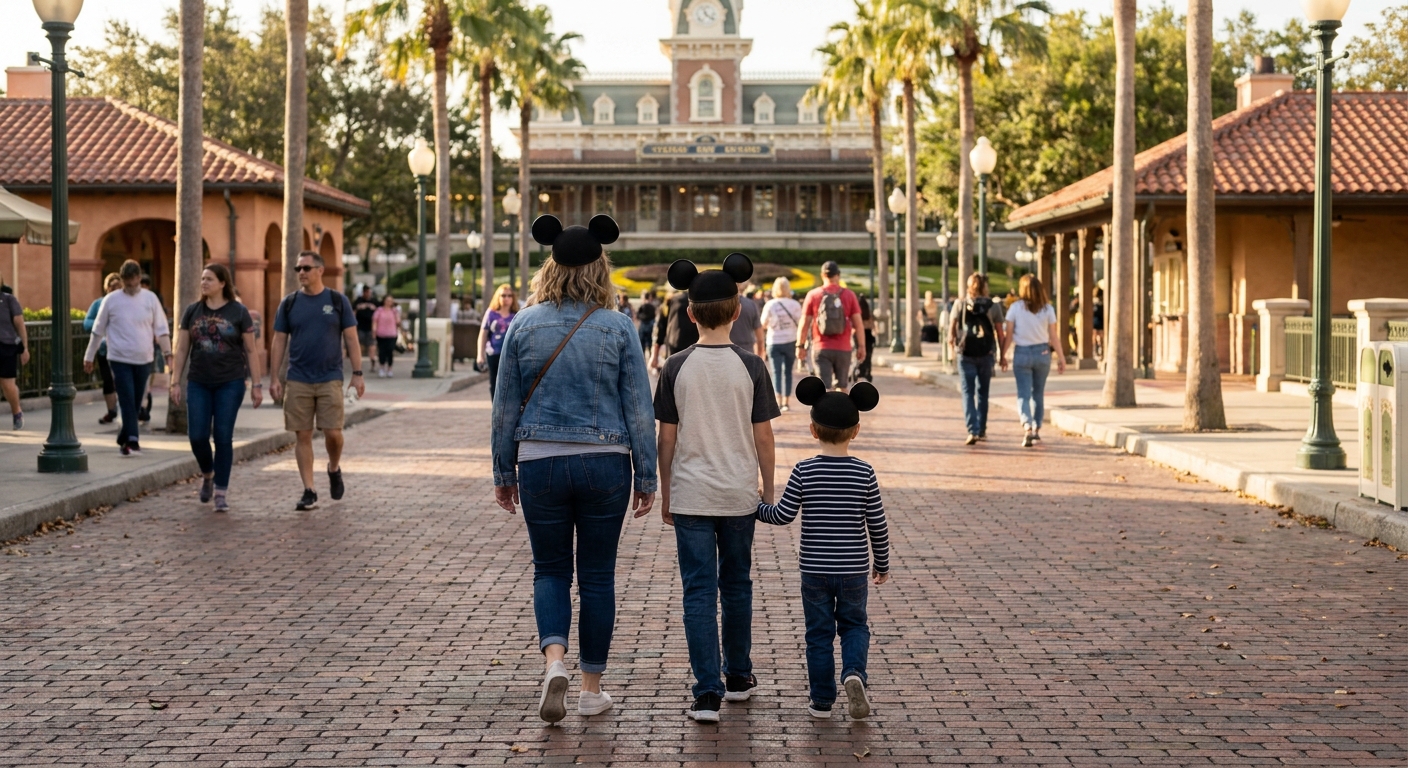
Choosing Your Party Type: How These Itineraries Differ
Your party type changes everything — pace, ride order, dining, and where Lightning Lane is worth paying for. Before you read a single day-by-day plan, find your column below. The same park, same week, plays completely differently for a family with a 4-year-old than for two adults chasing headliners.
The five party types these plans serve
| Party type | Priorities | Pace & rest | Lightning Lane lean |
|---|---|---|---|
| Young kids (under 7 / height-limited) | Characters, Fantasyland, low-intensity rides | Midday nap/pool break is non-negotiable | Mostly Multi Pass; skip most Single Pass headliners (height) |
| Tweens & teens | Thrill rides, immersive lands, late nights | Go hard, sleep in, push close | Multi Pass + targeted Single Pass for coasters |
| Adults-only / couples | Headliners, dining, World Showcase, ambiance | Flexible; long park days | Single Pass on the best rides, Multi Pass to fill gaps |
| Multigenerational | A mix — grandparents, parents, kids all happy | Split-up time + shared meals | Multi Pass for the group; Single Pass only for the thrill-seekers |
| Big or split-up groups | Coverage without herding everyone | Plan to divide and reunite | Per-sub-group, not one master list |
How priorities shift the actual plan
- Thrill vs. character. A teen-led day rope-drops Avatar Flight of Passage (Animal Kingdom) or Rise of the Resistance (Hollywood Studios). A little-kid day rope-drops Seven Dwarfs Mine Train and stacks character meets. Height matters: the four big mountains and the Single Pass headliners (TRON Lightcycle / Run, Seven Dwarfs Mine Train, Guardians of the Galaxy: Cosmic Rewind, Rise of the Resistance, Avatar Flight of Passage) gate out your youngest riders — don’t pay for a Single Pass they can’t board.
- Pace & rest. Families with young kids should build the plan around a midday break; everyone else can run a single long push.
- Dining. Couples and multigen groups should treat sit-down meals as the anchor of the day. Families with toddlers should lean quick-service and book the one character meal that matters most.
Where Lightning Lane money goes by type
- Budget / young kids: You can skip Lightning Lane entirely at Magic Kingdom for a day or two. Rope-drop, ride during parade and meal windows, and hit the naturally low-wait rides. The savings beat the time loss when your crew naps midday anyway.
- Luxury / thrill-focused / 7-day trips: Buy Lightning Lane Single Pass for each flagship and Multi Pass to fill the day. Stay on-property to layer Early Theme Park Entry (30 minutes before the gate) and, at Deluxe/Club-level resorts, Extended Evening Hours.
Pro tip: Remember Multi Pass is booked in advance — Disney-resort guests 7 days out, off-site guests 3 days out, with the window opening at 7:00 AM Eastern — not a day-of scramble. Multigen groups should put the most organized person on booking duty for the whole party so everyone’s selections line up.
Smart-money moves baked into every itinerary
- [ ] Bring a refillable bottle (a Stanley or similar) and use the free water-refill stations instead of paying around $5 a bottle.
- [ ] D23 Gold members: stack the dining discount — about 10% off at Sunshine Churros and 15% off at Raglan Road.
- [ ] On-property guests: request a 2-hour late checkout (the Polynesian, for one, often grants it) to stretch your final morning without an extra night.
- [ ] On standard date-based tickets you do not need a separate park reservation — just walk in.
How to read the rest of this guide
Pick the column that matches your group, then follow the day-by-day plan that follows it. If you’re a split-up group, read two columns — one per sub-group — and reunite at the dining anchors.
The one thing to remember: match the itinerary to your party first; the right plan for a teen squad will exhaust a stroller family, and vice versa.
Lightning Lane Explained: Multi Pass vs. Single Pass
Forget everything you heard about the 7 AM scramble — Lightning Lane Multi Pass is a “book in advance, then refill all day” system now, and knowing the difference between Multi Pass and Single Pass is the single biggest lever on your wait times.
Here’s the clean version: there are two separate products. Multi Pass is the bundle that covers most rides in a park. Single Pass is bought one ride at a time, only for the five biggest headliners. They’re priced, purchased, and booked differently — mixing them up is how people overpay or waste a morning.
Lightning Lane Multi Pass: buy it, book it early, keep refilling
Multi Pass is purchased per day, per park. The part people get wrong: you don’t wait until you’re standing at the gate. You pick your attractions in advance.
- Disney resort / on-site guests: start choosing 7 days before arrival — and you can set up selections for your whole trip in one sitting.
- Off-site guests: start 3 days before.
- The booking window opens at 7:00 AM Eastern on your eligible day.
You lock in an initial set of selections, then it becomes a rolling system: once you tap into a ride (or its return window simply passes), you’re free to add the next one, one at a time, throughout the day in My Disney Experience. Stack a strong morning lineup, then keep feeding the queue all afternoon.
Pro tip: The old Lightning Lane Multi Pass habit of setting a 6:59 AM alarm to “win” the day is obsolete for Multi Pass. On-site guests booking 7 days out are choosing from a far wider pool than someone scrambling day-of — your real advantage is the early arrival window, not your reflexes at sunrise.
Lightning Lane Single Pass: à la carte for the heavy hitters
The five marquee rides are carved out of Multi Pass entirely. You buy these individually, and there are exactly five:
| Park | Single Pass ride |
|---|---|
| Magic Kingdom | TRON Lightcycle / Run |
| Magic Kingdom | Seven Dwarfs Mine Train |
| EPCOT | Guardians of the Galaxy: Cosmic Rewind |
| Hollywood Studios | Star Wars: Rise of the Resistance |
| Animal Kingdom | Avatar Flight of Passage |
If a ride isn’t on that list, its Lightning Lane is part of Multi Pass — there is no sixth Single Pass attraction to hunt for.
Quick comparison
| Multi Pass | Single Pass | |
|---|---|---|
| What it covers | Most attractions in a park | One of 5 headliners |
| How you buy | Bundle, per day | One ride at a time |
| Booking start | 7 days out (on-site) / 3 days (off-site) | Same advance windows apply |
| Window opens | 7:00 AM Eastern | 7:00 AM Eastern |
| How it works | Initial set, then refill one-by-one | Pick a return time, ride once |
The smart way to combine them
- [ ] Decide which one or two Single Pass rides are non-negotiable for your group, since those are separate purchases.
- [ ] Book your Multi Pass selections the moment your window opens — front-load the highest-demand rides that aren’t Single Pass (think Slinky Dog Dash at Hollywood Studios or Jungle Cruise at Magic Kingdom).
- [ ] After each ride, immediately add your next Multi Pass selection — the system rewards people who keep it topped off rather than booking once and forgetting.
A common veteran move: skip Single Pass on a ride you can simply rope-drop instead. If you’re first through the gate at Magic Kingdom, Seven Dwarfs Mine Train is often a short standby wait early — pocket that Single Pass money and aim your dollars at a ride you genuinely can’t out-wait.
Don’t confuse the two morning clocks
This trips up even repeat visitors: Advance Dining Reservations open at 6:00 AM Eastern, 60 days out, while the Lightning Lane window opens at 7:00 AM Eastern. Different products, different times — set two reminders, not one.
The one thing to remember: Multi Pass is “buy once, then book early and keep refilling all day.” Single Pass is à la carte for five rides only. Match your purchases to your must-do list and you’ll skip the most lines for the least money.
Lightning Lane Multi Pass vs. Single Pass vs. Standby: Comparison Table
The move: pay for Lightning Lane on the rides where the line genuinely hurts, and ride standby everywhere the wait is short or the line moves fast. Most groups overbuy.
There are three ways to get on any ride at Walt Disney World. Knowing which one to use — and when — is the single biggest time-saver of your trip.
The three options at a glance
| Lightning Lane Multi Pass | Lightning Lane Single Pass | Standby | |
|---|---|---|---|
| How it works | Buy per day, then pre-book a set of attractions; redeem one, add the next, one at a time | Bought à la carte for one headliner; no Multi Pass needed | Join the regular line, no purchase |
| Cost (conceptual) | Add-on per ticket, per day; price floats by date/crowd | Per-ride fee, often the priciest single add-on; floats by date | Free |
| Best for | Mid-tier headliners with long lines (Space Mountain, Slinky Dog Dash, Jungle Cruise, Frozen Ever After) | The four/five top headliners only | Walk-on and fast-moving rides, plus early morning |
| Booking timing | Disney-resort guests pick up to 7 days before arrival; off-site 3 days; window opens 7:00 AM ET | Same advance windows; buy as soon as you can for the hardest rides | Anytime the park is open |
| Trade-off | Best value but requires active management all day | Convenient, but you’re paying top dollar one ride at a time | Free, but you spend the currency of time |
Pro tip: Multi Pass selections are made in advance and then refilled one at a time — this is not the old day-of 7 AM scramble. Stack your first three picks before you ever leave the hotel, then keep adding throughout the day as each one is redeemed.
What’s Single Pass (and what isn’t)
Only these rides use Lightning Lane Single Pass — everything else with a Lightning Lane is Multi Pass:
- Magic Kingdom: TRON Lightcycle / Run, Seven Dwarfs Mine Train
- EPCOT: Guardians of the Galaxy: Cosmic Rewind
- Hollywood Studios: Star Wars: Rise of the Resistance
- Animal Kingdom: Avatar Flight of Passage
If a ride above is your group’s must-do, buy the Single Pass early — these sell out fastest. If it’s a “nice to have,” rope-drop it instead and save the cash.
When standby actually wins
Paying isn’t always the smart play. Skip Lightning Lane and ride standby when:
- [ ] It’s the first 60–90 minutes after opening — lines are walk-on across the board
- [ ] You’re at a lower-crowd park and posted waits are sitting under ~30 minutes
- [ ] The ride loads fast (Haunted Mansion, Pirates, Spaceship Earth, it’s a small world) — these chew through standby quickly
- [ ] You’re on a budget Magic Kingdom day — rope-drop, ride during parade/meal windows, and target low-wait attractions; you can have a great day buying nothing
A short standby line costs you less than the Lightning Lane fee buys back. Save your paid passes for the rides where standby balloons past 45–60 minutes.
How SupaPark tells you which to prioritize
This is where guesswork ends. SupaPark runs the most accurate Disney World prediction engine out there, and it turns these three options into a clear call:
- Sell-out forecasting flags which Multi Pass and Single Pass rides tend to run out early, so you book those first instead of losing them.
- Refill predictions tell you when a sold-out Lightning Lane is likely to reopen — so you keep checking at the right moment instead of all day.
- Best-time-to-ride forecasting shows when a ride usually drops to a short standby, so you know when not to pay.
- Live alerts ping you the second a ride craters to walk-on or a Lightning Lane refills, so you grab the moment without staring at your phone.
When SupaPark shows a ride is about to sell out and won’t hit a short standby all day, that’s your buy signal. When it forecasts a 10:00 AM walk-on window, pocket the money.
The one thing to remember: Pay only where the line genuinely costs you time — Single Pass for your one must-do headliner, Multi Pass for the long mid-tier lines, standby for everything else and every early morning. Let SupaPark’s sell-out and refill forecasts make the call so you’re never paying for a wait you could’ve skipped for free.
Park-by-Park Priorities and Must-Do Headliners
The fastest way to waste a Disney day is treating all four parks the same — each has a different headliner mix, a different rope-drop target, and a different “skip this” list. Here’s the park-by-park read on what to prioritize, what to pre-book, and where the lines actually punish you.
The four headliners that need Single Pass
These are the only rides you can’t get with Multi Pass — they’re à la carte Lightning Lane Single Pass, bought per ride. Everything else with a Lightning Lane is Multi Pass.
| Park | Single Pass rides | Rope-drop target |
|---|---|---|
| Magic Kingdom | Seven Dwarfs Mine Train, TRON Lightcycle / Run | Seven Dwarfs Mine Train |
| EPCOT | Guardians of the Galaxy: Cosmic Rewind | Cosmic Rewind |
| Hollywood Studios | Star Wars: Rise of the Resistance | Rise of the Resistance |
| Animal Kingdom | Avatar Flight of Passage | Flight of Passage |
Pro tip: If you stay on-property you get Early Theme Park Entry — 30 minutes before official open. Be at the tapstile ~15 minutes before that, MagicBand ready, and walk straight to the day’s headliner. That single move often saves you a 60–90 minute midday standby.
Magic Kingdom — most family-friendly, most to do
Headliners: Seven Dwarfs Mine Train and TRON (both Single Pass). Rope-drop Mine Train first — it builds the steepest standby line in the park and stays high all day. Pull TRON via Single Pass or a virtual queue if offered.
- Multi Pass your way through: Peter Pan’s Flight (notoriously long standby, great Multi Pass value), Jungle Cruise, Big Thunder, Haunted Mansion, Tiana’s Bayou Adventure (the ride formerly known as Splash Mountain).
- Skip if short on time: slow-loading omnimover filler and walk-on dark rides midday — save them for the last hour when the park empties.
EPCOT — split personality, plan by half
Cosmic Rewind (Single Pass) is the must-do; Test Track and Frozen Ever After are the top Multi Pass grabs. Morning is for Future World–side thrills; afternoon and evening belong to World Showcase eating and drinking.
- Rope-drop: Cosmic Rewind, then Test Track before the standby balloons.
- Skip if short on time: the slower pavilion films — they’re rarely a line, so fit them around your eating loop, not your headliner window.
Hollywood Studios — most thrill-dense, tightest mornings
Rise of the Resistance (Single Pass) is the crown jewel and the park’s longest standby. Slinky Dog Dash is the Multi Pass that sells out fastest — book it early or lose it.
- Rope-drop: Rise of the Resistance, then Millennium Falcon: Smugglers Run or Mickey & Minnie’s Runaway Railway.
- Suitability: leans thrill/tween-and-up (Tower of Terror, Rock ‘n’ Roller Coaster), but Toy Story Land and Runaway Railway keep little ones happy.
Animal Kingdom — half day of headliners, half day of wandering
Flight of Passage (Single Pass) is the marquee ride and worth the buy. Na’vi River Journey and Expedition Everest are the Multi Pass priorities; Kilimanjaro Safaris rewards an early or late slot when animals are active.
- Rope-drop: Flight of Passage, then Everest.
- Skip if short on time: the longer stage shows unless you specifically want a sit-down break in the Florida heat.
Let the forecaster pick your window
You don’t have to guess when a standby line dips. SupaPark’s best-time-to-ride forecaster shows each attraction’s typical low-wait windows — so you can slot a midday walk-on instead of eating a 70-minute line, and time afternoon rides to a predicted lull. Pair it with live wait alerts and you’ll catch the moment a headliner craters to near walk-on.
The bottom line
- [ ] Buy Single Pass for the one headliner that matters most in each park
- [ ] Rope-drop that same ride before Early Entry crowds arrive
- [ ] Front-load Multi Pass selections on the rides with the worst standby (Peter Pan, Slinky Dog, Test Track)
- [ ] Use the forecaster to schedule midday rides during predicted lulls
- [ ] Save walk-on filler for the final hour, not prime time
Match the headliner to your crew — Magic Kingdom and Animal Kingdom flex family-friendly, Hollywood Studios and EPCOT skew thrill — then let the data, not the crowd, decide your next move.
The 1-Day Itineraries by Party Type
One day means one park, one priority, and zero wandering — pick your headliner, rope-drop it, and let everything else fill in around it. With a single day, the enemy isn’t crowds, it’s indecision. Lock your park to your party, then keep asking the only question that matters: what should I ride next, right now?
Pick your park by party
| Party type | Best 1-day park | Rope-drop target | Lock first | Eat here |
|---|---|---|---|---|
| Young kids (under 7) | Magic Kingdom | Peter Pan’s Flight or Seven Dwarfs Mine Train | Single Pass: Seven Dwarfs Mine Train | Be Our Guest (lunch, easier to land) |
| Thrill-seekers / adults | Hollywood Studios | Slinky Dog Dash | Single Pass: Rise of the Resistance | Docking Bay 7 (fast, sit-down quality) |
| Foodies / no rides | EPCOT | World Showcase opening | Single Pass: Guardians: Cosmic Rewind | Walk World Showcase stalls |
| Budget | Magic Kingdom | Seven Dwarfs Mine Train standby | Nothing — skip paid lanes | Quick-service + refillable bottle |
| Luxury | Any park | Flagship via Single Pass | Single Pass on every headliner | Signature dining + late checkout |
How the morning actually works
Early Theme Park Entry gives on-site guests 30 minutes before the official open. Be at the tap-in gate 15 minutes before that, MagicBand ready, and walk straight to the day’s flagship.
- [ ] Tap in at the turnstile ~15 min before early entry
- [ ] Hit the one Single Pass headliner standby while the park is empty
- [ ] Knock out 2–3 nearby low-wait rides before the rope-drop crowd catches up
- [ ] Redeem your first Lightning Lane Multi Pass selection around mid-morning, then refill one at a time
Pro tip: Single Pass attractions — Seven Dwarfs Mine Train, TRON, Guardians: Cosmic Rewind, Rise of the Resistance, Avatar Flight of Passage — are bought à la carte and are NOT part of Multi Pass. On a one-day trip, buy one Single Pass for your must-ride headliner and rope-drop a second one in standby. That combo clears the two biggest time-sinks before lunch without overpaying.
Lightning Lane, the one-day way
Multi Pass is purchased per day, and you pick attractions in advance — on-site guests up to 7 days out, off-site guests 3 days out, with the window opening at 7:00 AM Eastern. You book an initial set, then add the next one as each is redeemed or its window passes.
- Families: stack Multi Pass on the mid-tier rides that build long standby lines by midday (Jungle Cruise, Haunted Mansion, Big Thunder).
- Thrill-seekers: pair a Single Pass for Rise of the Resistance with Multi Pass on Tower of Terror and Mickey & Minnie’s Runaway Railway.
- Don’t over-buy. One day is about three or four high-value skips, not collecting every lane.
Midday and evening flow
- Late morning: finish your pre-booked headliners while you have momentum.
- Midday: sit down for your hardest-to-get meal — book Advance Dining Reservations 60 days out at 6:00 AM Eastern (different window from the 7:00 AM Lightning Lane time). Eat during a parade or fireworks slot when ride lines thin.
- Afternoon lull: re-ride favorites or catch a show while standby waits dip.
- Evening: save one Multi Pass refill for after dark — night rides walk on as families with little kids head out.
Two party-specific money moves
- Budget: skip paid lanes entirely. Rope-drop hard, ride during everyone else’s meal times, and lean on low-wait attractions. Bring a refillable bottle and use the free water-refill stations instead of paying around $5 a bottle. D23 Gold members can stack discounts like 10% off Sunshine Churros and 15% off Raglan Road.
- Luxury: buy Single Pass on every flagship so you never touch a standby line, use Extended Evening Hours if you’re staying Deluxe, and request a 2-hour late checkout (Polynesian Village and similar Deluxe resorts often grant it) to stretch your final morning at no extra cost.
The one thing to remember: on a single day, ruthless prioritization beats coverage every time. Pick the one headliner that defines the day, secure it before the gates fill, and treat every following decision as “what’s the smartest next move right now.”
The 2-Day and 3-Day Itineraries by Party Type
With two or three days, your single biggest lever isn’t which rides you book — it’s matching park count to your party’s stamina and putting the right park on the right day. Two days = two parks (don’t try to “see everything”). Three days = three parks, or repeat your favorite if your group runs hot on thrills.
Allocate parks by party type
| Party type | 2-day plan | 3-day plan | The move |
|---|---|---|---|
| Young kids (under 7) | Magic Kingdom + EPCOT | Add Animal Kingdom | Slow mornings, midday break every day, characters over coasters |
| Thrill-seekers / teens | Hollywood Studios + Magic Kingdom | Add EPCOT | Front-load Single Pass headliners; hop in the evening |
| Multigen / mixed | Magic Kingdom + EPCOT | Add a repeat MK day | Split the group — coasters for some, World Showcase for others |
| Budget-focused | Magic Kingdom (1–2 days) | Add EPCOT | Skip Lightning Lane; rope-drop + meal-time low-wait windows |
Pro tip: On a budget? Lightning Lane Multi Pass is genuinely skippable for a 2-day Magic Kingdom trip — rope-drop the headliners, then ride during parade and meal windows when standby quietly drops. Pack a refillable bottle and use the free water-refill stations instead of paying around $5 for bottled water.
When park-hopping actually helps (and when it doesn’t)
You can hop anytime the parks are open now — the old 2 p.m. rule is gone. But hopping costs money and transit time, so be choosy.
- Worth it: EPCOT dinner after a morning at Hollywood Studios or Magic Kingdom — World Showcase is built for evenings.
- Worth it: Thrill groups hopping into a second park for a single evening headliner.
- Skip it: Families with young kids on a tight 2-day plan. One park a day, done well, beats two parks done frazzled.
Balance thrill days with slow days
Don’t stack two adrenaline days back-to-back, especially with mixed ages. Alternate:
- Day 1 (high energy): Hollywood Studios or a coaster-heavy Magic Kingdom morning.
- Day 2 (slower): EPCOT or Animal Kingdom — shows, character meals, walking, and World Showcase pacing.
Three days? Sandwich the slow day in the middle so nobody burns out before the finale.
Where to slot the midday break (young kids)
This is the difference between a magical evening and a meltdown.
- [ ] Rope-drop your top ride at Early Theme Park Entry (on-site = 30 min early)
- [ ] Knock out 3–4 attractions before 11 a.m.
- [ ] Leave the park ~12:30–1:30 p.m. for a resort nap or pool
- [ ] Return by late afternoon for parade, dinner, and fireworks
If you’re at a monorail or Skyliner resort, that break is painless — which is exactly why those resorts earn their cost for little-kid trips.
Sample day-by-day Lightning Lane plan (3 days, mixed party)
Remember the two clocks: ADRs open 60 days out at 6:00 a.m. ET; Lightning Lane Multi Pass selections start 7 days before arrival (on-site) at 7:00 a.m. ET, then refill one at a time all day.
| Day | Park | Single Pass (à la carte) | Multi Pass first picks |
|---|---|---|---|
| 1 | Magic Kingdom | Seven Dwarfs Mine Train, TRON Lightcycle / Run | Jungle Cruise, Haunted Mansion, Peter Pan’s Flight |
| 2 | EPCOT | Guardians of the Galaxy: Cosmic Rewind | Frozen Ever After, Test Track*, Soarin’ |
| 3 | Hollywood Studios | Star Wars: Rise of the Resistance | Slinky Dog Dash, Mickey & Minnie’s Runaway Railway, Tower of Terror |
*Confirm current availability before relying on any single attraction.
- Book the headliner Single Pass first each morning — those are the rides standby will punish you for.
- Stack Multi Pass for late morning, so as you redeem one you immediately add the next.
- Slinky Dog Dash tends to sell out fastest of any Multi Pass — grab it the moment your window opens or you’ll be stuck with afternoon-only times.
The one thing to remember
Pick the column that matches your group, then let park count follow stamina, not ambition. Two relaxed days beat three rushed ones — and for young kids, the midday break is non-negotiable.
The 4-Day and 5-Day Itineraries by Party Type
The move: one focused day per park, then a flex day you decide on the morning of — not a slot you over-plan. Four days gets you all four parks plus one wildcard; five days lets that wildcard become a real second swing at your heaviest park (usually EPCOT or Magic Kingdom).
The base 4-day skeleton
Run the parks in this order to ride the crowd patterns, not fight them:
| Day | Park | Rope-drop target | Single Pass to buy |
|---|---|---|---|
| 1 | Magic Kingdom | Seven Dwarfs Mine Train | Seven Dwarfs Mine Train, TRON |
| 2 | EPCOT | Guardians: Cosmic Rewind | Guardians: Cosmic Rewind |
| 3 | Hollywood Studios | Rise of the Resistance area | Rise of the Resistance |
| 4 | Animal Kingdom | Avatar Flight of Passage | Avatar Flight of Passage |
| 5 (flex) | your call | — | — |
Everything not on that Single Pass list (Space Mountain, Test Track, Slinky Dog Dash, Expedition Everest, etc.) runs through Lightning Lane Multi Pass — buy it per day and book your selections in advance (7 days out if you’re on-site, 3 days if you’re off-site, window opens 7:00 AM ET), then refill one at a time as you tap in.
Pro tip: Stack your hardest park on the day after a rest, not the day after a late fireworks night — a fresh rope-drop crew clears three headliners before the 9 AM crowd even parks.
How to actually use the flex day
Don’t default to “re-ride everything.” Match the flex day to your group’s biggest gap:
- [ ] Second EPCOT day for World Showcase — the half you never finish on a Future World–heavy day. Walk the loop slowly, hit a sit-down lunch, and during a festival graze the booths instead of a table-service meal.
- [ ] Re-ride favorites at your top park — go back to whichever park your group talked about most at dinner.
- [ ] Pool / rest morning, park night — sleep in, swim, then arrive at 4 PM for a relaxed evening and fireworks.
- [ ] Special event like an after-hours or seasonal party (separate ticket) if one’s running during your trip — check current dates rather than assuming.
On a 5-day trip, the flex day almost always should be that second EPCOT day; World Showcase rewards the extra time more than a fourth lap of Fantasyland does.
Party-type variations
Budget groups: Skip Lightning Lane Multi Pass entirely. Rope-drop the headliners, ride during parade and meal windows when standby drops, and fill gaps with naturally low-wait attractions. The savings fund a nicer dinner.
- [ ] Pack a refillable bottle (a Stanley or similar) and use the free water-refill / fountain stations — skips the ~$5-a-pop bottled water.
- [ ] If you have a D23 Gold membership, the discounts add up: around 10% off at Sunshine Churros and 15% off at Raglan Road in Disney Springs.
Families with young kids: Build the flex day as a pure rest day — pool morning, short park evening. Use Rider Switch on the Single Pass headliners so both adults ride without re-queuing, and keep dining early (around 5 PM) before the meltdown hour.
Luxury / all-out: A Deluxe stay unlocks Extended Evening Hours on select nights — the lowest-wait window of the entire trip, when on-site Deluxe guests get headliners nearly walk-on. Buy Single Pass for every flagship and don’t blink at it.
- [ ] Request a 2-hour late checkout (e.g. at Polynesian Village) to stretch your departure day — often free if you just ask.
Daily dining + Lightning Lane cadence
Two clocks, never confuse them:
| What | When it opens | Where |
|---|---|---|
| Advance Dining Reservations (ADRs) | 60 days before arrival, 6:00 AM ET | My Disney Experience |
| Lightning Lane Multi Pass selections | 7 days out (on-site) / 3 (off-site), 7:00 AM ET | My Disney Experience |
Book one marquee sit-down meal per park day at the 60-day mark, then let SupaPark’s Drop Watch hunt the tables you missed — the second a hard-to-get reservation frees from a cancellation, it pings you and you grab it in My Disney Experience. Same logic for Lightning Lane: let the refill forecaster tell you the smart next tap instead of refreshing the app yourself.
The one thing to remember: lock the four park days tight and keep the flex day loose — then let live data, not a rigid plan, decide your last move.
The 6-Day and 7-Day Itineraries by Party Type
The biggest mistake on a week-long trip is touring it like a 4-day trip with extra rides bolted on. Six and seven days is enough runway to slow down — repeat your favorite park, build in real rest, and let the on-site 7-day Lightning Lane window do work a shorter trip never can.
Why a longer trip changes the math
On a 3–4 day trip you’re sprinting. At 6–7 days you have permission to leave gaps, and those gaps are what keep kids and grandparents from melting down by day five.
- Repeat your strongest park. Most week-long groups do Magic Kingdom twice — once to cover the headliners, once at a stroll for parades, characters, and the stuff you skipped.
- Bank a true rest day mid-trip. A resort/pool day around day 4 resets everyone. Don’t schedule a park you’ll just leave by noon.
- Use the non-park days you’ve already paid the location for. Disney Springs (free to enter), a water park, or a long lunch off-property all count as “Disney” without a 25,000-step day.
A relaxed 7-day skeleton
| Day | Plan | Why it works |
|---|---|---|
| 1 | Magic Kingdom (rope drop) | Fresh legs for the busiest park |
| 2 | EPCOT | Slower pace, lots of sit-down breaks |
| 3 | Rest / resort pool / Disney Springs | Recover before the second half |
| 4 | Hollywood Studios | Headliner-heavy, plan it sharp |
| 5 | Animal Kingdom | Early start, early finish (it’s a morning park) |
| 6 | Water park or repeat-favorite park | Low-pressure, group’s choice |
| 7 | Magic Kingdom (return) + late checkout | Loose ends, parades, goodbyes |
Pro tip: On your final morning, ask your resort for a courtesy late checkout (often around 1–2 hours) — many Deluxe resorts like the Polynesian can accommodate it, which buys you a relaxed last park run without paying for another night.
The on-site 7-day advance window is your real edge
This is where staying on property pays off. Disney-resort guests can make Lightning Lane Multi Pass selections up to 7 days before arrival — for the entire trip in one sitting. Off-site guests only get a 3-day window. On a week-long stay, that means you can lock the high-demand attractions across all your park days before anyone off-property even has access.
- The advance window opens at 7:00 AM Eastern on your eligible day.
- Book your initial selections, then add one at a time through each park day as you redeem (or as windows pass).
- Single Pass headliners — TRON Lightcycle / Run and Seven Dwarfs Mine Train (Magic Kingdom), Guardians of the Galaxy: Cosmic Rewind (EPCOT), Star Wars: Rise of the Resistance (Hollywood Studios), and Avatar Flight of Passage (Animal Kingdom) — are bought à la carte, separate from Multi Pass.
Is Multi Pass worth it for all 7 days?
Not necessarily — and a longer trip is exactly when you can be selective.
- Buy it for headliner-heavy days (Hollywood Studios, a busy Magic Kingdom day).
- Skip it on light or repeat days. On your second Magic Kingdom visit or a morning Animal Kingdom day, rope drop and walk-on windows often beat paying again.
- A relaxed pace means you’re not trying to cram 12 rides into every day, so you don’t need Multi Pass on every day to “win.”
SupaPark’s refill predictions and best-time forecaster make this cheap to test: check whether your day’s must-dos tend to hit low waits at rope drop or late evening before you pay for a pass you won’t need.
Keeping kids and grandparents off the burnout cliff
- [ ] Plan one sit-down, air-conditioned meal in the middle of every park day
- [ ] Build in a midday return to the resort on at least two days
- [ ] Bring a refillable bottle — quick-service counters give free ice water, saving roughly $4–5 per bottle per person
- [ ] Use Rider Switch so adults split duty on big rides without re-queuing
- [ ] Park a stroller-as-wheelchair or rest spot strategy near every land’s quiet zones
If a seasonal event overlaps your week — a Magic Kingdom after-hours party or an EPCOT festival — treat it as a swap, not an add-on. After-hours party tickets often let you enter the park a few hours before the official start time, so use that early window for low-wait headliners and save your day’s energy.
The one thing to remember
A 6–7 day trip’s advantage isn’t more rides — it’s more recovery. Repeat one park, protect a rest day, book your whole trip’s Lightning Lane in the 7-day on-site window, and buy Multi Pass only on the days that actually need it. Let SupaPark’s alerts catch the walk-on windows and reservation drops so you can spend the slack on a nap by the pool, not a phone in a queue.
Sample Day-by-Day Lightning Lane Booking Schedule
Your whole booking strategy hangs on three clock alarms — 60 days, 7 (or 3) days, and 7:00 AM on each park morning — and SupaPark exists to make sure you never miss the third one or the dozen refill moments that follow.
Here’s the timeline that actually matters, in order:
The Three Windows (don’t mix them up)
| When | What opens | Time (ET) | Where you do it |
|---|---|---|---|
| 60 days before arrival | Advance Dining Reservations (ADRs) | 6:00 AM | My Disney Experience |
| 7 days before (on-site) / 3 days (off-site) | Lightning Lane Multi Pass selections | 7:00 AM | My Disney Experience |
| Each park morning | First Multi Pass + Single Pass buys go live | 7:00 AM | My Disney Experience |
The single most common rookie mistake is assuming dining and Lightning Lane open at the same hour. They don’t — ADRs hit at 6:00 AM, an hour before the Lightning Lane window. Set two alarms.
What to Book First, by Park Day
Single Pass rides are bought à la carte and tend to clear out for the day fastest, so on Single Pass days, buy the Single Pass first, then layer Multi Pass around it.
| Park day | First Multi Pass picks | Single Pass to buy | Refill trigger |
|---|---|---|---|
| Magic Kingdom | Jungle Cruise, Big Thunder Mountain, Peter Pan’s Flight | Seven Dwarfs Mine Train, TRON Lightcycle / Run | Redeem one → add next headliner |
| EPCOT | Frozen Ever After, Test Track*, Remy’s Ratatouille | Guardians: Cosmic Rewind | Add Soarin’ / Mission: SPACE after first tap-in |
| Hollywood Studios | Slinky Dog Dash, Mickey & Minnie’s Runaway Railway | Rise of the Resistance | Slinky goes first — add Tower of Terror next |
| Animal Kingdom | Kilimanjaro Safaris, Expedition Everest, Na’vi River | Avatar Flight of Passage | Refill toward Safaris before midday heat |
*Confirm current availability for any ride in refurbishment before you build the day around it.
Pro tip: Book Slinky Dog Dash as your very first Hollywood Studios Multi Pass pick — it sells out faster than almost anything else in that park, and once it’s gone for the day, no amount of refilling brings it back.
The In-Park Refill Rhythm
Multi Pass isn’t “book once and done.” You make an initial set of selections, then the moment you redeem one — or its return window passes — you can add the next, one at a time, all day long. The rhythm looks like this:
- [ ] Rope-drop your hardest non-Lightning Lane ride before your first Multi Pass window
- [ ] Tap in on your first booked attraction
- [ ] Immediately add the next one (this is the move people forget)
- [ ] Repeat after every redemption through park close
The catch: that “add the next one” moment is easy to miss when you’re mid-parade, in a queue, or chasing a toddler. Every minute you don’t refill is a slot someone else grabs.
Where SupaPark Does the Watching
This is the part you shouldn’t be doing manually. SupaPark runs the most accurate Lightning Lane forecasting around, and it puts that to work on your day:
- 7:00 AM nudge: a push the moment your selection window opens, so you’re not refreshing the app half-asleep.
- Refill alerts: the second one of your booked attractions is redeemed or expires, SupaPark pings you that it’s time to add the next — you just confirm it in My Disney Experience.
- Refill predictions: it forecasts when a sold-out headliner is likely to release more inventory, so you know whether to keep watching or pivot.
- Drop Watch for dining: miss a 60-day ADR for a hard-to-get table? SupaPark catches the cancellation the instant it frees up and alerts you to grab it.
You still book everything yourself, directly with Disney — SupaPark just makes sure you’re tapping “confirm” at the right minute instead of finding out two hours too late.
The One Thing to Remember
Three alarms, then let the alerts carry you: 6:00 AM at 60 days for dining, 7:00 AM at 7/3 days for your Multi Pass picks, and a refill the instant each ride is redeemed. Get the picks right up front — especially the fast-selling ones like Slinky Dog Dash — and let SupaPark handle the “add the next one” moment you’d otherwise miss while you’re actually enjoying the park.
Dining and Reservation Strategy That Fits Your Itinerary
Lock your two or three “must-do” meals first, then build your ride day around them — not the other way around. Dining is the only part of a Disney World trip you reserve 60 days out, so it’s the skeleton everything else hangs on. Get the anchors right and the rest of your itinerary flows.
ADRs (Advance Dining Reservations) open 60 days before your arrival at 6:00 AM Eastern in My Disney Experience. That’s a different clock from the 7:00 AM Lightning Lane Multi Pass window — don’t mix them up, and don’t try to do both in the same groggy login session.
Weave meals in without wrecking ride flow
The mistake that tanks a touring plan: a 12:30 PM signature lunch in the middle of your headliner run. You burn 90 minutes and lose your rope-drop momentum.
- Book sit-down meals at the edges of your day — an early breakfast before rope drop, or a late lunch (1:30–2:30 PM) once morning wait times have already spiked anyway.
- Eat quick-service during peak ride windows (11 AM–1 PM) when lines are long; eat your slow, reservation meals when riding is least efficient.
- Match the restaurant to the park you’re already in so you’re not park-hopping just to eat. You can hop any time the parks are open now — no 2 PM restriction — but crossing property for a burger still costs you an hour.
Signature vs. quick-service balance by party type
| Party type | Smart mix | Why |
|---|---|---|
| Young kids | 1 character meal + mostly quick-service | Short attention spans; long meals melt down |
| Teens / adults foodies | 1–2 signature dinners + grazing (EPCOT World Showcase) | Flavor variety beats sit-down volume |
| Big multigen group | 1 reserved group dinner, quick-service otherwise | One anchor everyone makes; flexibility the rest of the day |
| Budget-focused | Quick-service + a refillable bottle | Skip the priciest signatures; free water stations beat ~$5 bottled water |
Pro tip: Use a refillable bottle and the free water-refill stations across all four parks — it quietly saves a family of four real money over a week, and it’s the single most-overlooked cost cut.
Character meals for young kids
Character dining is the move for little ones — guaranteed face time with characters, indoors, sitting down, no 40-minute meet-and-greet line in the heat.
- Book the first or last seating of the day; characters are fresher and the dining room is calmer.
- Treat it as your character plan for the day so you’re not also burning ride time on standby meet-and-greets.
- These slots are some of the hardest to get at 60 days — which is exactly where Drop Watch earns its keep (below).
Allergy-friendly dining
Disney World is genuinely better than most places at accommodating food allergies and special diets, and Animal Kingdom has leaned in hardest with a dedicated allergy-dining tips kiosk. It sits near the Tip Board over toward Asia, with a cast member on hand to walk you through safe options — useful whether you’re dealing with shellfish, gluten, nut allergies, or something like managing Type 1 diabetes.
- At any sit-down or quick-service spot, ask for the allergy-friendly menu or a chef — most kitchens will send one out to talk through your meal.
- Note allergies on your ADR when you book so the kitchen is expecting you.
- Quick-service mobile orders in My Disney Experience let you flag common allergens before you ever reach the counter.
Drop Watch: how to land the “impossible” reservation
The best tables — character meals, the headliner signatures — are routinely “fully booked” at 60 days. Don’t accept that. Cancellations free up constantly as other guests reshuffle plans, and they get re-grabbed within minutes.
That’s what Drop Watch is for. SupaPark runs the most accurate Disney reservation-monitoring engine out there, so the moment a table you want frees up from a cancellation:
- [ ] You set the restaurant, date, and party size to watch
- [ ] SupaPark catches the drop the instant it appears and pings you
- [ ] You open My Disney Experience and book it yourself, directly with Disney
SupaPark never holds or books the reservation — it just catches the opening faster than you’d ever catch it refreshing the app manually, then hands you the window to grab it.
The one thing to remember: reserve your two or three anchor meals at 60 days, place them at the edges of your touring day, and let Drop Watch hunt the sold-out tables while you’re busy enjoying the parks.
Rope Drop, Early Entry, and Extended Evening Hours by Itinerary
The cheapest Lightning Lane is the one you never buy — and a good morning at the gate is how you avoid buying it. If you’re on-site, Early Theme Park Entry gives every resort guest 30 minutes inside the park before the official open. That half hour, used right, walks you onto the exact rides everyone else pays to skip later. Stack it with Extended Evening Hours (Deluxe and Club-level only) and the right party can knock out a park’s headliners with little or no Lightning Lane spend.
What you actually get
| Perk | Who gets it | When | What it’s worth |
|---|---|---|---|
| Early Theme Park Entry | All on-site resort guests | 30 min before official open, every day | Walk-on access to one or two headliners before the crowd lands |
| Extended Evening Hours | Deluxe + Deluxe Villa + Club-level guests | Select late nights, varies by park | Near-empty park, repeat rides on top attractions |
| Rope drop (off-site) | Everyone | At official open | Still strong if you’re physically first at the gate |
Early Entry is the great equalizer — a Value resort room gets you the same 30 minutes as a Grand Floridian suite. Extended Evening Hours is the one perk you’re really paying Deluxe rates for.
Be first, not “on time”
Arriving at open is arriving late. Here’s the sequence that wins the morning:
- [ ] Leave your resort ~75–90 minutes before official open
- [ ] Be at the tap-in turnstiles ~15 minutes before Early Entry begins
- [ ] Tap your MagicBand and walk (don’t run) straight to the day’s flagship ride
- [ ] Hit a second nearby headliner before the standby line balloons
- [ ] Pack a refillable bottle — free water stations beat paying around $4–5 for bottled
Pro tip: Single Pass rides like Seven Dwarfs Mine Train and Guardians of the Galaxy: Cosmic Rewind are exactly the attractions Early Entry lets you ride free. Spend those 30 minutes on the à-la-carte rides you’d otherwise pay extra for, and reserve your Lightning Lane budget for the mid-day standby walls.
Park-by-park rope-drop targets
- Magic Kingdom: Seven Dwarfs Mine Train first (Single Pass — riding it at Early Entry is pure savings). Peel off to Peter Pan’s Flight, then Space Mountain.
- EPCOT: Guardians of the Galaxy: Cosmic Rewind (Single Pass). If you have a virtual queue or Single Pass plan, pivot to Frozen Ever After or Remy’s Ratatouille Adventure.
- Hollywood Studios: Slinky Dog Dash at the gate — it draws the longest standby in the park and sells out of Lightning Lane fastest. Rise of the Resistance is Single Pass, so target it next.
- Animal Kingdom: Avatar Flight of Passage (Single Pass) is the whole reason to rope-drop here; do it first, then Na’vi River Journey and Expedition Everest.
Which mornings to prioritize by party type
| Party type | Prioritize Early Entry at | Why |
|---|---|---|
| Budget / no Lightning Lane | Magic Kingdom, Hollywood Studios | Most rides per free morning; lets you skip paying entirely |
| Families with young kids | Magic Kingdom | Fantasyland headliners load slow; beat them before the stroller crowd |
| Thrill-focused / no kids | Hollywood Studios, Animal Kingdom | Knocks out the two hardest Single Pass rides without buying them |
| Luxury / Deluxe stay | Whichever park has Extended Evening Hours that night | Pair a strong morning with a near-empty late night |
A Deluxe-resort group should plan the day around Extended Evening Hours: ride light in the heat, rest mid-day, and return for the late window when standby lines for top rides drop to near walk-on. That’s two low-wait windows in one day — and it’s the math that justifies the room rate.
How this cuts your Lightning Lane bill
Every headliner you clear before official open is a Lightning Lane you don’t buy. A family hitting two Early Entry rides each morning, plus an Extended Evening Hours night, can realistically cover the day’s biggest attractions on rope drop and standby alone — meaning Lightning Lane Multi Pass becomes a “maybe” for the afternoon, not a daily must-buy.
The one thing to remember: the gate is your first and cheapest Lightning Lane. Be physically first, target the Single Pass ride of that park, and let Early Entry plus Extended Evening Hours do the work your wallet would otherwise do.
Is Lightning Lane Worth It? Cost Breakdown by Trip Length and Party Type
Lightning Lane is worth it when your time in the park is scarce and the lines are long — not as a reflex purchase every single day. The honest math is time-saved-per-dollar: on a packed summer day you might claw back 2–4 hours of standing; on a quiet shoulder-season weekday you might save 30 minutes that rope-drop would’ve saved you for free. Buy on the high-value days, skip it on the low ones.
The two products, and who each is for
- Multi Pass — one per-day purchase that covers a stack of mid-tier and headliner attractions. You make selections in advance (Disney-resort guests up to 7 days out, off-site guests 3 days out; the window opens 7:00 AM ET), then refill one at a time through the day.
- Single Pass — bought à la carte for the five top headliners only: TRON Lightcycle / Run and Seven Dwarfs Mine Train (Magic Kingdom), Guardians of the Galaxy: Cosmic Rewind (EPCOT), Star Wars: Rise of the Resistance (Hollywood Studios), and Avatar Flight of Passage (Animal Kingdom).
Everything else with a Lightning Lane is Multi Pass. Prices float by date and demand, so decide per day, not per trip.
Who should buy what
| Party type | Multi Pass | Single Pass | The smart move |
|---|---|---|---|
| Family, peak crowds | Most days | The one headliner the kids must ride | Multi Pass earns its keep when waits balloon and little legs give out |
| Family, low crowds | Selectively | Rarely | Rope-drop + meal-time queues often beat paying |
| Adults-only thrill-seekers | Optional | Prioritize here | You care about the big-4 rides — spend on Single Pass, lighten Multi |
| Budget-focused (1–2 day MK) | Skip | Skip | Rope-drop, ride during parades/meals, hit low-wait rides |
How trip length changes the math
- 1–2 days: Stakes are highest — you can’t “catch it tomorrow.” A short Magic Kingdom trip can still go Lightning-Lane-free if you rope-drop hard, but most short, headliner-hungry trips justify paying.
- 3–5 days: Mix it up. Buy Multi Pass on your two highest-crowd park days; go free on the calmer ones and spread headliners across mornings.
- 6–7 days: You have time to absorb waits, so daily Multi Pass is usually overkill. A luxury, all-parks week can justify premium access on every flagship — but for most families, buying every day burns money you could’ve saved by riding at rope-drop on days 5–7.
Squeeze more value without spending more
- [ ] Rope-drop the day’s flagship during Early Theme Park Entry (on-site guests, 30 min early) — at Magic Kingdom that’s often Seven Dwarfs Mine Train, at EPCOT Guardians: Cosmic Rewind.
- [ ] Bring a refillable bottle and use free water-refill stations instead of buying bottled water.
- [ ] If you carry a D23 Gold membership, the small dining discounts (around 10% at Sunshine Churros, 15% at Raglan Road) trim the surrounding costs.
- [ ] Ask about a late checkout at your resort to stretch your final morning — no Lightning Lane required.
Pro tip: The most expensive Lightning Lane mistake isn’t overpaying — it’s buying on a day the rides were going to be near walk-on anyway. The reverse hurts too: skipping on a day a headliner’s Single Pass sells out by mid-morning. That’s exactly the gap SupaPark’s pricing intelligence and sell-out trends close — check the forecast the night before and the morning of, then decide day by day. On a flagged low-crowd day, keep your wallet shut and rope-drop instead.
The one thing to remember
Lightning Lane is a tool for buying back time on the days time is genuinely scarce — short trips, peak crowds, and the headliners you refuse to miss. Let the day’s actual demand make the call: pay where the hours-saved-per-dollar is high, and lean on free rope-drop strategy everywhere else.
Park-Hopping: When It Helps and When It Hurts
Park Hopper earns its money when your day has two distinct jobs — a morning headliner blitz and an evening at a second park — and wastes it when you’re already filling a single park rope-to-fireworks. It’s an add-on, not a default. Decide by your itinerary length and party type, not by FOMO.
Who Should Actually Add It
| Party type | Trip length | Hopper verdict |
|---|---|---|
| First-timers, single park-per-day focus | 1–3 days | Usually skip — one park is more than a full day |
| Couples / adults, no nap schedule | 3–5 days | Worth it for evening EPCOT + drinks/dining |
| Big families with young kids | Any | Often skip — transit eats nap-and-meltdown margin |
| Commando planners, repeat visitors | 4–7 days | Strong yes — you’ve seen the headliners; hop for the best of each park |
On longer 5–7 day trips you’ve already covered the marquee rides, so hopping to chase a festival, a specific dinner, or a nighttime show is pure upside. On a tight 1–2 day Magic Kingdom trip, the math flips: you’ll barely clear one park, and the add-on cost buys nothing.
The Best Hopping Combos
The classic winning move is morning headliner park → evening EPCOT:
- Rope-drop a ride-heavy park (Magic Kingdom or Hollywood Studios) for the low-wait first two hours.
- Hop to EPCOT mid-to-late afternoon for World Showcase — it’s built for grazing, drinking, and golden-hour strolling, and it peaks in the evening.
Pro tip: EPCOT’s World Showcase is the single best receiving park for a hop. The pavilions don’t need rope-drop timing, the food-and-walk pace forgives a late arrival, and the light between the pavilions late in the day is genuinely the prettiest in the resort.
Other strong pairings:
- Animal Kingdom morning (it closes earliest, so front-load it) → Magic Kingdom or EPCOT evening.
- Hollywood Studios morning → EPCOT evening (a quick Skyliner ride connects them).
Clear Up the “After 2 PM” Myth
You can hop any time the parks are open — the destination park just needs capacity. The old rule that locked hopping until after 2:00 PM is gone; don’t plan your day around it. That means a 10:00 AM rope-drop blitz and an 11:30 hop is completely legal if it serves your plan.
Transit Time Is the Real Tax
The add-on cost isn’t the only price — every hop costs 45–75 minutes door-to-door once you account for exiting, transit, security, and walking back in.
| Route | Realistic transit |
|---|---|
| Hollywood Studios ↔ EPCOT (Skyliner/boat) | ~20–30 min |
| Magic Kingdom ↔ EPCOT (monorail) | ~30–40 min |
| Animal Kingdom ↔ anything (bus) | ~45–60+ min |
Animal Kingdom is the worst-connected park — bus-only to most places — so hop out of it early rather than into it late.
When Single-Park Days Win
Skip the hop and stay put when:
- It’s a Magic Kingdom day — it’s big enough to swallow open-to-close on its own.
- You’ve got young kids on a nap rhythm — a midday resort break beats a second park.
- You’re on a budget-focused plan — put the Hopper money toward dining or a Single Pass instead. (If you’re trimming costs, bring a refillable bottle and use the free water stations rather than buying $5 bottled water.)
What Hopping Does to Your Lightning Lane Plan
This is where hoppers get tripped up. Lightning Lane Multi Pass selections are tied to a starting park, and you refill one at a time as the day goes.
- [ ] Set your morning park as the home base for your first Multi Pass selections.
- [ ] Stack and burn those morning selections before you hop.
- [ ] Only after you redeem one can you book the next — so don’t expect a fresh pile of second-park times waiting at hop-time.
- [ ] For the second park’s headliner, lean on Single Pass à la carte (e.g., Guardians of the Galaxy: Cosmic Rewind at EPCOT) rather than assuming Multi Pass coverage.
Two parks means your Multi Pass refills are competing across a wider map, and availability at the second park thins out by afternoon. Front-load the morning park’s high-demand rides, then treat the evening park as a Single Pass + walk-on + dining play.
The one thing to remember: Add Park Hopper only when your day genuinely splits into two missions — a ride-first morning and a relaxed evening elsewhere. If you’re staying ride-focused in one park, save the money and the transit hour, and put your Lightning Lane energy where you start the day.
Family-Aware Planning: Heights, Rider Switch, and Pacing
The fastest way to ruin a family park day is building a plan your shortest rider can’t actually do — sort the heights first, then route around them.
With young kids, the itinerary isn’t “what’s the best ride” — it’s “what can everyone do, who sits out what, and when does the 4-year-old hit the wall.” Get those three answers before you book a single Lightning Lane.
Know the height walls before you go
Most meltdowns at the gate are avoidable. The big headliners have hard height minimums, and they cluster right around the 38–48" range where a lot of preschoolers and early grade-schoolers land. Measure your kid at home in the shoes they’ll wear, then map it.
| Attraction | Park | Approx. height min | Lightning Lane type |
|---|---|---|---|
| Seven Dwarfs Mine Train | Magic Kingdom | 38" | Single Pass |
| Big Thunder Mountain | Magic Kingdom | 40" | Multi Pass |
| Space Mountain | Magic Kingdom | 44" | Multi Pass |
| TRON Lightcycle / Run | Magic Kingdom | 48" | Single Pass |
| Slinky Dog Dash | Hollywood Studios | 38" | Multi Pass |
| Rise of the Resistance | Hollywood Studios | 40" | Single Pass |
| Test Track | EPCOT | 40" | Multi Pass |
| Guardians: Cosmic Rewind | EPCOT | 42" | Single Pass |
| Avatar Flight of Passage | Animal Kingdom | 44" | Single Pass |
| Expedition Everest | Animal Kingdom | 44" | Multi Pass |
Use SupaPark’s child height tracking to flag which headliners a kid clears today — and which they’ll clear by the trip. A kid who’s 43" now and the family that doesn’t check could waste a pricey Avatar Flight of Passage Single Pass on someone who can’t board.
Pro tip: Don’t blow a Single Pass on a headliner half your party can’t ride unless Rider Switch covers the wait — for a 44" ride with a 41" kid, you’re paying premium for one adult to ride while the other babysits the line. Often the smarter spend is a Multi Pass everyone clears.
Rider Switch so nobody sits out the fun
Rider Switch lets adults take turns on height-restricted rides without re-waiting the whole standby line. One adult rides while the other stays with the child; then they swap and the second adult boards through the Lightning Lane return with little to no extra wait. Ask a cast member at the ride entrance to set it up.
- It works on standby and Lightning Lane rides alike.
- A third older kid who clears the height can usually ride twice (once with each adult) — a quiet win for the family.
- Build it into your plan for Flight of Passage, Rise, and the mountains, where the height cutoff splits most young families.
Stroller routing and quiet zones
Two things wreck afternoons with little kids: too much walking and zero downtime.
- Route to minimize backtracking. Hit a land, clear it, move on — don’t crisscross the park. Magic Kingdom’s hub spokes and EPCOT’s World Showcase loop both reward a one-direction sweep.
- Park strollers near, ride close. Strollers don’t go in queues, so cluster your stroller-parking rides together.
- Bank a midday break. The 1–4 p.m. heat-and-crowd window is when toddlers detonate. Plan an indoor, low-stimulation reset — a long air-conditioned show or a sit-down meal beats pushing through.
Good quiet zones for a breather:
- [ ] Walt Disney’s Carousel of Progress (Magic Kingdom) — dark, cool, ~20 min off your feet
- [ ] The Seas with Nemo & Friends (EPCOT) — calm, walk-on, aquariums kids love
- [ ] Tom Sawyer Island (Magic Kingdom) — open-air space to let energy out, no line
- [ ] Any World Showcase pavilion bench late afternoon
If anyone in the group has food allergies, Animal Kingdom keeps allergy-friendly dining info available near Discovery Island — worth a stop to confirm safe options before you commit to a quick-service spot.
Pace for the meltdown you can predict
Young kids fade on a schedule. Front-load the must-dos at rope drop when lines are shortest and everyone’s fresh, coast through midday, and save the back half for repeat favorites, not new headliners.
Let SupaPark do the watching: it pings you when a ride your kid clears drops to walk-on, so you can grab an unplanned win during the calm stretch — and its best-time forecaster tells you when each ride is usually shortest so you’re not gambling with a tired toddler in line.
The one thing to remember: Plan around your shortest rider and your earliest crash. Heights decide the rides, Rider Switch decides who sits out, and pacing decides whether the day ends in a hug or a tantrum.
Adjusting Your Plan in Real Time on Park Day
A great touring plan isn’t a script — it’s a starting position. The guests who win the day are the ones who pivot fast when the park changes around them. Rides go down. Waits crater. Storms roll in off the Florida afternoon. Your job isn’t to follow the itinerary; it’s to keep making the best next move with the information in front of you.
The “what next, right now?” decision loop
Every 20–30 minutes, run the same quick check before you walk anywhere:
- [ ] Is anything I planned currently down or posting an unusually long wait?
- [ ] Did a nearby headliner just drop to a walk-on or near-walk-on?
- [ ] Do I have a Lightning Lane window open or about to open?
- [ ] Is weather about to push the outdoor crowd indoors (or vice versa)?
Then make one decision and go. The mistake is standing still debating — by the time you’ve talked it out, the walk-on has filled back up.
Pro tip: A ride that just came back online after a breakdown is often your cheapest win of the day. The standby line emptied out while it was down, so for the first 10–15 minutes after it reopens, the posted wait is fiction — it clears far faster than the number suggests. Sprint to the reopened ride, not the perfectly-running one across the park.
Reacting to the three things that blow up a plan
| What happened | Bad instinct | The smart move |
|---|---|---|
| Ride goes down | Wait by the entrance hoping it’s quick | Pivot to your next priority immediately; circle back if it reopens within ~20 min |
| Wait craters to walk-on | “We’ll get it later” | Drop everything and ride it now — walk-ons rarely last |
| Afternoon storm | Leave the park | Move indoors (dark rides, shows, table-service meal); standby lines shrink during heavy rain |
This is exactly where SupaPark’s engine does the watching for you. Instant down-detection flags the second a ride stops loading — often before the standby line even realizes — and walk-on alerts ping you when a headliner quietly drops to near-zero. You’re not refreshing a screen; the alert finds you, and you just react.
Rebuilding the day on the fly
When a major attraction craters or a chunk of your plan evaporates, don’t try to salvage the original order — rebuild from where you’re standing. Open the day builder, drop the dead ride, and let it re-sequence around your current location, your Lightning Lane windows, and what’s actually short right now. A plan that updates itself beats a laminated one that’s already wrong by 11 a.m.
A few rebuild principles:
- Anchor to your fixed points first. Dining reservations and Single Pass windows (TRON, Seven Dwarfs Mine Train, Cosmic Rewind, Rise of the Resistance, Flight of Passage) don’t move — build the flexible stuff around them.
- Spend dead time on low-volatility wins. If your headliner is down and nothing’s walk-on, knock out a show or a reliably-short ride instead of burning the gap standing around.
- Keep Multi Pass refilling. The moment you tap into one selection, add the next — don’t let a ride breakdown stall your booking rhythm.
Use the “look around” rule for forced downtime
When a breakdown parks you somewhere unexpectedly, lean into it instead of fuming. The resorts and queues are stuffed with details most guests blow past — the Hidden Mickeys etched into rockwork, the winged-nut “Mickey ears” topping the cymbal stands in All-Star Music’s Jazz Inn courtyard, the classic Mickey tucked into a mural window at All-Star Movies. Looking up and around turns a 15-minute delay from wasted time into part of the trip. It’s a small reframe, but it keeps the group’s mood up while the ride comes back — and mood is what actually makes or breaks a park day.
The takeaway
Your itinerary is a hypothesis, not a contract. The parks will break it by lunchtime, and that’s fine — the planners who have the best day aren’t the ones who guessed perfectly at 7 a.m., they’re the ones who notice the change first and move on it fastest. Set your anchors, run the decision loop, let the alerts and the day builder catch the shifts you’d otherwise miss, and stay willing to throw out the plan the moment the park hands you something better.
Key Takeaways
The whole guide boils down to six moves. Nail these and the day-by-day plans run themselves.
If you only remember one thing: match your trip length to your party, then let the Lightning Lane rhythm — advance picks, then refills — do the heavy lifting while you walk onto rides everyone else is sweating over.
The six moves, ranked
- Match days to party type. A budget family can do Magic Kingdom in 1–2 days; a luxury or completist trip wants all four parks across ~7 days. Don’t buy more days than your crew’s stamina supports.
- Learn the Multi Pass advance-and-refill rhythm. Buy it per day, lock your first selections in advance (Disney-resort guests up to 7 days out, off-site 3 days out, window opens 7:00 AM ET), then add one new pick the moment you tap into a ride or its window passes. It is not a day-of scramble.
- Prioritize the 5 Single Pass headliners deliberately. These are à la carte and sell out — pick the ones your group actually cares about instead of buying all five reflexively.
- Lock ADRs at exactly 60 days, 6:00 AM ET. This is a separate clock from the 7:00 AM Lightning Lane window — don’t confuse them.
- Exploit Early Theme Park Entry. On-site guests get 30 minutes before official open. Be at the tap-stiles ~15 minutes before that and head straight to the headliner.
- Let live alerts and Drop Watch catch the rest. SupaPark pings you when a ride craters to walk-on, a Lightning Lane refills, or a hard-to-get table drops from a cancellation — you grab it in My Disney Experience.
The 5 Single Pass headliners
These four are the only attractions sold à la carte; everything else is Multi Pass.
| Park | Single Pass headliner |
|---|---|
| Magic Kingdom | TRON Lightcycle / Run · Seven Dwarfs Mine Train |
| EPCOT | Guardians of the Galaxy: Cosmic Rewind |
| Hollywood Studios | Star Wars: Rise of the Resistance |
| Animal Kingdom | Avatar Flight of Passage |
Pro tip: Your single most valuable rope-drop target is usually a Single Pass ride, not a Multi Pass one — sprint to Seven Dwarfs Mine Train at Magic Kingdom or Guardians: Cosmic Rewind at EPCOT during Early Entry and you can often skip buying that Single Pass entirely.
Two clocks, don’t mix them up
- [ ] 60 days out, 6:00 AM ET — book Advance Dining Reservations in My Disney Experience
- [ ] 7 days out (resort) / 3 days out (off-site), 7:00 AM ET — make Lightning Lane Multi Pass selections
- [ ] Day-of, all day — refill Multi Pass one pick at a time as you redeem
Cheap wins anyone can grab
- Pack a refillable bottle. Bring your own (a Stanley or any insulated bottle) and use the free water-refill and quick-service cup stations — it spares you the ~$5 bottled-water tax all day.
- Use member dining perks when offered. Discounts like the D23 Gold rate (roughly 10% at Sunshine Treats / Sunshine Churros, ~15% at Raglan Road) show up at select spots — worth a quick check before you order, though availability shifts.
- Ask for a late checkout. Deluxe resorts like Disney’s Polynesian Village will often grant a 1–2 hour late checkout on request, stretching your final morning at no extra cost.
- Park-hop anytime. The old 2:00 PM hop restriction is gone — you can move parks whenever they’re open, so build hopping into your plan freely.
The one move that matters most, by party
| Party type | The single move |
|---|---|
| Budget family, Magic Kingdom 1–2 days | Skip Lightning Lane entirely — rope-drop, ride during parade and meal windows, and target naturally low-wait attractions |
| Standard family | Lock ADRs at 60 days and work the Multi Pass refill loop relentlessly |
| Thrill-seekers | Spend deliberately on the Single Pass headliners you’ll actually ride twice |
| Luxury / all-parks 7 days | Stay Deluxe for Extended Evening Hours and Early Entry, then let Drop Watch snipe the tables others can’t get |
Bottom line: Pick the column that matches your group, follow the plan, and turn on alerts so the openings find you instead of the other way around.
<!-- SUPAPARK-LINKS:START -->
Keep planning: Seven Dwarfs Mine Train · live wait times · is Lightning Lane worth it
<!-- SUPAPARK-LINKS:END -->