1900 Park Fare Insider Guide: What to Eat, When to Go, and How to Actually Get a Reservation
Published June 11, 2026 · Updated October 27, 2026
Live now: 1900 Park Fare availability
At a Glance
- What it is: An all-you-care-to-eat character buffet at Disney’s Grand Floridian Resort, serving breakfast and dinner
- Best for: Families with young kids who want unhurried character time without standing in a park meet-and-greet line
- Characters: Storybook favorites stop by each table. The lineup can change, so check the current roster before you book
- Park ticket needed: No. It’s a resort restaurant, which makes it an easy fit for a non-park day
- Reservation difficulty: Hard. Book it early, like your other top-priority meals (details in “Breakfast vs. Dinner: Which Meal Should You Book?”)
- Time needed: About 60–90 minutes at the table, plus travel time to and from the resort
- Typical cost: Premium character-buffet pricing, charged per adult and per child. You can use the Disney Dining Plan here (full numbers in “What 1900 Park Fare Really Costs: Full Cost Breakdown for a Family”)
- Getting there: On the monorail loop, so it’s close to Magic Kingdom
- Best time to go: It depends on your park plans (see “Best Times to Book: Choosing a Slot That Fits Your Park Day”)
- Don’t miss: The signature strawberry soup, if it’s on the menu that day
- Skip: Any time slot that overlaps a rope-drop morning you really need
This guide is for families deciding whether 1900 Park Fare deserves one of their few character-meal slots, and how to get a table at a restaurant that’s hard to book. The biggest advantage is that your kids get several unrushed character visits, with photos and hugs, while you sit in air conditioning at a resort. You don’t need a park ticket, and you don’t give up any ride time.
Is 1900 Park Fare Worth It? The Short Answer
It’s worth it if it takes the place of something your day would otherwise have to deal with. If it costs you a headliner or a nap, it isn’t.
1900 Park Fare isn’t a must-do for everyone. It’s a great fit for the right family, and it’s an expensive way to lose a morning for the wrong one. Whether it’s worth it depends less on the food and more on what the meal pushes out of your day.
Who should prioritize it
- Families with young kids who love princesses and storybook characters. At a character buffet, the characters come to your table. You get photos, autographs and real interaction without standing in a meet-and-greet line in the sun. For a five-year-old, that can be a highlight of the trip.
- Guests staying in the Magic Kingdom resort area. The restaurant is at the Grand Floridian. If you’re already on the monorail loop, it’s a short trip instead of a separate outing.
- Disney Dining Plan users. 1900 Park Fare is Dining Plan eligible. An all-you-care-to-eat character buffet is usually one of the better ways to use a table-service credit, especially if your kids eat a lot.
Who should skip it
- Picky eaters who won’t eat much at a buffet. If your kid lives on plain pasta and three grapes, you’re paying a buffet price for a snack. Section 7 covers how to handle picky eaters if you’re on the fence.
- Budget-first trips. You’re paying mostly for the characters, not the food. If every dollar has a job, a quick-service meal plus one character meet in the park costs less. For the actual numbers, see What 1900 Park Fare Really Costs: Full Cost Breakdown for a Family.
- Families already booked for several character meals. The second character buffet is fun. By the fourth, kids are tired, adults are full, and you’ve spent a lot of park time sitting down. Choose the one or two meals with the characters your kids care about most.
The “what does this meal replace?” test
Before you lock in a reservation, look at the hour and a half or so it takes up and ask what you’d be doing otherwise. This one question settles the “worth it” debate better than any review.
| If the meal replaces… | Verdict | Why |
|---|---|---|
| A midday heat slog in Magic Kingdom | Great value | You’re in air conditioning and off your feet during the hottest, most crowded part of the day |
| A messy quick-service line | Great value | No hunting for a table or juggling trays, and the kids eat while characters come to them |
| A separate character meet-and-greet wait | Great value | You turn queue time into meal time and get both done at once |
| Your best shot at a rope-drop headliner like Seven Dwarfs Mine Train or TRON Lightcycle / Run | Poor value | Those first hours are when standby waits are usually shortest, and missing them can cost you more time later |
| An afternoon nap your kids genuinely need | Poor value | An overtired kid at 4 PM can wreck the rest of the evening, and the photos won’t make up for it |
The meal is the same in every row. The value depends entirely on where it lands in your day.
Pro tip: Before you decide, count the character meets your kids would otherwise wait for in a park. If it’s two or more, the meal is largely paying for itself in time saved, not just in food. If they only care about meeting one character, a single in-park meet is probably the better deal.
Quick gut-check before you commit
- [ ] Do your kids light up for princesses and storybook characters, or are they into Star Wars and coasters?
- [ ] Will they actually eat at a buffet, or just pick at it?
- [ ] Does the time slot replace a midday slog, a quick-service scramble or a character line, and not rope drop or nap time?
- [ ] Is this one of your first two character meals this trip, not your fourth?
- [ ] Are you staying in the Magic Kingdom resort area, or willing to build part of the day around the Grand Floridian?
If you checked most of these, book it and don’t second-guess it. If you didn’t, skip it. Your kids will be just as happy with an in-park meet and the extra ride time.
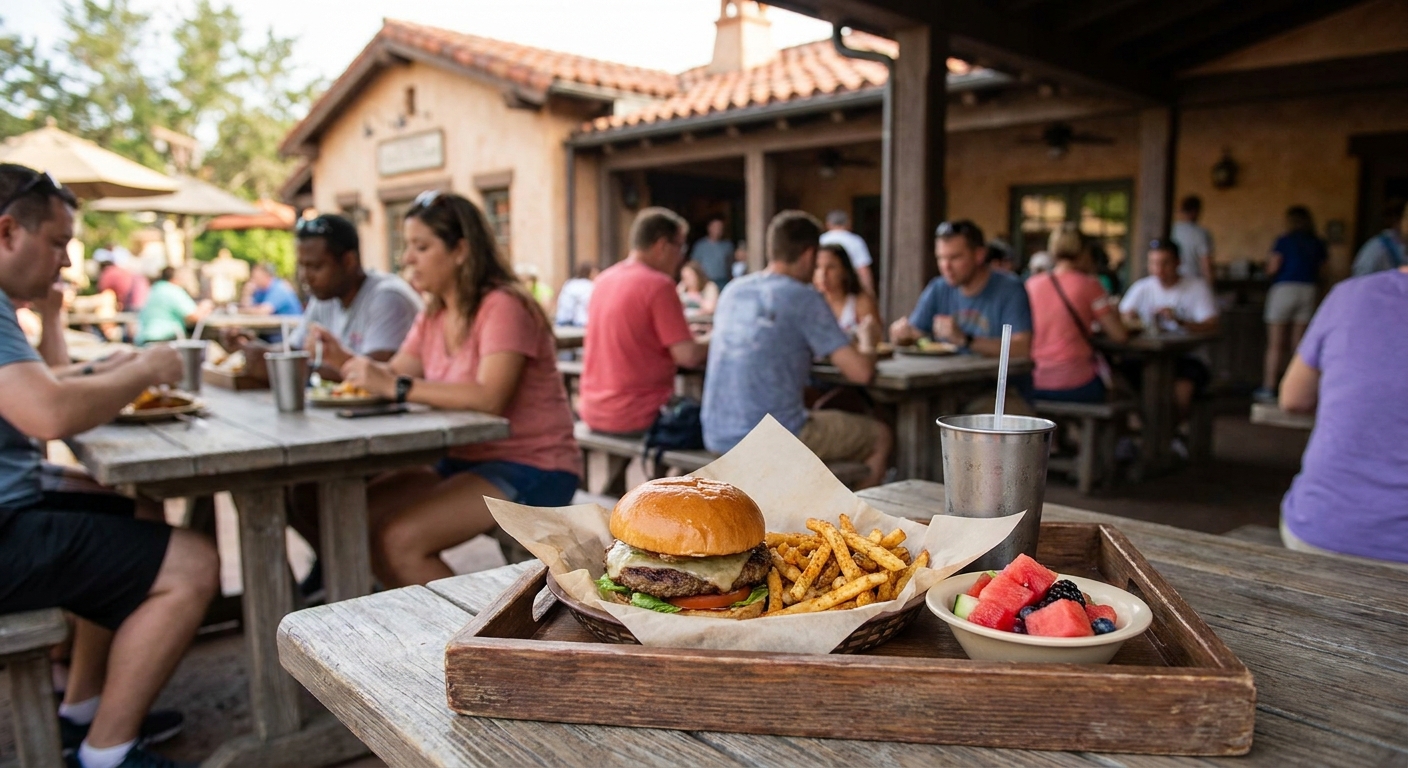
What 1900 Park Fare Actually Is: Setting, Atmosphere and Format
It’s a sit-down character buffet inside the Grand Floridian: busy, loud and storybook-themed. Characters come to your table, so you don’t wait in a meet line.
If you’ve only done in-park character meets, this format surprises people. You don’t stand in a queue. You sit, eat, and the characters work the room and come to you. It feels like a very lively party in a very formal building.
The Setting: Victorian Resort, Storybook Room
The restaurant sits in the main building of Disney’s Grand Floridian Resort & Spa, the flagship Victorian-style resort on the monorail loop. The lobby has white wood, red roofs, a big birdcage elevator and usually a live band or pianist. That’s the first thing you’ll see, and it sets a calmer, dressier mood than anything inside a park.
Inside, the room leans into a storybook and fairy-tale theme. Expect bright colors, whimsical touches and a nod to the late-1800s era the resort is built around. The best-known feature is a large, ornate mechanical band organ, often called “Big Bertha,” which has long been the room’s centerpiece. Disney has refreshed this restaurant over the years, so don’t count on any specific décor piece. Just expect a room built to impress kids and photograph well.
How a Character Buffet Actually Runs
Here’s the flow from check-in to checkout:
- [ ] Check in at the podium (the lobby level of the main building) and wait briefly to be called
- [ ] Get seated at your assigned table, where your server takes drink orders
- [ ] Serve yourself from the buffet whenever you like, as many trips as you want
- [ ] Characters rotate through the room and stop at each table for photos, autographs and a little interaction
- [ ] Stay seated-ish so you don’t miss your turn when a character reaches you
- [ ] Settle the check at the table when you’re done
Characters move on a loop, and handlers keep the pace steady. For details on who appears, how long visits last and how many to expect, see “Which Characters You’ll Meet (and How Character Visits Work).”
Pro tip: Hit the buffet in shifts. Have one adult stay at the table with the autograph book and phone ready while the others go up. Characters move on schedule, and coming back to an empty table is the most common way families miss a visit.
Noise and Energy Level
This isn’t a quiet meal. Picture dozens of excited kids, characters getting cheers, servers moving fast and a buffet line that never stops. It’s loud and happy, sometimes chaotic, and the peak is whenever a popular character walks in.
| Your family is… | How it’ll likely go |
|---|---|
| Young kids who love princesses and storybook characters | The sweet spot. The energy feels like a party, not a problem |
| A shy kid who warms up slowly | Usually fine. Characters are used to gentle approaches, and you can wave from your seat |
| Sensitive to noise or crowds | Can be a lot. Bring headphones and ask at check-in for a table away from the busiest areas (no guarantees) |
| Adults-only or teens | The setting is pretty, but the format is aimed at little kids |
| Toddlers who can’t sit long | Works better than a table-service meal, since food is ready right away and nobody waits on courses |
The buffet format quietly helps families with antsy kids. There’s no waiting between courses, and picky eaters can build their own plate.
What to Wear
There’s no dress code beyond normal theme-park clothes. Shorts, sneakers and park-day outfits are completely fine, even in the polished Grand Floridian lobby. Plenty of families do dress up for the photos. Kids in princess dresses or costumes are a common sight, and since characters will be posing next to them, it can be worth it if you were planning a “nice outfit” photo anyway.
A few practical notes:
- Layers help. Resort dining rooms often run cold, especially after a hot walk from the monorail.
- Avoid white on toddlers if syrup, sauces or anything red is on their plate.
- Costumes go in a bag. If you’re heading to a park afterward, a quick change keeps kids comfortable for the rest of the day.
Is It Your Family’s Kind of Meal?
Ask yourself one honest question: can your kids handle about an hour of noise, excitement and stop-and-start eating in a crowded room? If yes, this format is about as easy as character meals get. If your crew falls apart in loud rooms or after a long park morning, think carefully about where it lands in your day.
Which Characters You’ll Meet (and How Character Visits Work)
Every character usually comes to your table. You don’t wait in a line, but you do need someone sitting there when they arrive.
The lineup reported since the reopening
Since 1900 Park Fare reopened at Disney’s Grand Floridian Resort & Spa in April 2024, the lineup has been reported as:
| Character | What to expect |
|---|---|
| Cinderella | Returns as the restaurant’s anchor princess |
| Aladdin | In his “Prince Ali” outfit, a look you don’t often see at park meet-and-greets |
| Tiana | In the outfit tied to Tiana’s Bayou Adventure, not her classic gown |
| Mirabel | From Encanto. She’s still a fairly uncommon meet at Walt Disney World, which makes her a draw for kids who love the movie |
Lineups can change. Characters get swapped, costumes get updated, and a character can miss a meal without warning. If your child is set on one specific character, check the current lineup in My Disney Experience or call the restaurant before you plan a meal around them. Check again a few days before you go.
How the rotation works
- One visit per character, per table, is typical. With a four-character lineup, expect four separate stops during your meal.
- Each visit is short, usually a couple of minutes. That’s enough for a hug, an autograph, a photo or two and a bit of in-character chat. It isn’t a long sit-down.
- Characters work the room in a loop, so the gap between visits depends on where you’re seated and how busy the restaurant is. Some tables get two characters back to back and then wait a while for the next one.
- Most guests see the full lineup within the 60–90 minutes covered in “At a Glance.” If you eat quickly and leave early, you risk missing someone.
How not to miss anyone while you’re at the buffet
The most common way families miss a character is that everyone goes up to the buffet at once.
- Go to the buffet in shifts. Keep at least one adult at the table at all times, ideally with the kid who cares most about the characters.
- Watch where the characters are. If one is two tables away, wait before you get up for seconds.
- Count off the characters as you go. Before you ask for the check, make sure you’ve seen all of them.
Pro tip: If you were away from the table when a character came by, or your child was in the bathroom, let your server know. Character handlers can often send that character back before you leave. It works much better if you speak up during the meal than at the end when you’re paying.
Autographs and photos
- Have autograph books open to a blank page with the pen uncapped. Visits are short, and digging through a bag takes up half of one.
- Bring a thick pen or marker. Character gloves make thin pens hard to grip, and fat pens give cleaner signatures.
- Ask for a group photo. Servers and handlers will often take one with your phone, so the parent who usually takes the pictures can be in at least one shot.
- For better photos, stand up beside the character instead of having everyone lean in from their seats. It takes a few seconds and the photos are noticeably better.
- Use burst mode. Characters move quickly, and burst mode gives you a usable frame without asking for a retake.
Tips for shy or nervous kids
- Let them watch first. Kids often relax after seeing a character visit a few nearby tables.
- Hold them on your lap when the character arrives. It’s less intimidating than standing face to face.
- Give them a small job, like handing over the autograph book or showing a toy. Having something to do makes it easier to engage.
- Don’t force a hug. Characters are good with hesitant kids and will often switch to a high-five or a wave. A wave from across the table still counts as a good meet.
- Start with the character your child already loves. Meeting a favorite first usually makes the rest easier.
Your table-side checklist
- [ ] Confirm the current character lineup before your meal
- [ ] Have autograph books ready, with a thick pen or marker
- [ ] Charge your phone and clear some storage for photos
- [ ] Agree on a buffet-shift plan before you sit down
- [ ] Keep track of which characters you’ve seen
- [ ] Before you leave, tell your server about any character you missed
If you’re still deciding which meal to book, see “Breakfast vs. Dinner: Which Meal Should You Book?”
Breakfast vs. Dinner: Which Meal Should You Book?
Book breakfast if the meal is part of a Magic Kingdom day. Book dinner if it’s the main event of a slower evening. The characters are usually the same at both meals, but each one affects the rest of your day differently.
Most families choose between these two by price or by which slot happens to be open. A better way to decide is to ask what the meal does to the rest of your day. Breakfast leads into park time. Dinner closes out the day. Pick the one your itinerary actually needs.
Side-by-Side Comparison
| Factor | Breakfast | Dinner |
|---|---|---|
| Food variety | Breakfast buffet basics: eggs, breakfast meats, pastries and kid-friendly items. Good for picky eaters | Usually a wider spread with more savory entrées and desserts. Better for adults who want a real meal |
| Price level | The lower of the two | Usually costs more per person |
| Character energy | Kids are rested and excited. Expect lots of hugs and high energy | Can be just as fun, but tired toddlers late in the day are a real risk |
| Crowd and noise | Busy and loud. Strollers, early risers and families heading to the parks | Still lively, but the pace often feels a little calmer |
| Effect on park time | Takes a morning block, so plan around your park arrival | Takes an evening block. It costs you nothing on a non-park night but a lot on a Magic Kingdom night |
| Booking difficulty | Hard | Hard |
| Best for | Families with young kids doing Magic Kingdom the same day | Families on a rest day, a resort day or a slower trip, and groups who want a full dinner |
A note on menus and characters: Disney rotates buffet items and can change character lineups without much notice. The breakfast vs. dinner food differences above are typical patterns, not a guaranteed menu. Characters have been reported as largely the same at both meals, but confirm close to your date. “What to Eat” covers the food in detail.
Why Breakfast Wins on a Magic Kingdom Day
The Grand Floridian is on the monorail loop, so breakfast leads straight into a Magic Kingdom morning. You eat, the kids meet characters while they’re fresh, and you’re on your way to the park without backtracking.
- Character meets happen before the park. Kids who’ve already met the princesses are often less interested in waiting in an in-park meet line later.
- Lunch can be light. A big buffet breakfast often lets you get by on snacks until mid-afternoon.
- You keep your evening. You can stay for fireworks without a dinner reservation cutting your night short.
The trade-off is that breakfast always takes some morning park time. “Best Times to Book” covers how to fit it around rope drop.
Why Dinner Wins on a Slower Day
Dinner at 1900 Park Fare works best when it is the plan for the evening. That might be a pool day, a resort-hopping day or the evening after a half-day in the parks.
- Nothing competes with it. No ride is going walk-on while you’re eating.
- The bigger spread is worth it. If you’re paying more, you want time to enjoy the dessert table instead of rushing to the monorail.
- It works as an event. For birthdays or a “dress like your favorite princess” night, dinner gives the meal more weight.
Pro tip: Don’t book dinner here on a Magic Kingdom day thinking you’ll “just pop over” in the evening. Leaving the park in the late afternoon gives up the busiest, most atmospheric hours of the day, and many families never go back in. If you want dinner, schedule it on a night when you weren’t planning to be in a park.
Quick Decision Checklist
- [ ] Is it a rest, pool or resort day? → Dinner
- [ ] Do you have kids under 5 who tend to melt down by early evening? → Breakfast
- [ ] Do the adults want a full sit-down dinner, not eggs and waffles? → Dinner
- [ ] Is this your only splurge meal of the trip? → Either works. Choose by which day has room.
- [ ] Is cost the deciding factor? → Breakfast is usually lower. Full numbers are in “What 1900 Park Fare Really Costs.”
If You Can Only Get One Meal
Tables here are consistently hard to get, so you may end up with the meal you didn’t want. Take it anyway, then work around it. A dinner on a Magic Kingdom day can still work if you turn that day into a half-day in the park. If you’d still rather switch, SupaPark’s Drop Watch can track the other meal and alert you when a cancellation opens a table. You book it yourself in My Disney Experience, then cancel the slot you no longer need.
What to Eat: Buffet Highlights, Signature Items and What to Skip
The short version: try the signature items first, skip the filler you can get anywhere, and leave room for a second trip once you’ve seen everything.
The food here is solid, comfort-style Disney buffet fare. It’s usually better than a park quick-service meal but it’s not destination dining, and the characters are the main reason to book. A little strategy still gets you more out of the meal. Menus rotate by season and change over time, so read every dish below as an example of what has typically been served. It isn’t a promise of what you’ll see on your date.
The strawberry soup (when it’s there)
Strawberry soup is the dish this restaurant has long been known for. It’s a chilled, creamy, sweet soup that sits somewhere between a smoothie and a dessert. Fans like it as a light, fruity break from heavier buffet food. Others find it too sweet to have alongside savory dishes.
- Pros: unusual, kid-friendly, and it’s the thing returning guests tend to look for.
- Cons: it’s rich, and it fills you up faster than you’d expect for something served in a small cup.
- The move: take a small portion to try. Don’t fill a bowl. If you don’t see it, ask your server whether it’s on today. It hasn’t been a guaranteed item at every meal.
Breakfast: what typically shows up
Breakfast has usually been the classic Disney spread:
- Scrambled eggs, bacon, sausage and breakfast potatoes
- Waffles or pancakes, often Mickey-shaped, with toppings
- Pastries, muffins and breads
- Fresh fruit, yogurt and cereal
- Sometimes a featured hot dish or a seasonal special
Dinner: proteins and the carving station
Dinner adds more variety, and the main draw is usually a carving station. Roast beef or turkey is common, with other proteins rotating through: a chicken dish, a fish option, and a pasta or two. Sides typically include vegetables, potatoes and a salad section.
For more detail on how breakfast and dinner compare, see “Breakfast vs. Dinner: Which Meal Should You Book?”
The kids’ station
There’s typically a lower, kid-height station with familiar picks such as chicken nuggets or tenders, mac and cheese, pizza or plain pasta, and simple veggies. It’s great for picky eaters and lets little ones serve themselves. It’s also the easiest way to waste the meal, because a kid who loads up on nuggets in the first five minutes won’t touch anything else. If your child has allergies or dietary needs, see “Eating at 1900 Park Fare with Food Allergies, Dietary Needs or Picky Eaters” before you rely on the kids’ station.
Desserts
Expect a spread of bite-size desserts: mini cakes, cookies, mousses, and sometimes a soft-serve or sundae option. The small sizes are a gift, since you can try three or four without much commitment. Guests often rate the desserts as fun and photogenic more than truly memorable, so pick the ones that look most like the restaurant’s theme over the generic brownies.
Prioritize vs. skip
| Prioritize | Why | Skip or go light | Why |
|---|---|---|---|
| Strawberry soup (small taste) | It’s the signature, and you can’t easily get it elsewhere | Bread, rolls and pastries | They fill you up fast and taste like any hotel buffet |
| Carving station (dinner) | Usually the best-value, best-quality protein | Breakfast potatoes and fries | Heavy filler |
| Featured or seasonal dishes | Most likely to be fresh and not available elsewhere | Plain pasta and pizza (for adults) | Kid fallbacks, not why you came |
| Bite-size themed desserts | Small enough to sample a few | Cereal and packaged items | Nothing special |
| Fresh fruit | Light, and it balances the sweet items | Huge first-trip plates | Food gets cold while characters visit |
A smart buffet plan
- [ ] On your first lap, just look. Walk the whole line before you pick anything up.
- [ ] First plate: small portions of the signature and featured items.
- [ ] Second plate: go back for whatever impressed you, plus carved protein at dinner.
- [ ] Let kids pick one “safe” item from their station, then one new thing.
- [ ] Save one final trip for desserts, after the characters have come around.
Pro tip: Go up for food right after a character has left your table. The next visit is usually a few minutes away, and buffet traffic tends to thin while nearby tables are busy taking photos. That’s your best window for fresh carved meat and a short line.
Your table time is limited (see “At a Glance”), so the goal isn’t to eat the most food. It’s to taste the best few things while the characters keep visiting.
Eating at 1900 Park Fare with Food Allergies, Dietary Needs or Picky Eaters
Note the allergy when you book, say it again at check-in, and ask for a chef. At a buffet, the chef’s walkthrough matters more than any label on the line.
Buffets are harder than plated meals for allergies. Shared serving spoons, guests reaching across trays, and kids handling the dessert station all add cross-contact risk that a kitchen-plated meal doesn’t have. Disney World kitchens are generally known for handling allergies well, but you get that care by asking for it at each step.
How to flag allergies so it actually reaches the kitchen
1900 Park Fare takes reservations, so you have a record to attach your allergy notes to. Here’s the sequence that works best:
- [ ] When booking in My Disney Experience: add every allergy or dietary need to the reservation, for each person it applies to. (For the booking process itself, see “How to Actually Get a Reservation: The 60-Day, 6:00 AM Playbook.”)
- [ ] At the podium: tell the host again. Notes on a reservation don’t always make it to the server.
- [ ] When seated: tell your server and ask to speak with a chef before anyone goes up to the buffet.
- [ ] With the chef: list every allergen, including the mild ones. Mention whether trace amounts or shared fryers are a problem.
- [ ] Before dessert: if the chef hasn’t come back, ask your server to bring them over again.
How buffet allergy handling usually works
When a chef comes to your table, it usually goes one of two ways:
| Approach | How it works | Best for |
|---|---|---|
| Buffet walkthrough | The chef walks you along the line and points out which items are safe for your allergen | Single, less severe allergies; guests who want buffet variety |
| Separately prepared plates | The kitchen makes the allergy-safe food fresh and brings it to your table | Severe allergies, multiple allergens, anyone sensitive to cross-contact |
| Mix of both | Some items come from the line after the chef checks them, and the main plate comes from the kitchen | Families where one child has a serious allergy and the others eat normally |
If the allergy is severe, just ask for kitchen-prepared plates. The buffet line can be “safe” at 8:00 and not at 8:20 after a guest moves the wrong spoon into the wrong tray. A chef can confirm what went into a dish, but nobody can guarantee what happened to it on the line since then.
Pro tip: At that first chef visit, set up a safe dessert too. The dessert station gets more handling by small hands than anywhere else on the buffet, and the treats there are often the hardest to check for ingredients. If you sort it out early, you won’t be negotiating it while your kids are watching everyone else eat cake.
Plant-based and gluten-free considerations
- Plant-based: a buffet can usually cover a vegan diner with fruit, vegetables, potatoes and some sides. The filling protein is what’s often missing. Ask the chef whether the kitchen can make a plant-based entrée, not just which items on the line happen to be vegan. Check sauces, dressings and baked goods with the chef, because dairy and egg often show up where you don’t expect them.
- Gluten-free: the main risk is breaded items and shared utensils, not finding something to eat. Breakfast is especially full of gluten (pastries, waffles, pancakes). Ask whether gluten-free bread, waffles or pancakes can come out from the kitchen.
- Celiac or a strict medical diet: go with kitchen-prepared plates. Skip anything on the line that sits near bread, batter or a fryer.
Strategies for picky eaters
A buffet is usually the easiest kind of character meal for picky eaters, because there’s no single plate to reject. A few tactics help:
- Scout first, then take a small amount. Let your child look at the whole line before they put anything on their plate.
- Find the safe foods early. Fruit, potatoes, mac-and-cheese-style sides and bread are usually there in some form. Lock in one food they’ll definitely eat before you push anything new.
- Use the characters as motivation. “Two more bites before Pooh gets here” tends to work better at this meal than at most others.
- Eat a light snack on the way, not a big one. A very hungry picky eater has meltdowns, and a full one eats nothing.
- Have a backup plan. If your child will only eat three foods, bring one of them along just in case.
When the buffet’s value drops for kids who barely eat
The buffet charges a flat child price whether your kid eats a full plate or two strawberries. Kids under 3 usually eat free from the buffet, so for babies and young toddlers the question doesn’t come up. The value gets thin for kids aged 3 to 9 who are very picky, have a very small appetite, or only eat safe foods prepared separately by the kitchen.
In those cases, you’re paying for the characters, not the food. That’s fine if the characters are the reason you’re going. If your child won’t care about the characters either, you’re paying a full child price for very little.
What 1900 Park Fare Really Costs: Full Cost Breakdown for a Family
For a family of four, 1900 Park Fare is likely to be one of the most expensive meals of your trip. The menu price is only part of it, and the time it takes out of your park day is the cost most families forget to count.
Prices change by date and have gone up steadily over the years, so check My Disney Experience for the current numbers before you plan your budget. As a rough guide, when the restaurant reopened in 2024, breakfast was in the mid-$50s per adult and dinner was in the mid-$60s per adult. Child prices for ages 3–9 were noticeably lower. Expect current prices to be at or above those levels.
Cost Breakdown Template: Family of Four (2 Adults, 2 Kids Ages 3–9)
Fill this in with the current prices from My Disney Experience for your date.
| Line item | Breakfast | Dinner | Notes |
|---|---|---|---|
| Adults (×2) | Adult price × 2 | Adult price × 2 | Dinner usually costs more per person |
| Kids ages 3–9 (×2) | Child price × 2 | Child price × 2 | Ages 10+ pay the adult price |
| Kids under 3 | Usually free | Usually free | They can share food from your plates at the buffet |
| Florida sales tax | Added to the subtotal | Added to the subtotal | Not included in the menu price |
| Gratuity | About 18–20% customary | About 18–20% customary | Larger parties usually have it added automatically |
| Specialty drinks / alcohol | Rare at breakfast | More likely at dinner | Easy to forget when you budget |
| Menu total | Lower | Higher | The gap between meals grows with your family size |
Tax and tip are both calculated on a base price that’s already high. That pushes the final bill well past what the family-of-four menu prices add up to.
The Hidden Cost: Time
What’s missing from your receipt is the time the meal takes out of your day. The restaurant is at the Grand Floridian, not inside a park, so you need to count:
- [ ] Travel from your hotel or the park to the Grand Floridian (see “Getting There: Transportation and Arrival Tips”)
- [ ] Arriving early for check-in
- [ ] Time at the table (see “At a Glance”)
- [ ] Getting back to the park, including a security re-entry at Magic Kingdom
- [ ] Any rides or Lightning Lane return windows you give up while you’re gone
On a Magic Kingdom day, it’s realistic for the meal to take two hours or more out of your park time once travel is included. At a busy park, that could mean several rides. How much that matters depends on your plan, which is covered in “Best Times to Book: Choosing a Slot That Fits Your Park Day.”
Paying Cash vs. Using a Disney Dining Plan Credit
1900 Park Fare accepts the Disney Dining Plan. A character buffet like this one typically uses one table-service credit per person. Confirm the exact cost when you book.
| Paying cash | Dining Plan credit | |
|---|---|---|
| What you pay at the meal | Full menu price + tax + tip | One table-service credit per person |
| Tip | You pay it | Usually not covered. Check your plan’s details |
| Alcohol / specialty drinks | You pay | Check your plan’s details |
| Kids’ pricing | Child price for ages 3–9 | Children on the plan use child credits |
| Best for | One planned splurge | Families already on a plan with credits to spend |
When the credit is a smart use:
- You were already going to do a character buffet. The credit replaces cash you would have spent anyway. That’s the best case.
- It replaces a cheaper table-service meal. Each credit is worth the same no matter where you use it, so the higher the menu price, the more you get out of it.
- Your family eats a lot. At a buffet, big eaters get more food for the same credit.
When it’s a weak use:
- Your kids are picky and will eat a few bites before chasing characters.
- You’d be giving up a table-service meal you were more excited about just to use up the credit.
- You’re on the plan only to pay for this one meal. Do the math first, because buying a full plan for one meal rarely pays off.
Pro tip: If you’re using Dining Plan credits here, book dinner instead of breakfast. You use the same one credit per person, but dinner has the higher menu price, so the credit covers more. If you’re paying cash, the reverse applies: breakfast gets you the same characters for less. See “Breakfast vs. Dinner: Which Meal Should You Book?”
The Bottom Line on Cost
Think of 1900 Park Fare as the one character meal you splurge on, not one of several. If it’s the main event of a resort day, it’s good value. If it’s your third character meal in five days and it costs you prime park hours, the menu price is the smaller of the two costs.
How 1900 Park Fare Compares to Other Disney World Character Meals
1900 Park Fare is the best pick if you want Cinderella’s world, a full buffet and no park ticket. If you just want Mickey, princesses in a castle, or an easier table, another meal is probably a better fit.
Most families only fit one or two character meals into a trip, so it helps to see the options side by side. Formats and character lineups at these restaurants change from time to time, and some switch between meals or seasons. Treat the table below as a typical pattern and check the current details in My Disney Experience before you commit.
Side-by-Side Comparison
| Restaurant | Typical format | Characters (usually) | Location / park ticket needed? | Relative price tier | Booking difficulty |
|---|---|---|---|---|---|
| 1900 Park Fare | Buffet | Cinderella’s story and storybook characters, including the stepfamily | Grand Floridian Resort, no ticket needed | Mid-high | Hard |
| Cinderella’s Royal Table | Plated, fixed-price | Cinderella and other princesses | Inside Cinderella Castle, Magic Kingdom ticket needed | Highest | Very hard |
| Chef Mickey’s | Buffet or family-style (has changed over time) | Mickey and friends | Contemporary Resort, no ticket needed | Mid-high | Moderate |
| 'Ohana | Family-style | Character status varies by meal, so check current details | Polynesian Village Resort, no ticket needed | Mid | Moderate to hard |
| Topolino’s Terrace | Plated (character meal at breakfast) | Mickey and friends in artist outfits | Riviera Resort (top floor), no ticket needed | Mid-high | Hard |
| Akershus Royal Banquet Hall | Plated entrée with shared starters | Rotating Disney princesses | Norway pavilion, EPCOT ticket needed | Mid-high | Moderate |
| Hollywood & Vine | Buffet | Varies by meal and season | Hollywood Studios ticket needed | Mid | Moderate |
Exact pricing is covered in “What 1900 Park Fare Really Costs: Full Cost Breakdown for a Family.” The tiers above only show how these meals compare to each other.
What Actually Sets 1900 Park Fare Apart
- Villains alongside heroes. Most character meals only bring out “good guys.” Here, the stepfamily usually works the room, and they tend to play their roles with sharp, funny attitude. Older kids and adults often say this is the best part. Very shy toddlers might not love it.
- A buffet, not a fixed plate. Picky eaters have more choices than at plated meals like Cinderella’s Royal Table, Akershus or Topolino’s.
- No park ticket needed. Like Chef Mickey’s, 'Ohana and Topolino’s, it works on an arrival day, a departure day or a pool day.
- It’s hard to book. It isn’t Cinderella’s Royal Table, but multiple guides consistently rate it among the harder tables to get. Plan for that.
Pick This One If…
- 1900 Park Fare: your kids love Cinderella, you want the most food choice for picky eaters, and you’d enjoy some funny villain interaction. It also works if you want the meal on a day without a park ticket.
- Cinderella’s Royal Table: eating inside the castle is the whole point for your family and you’re fine paying the most for it. Know that you’re mostly paying for the setting. 1900 Park Fare usually gives you more character time and more food per dollar.
- Chef Mickey’s: your child mostly wants Mickey and his crew, and you’d like an easier reservation near Magic Kingdom.
- 'Ohana: you want a lively family-style meal at the Polynesian. Confirm whether characters are part of the meal you’re booking before you count it as a character meal.
- Topolino’s Terrace: you’d like a quieter, more polished plated breakfast with Mickey and friends, and you’re staying on the Skyliner line or don’t mind getting there.
- Akershus Royal Banquet Hall: you want several princesses in one meal and you’re already spending the day at EPCOT. It’s often the easiest way to meet princesses at a table.
- Hollywood & Vine: you’re at Hollywood Studios that day and the current lineup suits your kids. Check what’s running, because it changes more than most.
Pro tip: Don’t book two meals with the same characters. If you already have 1900 Park Fare for Cinderella, use your second character meal on something completely different, like Mickey and friends at Chef Mickey’s or Topolino’s, or a princess lineup at Akershus. You’ll see more characters across the trip instead of paying twice for the same photos.
Quick Decision Checklist
- [ ] Write down the two or three characters your kids care about most
- [ ] Decide whether the meal goes on a park day (castle, Akershus, Hollywood & Vine) or a resort day (1900 Park Fare, Chef Mickey’s, 'Ohana, Topolino’s)
- [ ] Rule out plated meals if you have a very picky eater
- [ ] Check the current format and lineup in My Disney Experience
- [ ] If you choose 1900 Park Fare, plan for it being hard to book (the strategy is in “How to Actually Get a Reservation: The 60-Day, 6:00 AM Playbook”)
How to Actually Get a Reservation: The 60-Day, 6:00 AM Playbook
Get set up before 6:00 AM Eastern exactly 60 days before arrival, and book this table before anything else.
1900 Park Fare takes reservations, and as a character buffet that families plan around, the popular slots usually go in the first few minutes the window is open. Most guests who end up “sold out” weren’t too late by days. They were too late by minutes, or they spent their first minutes logging in and linking accounts.
Don’t mix up the two morning windows
Lightning Lane Multi Pass and dining open at different times and work differently. Families who treat them as one window often miss both.
| Advance Dining Reservations | Lightning Lane Multi Pass | |
|---|---|---|
| Opens | 60 days before arrival | 7 days before (on-site) / 3 days before (off-site) |
| Time | 6:00 AM Eastern | 7:00 AM Eastern |
| Where | My Disney Experience | My Disney Experience |
| What you’re doing | Booking a table | Buying the pass for the day and choosing ride selections in advance |
The dining window opens about two months earlier than Lightning Lane and an hour earlier in the morning. For 1900 Park Fare, only the 6:00 AM dining window matters.
Why on-site guests have the edge
If you’re staying at a Disney resort, the 60 days are counted from your check-in date. From that one morning you can book meals for every day of your stay, up to 10 days. An off-site guest can only book 60 days ahead of each meal’s own date.
So if you want 1900 Park Fare on day 5 of your trip, you can book it five days before an off-site guest can even try for that date. That’s the biggest structural advantage in Disney dining. It only works if your resort reservation is linked to My Disney Experience before your window opens.
Pro tip: If you’re on-site, schedule 1900 Park Fare for the middle or end of your trip rather than arrival day. Later dates have the least competition on your booking morning, because most off-site guests can’t book them yet. When the window opens, book whichever restaurant you’d be most upset to lose first. If that’s Cinderella’s Royal Table, do that one first and 1900 Park Fare right after.
Why the family-friendly times go first
Everyone booking a character buffet is aiming for the same few slots: breakfast early enough to fit before a park morning, and dinner early enough to finish before bedtime meltdowns. That’s a small number of tables with a lot of families after them. Very early and late slots usually last longer, so decide ahead of time which backup time you’d accept.
Do this the night before
- [ ] Sign in to My Disney Experience and make sure you stay signed in. Don’t count on remembering a password at 5:58 AM
- [ ] Link your resort reservation (on-site guests), so the app knows your stay dates
- [ ] Add everyone in your party to Friends & Family, so you can pick them in seconds
- [ ] Confirm your exact party size and count every person, including small children
- [ ] Keep a credit card ready for the reservation guarantee
- [ ] Pick your first-choice time and at least two backup times
- [ ] Decide which meal you’ll take if your first choice is gone (see “Breakfast vs. Dinner: Which Meal Should You Book?”)
- [ ] Set an alarm for 5:50 AM Eastern. If you live in another time zone, convert it
On the morning
- [ ] Open the app a few minutes early, then refresh right at 6:00 AM
- [ ] Search your exact date and party size first
- [ ] If the time you want isn’t there, search breakfast and dinner separately and try nearby times. Results can change from search to search
- [ ] When an acceptable slot appears, book it right away. You can try to improve it later, but you can’t get back a slot you didn’t take
- [ ] Check again a few times that first morning. Slots sometimes reappear as other guests change their plans
Always book your real party size. Searching a slightly different time can turn up openings, but the table has to match the number of people who actually show up.
Cancellation and no-show fees
The credit card is a guarantee. Disney charges a per-person fee if you cancel after the cancellation deadline or don’t show up. The deadline is usually the day before your meal. Disney updates the exact cutoff and fee amount from time to time, so check the current terms in My Disney Experience when you book.
That deadline is also why tables keep freeing up as the date gets closer: families cancel just before they’d be charged. If your first try doesn’t work, see “Sold Out? How to Get a 1900 Park Fare Table from Cancellations.”
Sold Out? How to Get a 1900 Park Fare Table from Cancellations
“No availability” usually just means “nothing open right now.” Tables at 1900 Park Fare free up all the time, and the families who get them are the ones who keep checking.
A sold-out screen 60 days out isn’t the end of it. Plans change all through the booking window, and a lot of those changes land in the final days before the meal. Your odds are never guaranteed, but they’re often better than that first sold-out search suggests. (The initial booking playbook is covered in “How to Actually Get a Reservation: The 60-Day, 6:00 AM Playbook.”)
Why tables free up
- The cancellation-fee deadline. Disney charges a per-person fee if you cancel too late or don’t show up. As that cutoff gets close, families who booked “just in case” drop the tables they won’t use. Check your confirmation for the exact cutoff.
- Plan changes. A switch to a different park, a sick kid, a delayed flight or a rearranged itinerary can release a table at any point.
- Backup reservations. Some families book two character meals and keep the one that fits better. The other one gets released, often in the last week.
- The day before and the day of. Same-day changes happen when a family is tired, running late or rethinking the day. These openings are often brief, and they tend to go fast.
When openings tend to show up
| Window | What usually happens | How hard to look |
|---|---|---|
| Weeks out | Occasional trickle from big itinerary changes | Check every few days |
| Final week | More releases as backup bookings get trimmed | Check daily |
| Around the fee cutoff | Often the busiest stretch for cancellations | Check several times |
| Day of the meal | Short-lived openings from no-shows and late changes | Check in the morning and again before you leave |
These are patterns, not promises. A popular holiday week may stay full the whole time.
Make your search easier to match
The more flexible your search, the more openings you’ll be able to grab.
- Search each party size you could honestly use. Openings come in specific sizes. If your group could split (for example, four plus two), searching both sizes can turn up tables a single large search misses.
- Widen your times. Search the whole meal period, not just your ideal slot. An early breakfast or a late dinner is often easier to get than prime time.
- Be open to either meal. If breakfast and dinner would both work for your trip, search both. “Breakfast vs. Dinner: Which Meal Should You Book?” can help you decide which trade-offs you can live with.
- Try several dates. If you have more than one possible day, search them all instead of fixating on one.
Pro tip: Hang on to a backup character meal while you hunt for this one, and don’t cancel it until 1900 Park Fare is confirmed in My Disney Experience. Then release the backup before its own fee cutoff. You won’t get charged, and you’ll free a table for another family.
Asking about walk-up availability
If you’re already at the Grand Floridian, or close by on the monorail, ask at the restaurant’s check-in podium whether they can seat you. Walk-ups at a character buffet this popular are a long shot, especially at peak times. Your odds are usually best right as a meal period opens or toward its end, and with a small party. Also check My Disney Experience to see whether a walk-up option is offered that day. Don’t build your day around getting in this way. Treat it as a bonus if it works.
Let the openings come to you
Refreshing all day is tiring, and the best openings often only last a few minutes. SupaPark’s dining Drop Watch watches for you: it checks for a 1900 Park Fare table that matches your date, time and party size, and alerts you as soon as one frees up. Then you book it yourself in My Disney Experience. SupaPark never books or holds a table.
- Free: create dining watches and get alerts by email, up to 10 a day.
- Silver and Gold: unlimited push alerts, which is the faster option when a table might only be open for a few minutes.
Your cancellation-hunting checklist
- [ ] Write down every date, meal and party size your group could realistically use
- [ ] Keep a backup character meal booked until this one is confirmed
- [ ] Check more often as the fee cutoff approaches and during the final week
- [ ] Search again the morning of the meal
- [ ] Set up watches so you hear about openings without constant refreshing
- [ ] Book any opening right away in My Disney Experience
- [ ] Cancel your backup before its fee deadline
- [ ] If you’re nearby, ask at the podium about walk-up seating
Best Times to Book: Choosing a Slot That Fits Your Park Day
The best 1900 Park Fare reservation is the one that doesn’t cost you your most valuable park hours: early morning or evening, not the middle of the day.
A character buffet at the Grand Floridian takes up a big chunk of your day. It’s the 60–90 minutes from “At a Glance,” plus getting to and from the resort. The question isn’t which time is “best” in general. It’s which part of your day you can most easily give up.
What each time of day really costs you
Each hour of a park day is worth something different. Here’s how that plays out:
| Time block | Opportunity cost | Why |
|---|---|---|
| Before park open | Very low | You’re not giving up any rides. You’re just getting up earlier. |
| Rope drop / first hour | Very high | Standby lines are at their shortest, especially for headliners. |
| Midday | Highest | Lines and heat peak, and leaving the park for a meal splits your day in two. |
| Late afternoon / evening | Low | Your priority rides are usually done, and the kids are running out of energy anyway. |
Midday is the trap. It feels like a natural break, but a sit-down buffet across the lagoon right then means two transport legs, a re-entry, and the hottest, busiest part of the day spent getting places. Plan a midday break around a nap or the pool, not this meal.
Three slots that actually work
1. Early breakfast before a later park arrival This is the strongest option on a Magic Kingdom day, but only if your timing works. Take the earliest seating you can get, eat, and head to the park. You give up the first part of the morning but not a full ride block.
2. Late breakfast or brunch on a resort or rest day If you’re taking a day off from the parks (and with young kids, you should), a later breakfast costs you basically nothing. No alarm, no rope-drop rush, and the meal becomes the main event.
3. Dinner after a morning in the parks Ride hard in the morning, take a break in the afternoon, then have dinner as a calm finish to the day. This works best when you’ve already planned for an early night, not when you’re hoping to fit in fireworks.
The two mistakes to avoid
Booking over rope drop for a headliner. If you plan to ride Seven Dwarfs Mine Train in the standby line rather than buy Lightning Lane Single Pass, the first stretch after opening is when its line tends to be shortest. A breakfast that keeps you out of the park then costs you one of your most important rides of the trip. The longer standby wait later in the day often adds up to more time than the meal itself.
Booking a breakfast that cuts into Early Theme Park Entry. On-site guests get into the park 30 minutes early. That’s often the best half-hour of the day. If your seating, your meal and the trip to the park can’t all fit before that window opens, you’re paying for the meal with your head start. Check your park’s hours for your date, work backward, and give yourself a buffer. Character visits don’t always run on your schedule.
Sample day plans
These timings are only examples. Park hours change by date, so adjust everything to your actual opening time.
| Plan | Morning | Midday | Afternoon / Evening |
|---|---|---|---|
| Magic Kingdom + early breakfast | Earliest 1900 Park Fare seating → get to the park | Lightning Lane return times, quick-service lunch | Head back to the resort early or stay for the evening |
| Rope-drop day + dinner | Early Theme Park Entry → headliners | Break at your resort | 1900 Park Fare dinner, early bedtime |
| Resort rest day | Sleep in → late breakfast at 1900 Park Fare | Pool or resort-hopping | Disney Springs or a quiet evening |
Pro tip: Your check-in or check-out day is the cheapest place to put this meal. You’re not doing a full park day anyway, so a late breakfast before you leave (or a dinner after you arrive) costs you no ride time. It also turns an otherwise wasted travel day into a highlight.
Quick slot-picking checklist
- [ ] Decide which day is your Magic Kingdom rope-drop day, and don’t book this meal over it
- [ ] Add up the seating time, 60–90 minutes at the table, and your travel time, then make sure you still reach the park when you need to
- [ ] Rule out midday slots unless it’s a rest day
- [ ] Look at arrival and departure days first
- [ ] If breakfast or dinner is still undecided, see “Breakfast vs. Dinner: Which Meal Should You Book?”
The rule to remember: book 1900 Park Fare for a time your park day doesn’t need.
Getting There: Transportation and Arrival Tips
The fastest way from Magic Kingdom is usually on foot. Leave about 30 minutes from any Magic Kingdom-area resort, and plan on roughly an hour from anywhere else on property.
1900 Park Fare is in the main building of Disney’s Grand Floridian Resort & Spa, right next door to Magic Kingdom. Being that close makes it easy to underestimate the trip. Monorail queues, a boat that just left or a bag-check line can easily eat 15 minutes.
Your Options at a Glance
| Option | Best for | Typical door-to-door time | Watch out for |
|---|---|---|---|
| Walkway from Magic Kingdom | Guests leaving the park | About 10–15 min | Florida heat and afternoon storms |
| Resort monorail | Polynesian guests, rainy days | 5–20+ min depending on where you board | One-way loop, peak-hour queues |
| Resort boat launch | Guests coming from Magic Kingdom who’d rather not walk | About 10–20 min with the wait | Runs on a schedule and can stop for weather |
| Driving | Off-site guests and DVC/resort hoppers with a car | Varies; add 10 min for the security gate | Parking rules for dining guests |
| Rideshare | Off-site guests, late dinners | Varies with traffic | Pickup waits after dinner |
Monorail: Know Which Way the Loop Runs
The resort monorail stops at the Transportation and Ticket Center, the Polynesian, the Grand Floridian, Magic Kingdom and the Contemporary. It usually runs in only one direction. From the Polynesian, the Grand Floridian is the next stop. From the Contemporary or Magic Kingdom, you’ll usually ride most of the loop to get there.
Pro tip: Walk to breakfast from Magic Kingdom, then take the monorail back. Coming from the park, the train takes the long way around. Going from the Grand Floridian to Magic Kingdom, it’s a single short hop, which makes it the easiest way to reach the park after an early breakfast.
The Walkway From Magic Kingdom
A paved path runs from the Magic Kingdom side of the lagoon to the Grand Floridian. Most families walk it in about 10–15 minutes. It’s flat and works well with strollers. The section between the Grand Floridian and the Polynesian also gives Polynesian guests a walking route. Path access has occasionally changed because of construction or maintenance, so check current conditions before you rely on it.
Wear your most comfortable shoes. You’ll walk more on this “quick” trip than most people expect, and kids who’ve already done a morning of rides tend to fade on the way.
Boats
A resort launch has typically connected the Grand Floridian, the Polynesian and Magic Kingdom. It’s a pleasant ride, but it runs on intervals, and lightning or high wind can shut it down. Treat it as a nice extra, not your plan for being on time.
Driving and Parking
At the security gate, tell the attendant you have a 1900 Park Fare reservation and have it ready in My Disney Experience. Dining guests are generally let in to park, but the rules on time limits and fees have changed over the years, so confirm the current policy before you go. Valet is usually available if you’re running behind.
Rideshare
Ask to be dropped at the main lobby entrance of the Grand Floridian. The restaurant is a short walk inside. After a late dinner, open your rideshare app before you pay the check, because pickup waits at resort entrances can stretch out.
Coming From a Non-Monorail Resort
Disney transportation usually doesn’t run directly between resorts. The most reliable route is a bus to Magic Kingdom, then the walkway or the monorail. Plan on about an hour door to door.
When to Check In
- [ ] Plan to arrive 15–20 minutes before your reservation time
- [ ] Check in at the host podium as soon as you arrive. Your wait for a table starts then, not when the whole group shows up
- [ ] Mention any allergies again at check-in (full details in “Eating at 1900 Park Fare with Food Allergies, Dietary Needs or Picky Eaters”)
- [ ] Use the restroom before you’re seated so nobody misses a character visit
If you’re early, the Grand Floridian lobby is a comfortable place to wait.
If You’re Running Late
Disney restaurants generally hold a reservation for a short grace period, often around 15 minutes. After that, your table may not be guaranteed. If you’re running late, call or tell the host right away. They often try to work you in, but on busy mornings they may not be able to. If you don’t show up at all, a per-person no-show fee may be charged.
Strollers and Wheelchairs
- Strollers: You usually can’t bring them to the table. The host will tell you where to park them. Fold them before boarding the monorail if a cast member asks, and take valuables with you.
- Wheelchairs and ECVs: The monorail and the main walkway are accessible. Cast members use a ramp to help guests board the monorail. Boat access depends on water conditions and the vessel, so ask before you board.
- Seating: Mention mobility needs at check-in. That helps the host seat you where characters and buffet stations are easy to reach.
Bottom line: Walk in from Magic Kingdom, take the monorail back, and arrive 15–20 minutes early.
Pairing 1900 Park Fare with a Resort Day or a Magic Kingdom Day
Treat 1900 Park Fare as the anchor of a half-day, not something squeezed between rides. It works best right before a Magic Kingdom day or at the center of a slow resort day.
The Grand Floridian sits on the resort monorail loop next to Magic Kingdom. That makes it one of the easiest character meals to attach to a real plan. A big resort meal also sets you up to skip two common park-day costs: in-park convenience pricing and the crush at counter-service spots around noon. Take care of the main meal at the Grand Floridian and your group can graze on snacks until a late lunch.
Itinerary 1: Breakfast, Monorail, Then Magic Kingdom
This works for families who don’t need to be at the gate for opening and would rather start the day with characters than with a long queue.
- [ ] Get dressed and pack the park bag before breakfast so you leave from the restaurant, not from your room
- [ ] Bring the autograph book and keep the phone charged, since characters come to the table
- [ ] Finish the meal and head to the monorail or the walkway to Magic Kingdom (details in “Getting There: Transportation and Arrival Tips”)
- [ ] Start with Fantasyland or Adventureland favorites, using any Lightning Lane return times you’ve already set up
- [ ] Skip the noon counter-service rush. Breakfast should carry most kids into the early afternoon, so a snack will do
- [ ] Head back for a midday break if you have under-5s (see the nap tips below)
Why it works: The kids have already met their princesses before the gates open, so you can spend park hours on rides instead of meet-and-greet lines.
Itinerary 2: A Low-Key Resort-Hopping Day
This is the best use of 1900 Park Fare on a no-park day, like a rest day in the middle of a long trip or an arrival day. The three monorail resorts are close together and each feels different, so you get a full day out of very little travel.
| Stop | What to do there | Why it’s worth the stop |
|---|---|---|
| Grand Floridian | Character meal, then a stroll through the Victorian lobby and grounds | Your main meal of the day, with characters included |
| Polynesian Village | Walk the grounds and the beach facing Cinderella Castle; grab a snack if the quick-service spots are open | Lush, relaxed, and great for photos |
| Contemporary | Watch the monorail glide through the building’s concourse | Kids love it, and it’s air-conditioned |
| Your own resort | Afternoon pool time and a nap | A real recharge before evening |
- [ ] Eat at 1900 Park Fare in the morning or around midday
- [ ] Ride the resort monorail loop to the Polynesian, then the Contemporary
- [ ] Head back to your own hotel for the pool
- [ ] Optional: watch Magic Kingdom fireworks from a resort viewing spot instead of going into the park
Know this before you plan the pool part: Disney generally limits pool access to guests of that resort. Unless you’re staying at the Grand Floridian, Polynesian or Contemporary, plan to swim back at your own hotel.
Stroller and Nap Tips for Little Ones
- Monorail: You can usually roll a stroller on without folding it. Disney buses ask you to fold it, so a resort day spent on the monorail is easier with a baby.
- At the restaurant: Ask the host where to park the stroller. Bring a small bag with wipes and a change of clothes to the table so you aren’t digging through the stroller in the middle of the meal.
- Nap timing: On the Magic Kingdom day, plan a midday break back at the hotel. A big breakfast plus a morning of rides is the classic recipe for an afternoon meltdown.
- On the resort day, let the nap land after pool time. Kids who swam right after a heavy meal often crash hard, and that can work in your favor.
Pro tip: Magic Kingdom stroller rentals can’t leave the park. On the breakfast-then-park day, use your own stroller or one from an outside rental company so you have it on the monorail, in the restaurant and on the walk back.
Which Pairing Fits Your Family?
| Your situation | Best pairing |
|---|---|
| First trip, kids desperate to meet princesses | Breakfast + Magic Kingdom day |
| Long trip that needs a rest day | Resort-hopping day |
| Toddlers on a strict nap schedule | Resort-hopping day, or breakfast + an afternoon off |
| Older kids focused on headliners | Breakfast only if it doesn’t push back your park arrival |
For what each version of the day costs once you add up the meal, see “What 1900 Park Fare Really Costs: Full Cost Breakdown for a Family.”
Common Mistakes Families Make at 1900 Park Fare
Most bad meals here come from planning slips you can avoid, not from the food or the characters. Here are the mistakes that come up again and again, with a fix for each.
Booking mistakes
1. Booking too late. Families often book flights, hotel and park tickets first and leave dining for later. By then, the useful breakfast times may be taken.
- Fix: Put the reservation window on your calendar the day you book your trip. The booking playbook is in “Breakfast vs. Dinner: Which Meal Should You Book?”
2. Giving up when it shows sold out. “No availability” only tells you what’s open right now. Plans change all the time, and tables come back.
- Fix: Keep checking, especially as cancellation deadlines get close. Also try a different party size or a nearby time instead of only your first choice.
3. Booking over rope drop. An early breakfast at the Grand Floridian can cost you the low-wait first hour at Magic Kingdom, and that’s the most valuable hour of the day.
- Fix: Decide whether the meal or rope drop gets the morning, then plan around that choice. Slot strategy is covered in “Best Times to Book: Choosing a Slot That Fits Your Park Day.”
4. Forgetting the cancellation-fee window. Disney charges a per-person fee if you cancel after the deadline or don’t show up. When you have several reservations to juggle, it’s easy to lose track of one.
- Fix: As soon as you book, set a phone reminder for two days before the deadline shown in your confirmation. Then you can drop the meal without paying for it.
Mistakes at the table
5. Not flagging allergies. A note in the reservation is a start, but it doesn’t guarantee that the person checking you in or your server knows about it.
- Fix: Add the allergy when you book, mention it again at check-in, and ask to talk with a chef before anyone goes to the buffet. “Eating at 1900 Park Fare with Food Allergies, Dietary Needs or Picky Eaters” has the details.
6. Filling up before the characters arrive. Kids who eat a big first plate tend to get restless just when the main characters reach your table.
- Fix: Keep the first trip small, like a snack before the show. Bigger plates can come between visits.
7. Missing a character during a buffet trip. It happens most often when the whole family goes to the buffet at once.
- Fix: Take turns at the buffet, as described in “What 1900 Park Fare Actually Is.” If you still miss someone, tell your server (see “Which Characters You’ll Meet”).
Planning mistakes
8. Not choosing a backup for the reason you booked. “Any other character meal” isn’t a real backup. If the backup doesn’t give you what you booked 1900 Park Fare for, the day still feels like it went wrong.
- Fix: Decide what the meal is supposed to do, then pick a backup that does the same thing (see the table below).
9. Underestimating travel time. The Grand Floridian is close to Magic Kingdom, but it doesn’t always feel close. Getting out of the park, waiting for transportation and walking through the resort all take time, and they add up quickly with a stroller.
- Fix: Plan your arrival time backward from check-in, and leave extra room for transportation delays. “Getting There: Transportation and Arrival Tips” covers your options.
Pro tip: Before you choose a backup, write down in one sentence why you’re booking this meal, like “my daughter meets her favorite princesses without waiting in lines” or “a calm sit-down meal on our resort day.” Then judge every backup against that sentence. Families who do this usually end up happy with their plan B. Families who don’t often end up somewhere that looks similar but doesn’t do what they needed.
| What the meal needs to do | What to look for in a backup |
|---|---|
| Princess meets without lines | Another character meal where the specific characters your child cares about come to the table |
| A sit-down meal on a Magic Kingdom morning | Something near the park that doesn’t cost you the first hour |
| A slow, low-key evening | A resort-area dinner that doesn’t require going back into a park |
| Food that’s safe for allergies | A restaurant where you’ve already confirmed allergy handling, even without characters |
Pre-meal checklist
- [ ] Reservation window is on your calendar
- [ ] Reminder set before the cancellation deadline
- [ ] Allergies noted in the reservation and ready to mention at check-in
- [ ] Meal time doesn’t overlap the rope drop you care about
- [ ] Travel time planned backward from check-in, with extra room
- [ ] Autograph book, pen and charged phone in one bag
- [ ] Plan for who stays at the table during buffet trips
- [ ] Backup restaurant picked for the same reason you booked this one
The point of the checklist: getting the booking, timing and table plan right before you arrive avoids almost every one of these mistakes.
Frequently Asked Questions
The short version: book exactly when the window opens, count on characters coming to your table, and if it shows sold out, keep checking.
Here are quick answers to the questions families ask most. Each one points to the section with the full detail.
| Question | Quick answer | Full detail |
|---|---|---|
| When can I book? | 60 days before arrival, 6:00 AM Eastern | How to Actually Get a Reservation |
| Dining Plan? | Yes, it’s eligible | What 1900 Park Fare Really Costs |
| Park ticket needed? | No, it’s at the Grand Floridian | Getting There |
| Breakfast or dinner? | Breakfast on a park day, dinner as the evening’s main event | Breakfast vs. Dinner |
| Sold out? | Watch for cancellations | Sold Out? How to Get a Table from Cancellations |
| How long does it take? | About 60–90 minutes at the table | At a Glance |
How far in advance can I book 1900 Park Fare?
Advance Dining Reservations open 60 days before arrival at 6:00 AM Eastern in the My Disney Experience app.
Is 1900 Park Fare on the Disney Dining Plan?
To see whether using a plan credit here beats paying out of pocket, read “What 1900 Park Fare Really Costs: Full Cost Breakdown for a Family.”
Which characters are at 1900 Park Fare?
It’s a storybook-themed character buffet, and the characters are usually the same at breakfast and dinner. Each one comes to your table on a rotation. Lineups can change, so check “Which Characters You’ll Meet (and How Character Visits Work)” and the restaurant listing in My Disney Experience before you go.
Do I need a theme park ticket to eat at 1900 Park Fare?
No. 1900 Park Fare is inside Disney’s Grand Floridian Resort & Spa, not inside a park, so a dining reservation is all you need. That’s also why it works for a resort day with no park ticket (see “Pairing 1900 Park Fare with a Resort Day or a Magic Kingdom Day”).
Is breakfast or dinner better at 1900 Park Fare?
Breakfast usually fits better when the meal is part of a Magic Kingdom day. Dinner works when the meal is the main plan for a slower evening, and it usually costs more. For the side-by-side comparison, see “Breakfast vs. Dinner: Which Meal Should You Book?”
What can I do if 1900 Park Fare is fully booked?
Don’t give up when it shows sold out. Tables often open up from cancellations, especially around the cancellation-fee deadline and the day before or day of the meal. “Sold Out? How to Get a 1900 Park Fare Table from Cancellations” explains when and how to check.
How long should I plan for the meal?
Plan on about 60–90 minutes at the table, plus travel time to and from the Grand Floridian. If you eat fast and leave early, you may miss a character.
Do we have to wait in line to meet the characters?
No. Characters visit every table, so there’s no meet line. Someone just needs to be at the table when they arrive. If you miss a visit, tell your server; “Which Characters You’ll Meet” explains what usually happens next.
Quick pre-booking checklist
- [ ] Decide breakfast or dinner based on what else you’re doing that day
- [ ] Put the 60-day mark on your calendar with a 6:00 AM Eastern reminder
- [ ] If it’s sold out, keep checking for cancellations
Pro tip: Most problems families have here come from timing: booking too late, giving up at “sold out,” or scheduling the meal over rope drop. Before you lock in a slot, read “Common Mistakes Families Make at 1900 Park Fare.”
Key Takeaways
1900 Park Fare is worth booking when it replaces something your day would otherwise have to fit in, like character lines or a separate sit-down meal. If it costs you a headliner or a nap, skip it.
- Who it’s for: families with young kids who love princesses and storybook characters. It suits them best when the meal stands in for meet-and-greet lines they’d otherwise wait in at the parks. See “Is 1900 Park Fare Worth It? The Short Answer.”
- When to book: Advance Dining Reservations open 60 days before arrival at 6:00 AM Eastern in My Disney Experience. Be ready right at that time. The full playbook is in “How to Actually Get a Reservation: The 60-Day, 6:00 AM Playbook.”
- Cost: budget for the whole bill, including adult and child pricing, tax and tip, for everyone in your party. Don’t go by the headline buffet price alone. See “What 1900 Park Fare Really Costs: Full Cost Breakdown for a Family.”
- Allergies: note them when you book and again at check-in. Ask to speak with a chef instead of relying on the buffet line. See “Eating at 1900 Park Fare with Food Allergies, Dietary Needs or Picky Eaters.”
- If it’s sold out: keep checking. Tables often reopen through cancellations, especially near the cancellation-fee deadline and the day before the meal. You always book in My Disney Experience. See “Sold Out? How to Get a 1900 Park Fare Table from Cancellations.”
- Before you go: check the current characters, menu and prices. All three can change, and what’s been reported since the April 2024 reopening may not match the day you visit.
Pro tip: Before you spend a dining slot here, count how many character meets your kids would otherwise wait in line for at the parks. If it’s two or more, the time you save makes a strong case for the meal.
For live crowd and dining data while you plan the rest of the trip, start at supapark.com.
Check it live: dining drop odds · hardest reservations · crowd forecast
Booked up? Get a free dining reservation alert when a table opens, then book it in My Disney Experience.