Best Disney World Resort Hotels for Every Budget (2027 Planning): What Each Tier Actually Buys You
Published June 14, 2026 · Updated November 16, 2026
At a Glance
- Best for: Planners deciding whether on-site is worth the premium — and which tier actually changes their park day
- What each tier buys you: Value = a bed, a bus, and Early Theme Park Entry; Moderate = better pools, bigger rooms, occasional walkable/Skyliner location; Deluxe = location (walk or boat to a park) plus Extended Evening Hours
- The perk that actually matters: Early Theme Park Entry — 30 minutes before open, automatic for every on-site guest, Value included. It’s the same 30 minutes at All-Star Movies as at Grand Floridian.
- The Deluxe-only perk: Extended Evening Hours (Deluxe and Club-level) — the closest thing to a quiet park you can buy
- Typical cost: Varies by date and tier; discount offers tend to cluster on Sunday–Thursday nights, so weekday-heavy stays price better than weekend-heavy ones
- Free with any on-site stay: Self-parking at your resort, bus/boat/Skyliner transportation, and the 7-day Lightning Lane Multi Pass advance booking window (off-site guests get 3 days)
- Don’t miss: Pricing the same trip as a package versus room-only — and checking whether a current offer applies to your exact dates before you commit
- Skip: Paying Deluxe rates for a resort you’ve picked for theming rather than walkability. If you’re busing to the parks anyway, you bought the lobby, not the commute.
This guide is for anyone staring at a resort list wondering whether the price jump buys anything real. The single biggest win: the perks that genuinely move your park day — Early Theme Park Entry and the 7-day Lightning Lane Multi Pass window — come with every Disney-owned room, including the cheapest one, so the only thing extra money reliably buys is commute time and room size. Decide which of those two you’re actually short on, then let the price sort the rest. See when every Lightning Lane sells out, measured daily.
 Mickey & Minnie Christmas topiary, Magic Kingdom. (Photo: SupaPark)
The Real Question: What Are You Actually Buying at Each Tier?
You are not buying better park access at a Deluxe. You’re buying minutes — commute minutes, nap minutes, and the minutes between “I’m done” and “we’re back at the room.”
This is the single most misunderstood thing about Disney World hotels. Guests assume the Grand Floridian unlocks something the All-Star Movies doesn’t. It doesn’t — not where it counts. Stay anywhere Disney-owned and you get the same Early Theme Park Entry (30 minutes before official open, every park, every day), the same 7-day-before-arrival Lightning Lane Multi Pass booking window, the same 7:00 AM Eastern start time on that window, the same free bus/boat/monorail/Skyliner network, and the same free parking.
A family in a $150-ish Value room and a family in a $900-ish Deluxe room walk into the same rope drop with identical tools.
What actually changes as you move up
| What you get | Value | Moderate | Deluxe / Deluxe Villa |
|---|---|---|---|
| Early Theme Park Entry | Yes | Yes | Yes |
| 7-day Lightning Lane window | Yes | Yes | Yes |
| Extended Evening Hours | No | No | Yes, select nights |
| Typical room size | Smallest; standard rooms tight for 4 | Noticeably bigger | Largest; villas add kitchens and laundry |
| Commute style | Bus-dependent | Bus, some Skyliner | Walk, boat, monorail, or Skyliner to at least one park |
| Sit-down dining on site | Essentially none | One, usually | Two to four, often the good ones |
| Pool | Themed, fun, loud | Bigger, slide, quieter areas | Resort-as-destination; worth a whole afternoon |
The one real perk gap: Extended Evening Hours
Extended Evening Hours is the only tier benefit that changes a park day. On select nights, guests at Deluxe and Deluxe Villa resorts (plus Club level) can stay in a designated park after regular close. Those hours are the closest thing to a quiet park you’ll find — short standby lines on rides that ran 70 minutes at 2 PM.
Pro tip: Extended Evening Hours runs on posted nights at specific parks, not every night everywhere — so check which nights are listed before you lock your dates, not after you book. A Deluxe stay that misses every Extended Evening night paid the premium and got none of the only perk Value guests can’t buy.
The decision rule
Run your trip through these four questions. If you answer “yes” to two or more, the premium is buying something real:
- [ ] Party of 5+ or anyone sharing a bed unhappily? Square footage stops being a luxury and becomes the difference between sleeping and not. Value family suites and Moderate rooms solve this cheaper than a Deluxe.
- [ ] Kids under 6, or anyone who needs a midday break? Walk-back or boat-back access is worth real money. A 50-minute bus round trip kills the nap you went back for.
- [ ] Trip of 4 nights or fewer? Commute time eats a bigger share of a short trip. Proximity matters most when you have the fewest days.
- [ ] No car? You’re fully dependent on Disney transportation, which makes location the whole game. With a car, a Value resort’s bus dependency hurts much less.
Flip it around: a party of three adults on a 7-night trip with a rental car gets almost nothing from a Deluxe except a nicer lobby. Spend that difference on a couple of signature dinners and extra ticket days.
The middle play most people miss
Moderates are the honest sweet spot for families of four. You get a real bump in room size, a sit-down restaurant on property, and — at the Skyliner-served resorts — a gondola to EPCOT and Hollywood Studios that beats buses on both speed and predictability. That’s Deluxe-style convenience at a fraction of the gap.
Off-site Good Neighbor hotels are a legitimate budget play, but understand the trade: no Early Theme Park Entry, and your Lightning Lane window opens 3 days before arrival instead of 7. Some room-and-ticket packages offset that with a dining plan, and parking is typically included. If you take that route, book a hotel whose shuttle drops at the park entrance rather than the bus hub — that alone can save 5 to 10 minutes each direction.
What this means for your plan
Pick the tier that reduces friction for your specific group, not the one that sounds like better access. Then spend your planning energy where the actual time savings live: your 7:00 AM Lightning Lane selections, your rope-drop order, and knowing when each headliner’s wait usually bottoms out. SupaPark’s best-time-to-ride forecaster and crowd calendar are free at supapark.com — and they’ll save a Value guest more standby minutes than a Deluxe room ever will. For every day ahead, check the Disney World crowd calendar.
Planning around this? See crowds for my dates.
Disney Resort Tiers Compared: Price, Transport, Room Size, and Best For
The tier you book matters less than the commute it buys you — and the four shortest commutes at Walt Disney World are all walk-or-boat, not bus.
Disney’s marketing sells tiers (Value, Moderate, Deluxe, DVC Villas). What you’re actually buying is square footage, how many bodies fit in a room, and how many minutes you burn getting to a turnstile. Here’s the honest grid.
The master comparison
| Resort | Typical nightly range | Standard room | Max occupancy | Transport | Closest park | Standout | Best for |
|---|---|---|---|---|---|---|---|
| All-Star Movies / Music / Sports | $ | ~260 sq ft | 4 + infant | Bus only | Animal Kingdom | Cheapest on-property door | First-timers testing the waters |
| All-Star Music Family Suites | $$ | ~520 sq ft | 6 | Bus only | Animal Kingdom | Two bathrooms, kitchenette | Six people, one budget |
| Pop Century | $ | ~260 sq ft | 4 + infant | Skyliner + bus | Hollywood Studios | Skyliner at a Value price | Best value-tier transport, full stop |
| Art of Animation | $–$$ | ~260 / suites ~565 sq ft | 4 / 6 | Skyliner + bus | Hollywood Studios | Themed suites, two baths | Big families who want Skyliner |
| Caribbean Beach | $$ | ~314 sq ft | 4–5 | Skyliner hub + bus | EPCOT | Skyliner interchange | Moderates who hate bus lines |
| Port Orleans French Quarter | $$ | ~314 sq ft | 4 | Bus + boat to Disney Springs | — | Smallest, calmest Moderate | Couples, easy navigation |
| Port Orleans Riverside | $$ | ~314 sq ft | 4–5 | Bus + boat | — | Royal Rooms, bayou grounds | Moderate charm, lower price per head |
| Coronado Springs | $$ | ~314 sq ft | 4 | Bus only | Animal Kingdom | Gran Destino tower, king rooms | Adults, convention travelers |
| Fort Wilderness Cabins | $$–$$$ | ~500+ sq ft | 6 | Bus + boat to Magic Kingdom | Magic Kingdom | Full kitchen | Groceries over quick service |
| Fort Wilderness campsites | $ | n/a | varies | Bus + boat | Magic Kingdom | Cheapest on-property, period | RV and tent families |
| Wilderness Lodge | $$$ | ~340 sq ft | 4–5 | Boat to Magic Kingdom + bus | Magic Kingdom | The lobby, genuinely | Deluxe atmosphere, lower Deluxe price |
| Animal Kingdom Lodge | $$$ | ~344 sq ft | 4–5 | Bus only | Animal Kingdom | Savanna views, best Deluxe dining | Animal lovers who accept bus life |
| Polynesian | $$$$ | ~415 sq ft | 5 | Monorail + boat | Magic Kingdom | Monorail + boat redundancy | Magic Kingdom-heavy trips |
| Contemporary | $$$$ | ~394 sq ft | 5 | Walk to Magic Kingdom | Magic Kingdom | ~10-min walk to the turnstiles | Shortest commute on property |
| Grand Floridian | $$$$ | ~440 sq ft | 5 | Walk/monorail/boat to MK | Magic Kingdom | Walking path + monorail | Splurge with real utility |
| Beach Club | $$$$ | ~381 sq ft | 5 | Walk to EPCOT + boat | EPCOT | Stormalong Bay, back-gate EPCOT | EPCOT + Studios double-dippers |
| Yacht Club | $$$$ | ~381 sq ft | 5 | Walk to EPCOT + boat | EPCOT | Same pool, quieter tone | Adults wanting Beach Club perks |
| BoardWalk Inn | $$$$ | ~390 sq ft | 5 | Walk to EPCOT + boat | EPCOT | Shortest walk to EPCOT | Late-night EPCOT people |
| Riviera | $$$$ | ~300+ sq ft (studios) | 4 | Skyliner + bus | EPCOT | Topolino’s breakfast | Skyliner loyalists |
| Saratoga Springs | $$$ | ~355 sq ft (studios) | 4–5 | Bus + boat to Disney Springs | — | Walk to Disney Springs | Quiet, kitchenette stays |
| Old Key West | $$$ | ~390 sq ft (studios) | 4–5 | Bus + boat | — | Biggest rooms per dollar | Space over location |
The shortest realistic commutes
Door to tapstile, on a normal day:
- Contemporary → Magic Kingdom on foot, roughly 10 minutes. No waiting for anything.
- Grand Floridian → Magic Kingdom walking path, usually 12–15 minutes, with monorail and boat as backup.
- BoardWalk, Beach Club, Yacht Club → EPCOT’s International Gateway in 5–10 minutes, and a boat or walk to Hollywood Studios.
- Pop Century, Art of Animation, Caribbean Beach, Riviera → Skyliner to Hollywood Studios or EPCOT, typically 15–20 minutes and no bus-stop roulette.
Everything bus-only — the All-Stars, Coronado Springs, Animal Kingdom Lodge — should be budgeted at 45–60 minutes door to tapstile when you include waiting and multi-stop routes. That’s the real cost of a cheap room.
Pro tip: Animal Kingdom Lodge is the one Deluxe with Value-tier transportation. It’s bus-only, it’s far from everything, and guests regularly underestimate the morning commute. Book it for the resort itself, not for park access — and if you’re doing Early Theme Park Entry, add 20 minutes to whatever you planned.
Quick decision checklist
- [ ] Count heads — over four people means suites (All-Star Music, Art of Animation), Cabins, or a DVC villa, not a standard room
- [ ] Name your heaviest park — then book the resort that walks or Skyliners there
- [ ] Decide if you’ll return midday — if yes, commute time doubles, so pay for proximity
- [ ] Price per person, not per night — a ~520 sq ft suite for six often beats two Value rooms
- [ ] Check which nights are cheapest — Sunday through Thursday typically prices lower than weekends
What the tiers actually buy
- Value: a bed, a bus, and themed photo ops. Fine if you’re in the parks dawn to close.
- Moderate: roughly 50 more square feet, better pools, and at Caribbean Beach, Skyliner access that outperforms some Deluxes.
- Deluxe: proximity and Extended Evening Hours — the perk that genuinely changes a park day.
- DVC villas: kitchens and laundry. Old Key West and Saratoga Springs give you the most space per dollar on property, at the cost of a bus.
The takeaway: pick for commute and occupancy first, theme last.
Value Resorts: Which One to Pick and the Family Suite Math
If your group is four or fewer and you want the best Value stay at Walt Disney World, book Pop Century — the Skyliner is worth more to a park day than anything else in this tier. That’s the whole decision in one line. Everything else is edge cases and suite math.
The head-to-head
| Resort | Transport | Walk to food court | Best for | Watch out for |
|---|---|---|---|---|
| Pop Century | Skyliner (EPCOT + Hollywood Studios) + buses | Tight loop, most rooms under ~5 min | Couples, small families, anyone doing EPCOT/DHS | Fills fast; cheapest rooms sit farthest back |
| Art of Animation | Skyliner + buses | Long — sprawling layout, suites are a real walk | Groups of 5–6 needing a suite | Suite buildings are the longest hikes |
| All-Star Movies | Bus only | Moderate | Families wanting the most kid-forward theming | Shares bus routes with the other All-Stars |
| All-Star Music | Bus only | Moderate | Family Suites on a budget | Quietest of the three, but also the most dated feel |
| All-Star Sports | Bus only | Moderate | Pure price play | Youth sports groups can make it loud |
The functional split is simple: Skyliner or bus. Pop and Art of Animation share a Skyliner station, which means you can get to EPCOT’s International Gateway and Hollywood Studios without waiting for a bus, and you can slide back to the room midday without burning 45 minutes. The All-Stars are bus-only, and the three of them often share routes — meaning your bus may stop twice before you board.
Rooms across Pop and the All-Stars have been refreshed in recent years, so you’re generally getting hard-surface floors, queen or double beds, and a drop-down bed in some Pop rooms. Art of Animation’s standard Little Mermaid rooms are the oldest-feeling part of that resort and the farthest from everything — they’re the one Value room I’d actively steer you away from.
The family suite math
This is where Value resorts quietly beat Moderates. A suite sleeps six, includes a kitchenette (mini-fridge, microwave, coffee maker, sink) and a second bathroom — the single most underrated amenity in a six-person trip.
| Option | Sleeps | Second bath | Kitchenette | Trade-off |
|---|---|---|---|---|
| All-Star Music Family Suite | 6 | Yes | Yes | Bus only; converted from two standard rooms, so it feels pieced together |
| Art of Animation (Cars / Finding Nemo) suite | 6 | Yes | Yes | Skyliner access; long walks; priced above All-Star Music |
| Two standard Value rooms | 8 | Two full baths | No | Two keys, two bills, possibly two buildings |
The break-even: a Family Suite typically prices somewhere between one and two standard Value rooms. If the suite costs less than two rooms, it wins outright — same beds, one bill, plus a kitchen. If the suite costs more than two standard rooms, you’re paying a premium for the kitchenette and for everyone sleeping behind one door. With kids under about 10, that premium is usually worth it. With two teens who’d happily take their own room, book the two rooms and request adjoining.
Pro tip: All-Star Music Family Suites are frequently the cheapest way to legally sleep six people on Disney property with two bathrooms — and because they get less attention than the Art of Animation suites, they hold availability longer at the same occupancy. If Skyliner access isn’t driving your park plan, that’s free money.
Preferred rooms: worth it or not
- [ ] Check where the preferred buildings actually sit on the resort map before paying
- [ ] Measure the walk to the bus stop, not just the food court
- [ ] Ask about pool-adjacent rooms if anyone naps midday — noise travels
- [ ] At Pop, preferred usually means the 50s/60s/70s buildings closest to the main hall
The preferred upcharge runs roughly $15–30 a night. At the All-Stars, where standard rooms can be a genuine 10-minute walk from the bus stop in Florida humidity, that’s a reasonable buy for a family with a stroller. At Pop, the whole resort is compact enough that standard is fine — skip it and put the money toward Lightning Lane Multi Pass.
Who should skip Value entirely
Skip it if you need a true separate bedroom, if you’re traveling with a baby who naps on a schedule (one room, one TV, hard silence rules), or if walking distance to a park matters more than price — that’s a Moderate or Deluxe conversation. Also skip if your group is seven or eight; at that size the suite math breaks and you’re better off pricing a Moderate or a villa.
The one thing to remember: Pop Century for small groups, All-Star Music Family Suite for value-minded sixes, Art of Animation suites only if Skyliner access is genuinely shaping your park days.
Moderate Resorts: The Value Sweet Spot and the Big Differences Between Them
If you only remember one thing about the Moderate tier, make it this: “Moderate” is a price band, not a product — the gap between two Moderates is bigger than the gap between a Value and a Moderate. You’re paying a mid-tier rate for a real bed, real pools, table-service food on site, and a commute that ranges from genuinely excellent to genuinely annoying depending on which name you type into the booking page. Pick wrong and you’ve paid Moderate money for a Value experience with a longer walk.
Why Moderates are the default recommendation
Three reasons, in order of how much they matter:
- Bed quality and square footage. Standard Moderate rooms have two queen beds (Values give you doubles), which matters more than the theming when you’re sharing with a teenager.
- On-site food you’d actually eat. Moderates have both quick service and at least one table-service restaurant, so a rained-out afternoon doesn’t mean a bus ride to find dinner.
- Transportation upgrades. Several Moderates have boat or Skyliner access, which is the real luxury — no waiting at a bus stop with a folded stroller in one hand.
The catch nobody tells you at booking: Moderates are big. Caribbean Beach and Riverside are sprawling, multi-village properties where an internal walk from the far room to the main building and bus depot can run 10–15 minutes. That’s 20–30 minutes a day of walking you didn’t budget for, in July.
How they actually compare
| Resort | Standard room sleeps | Transportation | Internal footprint | Best for |
|---|---|---|---|---|
| Caribbean Beach | 4 + infant | Skyliner hub (EPCOT + Hollywood Studios), buses elsewhere | Very large, lakeside loop | Anyone prioritizing EPCOT/DHS days |
| Port Orleans French Quarter | 4 + infant | Boat to Disney Springs, buses | Smallest Moderate — walkable end to end | Couples, quiet seekers, short walks |
| Port Orleans Riverside | 4–5 (trundle in Alligator Bayou) | Boat to Disney Springs, buses | Large, two distinct sections | Families of five on one room |
| Coronado Springs | 4 + infant | Buses only | Large, ring around a lake; Gran Destino is the hub | Adults, grown-up dining, pool scene |
| Fort Wilderness Cabins | 6 | Boat to Magic Kingdom, internal buses | Enormous, car-helpful | Big groups, long stays, cooking |
The occupancy question that decides most bookings
Most Moderate rooms cap at four plus one child under three in a crib. If you’re a party of five, your realistic on-site options narrow fast — and the cheapest fix is a Port Orleans Riverside Alligator Bayou room with a trundle bed, which officially sleeps five. Book that early; those rooms are a known workaround and the inventory is finite.
Party of six? The Fort Wilderness Cabins are the answer. Full kitchen, separate bedroom, and a boat to Magic Kingdom — the kitchen alone can claw back real money over a week of breakfasts.
Pro tip: Two Moderates are effectively Deluxe-adjacent on commute, and for opposite parks. Caribbean Beach puts EPCOT and Hollywood Studios on the Skyliner, so you can leave for a midday nap and come back without a bus. The Fort Wilderness Cabins put Magic Kingdom on a boat. If your trip is weighted toward those parks, you’re buying Deluxe-grade transportation at a Moderate rate — which is the single best value play in the tier.
The honest downsides, resort by resort
- Caribbean Beach: The Skyliner is the draw and the dependency. It doesn’t run in high wind or lightning, and you fall back to buses with everyone else. Request a room near the Riviera station or the main hub if walking matters.
- French Quarter: Smallest and quietest, with a single pool and no table-service restaurant of its own — you walk or boat to Riverside for that. Fine if you like calm; thin if your kids need options.
- Riverside: Big enough that your section determines your day. Alligator Bayou is woodsy and closer to the bus stops; Magnolia Bend is grander and further out.
- Coronado Springs: A working convention hotel. Expect lanyards at breakfast and busier elevators midweek. The Gran Destino tower rooms are the nicest in the tier and the rooftop dining is genuinely good — but it’s bus-only to all four parks.
- Fort Wilderness Cabins: Charming, isolated, and dependent on internal transportation to reach the boat or bus depot. Budget extra time on every leg.
Before you book a Moderate
- [ ] Count your party — five or six changes the shortlist immediately
- [ ] Decide which two parks you’ll visit most, then match the transportation
- [ ] Add a room-location request (near main building / near a bus stop) at booking
- [ ] Check whether a convention is running if you’re eyeing Coronado Springs
- [ ] Price the Cabins against two Moderate rooms for parties of six
The takeaway: Choose a Moderate by its transportation and its occupancy limit, not its theme. Skyliner for EPCOT-heavy trips, a Riverside trundle room for five, Cabins for six — and if you’re bus-only anyway, there’s no commute reason to pay above Value.
Deluxe Resorts: When the Premium Actually Pays for Itself
Deluxe is almost never worth it for the room — it’s worth it when the location erases a commute you’d otherwise eat twice a day for a week. That’s the only honest test. If your resort choice doesn’t change how you move, you’re paying Deluxe rates for a nicer lobby.
The commute math, done properly
Bus-dependent resorts don’t cost you “20 minutes.” They cost you the full door-to-tapstile chain: walk to the bus stop, wait for a bus that may already be full, ride with stops, then walk the transportation hub to the gate. On a walk-to-park or monorail resort, that chain collapses to a walk.
| Resort | Park access | Realistic door-to-gate |
|---|---|---|
| Contemporary | Walk to Magic Kingdom | Under 10 min on foot |
| Polynesian / Grand Floridian | Monorail (GF also walkable) | ~15 min |
| Beach Club / Yacht Club / BoardWalk | Walk to EPCOT via International Gateway | 5–12 min |
| Riviera | Skyliner to EPCOT & Hollywood Studios | ~15 min, no transfer |
| Animal Kingdom Lodge / Wilderness Lodge | Bus (Wilderness Lodge has boat to MK) | 30–45 min to most parks |
| Value / Moderate | Bus only | 35–50 min, worse at close |
Call the savings 20–30 minutes each direction. On a 6-day trip with a midday nap — so two round trips a day, not one — that’s four legs daily, roughly 1.5–2 hours a day back, or something like 8–12 hours across the trip. That’s a full extra park day you didn’t pay admission for, and it’s the difference between “we’ll go back for naps” being a plan and being a fantasy nobody actually executes.
Pro tip: The commute saving is worth the most at park close, not rope drop. Everyone leaves at once; the bus queue at a Value resort after fireworks is the single worst half hour of a Disney trip. Walking out of EPCOT’s International Gateway to Beach Club while the bus line is still forming is the perk you’ll actually remember.
The two best-value Deluxe plays
Animal Kingdom Lodge and Wilderness Lodge are bus-dependent, which means they fail the location test — and they’re still the smartest Deluxe buys, because you’re paying for a destination resort instead of a shortcut.
- Animal Kingdom Lodge — A savanna-view room turns downtime into an activity. Kids who’d melt down in a Value room will stand at the balcony for 40 minutes watching giraffes. Jambo House and Kidani Village both work; Kidani is quieter, Jambo is more central to dining.
- Wilderness Lodge — The boat to Magic Kingdom is a genuine commute advantage, and the lobby is the best free entertainment at Walt Disney World on a rainy afternoon.
If your trip is Animal Kingdom and Magic Kingdom-weighted and you want resort-as-attraction, these two deliver more per dollar than Grand Floridian.
Club level: what it really is
Club level is a food-and-space upgrade, not a park advantage. It buys you a lounge with continental breakfast, afternoon snacks, evening appetizers and beer/wine, plus a dedicated concierge desk. It does not buy you earlier Lightning Lane access, shorter lines, or special ride privileges.
- Worth it if: your group grazes, you’d otherwise buy resort breakfast daily, and you’ll genuinely use the lounge at least twice a day.
- Skip it if: you’re in the parks 7 AM to 10 PM. You’re paying for a lounge you’ll walk past.
Extended Evening Hours
When posted, Extended Evening Hours (Deluxe and Club-level guests) is the one Deluxe perk that measurably changes a park day — a park running with a fraction of its daytime crowd. Check which nights are posted before you lock dates, because they’re limited and park-specific. If none fall in your window, that perk is worth zero to you. Note Early Theme Park Entry is not a Deluxe perk at all — every on-site guest gets it.
When Deluxe is a waste of money
- [ ] You’re park-hopping bus-reliant parks anyway (Animal Kingdom, Hollywood Studios from a monorail resort)
- [ ] You have a rental car and will drive — a Value resort plus a car beats a Deluxe bus
- [ ] Nobody naps midday, so the commute happens twice a day instead of four times
- [ ] Your group is out until close every night and sleeps in the room only
- [ ] Trip is 3 nights or fewer — not enough legs for the time math to compound
- [ ] You’d have to cut park days or Lightning Lane to afford it
That last one is the real trap. A Moderate resort plus Lightning Lane Multi Pass on your busiest days beats a Deluxe room with no line strategy, every time.
Transportation Reality Check: Skyliner vs Monorail vs Bus vs Boat vs Walking
Your transportation mode matters more than your room, your pool, or your theming — because it’s the one resort feature that taxes you twice a day, every day of the trip.
Nobody comparison-shops hotels on commute time, and that’s exactly why it’s the most underrated factor in the whole decision. A Value room that puts you on a bus with four other resort stops costs you real park hours. A Moderate room a 10-minute walk from a tapstile buys them back.
What each system actually buys you
| Mode | Serves | Reaches directly | Realistic door-to-tapstile | The catch |
|---|---|---|---|---|
| Walking | BoardWalk, Beach/Yacht Club, Swan & Dolphin (EPCOT); Contemporary (Magic Kingdom) | EPCOT’s International Gateway; Magic Kingdom | 8–20 min | Only two parks have walkable hotels. Weather-exposed. |
| Skyliner | Caribbean Beach, Riviera, Art of Animation, Pop Century | EPCOT (International Gateway) + Hollywood Studios | 20–35 min | Many routes transfer at Caribbean Beach. Shuts down for lightning. Strollers must be folded in the gondola. |
| Monorail | Contemporary, Polynesian, Grand Floridian | Magic Kingdom + EPCOT | 15–30 min | EPCOT requires a transfer at the TTC. Strollers fold. Occasional single-beam operation slows everything. |
| Boat | Wilderness Lodge, Fort Wilderness, Grand Floridian, Polynesian, Contemporary; EPCOT-area resorts; Port Orleans/Old Key West/Saratoga (Disney Springs) | Magic Kingdom; EPCOT & Hollywood Studios (Friendship boats) | 20–40 min | Slowest and the first thing cancelled in weather. Strollers fold. |
| Bus | Every Disney resort | All four parks | 25–50 min | The variable one. Multi-stop loops at Value resorts, plus a queue at park close. |
The headline: no Disney transportation mode reaches all four parks. Skyliner and monorail each cover two. Buses cover everything but with the worst worst-case. So the smart read isn’t “which resort has the best transportation” — it’s “which resort has good transportation to the parks I’m actually prioritizing.”
Early Theme Park Entry without the stress
Early Entry gives on-site guests 30 minutes before official open — and it’s only worth what you can actually use. Lose 20 of those minutes to a bus line and you paid for a perk you didn’t collect.
- Most reliable for Early Entry: walkable resorts. Contemporary to Magic Kingdom, or the EPCOT-area hotels to the International Gateway. You control your own departure, no queue, no cascade.
- Strong but schedule-dependent: monorail to Magic Kingdom. Service starts early for Early Entry, but build buffer.
- Workable with discipline: Skyliner. Gondolas typically start running early enough for Early Entry, but if you’re at Pop or Art of Animation with a Caribbean Beach transfer, be at your station before service starts, not at it.
- Riskiest: buses to any park, and boats to Magic Kingdom. Buses do run early, but one full bus means waiting for the next.
Pro tip: The weather-dependent modes — Skyliner and boats — have no backup you can see coming. Lightning within a few miles halts gondolas and watercraft, and the fallback is a bus bridge that arrives late and crowded. If you’re staying Skyliner-side during Florida’s summer afternoon storm season, treat a 4 PM return as a maybe, not a plan, and keep a rideshare fare in your mental budget.
Stroller rules, by mode
- [ ] Skyliner — stroller must be folded; load and unload fast, the cabins don’t stop
- [ ] Monorail — folded, and mind the gap at the doors
- [ ] Boats — folded, and the gangway can be awkward with a sleeping kid
- [ ] Buses — folded, no exceptions, child out of the seat first
- [ ] Walking — the only mode where the stroller stays open the whole way
Translation: if you’re traveling with a baby and a loaded stroller, walkable and monorail resorts are dramatically less physical labor than a multi-stop bus.
When a car or rideshare wins
- You’re hopping between parks buses don’t connect well — Animal Kingdom to Magic Kingdom by Disney bus often means a transfer; driving is usually faster.
- Park close. The post-fireworks bus and monorail crush is the worst 45 minutes of a Disney day. A rideshare from a resort-area pickup point regularly beats it.
- You’re staying Value and need an 8:00 AM tapstile. Driving removes the biggest variable in your morning.
- You’re off-site. Resort parking at Disney hotels runs roughly $15–$25 a night, while Good Neighbor hotels typically include it free — and a shuttle dropping at the Magic Kingbom entrance saves the bus-hub walk. Check your hotel’s shuttle schedule against Early Entry, though; most don’t support it.
The one thing to remember
Pick your hotel by the parks you’ll visit most, then check what reaches them without a transfer. A no-transfer connection to your priority park is worth more than a nicer room on a slower route.
Cost Breakdown: What a 6-Night Stay Really Costs by Tier
The gap between a Value room and a Deluxe room is real money, but it’s almost never the line item that wrecks a budget — in-resort dining and a rental car you didn’t need usually cost more than the tier upgrade itself.
Here’s the same trip modeled four ways: family of four, 6 nights, 5 park days, flying into Orlando International.
The four-tier model
| Line item | Value (All-Star) | Moderate (Caribbean Beach) | Deluxe (Beach Club / Wilderness Lodge) | Good Neighbor off-site |
|---|---|---|---|---|
| Room rate, 6 nights | Lowest on property | Roughly double Value | Often 3–4× Value | Frequently below Value, sometimes well below |
| Taxes | Florida sales + tourist development tax on top of every quoted rate | Same | Same | Same |
| Resort fee | None at Disney-owned resorts | None | None | Common off-site — read the fine print |
| Self-parking | Nightly fee, lowest tier | Nightly fee, mid tier | Nightly fee, highest tier | Usually free |
| Early Theme Park Entry | Automatic | Automatic | Automatic + Extended Evening Hours on select nights | Not included |
| Transport to parks | Disney buses, free | Buses + Skyliner | Buses, boats, monorail or Skyliner depending on resort | Shuttle, rental car, or rideshare |
| Airport transfer | Mears Connect / Sunshine Flyer / rideshare | Same | Same | Same, or rental car |
Disney’s own transportation is free at every on-site tier — that’s the one cost the Deluxe premium doesn’t buy you more of, only better versions of it.
Where the money actually leaks
Three line items swing harder than the room:
- In-resort dining vs. groceries. Four people eating every meal at table service for six nights can exceed the entire Value room cost. A grocery delivery to bag check — breakfast items, snacks, cases of water — plus one table service meal every other day is the single biggest controllable number in the whole budget.
- Bottled water. Every quick-service counter and fountain stand will hand you a free cup of ice water. Buying bottles at $4–$5 a head, four times a day, for six days, is a few hundred dollars for water you can get for nothing.
- The rental car you don’t need. If you’re on-site and not planning off-property meals or Universal days, a rental car means the daily rate, fuel, and a nightly resort parking fee. Off-site, the car is usually mandatory — free hotel parking, free theme-park parking isn’t; budget for daily park parking instead.
Pro tip: An Advance Dining Reservation at any Disney resort typically gets your parking validated at that resort’s lot — which quietly makes off-site stays cheaper if you were already booking a resort dinner. Monorail-area resorts (Grand Floridian, Polynesian, Contemporary) enforce their lots hardest, so a reservation is what guarantees you a spot rather than a conversation at the gate.
Converting the delta into park hours
| Stay type | Typical morning overhead | Net effect over 5 park days |
|---|---|---|
| Deluxe, walk or boat to a park | 10–20 min door to tapstile, plus Early Entry | Most park time per day; Extended Evening Hours on eligible nights is the closest thing to a quiet park |
| Moderate, Skyliner | 20–35 min, plus Early Entry | Strong, with EPCOT and Hollywood Studios effectively walkable-adjacent |
| Value, bus | 30–50 min with a bus wait, plus Early Entry | Still beats off-site on rope drop reliability |
| Off-site shuttle | Fixed departure times you don’t control, no Early Entry | Lose roughly 30 minutes of the thinnest-crowd window daily |
That Early Entry half hour is the real Disney-resort perk, and it’s identical at Value and Deluxe. Over five days it’s about 2.5 hours of the lowest-wait touring you’ll get — which is why a Value room with a bus ride often outperforms a cheaper off-site room with a shuttle.
The booking math worth running
- [ ] Price a Sunday–Thursday stay against your Friday–Saturday version; weekday rates are consistently softer
- [ ] Check whether a room-and-ticket package with a complimentary dining plan (Quick-Service at Value/Moderate, Standard at Deluxe) beats the straight percentage-off room discount — you can’t stack both, so take the higher-value one
- [ ] Price the off-site room with resort fee, daily theme-park parking, and fuel before comparing
- [ ] Decide rental car vs. rideshare based on how many off-property trips you’ll genuinely make, not how many you imagine
- [ ] Add groceries as a line item, not an afterthought
The honest verdict
Value-to-Moderate is usually the best dollar-for-dollar upgrade on property — you get a meaningfully better room and, at Caribbean Beach, Skyliner access that removes the worst part of a bus-dependent day. Moderate-to-Deluxe is a comfort-and-location purchase, and it’s worth it mainly if you’ll use Extended Evening Hours or you’ll genuinely walk to a park.
The biggest avoidable overspend hides in the gap between what you booked and what you spend once you’re there — dining, bottled water, and a car sitting in a paid lot. Fix those three and the tier question gets a lot smaller.
Discounts and Offers: How Disney Resort Deals Actually Work
The single most expensive planning mistake is waiting for last year’s promotion to come back. Disney offers rotate, change names, change eligibility, and sometimes just don’t reappear. Book the best verified offer available for your dates, then keep checking — because of how rebooking works, you lose almost nothing by locking something in early.
The offer types that actually exist
Most Disney resort savings fall into a handful of recurring shapes. The specific percentages and windows change every season, so treat the structure as durable and the numbers as something you verify at booking.
| Offer type | How it usually works | Who it’s best for |
|---|---|---|
| Room-only percentage off | A discount off rack rate, scaled by tier and season — Deluxe typically gets the biggest percentage, Value the smallest | Anyone buying tickets separately or already holding them |
| Room-and-ticket package | Bundled room + tickets through the official Disney travel portal, sometimes with a dining plan attached | Families who want one price and one payment plan |
| “Free dining”-style promos | A dining plan added at no extra cost, usually tied to a non-discounted package and a minimum night count | Big eaters, groups doing table-service meals |
| Add-free-nights promos | Extra nights and/or tickets added to a qualifying package when they appear | Longer stays that can absorb the minimum-night rule |
| Annual Passholder rates | Separate, often deeper room-only rates on limited room categories | Passholders with flexible dates |
| Florida resident rates | Locals-only room and ticket pricing, ID required at check-in | In-state guests, short stays |
| Military / DVC member rates | Separate programs with their own booking channels and rules | Eligible households only |
| D23 offers | Occasional member room discounts, including at some non-Disney nearby hotels | Existing D23 members — don’t join just for this |
The rules nobody reads until they bite
- Capacity-controlled by room category. A “up to 25% off” headline usually means the deepest discount sits on a small number of premium rooms — savanna view at Animal Kingdom Lodge, club level, preferred rooms. Standard rooms often get a smaller cut, and the discounted inventory in any category can simply run out.
- Blackout dates are the fine print. Many room-only offers are weighted toward Sunday–Thursday nights, or exclude holiday weeks entirely. If your trip straddles a weekend, price both the discounted and undiscounted versions.
- Offers rarely stack. A percentage-off room discount and a package-based promotion are usually mutually exclusive. Price both, take the higher-value one — don’t assume the one with the bigger headline number wins.
- Package promos often have activation conditions. Free nights typically have to be consecutive at the same resort (no splitting between hotels), and bonus tickets or perks frequently don’t activate until you’re actually checked in with a live room key.
You can usually rebook onto a better offer
This is the part that changes how you plan. If a new discount drops after you’ve already booked, you can generally have your existing reservation rebooked under the new offer — subject to that offer’s room categories still being available.
- [ ] Book now at the best current rate so you hold the room category you want
- [ ] Note your confirmation number and the exact room category booked
- [ ] Re-check for new offers roughly monthly, and again near your 60-day mark
- [ ] If a better offer appears, ask for it to be applied — don’t cancel first
- [ ] Confirm the new total in writing before you accept the change
- [ ] Re-verify your deposit and cancellation terms, since package and room-only rules differ
Pro tip: Room-only and package reservations have different deposit and cancellation structures — a room-only booking is typically far more flexible to change than a package. If you’re booking early and speculatively, room-only plus separately purchased tickets often gives you more room to maneuver when a better offer lands, even if the package looks slightly cheaper on day one.
What to verify before you hand over a card
Every one of these moves depending on season, resort, and the specific offer document:
- Exact travel window and booking deadline
- Which resorts and which room categories are included
- Whether weekends are excluded
- Minimum night requirements
- Whether tickets must be a certain length to qualify
- What happens to the discount if you shorten or shift your dates
The takeaway for this section
Don’t plan your budget around a promotion that hasn’t been announced. Build the trip at the real, current price, book something flexible, then treat any discount that appears as upside rather than the foundation of your plan. The guests who save the most aren’t the ones who found a secret code — they’re the ones who booked early, stayed flexible, and asked to be rebooked when a better offer showed up.
Booking Strategy: The Order of Operations That Saves the Most
The single biggest money-saver in a Disney World hotel booking isn’t the resort you pick — it’s booking a refundable room early and then rebooking it when a discount lands. Disney doesn’t retroactively apply offers to your reservation. Nobody calls you. If a room discount drops for your dates and you don’t re-price, you simply pay the old rate.
Here’s the sequence that works, in order.
The order of operations
- [ ] Pick dates by price season and crowd level first — before you shop a single resort. Mid-week stays (roughly Sunday–Thursday) consistently price below weekend nights at the same resort, and Disney’s own rate calendar swings by season more than it swings by tier. Moving a trip one week can save more than dropping from Deluxe to Moderate.
- [ ] Book a room-only reservation as a placeholder, as early as you can. Rates are published about a year out. Room-only takes a small deposit (typically one night) and is fully cancellable up to about 5 days before arrival — so there’s essentially no downside to holding the room you want.
- [ ] Rebook when a discount drops. Disney releases room offers in waves, often percentage-off deals weighted toward mid-week nights and specific date windows. When one hits your dates, re-price and rebook.
- [ ] Layer tickets next, not first. Date-based tickets price by day and length of stay, and longer tickets drop sharply in per-day cost. You do not need a separate park reservation for standard date-based tickets.
- [ ] Dining at exactly 60 days before arrival, 6:00 AM Eastern, in My Disney Experience. On-site guests can book the whole length of stay in one pass.
- [ ] Lightning Lane Multi Pass selections at 7 days before arrival (on-site) or 3 days (off-site), window opening 7:00 AM Eastern. You pick in advance, then refill one at a time through the day.
Room-only vs. package: the part that actually bites
| Room-only | Walt Disney Travel Company package | |
|---|---|---|
| Deposit | Small — usually one night | Larger flat deposit per reservation |
| Free-cancellation window | Roughly up to 5 days before arrival | Much earlier — penalties typically start around 30 days out |
| What’s bundled | Room only | Room + tickets (and dining plan when offered) |
| Flexibility to rebook | High — easy to cancel and re-book at a new rate | Lower — repricing often means rebuilding the package |
| Best for | Planners who want to chase discounts | Guests who want one payment plan and bundled offers |
The trade-off is real: packages sometimes carry offers room-only can’t touch (free-dining-style promos, add-a-day deals), and they let you pay over time instead of in full at check-in. But they punish indecision. If your dates or party size are still soft, hold room-only.
Pro tip: Hold room-only early even if you expect to end up in a package. You can convert to a package later; what you can’t do is reclaim a sold-out room category — and standard-view and value-category rooms at Deluxe resorts are usually what discounts attach to, so they vanish first.
Price-watching an existing reservation
Checking once and calling it done is the mistake.
- Re-price your dates when new offers are announced, and again roughly 60 and 30 days out.
- Compare apples to apples: a 20% discount on a preferred room can land above a smaller discount on a standard room. Look at the total, not the percentage.
- Stacking usually doesn’t work. Percentage-off room offers and bundled package promos are typically mutually exclusive — run both numbers and take the higher-value one for your dates.
- If you wait: discounts are capacity-limited by room category. By the time you check, the discounted inventory at your resort may be gone even though the offer is still technically live.
When a travel agent genuinely earns their spot
A good Disney-focused agent costs you nothing and does the one thing most planners won’t: automatically re-prices your reservation against every new offer and rebooks you. That’s the value — persistence, not secret rates. Agents have no access to inventory or pricing you don’t.
Skip the agent if you enjoy the optimizing, or if you want to make changes at 11 PM without going through a middleman.
What waiting costs, step by step
| Step | If you wait |
|---|---|
| Date selection | Lose the cheaper mid-week pattern; peak-season pricing locks in |
| Room-only placeholder | Your resort or room category sells out at any price |
| Rebooking on a discount | You pay the undiscounted rate — Disney won’t adjust it for you |
| Tickets | Fewer date combinations; per-day savings on longer tickets narrow |
| Dining at 60 days | The headline tables (signature dining, character meals) are gone within minutes |
| Multi Pass at 7 days | Headliner return times push to late afternoon or sell out entirely |
The missed-dining step is the most recoverable one. Tables reopen constantly as other parties re-plan — they just get claimed by whoever happens to be looking in that four-minute window. SupaPark’s dining Drop Watch handles the watching: set restaurant, date, and party size, and you get pinged the moment a cancellation hits, then you book it yourself in My Disney Experience. Same idea for Lightning Lane refills. The crowd calendar — useful for step one, picking dates — is free at supapark.com.
Season and Date Strategy: The Same Room for Hundreds Less
The same resort room can swing hundreds of dollars a night depending on which week you book it — and Disney publishes that calendar openly, so the price difference is a choice, not bad luck.
Disney prices resort rooms by season, not by a flat nightly rate. Every resort has a rate calendar broken into tiers — the cheapest weeks sit far below holiday peaks for an identical room, identical view, identical bed. Nothing about the product changes. Only the date does.
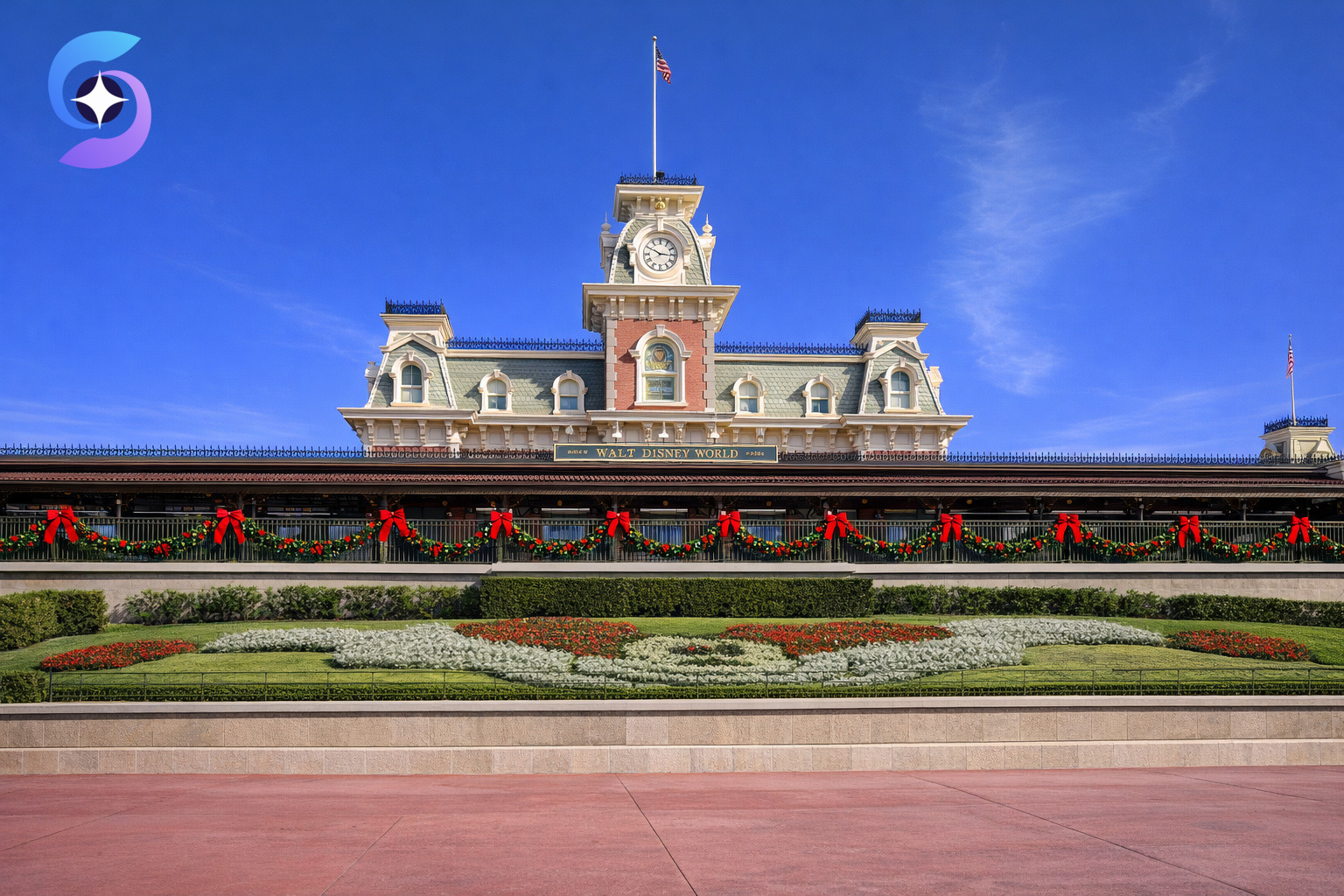 Walt Disney World Railroad — Main Street U.S.A. Station, Magic Kingdom. (Photo: SupaPark)
Treat price and crowds as two separate problems
This is the mistake that costs people the most: assuming cheap weeks are empty weeks. They often aren’t. Holiday weeks are expensive and packed — that’s the easy call. But some mid-tier weeks run moderately priced with brutal crowds, and a few genuinely cheap stretches are also thin.
The sweet spot where both line up is late summer — roughly from mid-August once school calendars kick in, through the first half of September. Rates soften, crowds thin out noticeably, and park hours can still run long. The catch is real, though: that’s peak Florida heat and daily afternoon storms. Plan around it rather than pretending it isn’t there.
- [ ] Build a midday indoor reset into every park day (Carousel of Progress is down for its reimagining, but the Hall of Presidents, Country Bear Jamboree, and the EPCOT pavilion films all work)
- [ ] Pack ponchos, not umbrellas — storms arrive fast and leave fast
- [ ] Use the afternoon for the resort pool, then return to the park for evening hours
- [ ] Refill insulated bottles with free ice water at any quick-service counter
Rough relative-price periods across the year
| Period | Relative room price | Crowd reality | Worth booking? |
|---|---|---|---|
| Early–mid January (after New Year’s) | Lowest | Light, with marathon weekends spiking resorts | Strong value; watch race weekends |
| Late January–early February | Low | Light to moderate | One of the best price-to-crowd trades |
| Presidents’ week | High | Heavy | Skip unless the dates are fixed |
| March–mid April (spring break, Easter) | Highest outside holidays | Heavy and unpredictable | Only if the school calendar forces it |
| Late April–May | Moderate | Moderate, pleasant weather | Solid compromise week |
| June–mid July | High | Heavy | Long hours, but you pay for them twice |
| Mid-August–mid-September | Low | Lightest of the year | Best overall value; plan for heat |
| Late September–October | Moderate | Moderate, climbing on event nights | Great weather, event-night crowds at Magic Kingdom |
| Early November | Low to moderate | Light midweek | Underrated |
| Thanksgiving week | High | Heavy | Avoid |
| Early December | Moderate | Moderate | Holiday decor without holiday pricing |
| Christmas–New Year’s | Peak | Maximum | Highest price, worst crowds |
The Sunday–Thursday gap is the easiest money you’ll save
Disney’s rate calendars and most room discounts lean hard on weeknights. Friday and Saturday carry a premium, and percentage-off room offers frequently come with “most Sunday through Thursday nights” attached. Shift a Friday–Tuesday trip to Sunday–Thursday and you’re often buying the same room for meaningfully less — with thinner park crowds on those weekdays too.
Pro tip: If you’re pricing a Deluxe stay, check which nights have Extended Evening Hours posted before you lock your dates. Those extra late hours for Deluxe and Club-level guests are the closest thing to a quiet park at Walt Disney World, and a two-night shift can be the difference between getting three of them and getting none.
Trading a crowded week for a cheaper, emptier one
Run the swap honestly. Moving a family of four from a spring-break week to a late-August week typically drops the room rate a tier or two and cuts your longest standby waits — that’s value on both sides of the ledger. The trade-off is heat and the school-schedule problem, which is the real reason most people pay the premium.
If your dates genuinely can’t move and you land in a busy week with a short trip, that’s when a Disney After Hours ticket earns its price: you’re buying ride throughput in a nearly empty park, not a full day. It’s a weak buy if your group fades by 9 PM.
And wherever you land, don’t waste a Lightning Lane Multi Pass selection on an attraction with a free single rider line — Test Track at EPCOT is the classic example. Save selections for rides with no shortcut.
Pick dates on data, not on vibes
Before you commit, read the crowd calendar for the weeks you’re comparing side by side, then layer the price tier on top. SupaPark’s crowd forecasts and best-time-to-ride forecaster are on the free tier at supapark.com (also free on iPhone and Android), so you can see what a given week actually looks like before you put money down. And on long summer evenings — when headliners tend to crater late — a wait-drop alert catches that moment for you instead of you watching a screen.
The one thing to remember: choose your week first, resort second. The date you pick moves your total trip cost more than the resort tier does.
On-Site vs Off-Site: An Honest Break-Even Comparison
The honest math: off-site usually wins on dollars per square foot, and on-site usually wins on dollars per ride. Which one matters more depends almost entirely on how long you’re staying and how hard you plan to rope drop.
What each option actually buys you
| Option | Early Theme Park Entry | LL Multi Pass advance window | Transportation | Parking | Space per dollar | Kitchen |
|---|---|---|---|---|---|---|
| Disney-owned (Value → Deluxe) | Yes, automatic | 7 days before arrival, whole trip | Disney buses, Skyliner, monorail, boats | Included for resort guests | Weakest at Value, better in DVC villas | Kitchenette in some suites; full kitchen in villas |
| Swan, Dolphin, Swan Reserve | Yes | 7 days | Disney buses; walk or boat to EPCOT and Hollywood Studios | Paid, resort-style fees | Strong — large rooms, Marriott points earned | No |
| Disney Springs–area hotels | No | 3 days | Hotel shuttle to parks | Usually free | Good, often two queen beds plus sofa | Rarely |
| Good Neighbor hotels | No | 3 days | Hotel shuttle, varies by property | Usually free | Good, and discount-friendly | Sometimes a kitchenette |
| Vacation rental / condo | No | 3 days | Your car, full stop | Free at the house; park fee each day | Best by a mile | Full kitchen, laundry |
The two lines that change your park day are columns two and three. Early Entry is 30 minutes of near-empty park, which is the cheapest ride capacity at Walt Disney World. And the 7-day versus 3-day Lightning Lane Multi Pass gap isn’t about quantity — it’s about getting first crack at the tight windows on the attractions everyone wants. Off-site, you’re picking from what’s left four days later.
Where off-site genuinely wins
- Long stays. The perk gap is fixed per trip; the nightly savings compound. Somewhere around night five or six, a rental’s lower rate plus a real kitchen tends to out-earn Early Entry.
- Groups of six or more. On-site, six people usually means two rooms or a family suite. Off-site, six people means one house with two bathrooms and a washer.
- You’re driving anyway. If you already have a car, free hotel parking replaces a nightly on-site-style parking expense, and you skip the bus-hub shuffle.
- Hard budget ceiling. Breakfast and a few dinners cooked at the rental is the single biggest food-cost lever on a Disney trip. Nothing on-site competes with it.
Where off-site quietly loses
- Short trips (3 nights or fewer). You have maybe five park mornings total. Giving up Early Entry on all of them to save two nights of room rate is a bad trade.
- No car. Shuttle schedules are fixed, infrequent, and unforgiving if a ride goes down and you want to pivot.
- Young kids. Midday naps back at the resort are realistic on a Skyliner or monorail loop. They’re a 90-minute round trip from a rental.
- Rope-drop-heavy plans. If your strategy is “be at the tap stiles before opening every day,” off-site adds friction at exactly the hour you can’t afford it.
Pro tip: An Advance Dining Reservation at any Disney hotel gets you into that resort’s parking lot for free, even as an off-site guest — which is how off-site drivers reach monorail-area resorts without paying day rates. The catch: it requires an ADR you actually hold, and the monorail resorts enforce it. Book something like Kona Café or Capt. Cook’s before you count on the spot.
Two more things worth knowing
- A Good Neighbor stay booked as a room-and-ticket package (commonly 4-night, 4-day) has at times included a dining plan — Quick-Service at Value/Moderate equivalents, Standard at Deluxe. Meal value like that can partially offset losing Early Entry. Offers change constantly, so price it live rather than assuming.
- Shuttle drop-off location matters more than shuttle frequency. A shuttle that lands at the Magic Kingdom entrance instead of the bus hub saves 5–10 minutes each way — meaningful when you’re chasing a specific window.
Run the break-even yourself
- [ ] Total nights × nightly difference (on-site vs off-site)
- [ ] Add daily theme-park parking for off-site
- [ ] Subtract grocery savings if there’s a real kitchen
- [ ] Subtract any on-site parking you’d pay
- [ ] Ask: is the remaining number worth 30 minutes of empty park each morning plus the earlier Lightning Lane window?
If that number clears a few hundred dollars and you’re staying a week, go off-site. If it’s close and your trip is short, stay on property.
Deluxe Villas and DVC Rentals: Kitchens, Laundry, and Point Rentals Explained
Renting Disney Vacation Club points is the single biggest discount on Deluxe-level lodging that most planners never use — and the cost of that discount is flexibility, not quality.
Deluxe Villas are the Disney Vacation Club side of resorts you already know: Bay Lake Tower at the Contemporary, the Beach Club and BoardWalk villas, Boulder Ridge and Copper Creek at Wilderness Lodge, the Grand Floridian villas, Old Key West, and more. Same lobbies, same pools, same Early Theme Park Entry, same Extended Evening Hours eligibility as the Deluxe tier they sit on. The rooms are just built for people who are staying a while.
What each villa size actually buys you
| Unit | Sleeps (typical) | Kitchen | Laundry | Best for |
|---|---|---|---|---|
| Deluxe Studio | 4–5 | Kitchenette: mini-fridge, microwave, coffee maker, sink | Resort laundry room | Short stays, couples, one-kid families |
| One-Bedroom Villa | 4–5 | Full kitchen: full fridge, stove, oven, dishwasher | Washer/dryer in unit | 5+ nights, anyone cooking breakfast |
| Two-Bedroom Villa | 8–9 | Full kitchen | Washer/dryer in unit | Two families splitting one bill |
The jump that matters is studio → one-bedroom. A studio is a nicer hotel room. A one-bedroom is an apartment, and that changes your trip economics.
The kitchen math nobody runs
Breakfast is the meal Disney charges the most for relative to what you get. A family of four eating a counter-service breakfast every morning spends real money on eggs and a pastry. Cereal, yogurt, and fruit from an Instacart delivery to the resort costs a fraction of that, and you eat it in pajamas instead of in a line.
Where the full kitchen pays for itself:
- Breakfast every day. The highest-margin meal for Disney, the easiest one to skip.
- Toddler and picky-eater dinners. Pasta in the villa at 7 PM beats a $30 kids’ meal nobody finishes.
- Leftovers. Disney portions are huge; a real fridge means last night’s dinner is today’s lunch.
- Laundry. In-unit washer/dryer means packing roughly half the clothes for a 7-night trip — smaller bags, fewer checked-bag fees, no hauling quarters to a resort laundry room at 10 PM.
Rough rule: the savings scale with trip length. On three nights, a one-bedroom is a luxury. On seven-plus nights with a family of five, it’s often the cheaper total trip than two Moderate rooms once you net out food.
Pro tip: Book the grocery delivery for the afternoon of your arrival day, not the morning — Bell Services will hold cold items, but you avoid the pile-up if you’re there to meet it, and most people’s arrival day is a half-day anyway. Put breakfast, water, and snacks on the list before anything else; those three categories are where the kitchen earns its keep.
How renting DVC points works
A DVC member books a villa in their own name using their annual points, and you pay them — usually through a broker that escrows the money and holds both sides to a contract. Direct member-to-member rentals happen too, often cheaper, and with correspondingly more risk. The published cash rate for a Deluxe Villa is typically well above what a points rental runs for the same room and dates; that gap is the whole reason people do this.
The tradeoffs are real and you should price them honestly:
| What you give up | What it means in practice |
|---|---|
| Flexible cancellation | Most rentals are non-refundable or heavily restricted. Buy travel insurance. |
| Daily housekeeping | Expect light service on a schedule, not a daily tidy. Villas are not hotel-serviced. |
| Disney room discounts | Promotional room offers don’t apply to a points reservation. |
| Late planning | Popular villas and holiday weeks go 7–11 months out. Late = whatever’s left. |
| Changing your mind | Date and resort changes range from hard to impossible. |
Your pre-rental checklist:
- [ ] Confirm the exact resort, villa size, and view category in writing
- [ ] Read the cancellation and change terms before any money moves
- [ ] Verify the reservation appears in your My Disney Experience account under your name
- [ ] Price travel insurance, since the booking usually isn’t refundable
- [ ] Compare the all-in rental cost against a current cash rate for the same dates
Buying DVC is a different conversation
Renting points is a trip tactic. Buying into DVC is a decades-long financial commitment involving per-point purchase price, annual dues that rise over time, the contract’s expiration year, and resale restrictions that differ from direct purchases. It is not a vacation hack, and it only pencils out if you genuinely travel this way for years. Anyone seriously considering it should run their own numbers and verify current terms and pricing directly with Disney Vacation Club — not from a guide, including this one.
The call: rent points for a one-bedroom when your stay is six nights or longer and your group eats breakfast. Book a studio if you’re staying under five nights — you won’t use the kitchen enough to justify the upcharge.
Perks Worth Counting and Perks That Are Mostly Noise
Only four resort perks reliably change how your park day goes: Early Theme Park Entry, the 7-day Lightning Lane Multi Pass booking window, free standard self-parking, and skipping the bus entirely. Nearly everything else is a nice-to-have you shouldn’t pay a premium to get.
Disney markets the whole bundle as one glossy package. In practice, some perks save you an hour a day and some save you a paragraph in a brochure.
The perks that actually earn their keep
| Perk | What it really does | Who should care |
|---|---|---|
| Early Theme Park Entry (30 min, every Disney resort) | One or two headliners before the park fills — the single biggest free time-saver on property | Everyone. It’s identical at Value and Deluxe |
| 7-day Lightning Lane Multi Pass window | Resort guests pick selections 7 days before arrival vs. 3 off-site; the window opens 7:00 AM ET | Anyone with a tight must-do list |
| Free standard self-parking | Off-site hotels charge it back in resort fees or parking anyway; on-site it’s included | Drivers and rental-car families |
| Charge to the room (MagicBand or app) | Kids can buy a snack without you handing over a card; one bill to audit at the end | Groups splitting costs |
| Free resort-to-resort transport | Dining at a resort you’re not staying at costs nothing to reach | Anyone booking resort restaurants |
| Skyliner / monorail / walk-to access | Removes the bus-hub wait, which is where park-day time quietly disappears | Mid-day return-to-nap families |
| Extended Evening Hours (Deluxe/Club-level, when offered) | Posted nights only — the closest thing to a quiet park you can buy | Deluxe guests choosing dates |
Extended Evening Hours is the one perk worth letting steer your dates. Check which nights are posted before you book, not after — if none of them line up with your trip, you just paid Deluxe money for a lobby.
Situational: run the math before you count it
- Refillable resort mugs. Break-even is roughly a long stay plus a real coffee habit. Two adults drinking two cups a day at the food court for five-plus nights? Usually worth it. A three-night stay where you’re in the parks from open to close? You’ll fill it twice and resent it.
- Disney Dining Plan when bundled. Only compelling when it arrives free with a Room-and-Ticket package — then it’s found value, not a decision. Paying for it outright means pre-committing to eating a specific way.
- Resort recreation and movie nights. Genuinely great for a planned afternoon off. Worthless if your itinerary has you back at 10 PM every night.
- Luggage services. Real value on a split stay or a late checkout day; otherwise a non-event.
Mostly noise
- Themed room upcharges. Kids love them for about 20 minutes. You’re not in the room while awake.
- Preferred-room fees at some resorts. You’re buying 200 fewer steps to the bus stop. Spend it on an extra table-service meal instead.
- Any perk that doesn’t alter your actual day. If you can’t name the hour it saves or the decision it changes, it isn’t a perk — it’s a line item.
Pro tip: Don’t spend a Lightning Lane Multi Pass selection on an attraction with a free single rider line — Test Track at EPCOT is the classic example. Save your selections for the headliners with no shortcut, and let single rider do the work on the ones that have it.
Two related buys people mishandle
- After Hours tickets. Worth it when the trip is short and the must-do list is long — you’re buying ride throughput, not a park day. Weak buy if your group fades by 9 PM.
- The cheap-dates question. Treat the price calendar and the crowd calendar as two separate problems that happen to overlap in late summer. That overlap is real and useful — but it’s also peak Florida heat, so build midday indoor resets into the plan or you’ll burn the savings on a meltdown.
Verify-at-booking checklist
- [ ] Confirm current parking policy and any resort fees for your dates
- [ ] Check which nights of your stay have Extended Evening Hours posted
- [ ] Note your Lightning Lane Multi Pass booking date (7 days before arrival, on-site)
- [ ] Confirm whether a bundled Dining Plan is actually included in your package
- [ ] Decide the mug question based on nights × actual coffee drinkers
Parking policies, perk eligibility, and posted hours all change. Verify at booking rather than trusting a blog — including this one.
One more free lever: on longer summer evenings, headliner waits tend to crater late. A SupaPark wait-drop alert catches that moment for you instead of making you refresh an app all night — live waits, the best-time-to-ride forecaster, and the crowd calendar are on the free tier at supapark.com.
Room Requests, Room Categories, and Getting a Better Room Free
The single highest-ROI move at any Disney resort is a specific, reason-backed room request made at online check-in — not a paid category upgrade. Most of what guests pay extra for (closer building, nicer view) can be partially engineered for free. Most of what actually improves a stay — location relative to the bus stop, a quiet hallway, two beds that fit your family — isn’t a purchasable category at all.
What Online Check-In Requests Can and Can’t Do
Online check-in in My Disney Experience lets you pick from a short list of canned preferences — upper floor, close to transportation, close to a quick-service location, that kind of thing. Useful to know how it actually works:
- Requests are preferences, not guarantees. Nobody at Disney is obligated to honor them, and nothing is confirmed until your room is assigned.
- Room assignment usually happens the morning of arrival, sometimes the night before. Checking in too far out doesn’t buy you priority.
- A canned checkbox is weaker than a human note. The front desk can read free-text requests attached to your reservation, which is why calling to add one is worth five minutes.
- Checking in later in the day sometimes helps — more rooms have been vacated and reassigned. Arriving at 11 a.m. and demanding a specific building rarely works.
How to Write a Request a Front Desk Can Actually Act On
The pattern that works: one request, specific, with a reason. Three competing requests get you none of them.
- [ ] Call the resort reservations line a week or two out and ask for a free-text note on the booking.
- [ ] State one priority, not five: “Close to a bus stop, traveling with a toddler in a stroller.”
- [ ] Add the why — operational reasons (mobility, medical, young kids) get weighted more than aesthetic ones.
- [ ] Re-state it politely at the front desk on arrival, once, and ask if anything is available.
- [ ] If the room is genuinely wrong (far from everything with a non-walking grandparent), ask to be moved — early in the stay, calmly, at a non-peak desk hour.
Pro tip: At the sprawling Value resorts, “preferred room” is really a walking-distance product — but requesting a building near the main hall for a stated mobility or stroller reason achieves most of the same thing for nothing. Pay for preferred when you cannot risk the long walk; request it when you’d merely prefer it.
Which Upcharges Are Worth It
| Category | What you’re buying | Worth-it verdict |
|---|---|---|
| Preferred room (Value/Moderate) | Shorter walk to food court, bus stop, main pool | Often yes at the biggest Value resorts, where “standard” can mean a long haul with a stroller |
| Pool view | A view of a pool you’ll be standing in anyway | Usually skip — you’re in the parks, not the room |
| Savanna view (Animal Kingdom Lodge) | Animals from your balcony, morning and night | Yes — this is the rare view that changes the trip; it’s the resort’s whole reason for existing |
| Theme park view | Fireworks or park sightlines from the room | Situational — good for a split-stay rest day or a nap-schedule family; weak if you’re closing the parks nightly |
| Club level | Lounge food, drinks, a dedicated concierge desk | Only if you’ll use it — breakfast plus evening apps for a group of four can pencil out; Deluxe/Club-level guests also get Extended Evening Hours access |
| Room-only standard | Nothing extra | Default — put the savings toward Lightning Lane or a signature dinner |
Connecting vs. Adjoining for Bigger Families
These are not synonyms, and the distinction matters:
- Connecting = a private interior door between the two rooms. What families with young kids actually want.
- Adjoining = next door, no interior door. You’re walking the hallway in pajamas.
Connecting rooms are a limited inventory and a true request, never a guarantee. If a shared interior space is non-negotiable, a family suite or a villa with a second bedroom is the reliable answer — All-Star Music family suites and the Cars-themed suites at Art of Animation include two bathrooms and a kitchenette and sleep six, which also kills the “everyone showers in sequence” bottleneck.
Accessibility, Roll-In Showers, and Real Constraints
Accessibility needs aren’t preferences — they’re assignments. Book the accessible room type directly (roll-in shower vs. tub with bars are different inventory, so name which you need), then call to confirm it’s coded on the reservation. Do this early; accessible inventory is small and goes first at peak dates.
Realistic Expectations on Upgrades
Free upgrades happen. They are not a strategy. They tend to occur when the resort is overbooked in your category and has nowhere else to put you — not because you mentioned an anniversary. Be pleasant, state one real need, and treat anything extra as a bonus. Guests who arrive expecting a comp are the ones who leave annoyed.
Dining Near Your Hotel: How Resort Choice Changes Your Food Plan
Your hotel doesn’t just decide where you sleep — it decides how many dinners you can reach without a bus, and that quietly sets your food budget for the whole trip.
A table-service dinner at a resort you can walk to costs you 10 minutes of travel. The same meal across property costs you an hour round-trip on Disney transportation, plus the risk of a missed reservation. That difference is worth more than most people’s “resort perk” math.
The cluster strategy: book where you already are
Two clusters put real dining within walking or monorail distance, and they’re the most underrated reason to pay up:
| Cluster | Resorts in walking/monorail reach | What that unlocks |
|---|---|---|
| EPCOT area | BoardWalk, Beach Club, Yacht Club, Swan & Dolphin (walkable to each other and to EPCOT’s International Gateway) | BoardWalk and Beach Club dining plus EPCOT’s World Showcase restaurants — the densest food zone on property |
| Monorail loop | Grand Floridian, Polynesian, Contemporary | Magic Kingdom-area signatures and Polynesian favorites, reachable in minutes without a bus |
| Skyliner line | Riviera, Caribbean Beach, Pop Century, Art of Animation | Two parks plus several resort food courts on one gondola line — the best value-tier dining access |
If dining matters to your group, an EPCOT-area or monorail room buys you optionality, not just a nicer lobby. You can make a 7:30 PM reservation without planning your entire evening around transportation.
Pro tip: An Advance Dining Reservation at any Disney resort gets you free self-parking at that resort for the meal — which is how off-site and Good Neighbor guests dine at the monorail resorts without paying a thing. The monorail hotels enforce their lots strictly, so without the reservation you may simply be turned away. Book the table, then drive.
Quick service is where families actually save
Table service gets the attention; food courts determine your spend. The strongest family food courts are at Art of Animation, Pop Century, Riviera and the Deluxe resorts’ casual counters — big menus, mobile ordering, and seating that works with a stroller. Value and Moderate resorts lean hard on the single food court model, which is fine for breakfast and fine for a late-night slice, less fine as your only dinner option for seven nights.
What actually trims the bill:
- Grab-and-go breakfast in the room. Resorts with in-room fridges plus a market (most Deluxe and all Skyliner resorts) let you do yogurt, pastries, and fruit for a fraction of a sit-down breakfast — and you leave for rope drop 40 minutes earlier.
- Grocery delivery. Every Disney resort accepts third-party grocery delivery to Bell Services. One order of milk, cereal, water and snacks typically beats resort market prices substantially across a week.
- Refillable resort mug. Worth it if you’re on property 4+ nights and actually drink coffee. Not worth it for a two-night stay.
- Free ice water. Any quick-service counter or fountain stand will hand you a cup, no purchase. Carry an insulated bottle per person; bottled water at around $4–$5 a head, five times a day, is a genuinely absurd line item.
The 60-day rule, and what to do when you miss it
Advance Dining Reservations open 60 days before your arrival date at 6:00 AM Eastern in My Disney Experience — not 180 days, and not 7:00 AM. (7:00 AM is the Lightning Lane Multi Pass window; keep the two straight or you’ll be logged into the wrong screen.) On-site guests booking at 60 days out get the whole length of stay in one sitting, which is the real dining perk of staying on property.
Your 60-day morning checklist:
- [ ] Set an alarm for 5:45 AM Eastern; be logged in and verified before 6:00
- [ ] Decide party size and the exact time windows you’ll accept in advance
- [ ] Book the hardest table first, then work down your list
- [ ] Take an imperfect time over nothing — you can modify later
- [ ] Note which restaurants came up empty; those go on a watch
When it’s already sold out
Being shut out at 60 days is not the end. Plans change constantly and tables drop back into inventory at unpredictable hours — the catch is that each one exists for a few minutes before somebody refreshing the app grabs it.
Don’t be the person refreshing forty times a day. SupaPark’s dining Drop Watch handles it: set the restaurant, date and party size, and you get pinged the moment a cancellation hits, then you book it yourself in My Disney Experience. SupaPark never makes the reservation — it just makes sure you’re not checking five minutes too late. Drop Watch alerts by email are on the free tier at supapark.com, along with live waits, the best-time-to-ride forecaster and the crowd calendar; instant push delivery sits on the paid tiers.
The takeaway for this section: pick your resort partly for what you can walk to at dinnertime, order groceries before you arrive, and treat a sold-out restaurant as a watch to set rather than a plan to abandon.
Family Logistics by Resort: Strollers, Naps, Pools, and Kid Height Realities
With little kids, your resort isn’t a hotel — it’s a logistics decision, and the single biggest variable is how fast you can get from a park exit to a dark room. Everything else (pool slides, laundry, bus-stop walks) matters, but the nap return is the one that saves or sinks a day.
Which resorts make a midday nap actually realistic
A nap return only works if the round trip is under roughly 90 minutes door-to-door. Buses with multiple internal stops kill it. Walking and Skyliner save it.
| Resort | Park it’s fast to | Realistic nap return? |
|---|---|---|
| Contemporary / Bay Lake Tower | Magic Kingdom (walk) | Yes — the best in the whole resort system |
| Polynesian, Grand Floridian | Magic Kingdom (monorail/boat/walk) | Yes |
| BoardWalk, Beach Club | EPCOT (walk), Hollywood Studios (boat/walk) | Yes |
| Art of Animation, Pop Century, Riviera, Caribbean Beach | EPCOT, Hollywood Studios (Skyliner) | Usually — Skyliner is fast but weather-sensitive |
| All-Star Resorts | Any (bus only) | Rarely — budget 2+ hours round trip |
| Animal Kingdom Lodge | Animal Kingdom (short bus) | Yes for Animal Kingdom, no for anything else |
The pattern: walk-to-park and Skyliner resorts buy you a second park evening; bus-only value resorts don’t. If you’re staying at the All-Stars with a 3-year-old, plan one long park day with a long sit-down lunch instead of a return trip, or pick an afternoon at the pool and skip the park re-entry entirely.
Stroller handling by transportation mode
This is the detail nobody warns first-timers about:
- Buses: strollers must be folded before boarding. Everything in the basket comes out. Budget an extra five minutes and a free hand.
- Skyliner: you can roll most strollers straight into the cabin unfolded. Enormous with a sleeping kid.
- Monorail and boats: usually roll on unfolded too.
- Walking paths (BoardWalk, Beach Club, Contemporary): zero handling, zero folding, no queue.
Pro tip: If you’re renting a stroller for the week from an outside company, the Skyliner and walking resorts are worth more than the nightly price difference suggests — a double stroller you never have to collapse is the difference between a calm transfer and a meltdown at a bus stop in the rain.
Pools, splash zones, and laundry
- Value resorts punch above their weight here. All-Star Music’s Three Caballeros splash area is a legitimate half-day for toddlers, free, with no ride height rules to argue about.
- Feature pools with slides tend to draw the crowds; the quiet pools tucked between buildings are where you’ll actually get a chair after 2 PM. Ask at check-in which quiet pool is closest to your building.
- Laundry: value and moderate resorts have coin laundry near the feature pool; Deluxe Villas and the Fort Wilderness cabins typically have in-unit washer/dryer. With a potty-training kid or a poncho-soaked day, in-unit laundry is a real amenity, not a luxury line item.
Room requests that actually help
- [ ] Ask for a room near the lobby/bus stop at sprawling resorts (All-Star Sports, Coronado Springs, Caribbean Beach can be a 10-minute internal walk)
- [ ] Ask for ground floor if you’re hauling a stroller up stairs at a value resort
- [ ] Ask away from the feature pool and elevators if you have an early-waking baby
- [ ] Request a connecting or two-bathroom layout (All-Star Music Family Suites and Art of Animation suites include two bathrooms and a kitchenette, sleeping six)
- [ ] Note requests are requests — confirm at check-in, politely, and ask again if the answer is no
Build the park order around who can actually ride
Height rules, not hotel tiers, decide which park goes on which day. A few anchors worth planning around: Rock ‘n’ Roller Coaster Starring The Muppets at Hollywood Studios requires 48 inches, which is a real wall for most 6- and 7-year-olds. If one kid clears a headliner and another doesn’t, Rider Switch lets the waiting adult ride after without re-queuing — but it means one adult is parked with the shorter kid for 30+ minutes, so stack those rides where there’s something nearby for the waiting half to do.
The smart sequencing: put your most height-restricted park (Hollywood Studios) on a day when the short kid is freshest, and put Magic Kingdom — the park with the deepest bench of no-minimum rides — adjacent to your longest travel day from a bus-only resort.
This is exactly what SupaPark’s family tools automate on Gold: you enter each kid’s height, and ride eligibility and Rider Switch planning get folded into the day builder, so you stop re-checking signs at the entrance to every queue. Live waits, the crowd calendar, and the best-time-to-ride forecaster are free at supapark.com.
The one thing to remember: price the nap, not just the room. A moderate on the Skyliner that saves you 40 minutes each way, twice, for a week often beats a value resort by more than it costs.
Frequently Asked Questions
The short version: resort tier buys you location and room size, not a better shot at rides — and the perks that actually change your day are free entry time, transportation, and the early Lightning Lane window.
Does staying at a Disney resort get you better Lightning Lane access?
Yes, but it’s a timing edge, not a quality edge. Disney resort guests can make Lightning Lane Multi Pass selections starting 7 days before arrival (for the whole trip), while off-site guests wait until 3 days out — and both windows open at 7:00 AM Eastern. That extra four days matters most for the Multi Pass attractions that go first, so if you’re booking a Value resort purely for the planning window, that’s a legitimate reason; the rides themselves are identical from every room category.
Is a Deluxe resort worth it just for the perks?
Only if you’ll actually use Extended Evening Hours. Every on-site guest gets Early Theme Park Entry (30 minutes before official open), so that perk is not a Deluxe differentiator — Extended Evening Hours, limited to Deluxe and Club-level guests on select nights, is the one that genuinely changes a park day, because the park is thin and the headliner waits drop.
| What you’re buying | Value | Moderate | Deluxe |
|---|---|---|---|
| Early Theme Park Entry | Yes | Yes | Yes |
| Extended Evening Hours | No | No | Yes (select nights) |
| Walk/boat/monorail to a park | No | Rarely | Often |
| Standard room sleeps | 4 | 4–5 | 5 |
| Self-parking as a resort guest | Included | Included | Included |
Pro tip: Before you pay a Deluxe premium for “less transit,” check which nights Extended Evening Hours is actually posted for your dates. If your trip lands on nights without it, you’re paying Deluxe money for a shorter bus ride — and a Moderate on the Skyliner often beats a Deluxe on a bus.
Do you need a park reservation with your resort stay?
No. Standard date-based theme-park tickets don’t require a separate park reservation, so you don’t have to lock a park to a date before you arrive. That’s genuinely good news for resort planning: you can pick your park the morning of based on crowds and weather instead of committing months out — and SupaPark’s crowd calendar and “which park today?” read are on the free tier at supapark.com if you want the data behind that call.
How do I get a hard-to-book resort restaurant when everything shows as unavailable?
Don’t believe the blank screen. Advance Dining Reservations open 60 days before arrival at 6:00 AM Eastern in My Disney Experience, but tables free up all day long as other guests re-plan — they just get scooped within minutes by whoever happens to be refreshing. That’s the gap SupaPark’s dining Drop Watch closes: set the restaurant, date, and party size, and you get pinged the second a cancellation hits, then you book it yourself in My Disney Experience (SupaPark never books anything).
Worth knowing for resort-hotel dining specifically:
- [ ] Set your watch for your whole trip window, not one date — signature restaurants drop unevenly
- [ ] Watch two time slots, not one; a 5:15 PM and an 8:45 PM are far easier catches than 7:00 PM
- [ ] Check whether the restaurant is walkable from your resort before you book it — a monorail-loop dinner from a Value resort is a 60-plus-minute round trip
- [ ] Keep one flexible night; a drop you can’t take isn’t a win
Does your resort choice affect how early you should rope drop?
It changes how realistic rope drop is, which is the same thing in practice. Early Theme Park Entry starts 30 minutes before open, which means being at the gate well before that — a walkable or monorail/Skyliner resort makes that a 20-minute morning, while a Value resort on a bus route can mean leaving 75–90 minutes ahead. Be honest about whether your group will do that on vacation, because an unused Early Entry perk is the most commonly wasted thing people pay for on-site.
What’s the one resort-booking mistake to avoid?
Paying for proximity to a park you won’t visit most. If your must-do list is Magic Kingdom-heavy, a monorail or boat resort earns its premium; if you’re an EPCOT/Hollywood Studios family, the Skyliner resorts do the same job for Moderate money. Match the location to your actual ride priorities — SupaPark’s free best-time-to-ride forecaster will tell you which waits you can beat for free, which is often the better place to spend the difference.
Going to Disney? Pick your dates
Free with a SupaPark account: the crowd forecast for each of your days, and alerts for the rides and tables you pick. See plans and pricing or get the app.
Tools for your trip
- Crowd calendar: Every park, every day, from our forecast
- Lightning Lane sellout times: When each ride usually sells out
- Dining table odds: How often a full table opens up
- Real wait: Posted wait vs the line you actually stand in