The Ultimate Walt Disney World First-Timer's Master Plan
Published June 14, 2026 · Updated September 9, 2026
At a Glance
- Best for: First-time Walt Disney World visitors who want a confident game plan instead of guesswork
- Time needed: 4–5 park days to see all four parks without burning out; 3 if you’re tight on time
- Typical cost levers: Lightning Lane Multi Pass runs about $15 per person per day; off-peak weeks (mid-January–early March, late April–early May, early September) can shave $50–$100 off base ticket prices
- Best time to go: Off-peak weeks above — lower crowds, lower prices, shorter standby lines
- Book first: Advance Dining Reservations open 60 days out at 6:00 AM ET; Lightning Lane Multi Pass selections open 7 days before arrival (on-site) or 3 days (off-site) at 7:00 AM ET — keep those two windows straight
- Don’t miss: Locking 2–3 high-value Lightning Lanes a day for headliners standby can’t beat (Rise of the Resistance, Seven Dwarfs Mine Train, Guardians: Cosmic Rewind)
- Skip: Tapping a Lightning Lane blindly — on busy days the Lightning Lane line can run longer than standby, so check live waits first
- Heads up: Standard date-based tickets need no separate park reservation, and Park Hopper lets you bounce between parks anytime they’re open
This guide is for first-timers who feel buried by the planning before they’ve even packed — it turns ticket math, dining windows, Lightning Lane timing, and park order into one clear sequence. The single biggest win: knowing exactly what to book and when, so you walk in with a plan instead of paying for mistakes you didn’t know you were making. SupaPark’s live waits, best-time forecaster, and Drop Watch alerts then keep that plan honest in real time, catching the walk-on windows and freed-up reservations you’d otherwise miss.
How Many Days You Actually Need
For a true first-timer doing all four parks without a death march, plan on five to six days on property — four park days plus a buffer. Four parks in four days is doable, but you’ll be hitting rope drop every morning and limping out at fireworks every night, with zero margin for rain, meltdowns, or a ride going down. The buffer day is what turns a trip from “we survived” into “we’d do that again.”
The honest minimum, park by park
Walt Disney World is four full-day parks, and they are not the same size or walking load:
| Park | Realistic time to “see it” | Walking load | First-timer note |
|---|---|---|---|
| Magic Kingdom | 1.5–2 full days | High (sprawling, most rides) | The one park that earns a second day |
| EPCOT | 1–1.5 days | High (World Showcase is a long loop) | Split rides + festival eating across an afternoon |
| Hollywood Studios | 1 day | Moderate | Tight footprint, but headliner-heavy |
| Animal Kingdom | ~1 day (often a half by mid-afternoon) | Moderate | Front-loads well; fades early |
Magic Kingdom is the only park most families genuinely want two cracks at. Animal Kingdom is the one you can pair with an afternoon off.
Matching trip length to what you’ll actually cover
| Trip length | Park days | What you realistically get | Best for |
|---|---|---|---|
| 4 days | 4 | One pass at each park, headliners only, no rest | Repeat visitors, fast-moving adults, tight budgets |
| 5 days | 4 + 1 rest | All four parks at a sane pace, one recovery day | Most first-timers |
| 6 days | 5 + 1 rest | Above + a second Magic Kingdom day | First-timers with young kids |
| 7 days | 5 park + water park + rest | All four parks, a water park, Disney Springs, breathing room | Families wanting the full trip without burnout |
If you only have four days, accept the trade-off out loud: you’re choosing breadth over depth. Skip the second Magic Kingdom day, prioritize one or two headliners per park, and let the rest go.
When to add a rest or water-park day
- [ ] Traveling with kids under 6 → build in a midday return to the resort, every day
- [ ] Trip is 5+ days → schedule one full non-park day mid-trip, not at the end
- [ ] Visiting June–September → a water park (Typhoon Lagoon or Blizzard Beach) doubles as your rest day and beats the heat
- [ ] Anyone in the group has mobility limits → treat every park day as 6–8 miles of walking and pad accordingly
A rest day isn’t lost time — it’s what keeps day five from being the day someone cries on Main Street. Drop it in the middle of the trip; the back half is where fatigue compounds.
Family-aware pacing for young kids
Little ones run on a different clock, and fighting it costs you more time than honoring it.
- Commute back for naps. A 1–2 p.m. resort break resets toddlers and lets you ride the cooler, less crowded evening hours. Magic Kingdom and EPCOT especially reward an evening return.
- Front-load the must-dos. Hit your top one or two rides at rope drop while patience is highest, then coast.
- Don’t schedule a park day after a travel day. Arrival day = Disney Springs, resort pool, and an early dinner, not a 7th hour on your feet.
Pro tip: The smartest “extra” day for a first-timer isn’t a fifth park day — it’s an unscheduled one. Leave one day with no park ticket and no plan. That’s the day you re-ride a favorite, sleep in, or recover from the thing you didn’t see coming. Over-planning every hour is the single most common first-timer mistake.
The one thing to remember
Count your park days, then add at least one. Four parks in four days looks efficient on a spreadsheet and feels brutal by Thursday. Five to six days is the sweet spot where you see everything and still enjoy it — and with young kids, the rest day isn’t optional, it’s the plan working as intended.
Choosing When to Go
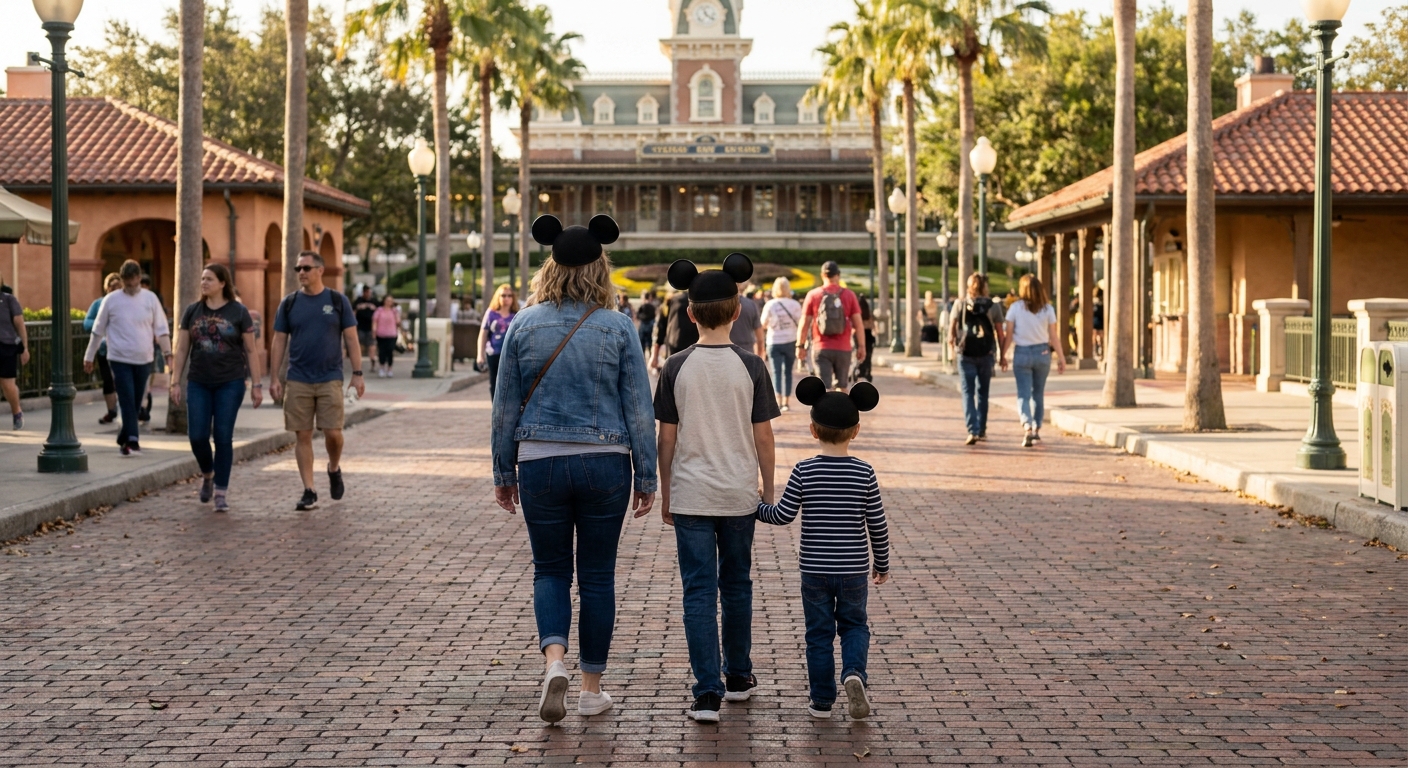
The single biggest lever on your trip isn’t where you stay or what you ride — it’s the week you pick. Crowd level, weather, ticket price, and park hours all swing hard by season, and the smart move is balancing them rather than chasing one.
When crowds are actually lowest
The reliably quieter stretches are mid-January to early March, late April to early May, and early September. These weeks tend to bring shorter lines and lower base ticket prices. The catch: lower crowds usually come with shorter park hours, so a “calm” January day may close hours earlier than a packed July one.
| Window | Crowds | Weather | Trade-off |
|---|---|---|---|
| Mid-Jan – early Mar | Low | Cool, occasionally chilly | Short hours; some refurbs |
| Late Apr – early May | Low–moderate | Warm, pleasant | Fills fast around holidays |
| Early Sep | Low | Hot, humid, afternoon storms | Hurricane season; early closes |
| Spring Break (Mar) | High | Mild and ideal | Surges at entry + Main Street, U.S.A. |
| Summer (Jun–Aug) | High | Hot, daily rain | Long hours offset big crowds |
| Late Nov – Dec | High | Cool, festive | Holiday parties shorten regular hours |
Read the weather, not just the calendar
- Summer (June–August): longest hours, but heat, humidity, and near-daily afternoon thunderstorms. Rope-drop hard, rest midday, return at night.
- Winter (Dec–Feb): the most comfortable touring weather, but pack a layer — January mornings can dip cold.
- September: thin crowds and a real bargain, but it’s peak hurricane/storm season and parks may close early.
School breaks are the spikes to plan around
Spring Break, summer, Thanksgiving week, and the December holidays are the predictable surges. On these days the biggest crush hits the entrance and Main Street, U.S.A. right at opening — don’t linger for photos. Head straight to your first headliner with Early Theme Park Entry (the 30-minute on-site head start that replaced Extra Magic Hours).
Pro tip: A “low crowd” forecast lowers the average wait, not the peak. Headliners like Seven Dwarfs Mine Train and Avatar Flight of Passage (both Lightning Lane Single Pass, à la carte) still build long standby lines by late morning even on quiet days — a low day rewards a plan, it doesn’t replace one.
How to read a crowd forecast
A crowd score is a relative prediction of how busy a park will be versus its own normal — not a promise of empty queues. Use it for two decisions:
- [ ] Pick your dates — aim for the lowest-scoring weeks your schedule allows.
- [ ] Pick your park each day — on multi-day trips, steer toward the park forecast to be calmest that day and save the predicted-busiest park for a slower one.
- [ ] Set your rope-drop target — even on a low day, decide your first ride before you walk in.
- [ ] Confirm park hours — a quiet day with a 7 p.m. close gives you fewer touring hours than a busier day open till midnight.
One note: standard date-based tickets do not require a separate park reservation for the four theme parks — that COVID-era system is gone, so you’re free to lock dates without reserving a park day.
Balancing low crowds against short hours
The genuine tension is this: the quietest weeks often have the shortest operating hours, while the busiest weeks stay open latest. The math usually favors lower crowds — you’ll ride more in a shorter low-crowd day than a long high-crowd one — but build for it: rope-drop every morning and don’t bank on late-night touring during off-peak weeks.
| Priority | Best pick |
|---|---|
| Shortest lines + lowest price | Mid-Jan to early March |
| Best weather, moderate crowds | Late April / early May |
| Longest hours, willing to brave crowds | Summer or holiday weeks |
| Cheapest, weather-tolerant | Early September |
Where SupaPark fits
This is exactly what SupaPark’s crowd forecasts are built for: compare upcoming weeks before you commit, then on each trip day lean on the “which park today?” guidance to send you where the lines will be thinnest and to set a concrete first-ride target. The forecaster is free, so you can scout dates and daily targets before you ever buy a ticket. Find it at supapark.com.
The one thing to remember: pick the lowest-crowd week your calendar allows, accept the shorter hours that come with it, rope-drop every morning, and let the forecast pick your park each day — a quiet day plus a plan beats a busy day every time.
Tickets Decoded: Base, Park Hopper, and Add-Ons
The smart first-timer move: buy a base ticket for the number of days you’ll actually be in parks, and only add Park Hopper if your plan genuinely needs two parks in one day. Everything else is a margin upsell. Here’s how the pieces fit.
Date-based tickets, in plain English
Disney World tickets are priced by the calendar. You pick your arrival date and length of stay, and the price reflects how busy those specific days are projected to be. Two truths most first-timers don’t realize:
- The per-day price drops the longer you stay. Day 1 carries the most cost; day 5 adds far less. A 5-day ticket is nowhere near 5× a 1-day ticket.
- Your dates matter as much as your length. Off-peak weeks — roughly mid-January to early March, late April to early May, and early September — can shave $50–$100 off the base price versus holiday and summer peaks.
Pro tip: Active U.S. military members and spouses should always price the Military Salute tickets and the standard date-based ticket, then take the cheaper one — the discount isn’t automatically the better deal on every date.
| Ticket layer | What it adds | Best for |
|---|---|---|
| Base ticket | One park per day | Most first-timers; you’ll need a full day per park anyway |
| Park Hopper | Visit more than one park the same day | Split-stay families, repeat visitors, nighttime hoppers |
| Park Hopper Plus | Hopper + water parks & minor venues | Trips of 4+ days that include a Typhoon Lagoon / Blizzard Beach day |
Do you actually need Park Hopper?
Here’s the honest take: most first-timers don’t, on most days. Each of the four parks comfortably fills a full day. If you’re racing between parks, you’re spending your time on buses instead of rides.
The old rule that you could only hop after 2:00 PM is gone — you can move between parks anytime they’re open, as long as the destination park has capacity. That makes Hopper genuinely useful in a few cases:
- You want EPCOT’s World Showcase at night after a morning at Magic Kingdom.
- You’re on a short trip and want a taste of two parks rather than missing one.
- You’ve ridden your headliners and want to chase dinner or fireworks elsewhere.
If none of those describe your trip, put the Hopper money toward Lightning Lane or a nice meal instead.
Park Hopper Plus and the add-ons
Park Hopper Plus layers water parks and minor venues on top. It only pays off if you’ll realistically spend a half-day at Typhoon Lagoon or Blizzard Beach — a big ask on a packed first-timer schedule with kids who melt down by 3 PM. If a water day isn’t already on the board, skip it.
The reservation myth — read this twice
Standard date-based tickets do NOT require a separate park-day reservation. The COVID-era system where you had to “reserve your park” before entry is gone for standard tickets. Show up, tap in, walk in. Don’t let outdated checklists talk you into a step that no longer exists.
The two morning windows you do need to keep straight:
- [ ] 6:00 AM ET, 60 days out — Advance Dining Reservations (ADRs) open in My Disney Experience.
- [ ] 7:00 AM ET — Lightning Lane Multi Pass selection window opens (7 days before arrival for Disney-resort guests, 3 days for off-site).
Budget the line-skipping too
Tickets aren’t your only park-access cost. Lightning Lane Multi Pass runs around $15 per person per day and varies by date — fold it into your daily spend, not your ticket math. Plan for 2–3 high-value selections a day (think Seven Dwarfs Mine Train or Guardians of the Galaxy: Cosmic Rewind — note those two are Single Pass, bought à la carte). Multi Pass is also a quiet hack for character meet-and-greets, letting you skip a long standby line for a quick photo.
This is exactly where SupaPark’s cost-forecast tool earns its keep: plug in your ticket type, party size, and planned Lightning Lane days, and it projects your daily spend — so you can see whether adding Park Hopper or an extra Lightning Lane day blows your budget before you commit.
The one thing to remember: buy the base days you’ll use, add Hopper only for a real two-park plan, and ignore anyone who tells you to “reserve your park” — that step is history.
Where to Stay: On-Site vs Off-Site
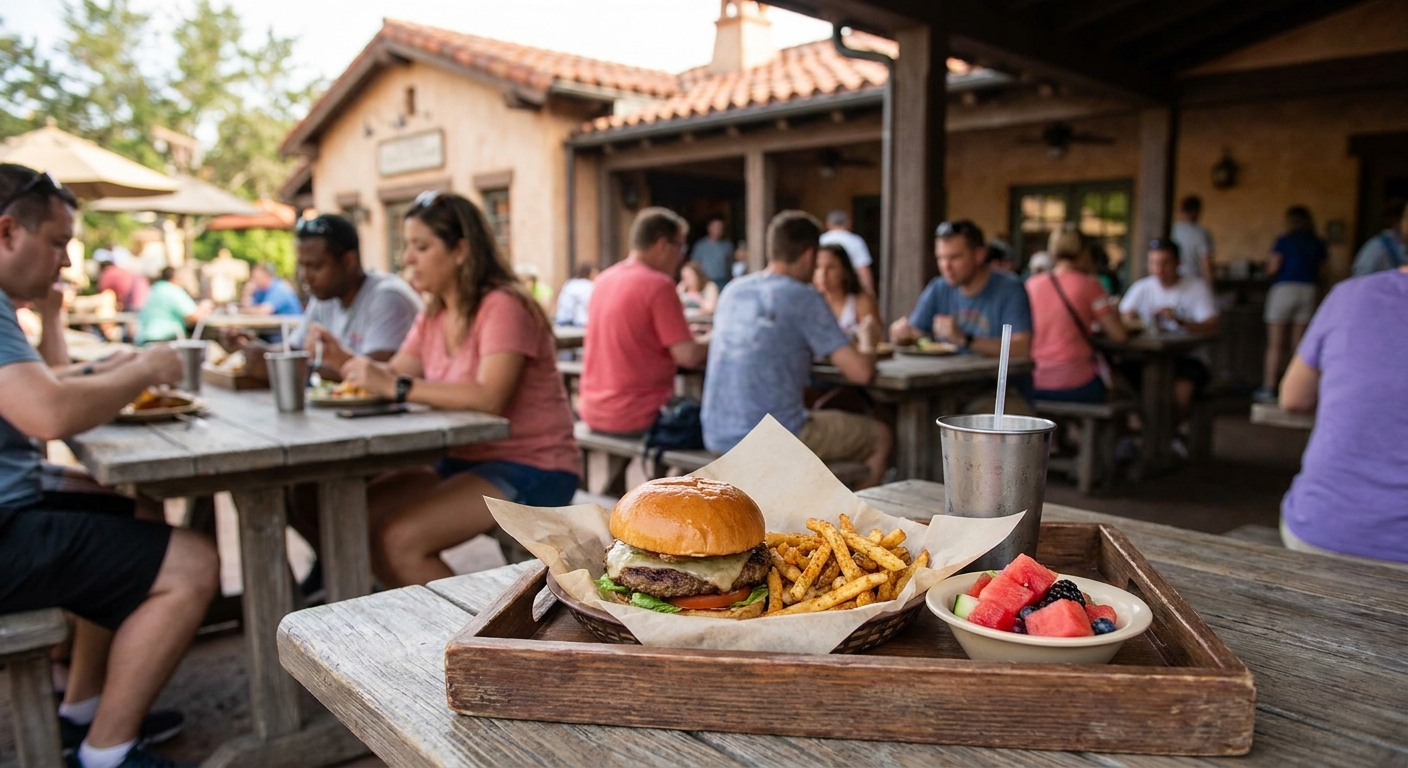
The short version: stay on-site if your trip is heavy on park days and early starts; go off-site if you’re trip is longer, budget-driven, or you want a kitchen and space. Both can work — the right call depends on how many mornings you actually plan to be at rope drop.
The single biggest on-site advantage isn’t the theming, it’s the 7-day Lightning Lane Multi Pass advance window. Disney resort guests can make their Multi Pass selections starting 7 days before arrival (for the whole trip); off-site guests get 3 days. On a packed first-timer itinerary, that head start is the difference between locking your top attractions early and scrambling for leftovers.
What on-site actually gets you
- Early Theme Park Entry — 30 minutes before official open, every day, for all on-site guests across every tier. This is the perk that pays for itself: walk onto a headliner before standby builds.
- Extended Evening Hours — extra nighttime park time, but only for Deluxe and Deluxe Villa (and Club-level) guests. Value and Moderate don’t get this.
- Free Disney transportation — buses, monorail, Skyliner, boats. No rental car, no daily parking fee.
- Free standard self-parking if you do drive.
The four Disney tiers, fast
- Value (Pop Century, Art of Animation, All-Star): cheapest on-site door, full transportation + Early Entry, smaller rooms, bus-only.
- Moderate (Caribbean Beach, Port Orleans, Coronado): more space, some boat/Skyliner access, mid-price.
- Deluxe (Contemporary, Grand Floridian, Polynesian): walk/monorail/boat to parks, plus Extended Evening Hours.
- Deluxe Villa: Deluxe perks with a kitchen/laundry — the on-site pick for longer family stays.
On-site vs off-site, side by side
| Category | Disney Value | Disney Moderate | Disney Deluxe | Off-Site (e.g. DoubleTree Suites) |
|---|---|---|---|---|
| Avg. nightly rate (off-peak) | ~$170 | ~$235 | ~$450 | ~$150 |
| Free standard parking | ✅ | ✅ | ✅ | ❌ ($25–$30/day at parks) |
| Free Disney transportation | ✅ | ✅ | ✅ | ❌ (shuttle/rideshare) |
| Early Theme Park Entry (30 min) | ✅ | ✅ | ✅ | ✅ only if ticket is resort-linked |
| Extended Evening Hours | ❌ | ❌ | ✅ | ❌ |
| Typical commute to parks | 20–30 min bus | 15–25 min bus/boat | 5–15 min walk/bus | 10–20 min shuttle + rideshare |
Rates are approximate for off-peak dates and swing higher over holidays and busy weeks — always price your exact dates.
Pro tip: Early Theme Park Entry is tied to your ticket, not your hotel. An off-site guest holding a Disney Resort hotel-linked ticket can still use the 30-minute early window — so the early-entry perk alone isn’t a reason to book on-site if your ticket already qualifies.
Why off-site still wins for some families
- Lower nightly cost and far more square footage — suites and vacation rentals mean separate bedrooms and a kitchen for breakfasts and snacks, which quietly saves real money over a week.
- Free hotel parking is standard; just budget the $25–$30 daily park parking fee if you drive yourself.
- Grab-and-go breakfast options and nearby grocery runs keep food costs down before you ever hit a park.
The transportation reality off-site
With Disney’s Magical Express airport bus discontinued, off-site guests rely on Mears Connect, Sunshine Flyer, or rideshare. For park days, Uber and Lyft drop you at the front of each park (the ride-side of the parking lot) or at the Ticket & Transportation Center — often faster than waiting on a hotel shuttle schedule.
- [ ] Confirm whether your ticket qualifies for Early Theme Park Entry (resort-linked or stay-based)
- [ ] Price your exact dates on-site vs off-site — including parking and rideshare
- [ ] Pre-book airport transport (Mears Connect / Sunshine Flyer) if staying off-site
- [ ] If on-site Deluxe, note which nights have Extended Evening Hours and plan a late park around one
The takeaway
If you’ll be at rope drop most mornings and want the longest possible runway to book Lightning Lane Multi Pass, on-site earns its premium — and Deluxe adds those quiet Extended Evening Hours. If you’re staying a week, traveling with a bigger crew, or watching the budget, an off-site suite with a kitchen often delivers the same park days for less. Either way, the higher on-site cost is best justified by time saved, not magic — so let your number of planned park mornings make the call.
The Master Booking Timeline
The whole trip hinges on two separate alarm clocks: 60 days out for dining, 7 days out for Lightning Lane. Mix them up and you lose your hardest-to-get tables and rides. Everything else is just linking accounts and showing up early.
Here’s the countdown, in the order it actually matters.
The two clocks you cannot confuse
| What | When it opens | Time (ET) | Where |
|---|---|---|---|
| Advance Dining Reservations (ADRs) | 60 days before arrival | 6:00 AM | My Disney Experience |
| Lightning Lane Multi Pass selections (on-site) | 7 days before arrival | 7:00 AM | My Disney Experience |
| Lightning Lane Multi Pass selections (off-site) | 3 days before arrival | 7:00 AM | My Disney Experience |
The dining clock is way earlier and an hour earlier in the morning. That’s the one first-timers blow. If you want Space 220, Cinderella’s Royal Table, or any character meal, you’re setting a 6:00 AM alarm 60 days before you land — not the day before.
Before you do anything: the setup checklist
Do this the moment your trip is confirmed. None of it is time-sensitive, but ADRs won’t work without it.
- [ ] Buy your date-based tickets (note: no separate park reservation needed for standard tickets)
- [ ] Create everyone’s My Disney Experience profile and link them into one Family & Friends group
- [ ] Link your tickets and resort reservation to every profile
- [ ] Set up Mobile Order and a payment method so day-of moves are friction-free
Pro tip: Link every member of your party to each other before day 60. ADRs and Lightning Lane both pull from your linked group — if your teenager’s ticket isn’t connected to your account at 6:00 AM, you can’t book the table for them, and parties of three-plus fill the marquee restaurants within the first hour.
60 days out — lock the tables
Dining is the scarcest thing at Disney World, scarcer than any ride. At 6:00 AM ET on your 60-day mark:
- Book the heavy hitters first — Space 220, character meals, anything with princesses.
- Keep it to about two table-service meals a day. Each sit-down eats 30–45 minutes you could spend riding.
- Striking out? Check resort-hotel restaurants and Disney Springs in the same app — they’re overlooked and open up more often.
Then let SupaPark’s Drop Watch do the grinding for you. Cancellations free up constantly, and the second a table you want drops, SupaPark pings you so you can grab it in My Disney Experience. That’s how first-timers land “impossible” reservations weeks after they sold out.
7 days out (or 3 if off-site) — set your Lightning Lane
Buy Lightning Lane Multi Pass before you travel — it’s around $15–35 per person per day depending on the date, and buying ahead guarantees early-morning slots for the headliners instead of a day-of scramble.
At 7:00 AM ET on your eligible day:
- Make your Multi Pass selections in advance for the whole trip, then refill one at a time as you redeem each one during the day.
- The à-la-carte Lightning Lane Single Pass rides also open at 7:00 AM — book these separately for the top-tier attractions: TRON Lightcycle / Run and Seven Dwarfs Mine Train (Magic Kingdom), Guardians of the Galaxy: Cosmic Rewind (EPCOT), Star Wars: Rise of the Resistance (Hollywood Studios), and Avatar Flight of Passage (Animal Kingdom).
- Use Multi Pass on character meet-and-greets too — Mickey at Magic Kingdom, the princesses at Hollywood Studios — to skip standby lines that can run over an hour.
Prioritize just two or three high-value Multi Pass slots a day. Spend them on rides standby can’t beat, and don’t bother “saving” a Lightning Lane for something that’s a walk-on by late afternoon.
Day of — the moves that actually save time
- Arrive for Early Theme Park Entry (30 minutes before official open for on-site guests) and head straight to your first ride.
- Lightning Lane isn’t always faster. On busy days the Lightning Lane return can balloon while standby quietly drops. Check SupaPark’s live wait data before you tap — sometimes the standby line is the smarter ride.
- Let the alerts find you: SupaPark flags when a ride craters to walk-on, when one goes down, and when a refill opens up, so you’re always making the next-best move without staring at your phone.
The one thing to remember: 60 days for food, 7 days for rides — same app, two alarms. Get those two mornings right and the rest of your trip is just showing up.
Lightning Lane Explained for First-Timers
Lightning Lane is Disney’s paid skip-the-line system — and the move is to use it surgically on 2–3 rides, not on everything. Done right, it turns a 70-minute standby into a 10-minute walk-on. Done wrong, you pay for a line that’s barely shorter than the free one.
There are two flavors, and first-timers constantly confuse them.
Multi Pass vs. Single Pass
| Lightning Lane Multi Pass | Lightning Lane Single Pass | |
|---|---|---|
| What it covers | A bundle of attractions across a park | One premium headliner, à la carte |
| How you pay | One per-day price, per person | Per ride, per person |
| How you book | Pick a starting set in advance, then refill one at a time all day | Buy the single ride you want |
| Best for | Mid-tier and high-demand rides + character meets | The marquee attractions that always have brutal standby |
| Confirmed rides | Everything not on the Single Pass list | TRON Lightcycle / Run, Guardians of the Galaxy: Cosmic Rewind, Star Wars: Rise of the Resistance — check current tiers for other headliners |
Single Pass rotates which top-tier rides it covers, so always confirm the current list in My Disney Experience before you assume a ride is included.
How Multi Pass actually works (it’s not the old 7 AM scramble)
Forget anything you heard about waking up at 7 AM to frantically grab passes — that was the retired Lightning Lane Multi Pass system. Here’s the real flow:
- [ ] Buy Multi Pass for the day (separate from your ticket)
- [ ] Pick your starting attractions in advance — Disney-resort guests up to 7 days before arrival, off-site guests 3 days before; the window opens 7:00 AM Eastern
- [ ] Once you tap into a ride (or its return window passes), add your next selection — one at a time, all day long, in the app
- [ ] Keep refilling as you go to stack value across the day
Because you book ahead, you lock in early-day windows for the rides that matter most instead of gambling the morning away. Note: that 7:00 AM Multi Pass window is not the same as the 6:00 AM Eastern dining-reservation window — keep your alarms straight.
When Lightning Lane beats standby — and when it doesn’t
The honest answer: not always. Lightning Lane is a virtual queue, and on packed days it can balloon. Space Mountain’s Lightning Lane can climb toward an hour when crowds surge — at which point you’re paying to wait.
- Worth it: the always-busy rides where standby routinely runs 60+ minutes — Seven Dwarfs Mine Train, Slinky Dog Dash, Rise of the Resistance for the Star Wars crowd.
- Skip it: anytime the live standby number is lower than the Lightning Lane return wait. It happens more than people expect, especially right at rope drop or late at night.
- Sleeper use: character meet-and-greets. A Multi Pass slot for Mickey at Magic Kingdom or the princesses at Hollywood Studios skips lines that can run an hour-plus — often better value than burning it on a ride.
Pro tip: Lightning Lane’s biggest hidden cost isn’t dollars — it’s tapping a “skip-the-line” pass into a line that’s barely shorter than standby. Always sanity-check the live wait before you commit. SupaPark watches both queues for you and flags the moment the Lightning Lane wait creeps above standby, so you ride the free line instead of paying for a slower one. It also pings you the instant a ride goes walk-on or goes down — and if a hard-to-get lunch reservation suddenly drops, Drop Watch catches it, letting you shift your ride block earlier.
The first-timer game plan
- [ ] Decide before your trip whether Multi Pass is worth it for your park days (skip it on low-crowd days)
- [ ] Book your advance selections the moment your window opens at 7:00 AM Eastern
- [ ] Reserve Single Pass separately for the one or two headliners you can’t miss
- [ ] Cap yourself at 2–3 high-value selections and refill the rest reactively
- [ ] Check live waits before every tap — never ride blind
The one thing to remember: Lightning Lane is a scalpel, not a sledgehammer. Aim it at the handful of rides where standby genuinely hurts, verify the live numbers before you commit, and let the rest of the park come to you for free.
Magic Kingdom: First-Timer Game Plan
Rope-drop the headliners, book your Lightning Lane Single Passes at 7:00 AM, and save the parade for a strategic break — Magic Kingdom rewards an early start more than any other park.
Magic Kingdom packs the most rides and the densest crowds, so the difference between a planned day and a wandering one is hours of waiting. Here’s the move.
Must-do attractions
- Seven Dwarfs Mine Train — the park’s hardest standby to beat. It’s a Lightning Lane Single Pass (bought à la carte), not Multi Pass. 38" height min.
- TRON Lightcycle / Run — also a Lightning Lane Single Pass. 48" height min, and it’s a forward-leaning launch coaster.
- Space Mountain, Big Thunder Mountain Railroad, Peter Pan’s Flight, Jungle Cruise, Haunted Mansion, and Pirates of the Caribbean — all Lightning Lane Multi Pass.
- Tomorrowland Transit Authority PeopleMover — a 10-minute, almost-never-a-line breather most first-timers skip. Great midday reset for tired feet.
Lightning Lane: Single Pass vs Multi Pass
Two separate systems, two separate strategies:
| What it covers | When to book | First-timer move | |
|---|---|---|---|
| Single Pass | TRON, Seven Dwarfs Mine Train (à la carte) | 7:00 AM ET (resort guests, on arrival-eligible day) | Grab the one you care most about the second the window opens |
| Multi Pass | Everything else (Space, Big Thunder, Peter Pan, etc.) | In advance — resort guests up to 7 days out, off-site 3 days out | Pre-book your selections, then refill one at a time through the day |
Buy Multi Pass before you travel and lock your first selections during the advance window — that’s what removes the day-of scramble. Plan on 2–3 high-value Multi Pass slots; use them on rides where standby balloons fast, like Peter Pan’s Flight and Jungle Cruise.
Pro tip: Lightning Lane isn’t always faster. On a busy morning a Multi Pass return time can sit behind a standby line that’s actually shorter — check SupaPark’s live wait data before you tap. SupaPark flags when the lane is longer than standby so you don’t burn a slot.
You can also point Multi Pass at popular character meet-and-greets (Mickey at Town Square Theater) to skip lines that otherwise run an hour-plus — a smart trade when you’ve got little ones and limited patience.
Rope-drop priorities & touring flow
First-timers win the day in the first 90 minutes. A clean sequence:
- [ ] Tap your 7:00 AM Single Pass (TRON or Seven Dwarfs Mine Train) before you leave the hotel
- [ ] At opening, walk straight to your top standby headliner — Seven Dwarfs Mine Train or Peter Pan’s Flight if you didn’t get the Single Pass
- [ ] Knock out Space Mountain and Big Thunder Mountain while Tomorrowland and Frontierland are still light
- [ ] Mid-morning: redeem your first Multi Pass, then refill the next one
- [ ] Midday heat/crowd peak (roughly noon–4 PM): indoor and low-wait rides — Haunted Mansion, Pirates, Carousel of Progress, PeopleMover
- [ ] Late afternoon/evening: re-ride favorites as standby drops after dinner
Best-time pattern: the hour right after opening and the last hour before close are consistently the shortest waits across the park. SupaPark’s best-time forecaster shows each ride’s low-wait windows so you ride at the dip, not the peak.
Height considerations
Plan around your shortest rider so nobody’s surprised at the gate:
| Ride | Height min |
|---|---|
| Seven Dwarfs Mine Train | 38" |
| Big Thunder Mountain | 40" |
| Space Mountain | 44" |
| TRON Lightcycle / Run | 48" |
Under 38"? There’s still plenty — it’s a Small World, Peter Pan, the Magic Carpets, and most of Fantasyland. Use Rider Switch so adults can take turns on the big coasters without re-waiting.
Parades & nighttime show
- The afternoon parade and the nighttime fireworks both draw huge crowds — and waits on rides drop sharply while everyone stakes out a curb. That’s your window to ride a headliner with a fraction of the line.
- If you want a prime fireworks spot on Main Street U.S.A., claim it 45–60 minutes early; otherwise watch from the Hub grass or the bridge to Tomorrowland and walk onto a ride during the show instead.
- The Fantasyland princess cavalcade rolls by free and frequently — an easy character fix without a meet-and-greet line.
The one thing to remember: rope-drop hard, spend Single Pass on your single must-ride, refill Multi Pass through the day, and treat the parade and fireworks as ride windows — not just shows.
EPCOT: First-Timer Game Plan
EPCOT rewards a split day: hit the thrill rides at rope drop, then slow-walk World Showcase in the afternoon. It’s two parks in one — a front half of headliner attractions and a back half that’s a walkable food-and-culture loop. Plan it like that and you’ll never feel the sprawl.
Layout & festivals set the pace
EPCOT is almost always running a festival (Flower & Garden in spring, Food & Wine in fall, Festival of the Holidays in winter, Festival of the Arts in winter), and the festival lives in World Showcase as dozens of food booths. That changes your strategy: World Showcase becomes the meal, not just the scenery. Knock out the rides early so you can graze later without a clock running.
Headliners and how to book them
Cosmic Rewind is the one that needs real planning — it’s the park’s most in-demand ride.
| Ride | Lightning Lane | First-timer move |
|---|---|---|
| Guardians of the Galaxy: Cosmic Rewind | Single Pass (à la carte) | Buy it if budget allows, or grab the virtual queue when it drops — sells out fast |
| Test Track | Multi Pass | Rope drop or wait for a late-evening lull |
| Remy’s Ratatouille Adventure | Multi Pass | First Multi Pass selection — books up early |
| Frozen Ever After | Multi Pass | Ride before 10 AM or after dinner |
Pro tip: Cosmic Rewind is Single Pass, so it’s a separate purchase from your Multi Pass for Test Track, Remy’s, and Frozen. Budget for it on its own — don’t assume one Lightning Lane purchase covers everything.
Best-time-to-ride windows
The standby lines you can actually beat without paying:
- Test Track — first 30 minutes after open, or the last hour before close. It also goes down for weather often, so a live status alert saves you a wasted walk.
- Frozen Ever After — at rope drop or during the evening fireworks slot.
- Remy’s — early morning before the World Showcase crowds drift back to France.
- Soarin’ / Mission: SPACE — these stay reasonable midday, so save them for when the headliners are slammed.
SupaPark’s best-time forecaster flags these walk-on windows per ride, per day, and pings you the moment one craters — handy when Test Track flips from a 60-minute line to a 15-minute one after a refurb cycle.
World Showcase pacing for families
World Showcase is a 1.2-mile loop around a lagoon — beautiful, but a lot of walking for short legs in afternoon heat.
- [ ] Start at one end (Mexico or Canada) and go one direction so you don’t backtrack
- [ ] Build in air-conditioned breaks: the Gran Fiesta Tour boat ride in Mexico and Frozen Ever After in Norway are both indoor and stroller-parkable
- [ ] Catch Turtle Talk with Crush or the American Adventure show to rest tired kids
- [ ] Plan to be near the lagoon for the nighttime show — stake a spot ~30 minutes early on busy nights
Kids burn out around hour four, so front-load anything they care about and treat the back of the loop as optional.
Festival snacks without overspending
Festival booths are the best food value in the park — small plates, big variety — but the per-item math adds up fast. The trap is buying drinks and “meh” items on impulse.
| Strategy | Why it works |
|---|---|
| Split plates across your group | Booth portions are tasting-size; one plate often feeds two |
| Pre-load a Disney gift card | Acts as a hard daily snack budget so you stop when it’s empty |
| Skip the bottled/specialty drinks | Refillable water bottle saves several dollars per person, per day |
| Pick 4–6 booths, not all of them | Trying everything is how a “cheap snack day” becomes a table-service price |
Pro tip: Be honest about duds. Festival menus rotate, and not every item lands — some snacks are bland for the price. Read the booth before you commit rather than ordering one of everything; a few standout plates beat a tray of forgettable ones.
The one thing to remember
Treat EPCOT as two trips in one day: rides first thing (Cosmic Rewind via Single Pass or virtual queue, Test Track and Remy’s at rope drop), then a slow festival graze around World Showcase in the afternoon. Let SupaPark watch ride status and walk-on windows so you’re eating when the lines are long and riding when they’re short.
Hollywood Studios: First-Timer Game Plan
Hollywood Studios is the most reservation-intensive park you’ll do — it punishes guests who improvise and rewards anyone with a plan locked in before they leave home. More headliners pack into this park than your morning can naturally absorb, so the order you tackle them matters more here than anywhere else at Disney World.
The five rides that define your day
| Attraction | Lightning Lane type | Height | First-timer note |
|---|---|---|---|
| Star Wars: Rise of the Resistance | Single Pass (à la carte) | 40" | The park’s marquee experience; books out fast |
| Slinky Dog Dash | Multi Pass | 38" | Sells out earliest of any Multi Pass selection here |
| Mickey & Minnie’s Runaway Railway | Multi Pass | Any | No height limit — great family anchor |
| Tower of Terror | Multi Pass | 40" | Big drop; pair with Rider Switch for short kids |
| Rock ‘n’ Roller Coaster | Multi Pass | 48" | Tallest requirement in the park; launches hard |
Pro tip: Slinky Dog Dash tends to be the first Multi Pass selection to vanish each morning — book it the moment your advance window opens, before you touch anything else. Waiting even an hour can erase your good return times entirely.
Get your passes set before you arrive
The scramble myth dies here. Lightning Lane Multi Pass is purchased per day, and you pick your attractions in advance — Disney resort guests up to 7 days before arrival, off-site guests 3 days out, with the window opening at 7:00 AM Eastern. Buy it before you travel so you can grab early return times the instant your window opens, then refill one selection at a time as you redeem through the day.
Rise of the Resistance is Single Pass, bought separately. Resort guests can buy it at 7:00 AM too — snag it before the general pool widens if it’s a must-do.
Rope-drop + Lightning Lane sequence
- [ ] Be at the gate for Early Theme Park Entry (on-site guests, 30 min early)
- [ ] Walk straight to Slinky Dog Dash or Rise of the Resistance standby first — pre-crowd, these are at their shortest
- [ ] Hold your Multi Pass returns for the rides that build the longest mid-day lines (Tower of Terror, Rock ‘n’ Roller Coaster)
- [ ] Use Runaway Railway as your flexible filler — no height limit, indoors, comfortable in any weather
- [ ] Refill the next Multi Pass selection the second your previous one is redeemed
Lightning Lane isn’t always the win. On busy days a Lightning Lane return can balloon while standby quietly drops to walk-on. Check SupaPark’s live wait data before you tap — when the lane is longer than standby, the smart move is to skip the lane and just ride. SupaPark flags that gap for you in real time so you’re not paying time for nothing.
Heights, Rider Switch, and splitting up
With a 48" minimum, Rock ‘n’ Roller Coaster is the gatekeeper — measure little ones honestly before you queue. For families straddling the 40" line on Tower of Terror, use Rider Switch: one adult waits with the child while the rest ride, then they swap without re-queuing. It keeps thrill-seekers moving without stranding anyone.
Don’t sleep on the shows
Hollywood Studios runs some of the best stage and street entertainment at Disney World, and shows are the natural cooldown between coasters.
- Build show start times into your plan and arrive 20–30 minutes early for prime headliner showtimes
- Slot a show right after a back-to-back coaster block to rest legs without losing momentum
- Character meet-ups (the Disney Princesses, for example) can carry hour-plus standby lines — when a Multi Pass slot exists for one, it buys back serious time versus waiting
The one thing to remember
Hollywood Studios is won or lost before you walk in. Lock Multi Pass and any Single Pass the moment your advance window opens, book Slinky Dog Dash first, rope-drop one headliner standby, and let SupaPark tell you when the lane is slower than the line — that single check is the difference between a smooth day and an afternoon stuck waiting.
Animal Kingdom: First-Timer Game Plan
The move: treat Animal Kingdom as a focused half-day, hit it hard at rope drop, and be out before the afternoon heat flattens you. It’s Disney World’s most beautiful park and its most underestimated — but for first-timers, the ride lineup is short enough that a smart morning covers nearly everything that matters.
Knock out Pandora first — and know your Lightning Lane tiers
The two Pandora attractions are why most people come, and they draw the longest lines in the park. Get there for Early Theme Park Entry (on-site guests, 30 minutes before open) and walk straight to Pandora.
- Avatar Flight of Passage is a Lightning Lane Single Pass ride — bought à la carte, not part of Multi Pass. It’s the headliner, standby balloons past 60–90 minutes by mid-morning, and a Single Pass is often worth it here if you hate long waits.
- Na’vi River Journey is a gentler boat ride included in Lightning Lane Multi Pass. Lovely, slow, family-friendly — but a Single Pass-level wait it is not.
Pro tip: Lightning Lane isn’t automatically faster. Check SupaPark’s real-time wait data before you tap your pass — at rope drop or late in the day, the Flight of Passage standby line occasionally drops below what the Lightning Lane saves you, and you keep your selection for later.
| Attraction | Lightning Lane tier | First-timer verdict |
|---|---|---|
| Avatar Flight of Passage | Single Pass (à la carte) | Don’t miss — buy the pass or ride at open |
| Na’vi River Journey | Multi Pass | Nice, not essential — short standby early |
| Expedition Everest | Multi Pass | Ride second, or use the single-rider line |
Expedition Everest and the single-rider shortcut
Everest is the park’s only thrill coaster — a backwards-launching Yeti chase that’s a genuine highlight. Ride it right after Pandora before the line builds.
- It has a single-rider line that’s frequently the fastest way on. If your group can split up, send riders through it and you’ll often beat both standby and Multi Pass.
- Save your Multi Pass selections for whatever has the longest standby when you arrive — let the live data decide, not a guess made at home.
Kilimanjaro Safaris: timing is everything
Go early. Animals are most active in the cool morning hours, and by midday many bed down in the shade where you can’t see them. This is a ride where the experience genuinely changes by the hour.
- Best window: first 1–2 hours after open (or close to dusk on longer days).
- It’s a real safari vehicle over bumpy terrain, ~18–20 minutes — a great mid-morning anchor once Pandora and Everest are done.
- Skip it at 1 p.m. expecting lions; you’ll mostly get naps.
When the park gets quiet — and why you should leave
Animal Kingdom typically thins out in the early-to-mid afternoon as day-guests move on and the Florida heat peaks. That’s your signal.
- The park has fewer rides than the others, so a strong morning genuinely covers the must-dos.
- Heading out by lunch leaves your afternoon open for a pool break, a nap, or a park hop — and yes, you can hop to another park anytime the second park has capacity; the old 2 p.m. rule is gone.
Heat management (this park is the hottest)
Lots of walking, lots of open sun, and zoo-style paths with limited cover. Come prepared:
- [ ] Refillable water bottle — free ice water at any quick-service counter
- [ ] Cooling towel + handheld fan
- [ ] Sunscreen reapplied mid-morning
- [ ] A built-in shade-and-AC break: the Gorilla Falls Exploration Trail, Maharajah Jungle Trek, or the Tree of Life trails let you slow down without losing time
- [ ] Mobile-order lunch before you’re starving — counter lines spike right at noon
Why it’s a half-day for most first-timers
Add it up: Flight of Passage, Na’vi River Journey, Everest, Kilimanjaro Safaris, and a walking trail or two — that’s a satisfying morning, not a 12-hour marathon. Pushing for a full day here usually means standing in the heat for things you’ve already seen.
The one thing to remember: rope-drop Pandora and the Safari, ride Everest single-rider, then get out before the afternoon sun wins. Let SupaPark’s live waits and best-time forecaster tell you the exact order on the day — animal activity and wait times shift hour to hour, and the right sequence at 9 a.m. isn’t the right one at 11.
Building Your Daily Itinerary
A great Disney World day isn’t a packed checklist — it’s a loose skeleton with built-in room to adapt. Lock in the big rocks (rope drop, your Lightning Lane anchors, one show, one break) and leave the middle flexible so live conditions can route you.
The skeleton that actually holds up
Most first-timers over-schedule and burn out by 2 p.m. Build around five blocks instead:
| Block | Window | What you’re doing |
|---|---|---|
| Rope drop | Park open – 10:30 a.m. | Hit one headliner and one secondary ride before lines build |
| Mid-day refills | 10:30 a.m. – 1 p.m. | Redeem your first Lightning Lane Multi Pass, then add the next one at a time |
| Afternoon break | 1 – 4 p.m. | Lunch, pool, or a low-energy ride during peak heat and crowds |
| Evening rides | 4 – 7 p.m. | Re-attack headliners as day-guests leave |
| Show + buffer | 7 p.m. – close | One nighttime show, then mop up anything you missed |
The afternoon break is the single most-skipped move that veterans never skip. Mid-day is the hottest, most crowded stretch — riding then means paying max wait for min comfort.
Get rope drop right
- [ ] Arrive 45+ minutes before official open (earlier with Early Theme Park Entry)
- [ ] Head straight to your first attraction — don’t linger on Main Street, U.S.A.
- [ ] Front-load a Single Pass headliner if you bought one (TRON, Seven Dwarfs Mine Train, Rise of the Resistance, Cosmic Rewind, or Flight of Passage)
- [ ] Knock out a second popular standby ride while the park is still thin
Lightning Lane: refill, don’t hoard
Buy Lightning Lane Multi Pass per day and make your selections in advance — Disney resort guests up to 7 days out, off-site guests 3 days out, with the window opening at 7:00 a.m. Eastern. After you redeem one (or its window passes), add the next, one at a time, all day in My Disney Experience.
Expect roughly two to three genuinely high-value Multi Pass slots in a day, so spend them on attractions standby can’t beat. And don’t tap a Lightning Lane on autopilot — sometimes standby is shorter.
Pro tip: SupaPark’s live waits flag the moment a Lightning Lane line is actually longer than standby — if the lane balloons past the standby queue, skip the lane and just walk on through standby.
Adapt in real time (this is where the day is won)
A rigid plan dies the first time a ride goes down. The skill is reacting fast — and that’s exactly what SupaPark’s live alerts do for you:
- Ride-down detection: the second an attraction goes “temporarily closed,” you get pinged — pivot to your next ride instead of discovering it at the gate.
- Walk-on drops: when a wait craters to near walk-on, the alert finds you so you can sprint there before the window closes.
- Best-time forecaster: tells you when each ride usually hits its low, so you slot it into the right block instead of guessing.
- Day builder: assembles a realistic route from your must-dos, then reshuffles as conditions change.
- Drop Watch: not a ride, but a sudden dining cancellation can free a lunch slot — grab it in My Disney Experience and shift your ride block earlier around it.
Build in buffer — then defend it
| Mistake | Smart move |
|---|---|
| Booking three table-service meals | Cap it at two; each adds 30–45 min of sit-down time |
| Scheduling every hour | Leave 60–90 min of unplanned buffer for bathroom lines, snacks, meltdowns |
| Front-loading the whole evening | Pick one nighttime show and stake a spot 30–45 min early |
Two sit-down meals a day is the sweet spot. More than that and dining quietly eats the ride windows you came for.
The one thing to remember
Plan the anchors, not the minutes. Lock rope drop, your two or three Lightning Lane picks, an afternoon break, and one show — then let live waits and real-time alerts route everything in between. The guests who flex with the data ride more and stress less than the ones clutching a minute-by-minute spreadsheet.
Dining Strategy: Reservations, Quick Service, and Snacks
The move: book your two or three must-eat tables at the 60-day mark, eat the rest of your meals quick service, and let SupaPark watch for the cancellations that free up the tables you couldn’t get. Disney dining is where first-timers either overspend, overschedule, or miss the legendary spots entirely. Here’s how to do all three right.
How ADRs actually work
Advance Dining Reservations open 60 days before your arrival date, at 6:00 AM Eastern, inside My Disney Experience. Don’t confuse that with the 7:00 AM Lightning Lane Multi Pass window — different system, different morning, an hour apart. If you’re on-site, your 60-day window covers your whole trip from day one, so you can book the back half of your stay before off-site guests get a shot.
The hard-to-get tables go fast. Parties of three or more often fill the prime slots inside the first hour, so be logged in and ready at 6:00 AM sharp on your day.
Prioritize these if they’re on your list:
- Space 220 (EPCOT) — the “dining in orbit” gimmick is the draw; sessions are capped, so slots vanish on release.
- Be Our Guest (Magic Kingdom) — Beast’s castle; treat it like a limited-availability attraction.
- Cinderella’s Royal Table — in-castle character dining, the hardest ticket for princess families.
- Gideon’s Bakehouse (Disney Springs) — no ADR needed, but rope-drop the Springs around 9 AM; the line builds before the 10 AM open.
Pro tip: if your dream table shows nothing at 60 days, don’t give up — cancellations drop constantly as other guests rework their plans. Turn on SupaPark Drop Watch: the instant a held reservation frees up, SupaPark pings you so you can grab it in My Disney Experience before anyone else refreshes. That’s how first-timers land Space 220 and Cinderella’s Royal Table without the 60-day scramble.
Quick service vs. table service
Two table-service meals a day is the sweet spot. Each sit-down eats 30–45 minutes of park time, and three of them will wreck your ride plan. Fill the gaps with quick service.
| Quick Service | Table Service | |
|---|---|---|
| Typical cost (per adult) | Lower, around $15–20 | Higher, often $30+ |
| Auto-gratuity | None — tip optional | Often 18% added for parties of 6+ |
| Time cost | 10–15 min | 30–45 min + wait |
| Reservation needed | No (mobile order) | Yes (60 days out) |
| Best for | Ride days, lunches, lean budgets | One special meal, A/C breaks, characters |
The gratuity gap is real money: large parties get hit with an automatic ~18% service charge at table service that quick service simply doesn’t carry. Plan your splurge meals on purpose, not by accident.
Mobile order timing and the green-tray allergy option
Mobile order through My Disney Experience is the single biggest time-saver for quick service — but only if you order ahead. Tap your order in 30–60 minutes before you want to eat, then hit “I’m Here” when you arrive. Popular spots cap pickup windows during the lunch rush (roughly 11:30 AM–1:30 PM), so reserving an earlier or later slot beats the crowd entirely.
For any food allergy or dietary need, use the allergy-friendly menu (the green-tray / allergy icon) inside mobile order. Toggle it and Disney prepares and packages your dish separately to cut cross-contamination risk — no need to flag down a chef or pay for a pricey specialty meal at the counter.
- [ ] Order 30–60 min before you want to eat
- [ ] Pick a pickup window outside 11:30 AM–1:30 PM if you can
- [ ] Toggle the green allergy menu for any dietary need
- [ ] Tap “I’m Here” only when you’re actually at the location
Character dining for first-timers
Character meals are the efficient play for families: you trade one table-service meal for guaranteed face time with multiple characters and zero standby meet-and-greet lines. Cinderella’s Royal Table (princesses, in the castle) and Chef Mickey’s (the classic fab-five buffet) are the headliners — both book out at 60 days, both are prime Drop Watch targets if you miss the initial release.
The one thing to remember
Lock your two or three priority tables at 60 days, eat everything else quick service to protect your ride time, and let SupaPark Drop Watch hunt the cancellations for the tables you couldn’t snag. The best dining day isn’t the most reservations — it’s the right reservations, with the rest of the day left free to actually ride.
Getting Around: Transportation and Park Logistics
The takeaway: where you sleep decides how you commute — and your morning routine, not the distance, is what makes or breaks rope drop. Disney World is the size of a small city, so “free transportation” still costs you time. Plan around the realistic numbers, not the marketing.
The four ways Disney moves you
Each transit mode serves specific resorts and parks. Match your hotel to the parks you’ll hit most.
| Mode | Connects | Realistic door-to-tapstile | Best for |
|---|---|---|---|
| Monorail | Magic Kingdom resorts (Contemporary, Poly, Grand Floridian), MK, EPCOT | 10–25 min | MK + EPCOT days |
| Skyliner | Caribbean Beach, Riviera, Pop, Art of Animation → EPCOT & Hollywood Studios | 10–20 min | Two-park hopper days |
| Bus | Every resort → all four parks | 20–30 min, plus wait | Animal Kingdom, value resorts |
| Boat | Select resorts → MK, EPCOT/Studios (Friendship boats) | 10–20 min | Scenic, lower-stress |
| Walking | EPCOT-area & MK-area resorts | 5–15 min | Deluxe convenience |
A few honest caveats:
- Buses are the great equalizer and the great time-sink. Budget 45–60 minutes door-to-attraction in the morning, because a bus you just missed can mean a 20-minute wait.
- The Skyliner doesn’t run in lightning. Have a bus backup in your head on stormy afternoons.
- The monorail can close for refurb. Disney swaps in buses, but it adds time — check status before you bank on it.
Off-site and driving: the real math
Off-site hotels (think a DoubleTree Suites–style property) run cheaper nightly, but you trade Disney transportation for a shuttle or rideshare and pay to park.
- Parking at the theme parks runs around $25–30/day if you drive yourself. Tram or walk from the lot adds 10–15 minutes each way.
- Rideshare beats the shuttle for rope drop. Hotel shuttles run on a fixed schedule and often dump everyone at the Ticket & Transportation Center. Uber/Lyft drop you at the park-side entrance (the ride-share zone near each park’s gate) at Animal Kingdom, Hollywood Studios, and EPCOT — shaving real minutes off a morning sprint.
- Magical Express is gone. Disney’s free airport bus ended in 2022. From the airport you now use Mears Connect, Sunshine Flyer, or rideshare — all paid. Book the shuttle services ahead so you’re not scrambling at baggage claim.
Pro tip: Early Theme Park Entry (the 30-minute head start) is tied to your ticket, not your hotel — if an off-site ticket is linked to a qualifying Disney Resort package, you can still use that window. Don’t assume off-site automatically means no early entry; check how your ticket is structured.
Morning logistics: how to actually make rope drop
Early Theme Park Entry only helps if you’re physically at the tapstiles before it starts. Work backward from the park’s regular open time and build in cushion.
- [ ] Be at your resort bus stop / Skyliner / monorail 75–90 minutes before official park open
- [ ] Mobile-order breakfast the night before, or grab-and-go from your resort food court
- [ ] Have park tickets and any Lightning Lane already loaded in My Disney Experience
- [ ] Know your first ride and walk straight to it — don’t linger on Main Street or the entrance plaza
- [ ] Off-site? Request your rideshare 60–75 minutes out and head for the park-side drop zone
For Lightning Lane Single Pass headliners — TRON, Seven Dwarfs Mine Train, Cosmic Rewind, Rise of the Resistance, Flight of Passage — the early-entry window is your best shot at a low standby wait before the masses arrive.
Strollers, wheelchairs, and mobility
- Strollers ride the buses but must be folded before boarding — a real consideration with a sleeping toddler and a loaded bag.
- Skyliner and monorail load strollers open, which is gentler on nap schedules. ECVs and wheelchairs board both easily.
- Boats accommodate wheelchairs and ECVs but can have a short ramp or gap; cast members assist.
- Walking paths between EPCOT-area resorts and parks are flat and stroller-friendly, but long — a 15-minute walk feels longer at hour ten.
The one thing to remember: your commute is a fixed tax on every park day. Pick a hotel whose transportation matches the parks you’ll visit most, leave earlier than feels necessary, and let SupaPark’s live data tell you when a ride has gone walk-on so the time you saved getting there actually buys you a shorter line.
The First-Timer Budget Breakdown
Build your budget around five buckets — tickets, lodging, dining, Lightning Lane, and “everything else” — then pad it 15% so a single splurge day doesn’t blow the whole trip. First-timers almost always underestimate the small stuff (snacks, a stroller rental, an impulse popcorn bucket), and that’s where a “reasonable” Disney World week quietly balloons.
Prices shift constantly by date, party size, and season — treat every number below as a planning range, not a quote.
Sample week for a family of four
| Bucket | Planning range | Notes |
|---|---|---|
| Park tickets (multi-day) | Largest single line item | Per-day cost drops the more days you add |
| Lodging (per night) | Value ~$170, Moderate ~$235, Deluxe $450+, off-site often less | Disney resorts include free transport + Early Theme Park Entry |
| Dining | ~$15–25 quick service, ~$30–60+ table service per adult | Auto-gratuity applies to large parties (see below) |
| Lightning Lane | Multi Pass is per person, per day; Single Pass à la carte | Optional — skip it on low-crowd days |
| Souvenirs + extras | Wildly variable | The bucket that wrecks budgets |
Pro tip: Disney adds an automatic 18% gratuity to table-service checks for larger parties (typically six or more) and on most dining packages — so a group meal can cost more than the menu prices suggest. Quick-service and counter-service spots carry no required tip, which is why families on a budget lean on them for most meals.
Where the money actually leaks
- Bottled drinks. A reusable bottle of ice water (free at any counter-service stand) saves roughly $4 per person per day versus buying bottled drinks. Over a week, that’s real money.
- Table-service overload. Each sit-down meal eats 60–90 minutes and a chunk of cash. Two table-service meals a day is a sane ceiling for first-timers; more than that and you’re paying to stand in your own dining lines.
- Lightning Lane on the wrong days. It’s worth it on high-crowd days for headliners — but on a quiet day, standby waits can be short enough that you’re paying to skip a line that barely exists.
Real money-saving tactics
- [ ] Load a Disney gift card with your daily spend. It works for food, merch, and even rideshare, and acts as a hard cap that stops the “just one more snack” creep. Discounted gift cards (warehouse clubs, grocery fuel-points promos) stretch it further.
- [ ] Buy souvenirs on shopDisney before you leave home. Limited and popular items often run cheaper online than in-park, you guarantee the size you want, and you skip the end-of-trip register splurge when willpower is lowest.
- [ ] Default to quick service, save table service for the experiences worth it. Character meals and signature restaurants are memories; a mid-day refuel doesn’t need to be.
- [ ] Check military and other eligible discounts. Disney’s Military Salute tickets offer meaningful savings for eligible active and retired U.S. service members and their spouses — always compare the discounted price against the standard rate before booking.
- [ ] Time the trip. Off-peak stretches (mid-January to early March, late April to early May, early September) tend to carry lower ticket and room pricing than holidays and summer.
Transportation: pick your lane
With Disney’s Magical Express airport bus retired, getting from the airport is now a paid choice: Mears Connect, Sunshine Flyer, or rideshare. Book ahead rather than scrambling at baggage claim. Once you’re here, staying at a Disney resort folds park transport into your room rate; off-site stays mean factoring in rideshare, a rental car, or parking fees (often $25–30/day at the parks).
The takeaway
The families who come home without budget regret do three things: they set a number per day, lock it onto a gift card, and decide in advance which one or two experiences are worth splurging on. Want the math done for you? SupaPark’s cost-forecast tool lets you plug in ticket type, party size, and planned Lightning Lane days to project daily spend — so you can see whether an extra Park Hopper or Lightning Lane day fits before you commit, not after the trip when the credit-card bill lands.
Family Planning: Kids, Heights, and Rider Switch
The whole-family day lives and dies on heights and timing — solve those two and the meltdowns mostly take care of themselves. Most first-timer stress isn’t the crowds; it’s getting to the front of a queue only to find out your 38-inch kid can’t ride, or hitting the wall at 2 p.m. with three cranky people and no plan.
Track heights before you tap a Lightning Lane
Disney’s big rides have hard height minimums, and they’re enforced at the gate — no exceptions, no negotiating. Measure your kid in the shoes they’ll actually wear (sneakers buy a half-inch) before the trip, then know which rides open up at each threshold.
| Height | What unlocks (examples) | Notes |
|---|---|---|
| Under 38" | Most dark rides, carousels, PeopleMover, boats | The “everything but coasters” zone |
| 38"+ | Seven Dwarfs Mine Train, Slinky Dog Dash | First real coasters |
| 40"+ | Big Thunder Mountain, Star Wars: Rise of the Resistance, Soarin’ | Big jump in options |
| 44"+ | Space Mountain, Avatar Flight of Passage, Expedition Everest | The headliner tier |
| 48"+ | TRON Lightcycle / Run, Guardians of the Galaxy: Cosmic Rewind | Tallest minimums |
SupaPark’s family-aware planning ties each child’s height to ride eligibility, so the day builder only routes you toward rides your kid can actually board — no wasted walks to a queue you’ll have to abandon.
Pro tip: Two of those headliners — Seven Dwarfs Mine Train and Avatar Flight of Passage — are Lightning Lane Single Pass (bought à la carte), not Multi Pass. Don’t burn a Multi Pass selection trying to grab them; budget separately if they’re on your kid’s must-ride list.
Rider Switch: ride the big stuff without leaving anyone out
If someone in your group is too short (or sitting out with a baby), Rider Switch lets both adults ride without waiting twice. One parent rides while the other waits with the child; then they swap, and the second parent walks on through the Lightning Lane return path — no second full queue.
- [ ] Tell the cast member at the entrance you want Rider Switch before the first rider goes in
- [ ] First adult rides; second adult waits with the kids
- [ ] Swap — second adult uses the Rider Switch return (often shorter than standby)
- [ ] Bonus: an older sibling who already rode can usually ride a second time with the waiting parent
It works on essentially every height-restricted attraction. On rides with a single-rider line, splitting the party can be even faster — just check the live waits first, because single-rider isn’t always the shortcut it looks like.
Strollers, quiet zones, and the nap question
Long walks between lands are where little legs give out. A few durable moves:
- Stroller-friendly routing: plan loops that minimize backtracking; SupaPark’s day builder keeps your next ride close instead of zigzagging the park.
- Built-in cool-downs: the Tomorrowland Transit Authority PeopleMover (Magic Kingdom) is a 10-minute, shaded, walk-on rest with no height limit — the best free break in the park. Carousel of Progress and the Hall of Presidents are air-conditioned sit-downs that double as naps.
- Quiet zones: every park has DAS/sensory-friendly spaces and low-stimulation corners; tucked-away spots like the EPCOT pavilion gardens or Animal Kingdom’s trails give overstimulated kids a reset.
Beat the meltdown clock
Most family meltdowns hit the same window — early-to-mid afternoon, when heat, hunger, and missed naps stack up.
| Time block | Smart move |
|---|---|
| Rope drop–11 a.m. | Hit headliners and height-gated coasters while everyone’s fresh |
| Noon–2 p.m. | Eat early (skip the 12:30 rush), then a shaded ride or a quiet break |
| 2–4 p.m. | Nap back at the hotel or a long indoor show — the lull, not the fight |
| Late afternoon–close | Re-emerge for second helpings, parades, and lower waits |
That midday return is the single biggest difference between a great family day and a march to the car at 1 p.m.
Match the attraction to the age
- Toddlers: “it’s a small world,” The Magic Carpets of Aladdin, Gran Fiesta Tour, the PeopleMover.
- Early grade-schoolers: Seven Dwarfs Mine Train (at 38"), Slinky Dog Dash, Buzz Lightyear, Na’vi River Journey.
- Bigger kids/tweens: Big Thunder, Space Mountain, Expedition Everest, Rise of the Resistance.
The one thing to remember
Lock in everyone’s height and a midday break before you build the rest of the day — let SupaPark route around ride eligibility and flag when a Single Pass headliner is worth it, and you’ll spend the day riding instead of rerouting around a queue your kid can’t board.
What to Pack and Day-Of Essentials
The single best packing decision you’ll make: break in your shoes before you fly, not in the security line at Magic Kingdom. A first-timer easily clocks 8–12 miles of walking per park day, and new shoes are the fastest way to end a $200-a-day ticket lying down on a bench. Everything else here is about staying cool, charged, and hydrated so the heat doesn’t decide your day for you.
Shoes and clothing
- Broken-in shoes, full stop. Wear them on real walks for at least a week first. Pack a second pair so you can swap mid-trip — alternating shoes saves your feet on back-to-back park days.
- Moisture-wicking socks beat cotton, which holds sweat and breeds blisters. Toss a few blister bandages in your bag.
- Florida weather flips fast. Afternoon thunderstorms are routine spring through fall, and midday heat regularly tops 90°F.
Weather gear: plan for sun, heat, and a daily downpour
A poncho beats an umbrella here — umbrellas are clumsy in queues and on rides.
| Item | Why it earns space | Smart move |
|---|---|---|
| Rain poncho | Storms blow through fast; ponchos free your hands | In-park ponchos run a premium — pack your own |
| Hat + sunglasses | Shade lines are long; sun is relentless | Wide brim over a cap if you burn |
| Sunscreen (travel size) | Reapplying mid-day matters more than one big morning coat | Stick format clears bag check faster |
| Cooling towel | Drops your perceived temp in line | Re-wet at any water fountain |
Pro tip: Skip the umbrella and the cheap park poncho. A reusable poncho packs to fist-size, survives the whole trip, and won’t get you side-eye on a coaster. The rain usually passes in 30–45 minutes — duck into an indoor ride like the PeopleMover or a show and let it blow over instead of leaving the park.
Power and water: the two things that ruin afternoons
Your phone is your park day — Lightning Lane, Mobile Order, the My Disney Experience map, and your photos all live there. A dead phone means a dead plan.
- Portable charger is non-negotiable. Heat and constant screen use drain batteries fast. Bring your own fully charged; in-park rental lockers exist but cost more and tie you to pickup points.
- Refillable water bottle saves real money and real misery. Filling it with ice water is free at any quick-service counter — that’s roughly $4 per person, per day you’re not spending on bottled drinks, and the bigger payoff is not getting dehydrated in the heat. Insulated bottles keep ice past noon.
What to keep handy in your park bag
A small, structured bag you can reach into in a queue beats a stuffed backpack you have to dig through. Keep these within grab-range:
- [ ] Portable charger + charging cable
- [ ] Refillable water bottle (start with ice)
- [ ] Rain poncho
- [ ] Sunscreen, sunglasses, hat
- [ ] Blister bandages + a few regular bandages
- [ ] Hand sanitizer and wipes
- [ ] Light snacks (granola bars, fruit) to skip a pricey cart
- [ ] A loaded Disney gift card as a hard daily budget — it works for food, merch, and even rideshare
- [ ] Portable fan or cooling towel for summer
- [ ] Spare hair ties, a pen, basic meds (pain reliever, allergy)
Your morning checklist
Run this before you leave the hotel — it’s the difference between a smooth rope drop and a parking-lot scramble.
- [ ] Phone charged to 100%; charger packed
- [ ] Water bottle filled with ice
- [ ] Sunscreen applied before you walk out the door
- [ ] Tickets/MagicBand linked and confirmed in My Disney Experience
- [ ] If you bought Lightning Lane Multi Pass: your advance selections are set (you can pick attractions up to 7 days out as a resort guest, 3 days off-site)
- [ ] Have a dining reservation today? It’s in your plan — and remember ADRs themselves open 60 days out at 6:00 AM ET, a separate window from Lightning Lane
- [ ] Check park hours and weather one last time
- [ ] Arrive early for Early Theme Park Entry — all on-site guests get 30 minutes before official open
The one thing to remember: comfortable feet, a charged phone, and a full water bottle protect your day more than any single ride reservation. Get those three right and the park can throw heat, rain, or crowds at you — you’ll still be standing when the fireworks start.
Rookie Mistakes to Avoid
The fastest way to ruin a first Disney World trip is to wing it — but the second-fastest is to over-plan it into a forced march. Here are the errors first-timers make again and again, and the smarter move for each.
1. Cramming every minute
Rookies build a schedule with zero slack, then melt down when one ride runs long. Parks are huge and hot; you will move slower than you think.
- The fix: plan 2–3 “anchors” per day (a headliner, a sit-down meal, a show) and leave the rest loose.
- Build in a real midday break — back to the hotel or a long lounge stop. Afternoons are the worst crowds and worst heat anyway.
2. Skipping rope drop
Sleeping in is the single most expensive mistake you can make. The first 90 minutes after opening are when the big rides are walk-ons.
- Use Early Theme Park Entry (30 minutes early for all on-site guests) to knock out a headliner before the day-guests arrive.
- Head straight to your first attraction — don’t linger on Main Street for photos. You can shoot those at night when lines are dead.
3. Misusing Lightning Lane
Two mistakes here: buying blindly, and assuming the paid lane is always faster.
| Lane | Best for | The catch |
|---|---|---|
| Multi Pass | Most attractions + character meets | Buy it before you travel; selections open up to 7 days out (on-site) or 3 days out (off-site) |
| Single Pass | Top headliners à la carte | Only TRON, Seven Dwarfs Mine Train, Cosmic Rewind, Rise of the Resistance, Flight of Passage |
- Buy Multi Pass ahead of time so you lock early-day slots and skip the morning scramble — the advance window opens at 7:00 AM Eastern.
- Aim for 2–3 high-value selections a day and burn them on rides standby can’t beat (Rise of the Resistance, Remy’s). Use a slot for a popular meet-and-greet — Mickey at Magic Kingdom, the princesses at Hollywood Studios — to dodge lines that can run an hour-plus.
- Pro tip: Lightning Lane isn’t always the shorter line. On busy days a posted Lightning Lane can run longer than the actual standby wait. Check SupaPark’s real-time wait data before you tap — sometimes the smart move is to walk into the standby queue and save the Lane for later.
4. Ignoring best-time-to-ride windows
First-timers ride whatever’s in front of them. Veterans know most attractions have a daily low-wait window — often right at open, during a parade, or in the last hour.
- Let SupaPark’s best-time forecaster tell you when each ride usually bottoms out, then route your day around those dips instead of guessing.
5. Under-budgeting for food
Snacks and quick-service add up faster than anyone expects, and the table-service surprise is the 18–20% auto-gratuity on parties of six or more.
- Lean on quick-service and counter-service to keep tips optional; cap table-service at one or two meals a day so you’re not losing 30–45 minutes per booking.
- Load a Disney gift card with your daily food allowance — it acts as a hard ceiling so you don’t blow the budget on impulse churros.
6. The wrong shoes — and too many steps
Ten-plus miles a day is normal. New shoes on day one is how vacations end in blisters.
- [ ] Broken-in, supportive walking shoes (not brand-new)
- [ ] Moisture-wicking socks + blister bandages
- [ ] A backup pair so you can rotate
- [ ] Refillable water bottle — hydration also keeps the feet happier
7. No plan for ride breakdowns
Rides go down. It’s not if, it’s when — and rookies stand there staring at a stalled queue.
- The moment a ride goes “temporarily closed,” roll to your next best-time window instead of waiting it out. SupaPark pushes an alert the second a ride craters or goes down, so you can pivot before the crowd does.
- If a dining cancellation frees up, SupaPark’s Drop Watch catches it instantly — sometimes a freed lunch slot lets you shift your whole ride block earlier.
The one thing to remember
Build a loose skeleton — rope drop, a couple of anchors, a midday break — and let live data fill in the rest. The planners who flow with the park, instead of fighting their own itinerary, are the ones still smiling at the fireworks.
<!-- SUPAPARK-LINKS:START -->
Keep planning: today’s crowd forecast · is Lightning Lane worth it · First Trip to Disney World: The 101
<!-- SUPAPARK-LINKS:END -->