TRON Height Rule and Which Seat to Actually Pick
Published October 3, 2026 · Updated November 18, 2026
TRON Lightcycle / Run at Magic Kingdom has a strict 48-inch (122 cm) height requirement for every rider, and once you clear the measuring stick, where you sit comes down to seat style first and row second. Most of each train consists of lean-forward lightcycles, with a small number of conventional upright seats at the rear that follow the exact same 48-inch rule and track layout. On the bikes, the front row gives you the cleanest view of the launch and canopy, while the back row whips you through with noticeably more punch. Knowing which spot fits your body—and asking a Cast Member at the merge point instead of on the loading platform—is often the difference between sitting out and riding.
TRON Lightcycle / Run at Magic Kingdom has a 48-inch (122 cm) height requirement, same for everyone. But each train carries two different kinds of seats — the lean-forward lightcycles that make up most of the vehicle, and a small number of upright, more conventional seats at the rear. Same track, same launch, same 48-inch rule. Very different experience getting into the thing. If anyone in your group has a bad back, a bigger body, limited flexibility, a recent surgery, or just doesn’t love the idea of being clamped onto a bike, that rear seat is the difference between riding and watching. For every other ride, see Disney World height requirements for every ride.
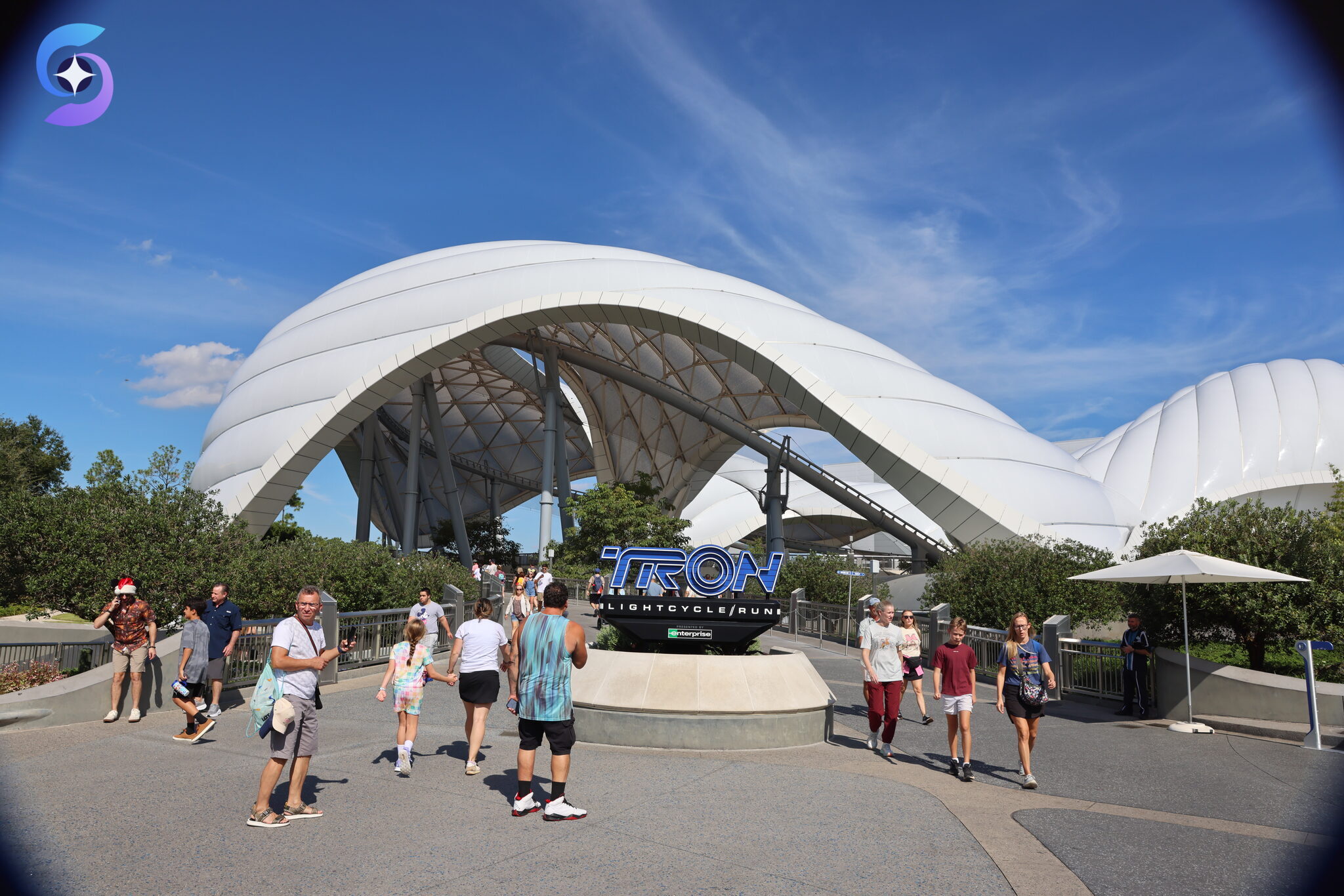 TRON Lightcycle / Run, Magic Kingdom. (Photo: SupaPark)
Almost nobody asks for it. Do.
The height number is 48 inches — verify it at home, in park shoes
48 inches is the gate. There’s no “close enough” at the measuring stick, and there’s no negotiating with a Cast Member who has a job to keep.
The insider move is to measure at home weeks out, barefoot and against a wall, then measure again in the actual shoes your kid will wear in the park. Thick-soled sneakers can be worth a real fraction of an inch — and Disney measures with shoes on. A kid who’s 47.5 inches barefoot in chunky sneakers is a very different planning problem than one who’s 46 inches flat. Know which one you have before you’ve walked your family to Tomorrowland.
What you want to avoid is the classic version of this disaster: a child who clears one attraction at 40 inches, clears another at 44, and then gets turned away at the one they’ve been talking about all week. If you’re planning around a borderline kid, make the hard calls at the kitchen wall, not in the queue. SupaPark’s family planning tracks each child’s height against ride eligibility, so your park-day list already reflects who actually gets to ride — and you can check it at supapark.com before you commit TRON to the plan at all.
Lightcycle vs. standard seat: what actually changes
The lightcycle. You straddle it, lean forward onto handlebars, and a padded brace comes down against your back while your lower legs are secured. It’s the signature of the attraction — the posture is genuinely part of the thrill, and the forward lean plus the open sides is why the launch feels faster than the numbers suggest.
The standard seat. You sit upright in a more traditional seat with a conventional restraint. No straddling, no forward lean, no brace against your back. Same ride profile, noticeably more ordinary boarding. These seats sit toward the rear of the train and there are only a few of them, which is the entire reason you need to ask early rather than hope.
Neither is “the easy version” in terms of the ride itself. TRON is still a smooth launch coaster from both seats — this is about whether your body wants to be in that bike position for the duration, not about reducing intensity.
Planning around this? Alert me when the wait drops for TRON Lightcycle / Run.
Who should request the standard seat
Ask for it if:
- You have back, neck, hip, or knee issues, or you’ve had recent surgery. The lean-forward posture loads your spine and hips in a way a normal coaster seat doesn’t.
- You’re a larger guest. The lightcycle’s back brace has to make contact to lock, and the upright seat is a far more forgiving fit. This is the single most common real-world reason people use it.
- You’re pretty flexible but your mobility is limited. Getting on and off a lightcycle takes more range of motion than sliding into a seat.
- Someone in your party is nervous but willing. The upright seat removes a whole layer of “what is this thing going to do to me” before the train even moves.
Ride the lightcycle if you’re physically comfortable doing it. For a first ride, it’s the version of TRON worth having.
How to ask so it actually happens
This is where people get it wrong. Row and seat requests go badly when they’re made at the last second, in front of a train that’s already loading.
- Ask early — at the entrance or the merge point, not on the platform. Cast Members are assigning positions in real time. By the time you’re being waved toward a spot, the decision is already made.
- Be specific and make it low-friction. “Could we get the standard seats if that’s possible?” is a question someone can say yes to. A vague “can we choose?” is not.
- Expect to wait a cycle or two. There are only a handful of those seats per train, so you may be held. At rope drop or late night that’s basically free. On a packed afternoon it’s a real cost.
- Smaller parties have the edge. Two people slot into leftover seats far more easily than six. If the seat type matters more than riding together, split up and reunite at the exit.
- If a sample vehicle is available near the attraction, use it. Trying the restraint before you commit an hour of your day is worth asking a Cast Member about.
And know that ride operations beats preference every time. Ask politely, accept a no gracefully, and don’t build your morning around a specific seat.
Once you’re on a lightcycle: front or back
If you’re riding the bike, the row genuinely changes the ride. Front row gives you the cleanest look at the launch and the canopy overhead — it’s the best first ride, and the better choice if someone’s nervous but game, because there’s nothing in your field of view but the Grid. Back row delivers the more intense version: you’re whipped through the launch rather than leading it. That’s the pick once you’ve already ridden and want the thrill dialed up.
Same rules apply — ask at the merge, make it easy, let it go if the answer is no. TRON is still TRON from the middle of the train.
Where TRON belongs in your day
Two structural things worth knowing:
TRON is Lightning Lane Single Pass. It’s bought à la carte, like Seven Dwarfs Mine Train, which means it is not part of your Lightning Lane Multi Pass refill rotation. Don’t plan your Multi Pass selections assuming you’ll fold TRON in — you won’t. Buying and confirming a Single Pass happens in My Disney Experience. Access methods at this attraction have changed over the years, so check how TRON is being distributed on your actual date in the app rather than assuming.
Timing beats seat strategy, every time. The hour you ride matters far more than which row you land in. TRON is also a coaster that goes down for weather and for operational holds, which means a 55-minute posted wait can evaporate — or a walk-up can turn into a closure — inside ten minutes. SupaPark tracks live waits, live operational status, and the best-time-to-ride patterns for TRON, and on paid tiers the alerts find you: a push when the wait craters, a push when it goes down, a push when it comes back. SupaPark is free on the web, iPhone (App Store) and Android (Google Play); it never books anything, so a Single Pass still gets confirmed by you in Disney’s app.
If someone in your group doesn’t clear 48 inches
Use Rider Switch. One adult waits with the child while the rest of the party rides, then they swap without re-queuing the whole line. It’s the single most underused tool in families with a borderline kid, and it turns “we skipped TRON” into “we both rode TRON.”
The other half of that plan: pick the consolation prize in advance. A kid who gets measured, comes up short, and then watches the family walk off without a next move is a kid who’s done for the afternoon. Have the Tomorrowland follow-up named before you get in line.
The one thing to remember
48 inches, no exceptions — but there are two ways to sit on this train, and the upright standard seat is the reason a lot of guests who assumed TRON wasn’t for them can ride it anyway. Ask at the merge point, ask early, and spend the rest of your planning energy on when you ride rather than where you sit.
Which Seat and Row Should Each Person in Your Group Pick?
Start with the non-negotiable filter: everyone boarding TRON Lightcycle / Run must measure at least 48 inches (122 cm) in their park shoes, because the upright standard seats at the back of the train carry the exact same height rule as the bikes. Once you know who clears the measuring stick, match each eligible rider to a spot based on physical fit first and view second.
Quick seat-matching calls for your party
- First-timers comfortable straddling the bike: Aim for a front-row lightcycle. Having nothing ahead of you on the launch and under the canopy makes the speed easier to read, especially if someone is slightly nervous.
- Repeat riders chasing maximum punch: Request a back-row lightcycle, where being whipped through the launch feels stronger than leading it, or take any middle row if keeping your wait moving matters more than row preference.
- Riders with back, neck, hip, or knee issues, larger frames, or limited mobility: Ask for the upright standard seat near the rear so you skip leaning forward onto handlebars and locking into the back brace.
- Larger groups with mixed seat needs: Split into pairs before reaching the merge point rather than asking a Cast Member to hold six people together for the few rear seats on each train.
If a sample vehicle is available near the attraction entrance, ask a Cast Member about trying it before entering the standby line or buying a Lightning Lane Single Pass in My Disney Experience. Testing the leg and back restraints up front settles the bike-versus-upright question fast—and gives you time to set up Rider Switch and a Tomorrowland backup ride if someone in your group measures under 48 inches.
How Tall Do You Have to Be to Ride TRON at Disney World?
You must be at least 48 inches (122 cm) tall to ride TRON Lightcycle / Run at Magic Kingdom, with no exceptions for either seat style. Whether you straddle the lean-forward lightcycle or sit upright in the standard rear car, the exact same 48-inch height requirement applies.
How the Two Height Checks Work
Cast Members measure borderline riders twice: once at the queue entrance outside Tomorrowland and a second time near the interior merge point right before the loading station. Clearing the first stick does not guarantee you will bypass the second. Because kids naturally slouch after standing in a standby or Lightning Lane queue, coach your child before you enter to stand with their heels flat against the back of the post and look straight ahead so the crown of their head—the highest point—meets the horizontal bar.
Shoes, Hair, and What Actually Counts
Disney measures guests in the shoes they are wearing to board. Normal sneakers with a supportive rubber sole are completely fine and often give a rider who measures 47.5 inches barefoot the fraction of an inch needed to clear the bar legitimately. However, Cast Members are trained to spot artificially stacked footwear, heels, or shoes stuffed with extra insoles, and they will flatten tall hairstyles, buns, hats, or mouse ears to reach the actual top of the skull.
What to Do If Your Child Is Right on the 48-Inch Line
Ride earlier in the day rather than late at night; spines compress slightly after hours of walking, and tired kids slump at the stick. If one child in your party comes up short at the entrance, tell the Cast Member immediately so your group can set up Rider Switch on the spot rather than forfeiting the adults’ turn.
Frequently Asked Questions
How tall do you have to be to ride TRON Lightcycle / Run?
The height requirement is 48 inches (122 cm), and it applies to both the lightcycle seats and the upright standard seats. Measure your child at home in the shoes they’ll actually wear, since Disney measures with shoes on.
What’s the difference between the lightcycle and the standard seat on TRON?
On a lightcycle you straddle the vehicle, lean forward onto handlebars, and a brace secures your back with your lower legs restrained; the standard seat is an upright, more conventional seat with a traditional restraint. The ride itself is identical — only the boarding position and fit change.
How do I request the standard seat on TRON?
Ask a Cast Member early — at the attraction entrance or the merge point, not once you’re being waved onto the platform. There are only a few of those seats per train, so be prepared to wait a cycle or two, and understand it’s never guaranteed.
Is TRON Lightcycle / Run included with Lightning Lane Multi Pass?
No — TRON is a Lightning Lane Single Pass attraction, purchased separately à la carte, so it isn’t part of your Multi Pass selections or refill rotation. You buy and confirm it in My Disney Experience.
Can my family ride TRON if my child is too short?
Yes, using Rider Switch: one adult waits with the child while the rest of the group rides, then swaps in without going through the full queue again. Decide on a backup Tomorrowland attraction ahead of time so a short measurement doesn’t derail the afternoon.
Is the front row or back row better on TRON Lightcycle / Run?
Pick the front row for your first ride or if someone is nervous, since you get an unobstructed view of the launch and the overhead canopy. Request the back row on a repeat ride when you want a stronger whipping sensation through the launch.
Can you test the TRON lightcycle seat before getting in line?
If a sample vehicle is available near the attraction, ask a Cast Member about trying it before entering the standby queue or buying a Lightning Lane Single Pass. Checking how the back brace and leg restraints fit up front helps you decide whether to request the upright rear seat at the merge point.
What can your family do if one child is under TRON’s 48-inch height limit?
Use Rider Switch so one adult waits with the shorter child—ideally with a Tomorrowland consolation stop already picked out—while the rest of the party rides, then swaps in without waiting through the full line again.
How tall do you have to be to ride TRON at Disney World?
Riders must be at least 48 inches (122 cm) tall to board TRON Lightcycle / Run at Magic Kingdom. That 48-inch height requirement applies to both the lean-forward lightcycle bikes and the upright standard seats at the back of the train.
Does the upright seat on TRON have a lower height requirement?
No, the upright rear seats on TRON have the exact same 48-inch (122 cm) height requirement as the standard lightcycle bikes. The accessible car changes your seating posture and restraint style, not the minimum height rule.
Can a child under 48 inches ride TRON with an adult?
No, every guest must independently meet the 48-inch height requirement to ride TRON, even when riding in the two-across upright seat next to a parent. Families with a child under 48 inches can use Disney’s free Rider Switch service so adults can take turns riding without waiting in the full standby line twice.
Keep planning: TRON Lightcycle / Run · live wait times · is Lightning Lane worth it
Go deeper — the full guides: Walt Disney World Hidden Gems Most Guests Walk Right Past – The Ultimate Insider Guide · Animal Kingdom Full-Day Touring Plan: Beat the Heat and Maximize Magic
SupaPark tracks live wait times and crowd forecasts, and pings you the second a hard-to-get reservation opens or a ride goes walk-on — free to start at supapark.com.
Going to Disney? Pick your dates
Free with a SupaPark account: the crowd forecast for each of your days, and alerts for the rides and tables you pick. See plans and pricing or get the app.
Tools for your trip
- Real wait: Posted wait vs the line you actually stand in
- Lightning Lane sellout times: When each ride usually sells out
- Crowd calendar: Every park, every day, from our forecast
- Dining table odds: How often a full table opens up