Is TRON Lightcycle / Run Too Intense for First-Timers?
Published July 31, 2026 · Updated November 10, 2026
Short answer: TRON Lightcycle / Run is way less intense than it looks. The lightcycle stance, the launch, the dark Grid — all of it reads as a white-knuckle coaster. But strip away the theming and you’ve got a smooth, roughly minute-long launch coaster with a tall height bar and no inversions. If you’re a nervous first-timer, the ride isn’t the problem. The marketing is.
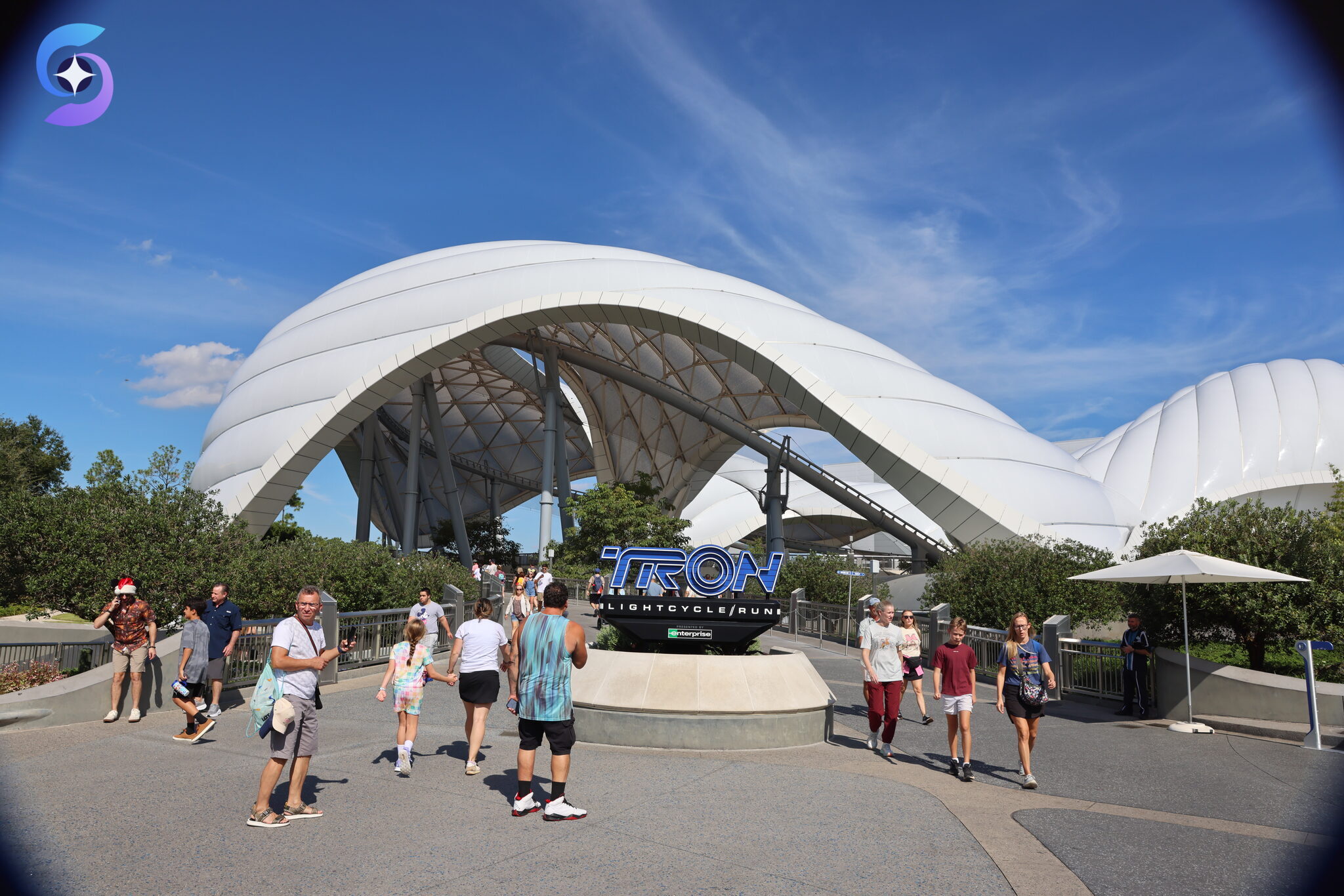 TRON Lightcycle / Run, Magic Kingdom. (Photo: SupaPark)
So the real question isn’t “is TRON scary?” It’s “do I actually hate sudden speed?” Answer that honestly and you’ll know exactly whether to ride, where to sit, and whether it’s worth a Lightning Lane Single Pass at Magic Kingdom.
The thing nobody tells first-timers: it’s the launch, not the fear
Here’s the distinction that matters. The people who struggle with TRON aren’t the ones who think it looks scary in theory — plenty of anxious riders love it. The ones who bail are the ones who genuinely can’t stand the physical sensation of sudden acceleration. That’s a different wiring, and it doesn’t care how brave you feel walking up.
TRON’s signature moment is the launch: you go from standstill to fast in a blink. There are no big drops that live in your stomach the way Space Mountain’s dark dips or Seven Dwarfs Mine Train’s little airtime hills do. It’s mostly speed and swooping, in the dark and partly outdoors. If fast-and-smooth is your thing, it’s a blast. If your body panics at the g-force of a hard launch, no amount of “but it’s short” will save the experience.
The smart move: stop asking whether TRON looks intense and start asking whether you like being launched. Those are not the same question, and confusing them is how people end up white-knuckled on the platform.
Your seat completely changes the ride — pick on purpose
This is the single most underused trick on TRON, and it’s free. The row you sit in changes how aggressive the ride feels, because this coaster is short, fast, and built around one giant first impression. Your seat decides whether that impression lands sleek or punchy.
- First-timer or nervous rider? Ask for the front. The front row gives you the cleanest sightline into the Grid, which matters more on TRON than on most Disney World coasters. Nothing’s blocking the view, the launch feels cinematic instead of chaotic, and the forward-leaning motorcycle position actually sells the “racing into the digital world” illusion. It’s the most controlled read of the ride.
- Want the most aggressive version? Ask for the back. Same track, punchier launch, more whip. Great for the thrill-seeker in your group — wrong choice for the person you’re trying to gently convince.
Cast members will generally try to accommodate a front- or back-row request if you ask at the merge point. It costs you nothing and can be the difference between a first-timer saying “again!” and “never again.”
Planning around this? Alert me when the wait drops for TRON Lightcycle / Run.
Test-drive it before you commit — the at-home POV trick
Clearing the height requirement means someone can ride. It doesn’t tell you whether they will — and there’s a big difference between eligible and willing, especially for tweens and cautious adults. The fix is dead simple and you do it before the trip: pull up an on-ride point-of-view video and watch the on-the-fence rider watch it.
You’re not looking for a verdict on whether it seems fun. You’re watching for the flinch at the launch. If they lean in, you’re golden. If they physically recoil at the speed, believe them — that reaction on your couch is the same one you’ll get on the platform, except at Magic Kingdom it comes after you’ve already spent money and morning on it.
For kids specifically: measure at home first so a failed height check isn’t the surprise, then let the genuinely undecided kid make the real call. “You can choose” beats a queue-line argument every time.
The Single Pass math: don’t gamble a headliner on a maybe
TRON is a Lightning Lane Single Pass attraction at Magic Kingdom — you buy it à la carte, separate from Multi Pass, and the price isn’t pocket change. That changes the calculus for a shaky rider. You don’t want to spend a Single Pass on someone who taps out at the platform.
So sequence it right:
- Screen first (the POV video and the honest “do you hate speed?” conversation) so you know it’s a real yes.
- If it’s a yes, decide between Single Pass and standby. Single Pass is the clean play when it’s a must-do and you don’t want to gamble your morning on a long line.
- If it’s a no, don’t force it — use Rider Switch. One adult waits with the non-rider, the other rides, then they swap without re-queuing. Nobody spends a cent or a fight on a ride that gets bailed on.
This is the same logic that makes Seven Dwarfs Mine Train such a tricky family call: the ride is more approachable than the wait, and midday standby is where good Magic Kingdom plans quietly fall apart. Decide before you’re standing in the heat, hungry and committed.
When standby actually works (and when it wrecks your day)
If you’re skipping Single Pass to save money, standby can absolutely work — but only if you’re disciplined about timing. TRON’s line tends to be ugliest in the middle of the day. Rope drop and the last stretch before close are your friends; noon is where you lose an hour you can’t get back.
A couple of durable in-park habits that stack the odds:
- When the queue path splits, go left. Most people are right-handed and drift right, so the left side often moves a touch quicker. It’s a small edge, but it’s free, and it works at bag check and entrance gates too.
- Let the data tell you when to pounce. Waits swing hard through the day. SupaPark’s best-time forecaster flags when TRON’s standby usually bottoms out, and its live walk-on alerts ping you the moment a wait craters — so you grab it at its cheapest instead of guessing. That’s the whole point: you ride when the line’s short, not when you happen to be standing nearby.
What SupaPark can’t tell you is whether your kid — or you — actually wants to be on it. Only the rider knows that.
The one thing to remember
TRON Lightcycle / Run isn’t the monster its looks promise — it’s a smooth, fast, minute-long launch coaster, and most first-timers who dislike it aren’t scared, they just hate sudden speed. Screen for that with an at-home POV video, put the nervous rider in the front row, and keep Rider Switch in your back pocket so a “no” never costs you a Single Pass. Clearing the height bar tells you they can ride. Everything above tells you whether they’ll be glad they did.
Is TRON Lightcycle / Run scary? Here’s what it actually does to your body
No — for most riders TRON Lightcycle / Run is thrilling rather than scary, because the things that usually frighten people simply aren’t in it. There’s no inversion, no stomach-dropping plunge, no villain jumping out of the dark, and no long slow climb to dread at the top. What you get instead is one hard launch and then roughly a minute of fast, swooping, mostly smooth track through the dark and partly outdoors. The fear is front-loaded in the queue and the station; the ride itself is over before most nervous riders finish being nervous.
The honest exception is speed sensitivity. If sudden acceleration makes your body panic — the pressed-back, breath-caught feeling of a launch — that’s the one sensation TRON leans on hardest, and it’s unavoidable. Same goes for quick directional changes if those tend to make you queasy; the ride banks and swoops rather than hammering you, but it doesn’t let up much.
The part people don’t factor in: the posture
The lean-forward Lightcycle position is its own intensity dial. Being stretched out over the bike with your back restrained is a vulnerable, exposed feeling even when the track is tame — and that physical strangeness is what some guests actually dislike, not the speed. If that’s the sticking point, ask before you board about the standard upright seat, which puts you in a conventional coaster position for the same ride.
The smart move: separate the three variables before you decide. Scary theming? Not a factor. Big drops? Not a factor. Hard launch plus an odd riding posture? Those are the real ones — and only one of them is fixable by asking at the station.
Frequently Asked Questions
How fast is TRON Lightcycle / Run?
It’s the fastest coaster at Magic Kingdom, and nearly all of that speed comes from the opening launch, which takes you from a standstill to full speed in a couple of seconds. Disney doesn’t publish an exact top speed on the ride sign, so treat specific numbers you see quoted elsewhere as estimates.
Is TRON intense?
It’s intense in one specific way — raw speed — and not intense in the ways most people fear, since there are no inversions, no big drop, and no scary theming. The other intensity factor is the lean-forward Lightcycle seat, which you can swap for a standard upright seat by asking before you board.
Is the TRON ride scary?
For most guests, no — it’s thrilling rather than frightening, and the scariest part is usually the anticipation while you’re waiting in the station. If someone in your group is genuinely speed-sensitive or gets queasy from quick directional changes, that’s the honest reason to sit it out.
Does TRON Lightcycle / Run have any drops or inversions?
No — there are no inversions and no big drop, which is why it feels far tamer than it looks. Nearly all of the intensity comes from the launch and the sustained speed, not from falling.
Can you ride TRON Lightcycle / Run in a regular seat instead of the Lightcycle?
Yes — there’s a standard upright seat available, and you just need to ask before you board rather than waiting until you’re at the loading platform. It’s the right call for anyone who’s fine with speed but uneasy about the lean-forward motorcycle posture.
Go deeper — the full guides: Ultimate Mickey’s Not-So-Scary Halloween Party Planner 2026 · runDisney: The Complete Race Weekend Planning Guide · Disney Jollywood Nights 2026: The Honest Guide to Who Should Go and What to Skip
SupaPark tracks live wait times and crowd forecasts, and pings you the second a hard-to-get reservation opens or a ride goes walk-on — free to start at supapark.com.
Going to Disney? Pick your dates
Free with a SupaPark account: the crowd forecast for each of your days, and alerts for the rides and tables you pick. See plans and pricing or get the app.
Tools for your trip
- Real wait: Posted wait vs the line you actually stand in
- Lightning Lane sellout times: When each ride usually sells out
- Crowd calendar: Every park, every day, from our forecast
- Dining table odds: How often a full table opens up