TRON or Space Mountain: Which Coaster Feels Scarier?
Published September 30, 2026 · Updated November 17, 2026
Here’s the thing nobody tells you when you search this: neither TRON Lightcycle / Run nor Space Mountain is a drop coaster. If you’re picturing the stomach-lift of Tower of Terror or the plunge on Tiana’s Bayou Adventure, you’re comparing the wrong attribute. These two rides scare people for completely different reasons, and figuring out which reason applies to your group is the actual decision.
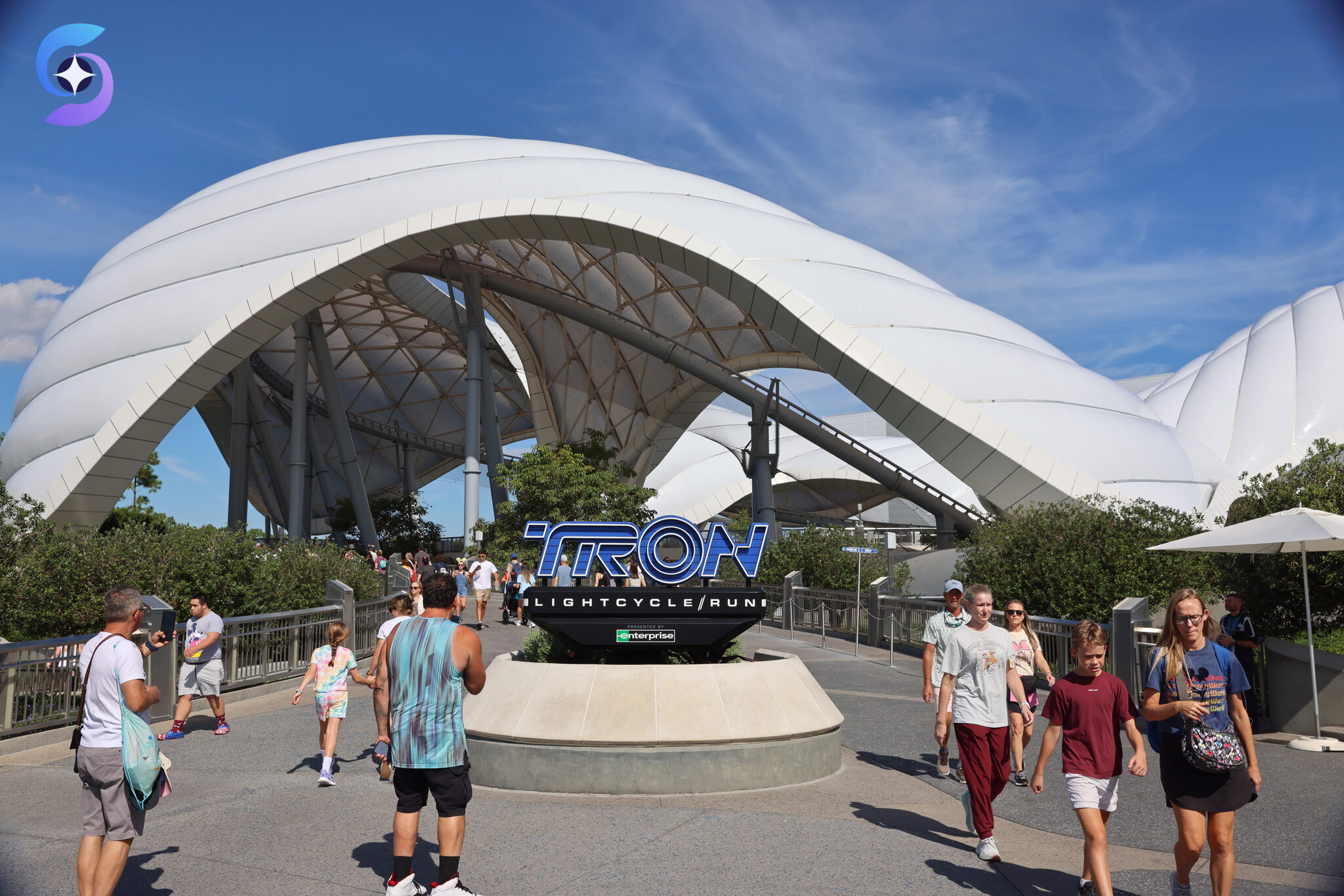 TRON Lightcycle / Run, Magic Kingdom. (Photo: SupaPark)
So let’s answer the real question: which one is going to be too much for someone in your party, and how do you ride both without overspending?
Neither one is built around a drop — that’s the whole point
TRON’s signature moment is a launch, not a fall. You accelerate hard, fast, and briefly — it’s the fastest coaster at Walt Disney World — and then you spend the rest of the ride swooping through banked curves, part of it outside under the canopy, part of it inside. There’s no lift hill, no crest, no moment of hanging at the top.
Space Mountain doesn’t have a headline drop either. It’s a series of dips, sudden banked turns, and short descents strung together in near-total darkness. Its fastest, most aggressive stretch comes right after you leave the launch tunnel — but you’d never be able to point to it on a track map, because you can’t see a thing.
That’s the honest verdict: if “bigger drop” is your screening test, both of these pass. Neither will give your drop-averse rider the sensation they’re dreading.
Space Mountain is scarier for the reason people underestimate
Darkness is the whole trick. You cannot see the next turn coming, which means your body never gets to brace. For a lot of guests — especially kids who did fine on Big Thunder Mountain Railroad — that unpredictability is the thing that breaks them, not the speed.
Space Mountain also rides rougher. The turns are tight, the transitions are abrupt, and the cars are snug single-file seats. If you’re tall, broad-shouldered, or have a back that complains, this is the one you’ll feel the next morning. It’s also the worse pick for anyone prone to motion sickness: dark plus jerky plus no visual horizon is the classic nausea recipe.
Smart move: if motion sensitivity runs in your family, ride Space Mountain earlier in the day, before the heat and a full stomach stack the odds against you.
Planning around this? Alert me when the wait drops for Space Mountain.
TRON is faster but easier on most bodies
TRON is smooth. Aggressively smooth — the speed is real but the track doesn’t beat you up, and because much of it is lit and you’re facing forward with a clear view, your brain gets the visual cues it needs. Plenty of guests who tap out on Space Mountain handle TRON fine.
The variable on TRON isn’t the layout, it’s the posture. You ride a bike-style vehicle, leaning forward with a restraint across your back and calves. Some people love it instantly; others find the position itself unsettling before the ride even starts. If that’s a concern, there is a seated option on the train with a more conventional restraint — ask a cast member at the load area rather than discovering it when you’re already straddling a Lightcycle.
The height rules settle this before you do
Space Mountain requires 44 inches. TRON requires 48 inches. That four-inch gap decides a surprising number of Magic Kingdom days — there’s a whole band of kids who are cleared for Space Mountain and nowhere near TRON.
Measure at home, then measure again the morning of, and don’t round up hopefully. A kid who gets turned away at the TRON entrance after a long walk to Tomorrowland has a worse afternoon than one who never had it on the plan.
The detail that matters most with a nervous kid
Both rides separate you. Space Mountain seats riders single-file in the same car; TRON puts each rider on their own Lightcycle. Neither one lets you hold a scared kid’s hand or pull them into your shoulder mid-ride. If that’s the comfort your child needs to get through something intense, these are both the wrong first coaster — start with a bench-seat ride like Big Thunder Mountain Railroad, where you can actually sit beside them.
And if someone in your group is out entirely, use Rider Switch. It’s free, you just ask the cast member at the entrance, and it means your second adult doesn’t have to re-queue or re-buy to get their turn.
Don’t pay for TRON until you’ve tried the free routes
This is where families quietly lose money. TRON is a Lightning Lane Single Pass ride — the à la carte tier — alongside Seven Dwarfs Mine Train at Magic Kingdom. Space Mountain is included in Lightning Lane Multi Pass, so if you’ve bought Multi Pass for the day, it’s already covered: book it in advance through My Disney Experience and refill as you go. See when every Lightning Lane sells out, measured daily.
For TRON, work through the free options first:
- Check live standby first. TRON runs a regular standby line every day. Look at the posted wait before you reach for your wallet.
- Rope drop or late evening. Standby on TRON is usually shortest early in the morning, and the last hour before close is frequently the day’s quietest window.
- The 30-minute rule. If live standby is running under about 30 minutes, skip the purchase. The time you save rarely justifies the spend.
The discipline that separates families who tour well from families who overspend: one paid splurge per park, chosen on purpose, not five panic buys. At Magic Kingdom, TRON is the one that can justify it — if the ride is genuinely non-negotiable for your crew and your day is too tightly scheduled to gamble.
This is exactly the call SupaPark is built for: live waits and ride status, Single Pass availability with sell-out and refill patterns, and a best-time forecaster that tells you whether standby is about to drop short enough that you don’t need to pay at all. When a slot opens, you get pinged the second it’s bookable and confirm it yourself in My Disney Experience — no refreshing a screen while you’re standing in Tomorrowland. It’s at supapark.com.
Two small things that save the TRON experience
Hydrate before you get in line. The queue and load area move you around a lot, and a thirsty, overheated kid is a scared kid — fill an insulated bottle with free ice water at any quick-service counter on the way over.
And don’t buy an open drink right before you tap in. Open cups aren’t allowed on the ride, so you’ll be chugging or tossing it at the entrance. Check your next move before committing to a two-handed slushie.
The one thing to remember
Stop comparing drops — there isn’t one worth comparing. Space Mountain is the scarier ride for anyone bothered by darkness, roughness, or motion sickness. TRON is the faster ride, and the harder one to clear on height and to get on without paying. Pick based on your rider’s actual trigger, and get TRON free before you get it paid.
Is TRON Scarier Than Space Mountain?
For most riders, no. Space Mountain usually feels scarier than TRON Lightcycle / Run, even though TRON is the faster ride. The difference is what you can see coming.
Space Mountain hits you with sudden drops and sharp turns in near-total darkness, so you can’t brace for any of them. It also rides rougher, with abrupt transitions and snug single-file seats. Kids who handle Big Thunder Mountain Railroad without a problem often come off Space Mountain rattled, and the reason is the surprise of it, not the speed. Expect sudden drops on Space Mountain. That matters if you’re screening for a rider who hates the falling feeling.
How scary is TRON?
TRON’s big moment is the launch. You accelerate hard right away, then swoop through smooth banked curves, partly outdoors under the canopy and partly inside. Much of the ride is lit and you face forward, so you can see where you’re headed. Smooth track plus being able to see where you’re going is why plenty of guests who tap out on Space Mountain are fine on TRON.
Who might find TRON scarier
TRON can be the harder ride for two kinds of riders:
- Launch-averse riders. If sudden acceleration is the trigger, TRON gives it to you within seconds of leaving the station, and there’s no slow climb to warm up on.
- Riders who don’t like the posture. You lean forward on a bike-style Lightcycle with restraints at your back and calves. Some people find that position unsettling before the ride even starts. A seated option with a more conventional restraint is on the train, so ask a cast member at the load area.
The quick call: if darkness, sudden drops, roughness or motion sickness is the worry, TRON is the gentler pick. If speed and launches are the worry, Space Mountain may actually be easier.
Which Is More Intense: TRON or Space Mountain?
Space Mountain feels more intense for most riders because it throws tight, jerky turns at you in near-total darkness, while TRON Lightcycle / Run trades shock value for pure, smooth speed. Which one hits harder depends entirely on whether your body reacts worse to darkness and roughness or to a high-speed launch.
How the ride sensations actually differ
- Speed vs. surprise: TRON is the fastest coaster at Walt Disney World, delivering its biggest rush right away with a forceful launch. Because you face forward with a clear view under the outdoor canopy and through lit indoor stretches, your brain can anticipate the banked curves. Space Mountain is slower, but losing your visual horizon makes every short descent and sharp turn feel much more chaotic.
- Roughness and comfort: TRON rides remarkably smooth and is easy on your joints. Space Mountain has abrupt transitions that jostle you around, making it the tougher ride on sensitive backs and the bigger trigger for motion sickness.
- Riding posture: Space Mountain seats you upright in snug single-file cars. TRON positions you leaning forward on a Lightcycle with restraints across your back and calves, though a conventional seated option is available on the train if you ask a cast member at the load area.
Which one to try first
If everyone clears TRON’s 48-inch height requirement (Space Mountain requires 44 inches), start with TRON when darkness, jerky tracks, or nausea are the main worry. Start with Space Mountain only if sudden launch acceleration is what spooks your rider.
Frequently Asked Questions
Does TRON Lightcycle / Run or Space Mountain have a bigger drop?
Neither ride is built around a significant drop — TRON’s thrill is a fast launch followed by banked curves, and Space Mountain is a series of short dips and tight turns in the dark. If your rider’s fear is specifically about falling sensations, both of these are safer bets than they sound.
Which is scarier, TRON or Space Mountain?
For most guests, Space Mountain feels scarier because it’s dark, so you can’t anticipate turns, and it rides noticeably rougher. TRON is faster but much smoother, and being able to see where you’re going makes it easier on people prone to motion sickness.
What are the height requirements for TRON and Space Mountain?
Space Mountain requires riders to be 44 inches tall, and TRON Lightcycle / Run requires 48 inches. Measure your kids before the trip, since that four-inch gap means plenty of children can ride Space Mountain but not TRON.
Do I have to buy Lightning Lane Single Pass for TRON?
No. TRON runs a regular standby line that’s usually shortest early in the morning and in the final hour before park close — if live standby is under about 30 minutes, skip the purchase entirely.
Is Space Mountain part of Lightning Lane Multi Pass?
Yes. Space Mountain is a Multi Pass attraction, so if you’ve bought Multi Pass for your Magic Kingdom day you can book it in advance and refill selections as you go — only TRON and Seven Dwarfs Mine Train require the separate Single Pass purchase at that park.
How scary is TRON Lightcycle / Run?
TRON’s scariest part is the hard launch at the start. After that it’s smooth banked curves that you can mostly see, so many guests find it less frightening than its speed suggests. The forward-leaning bike seat bothers some riders more than the ride itself.
Does Space Mountain have drops?
Yes. Space Mountain has sudden drops and sharp turns in near-total darkness, so you can’t see them coming. That surprise is the main reason many riders find it scarier than TRON.
Who would find TRON scarier than Space Mountain?
Riders who are bothered by speed and sudden acceleration, or who feel uneasy in the forward-leaning Lightcycle position, may find TRON harder. A seated train option is available if you ask a cast member at load.
Is TRON faster than Space Mountain?
Yes, TRON Lightcycle / Run is the fastest coaster at Walt Disney World, starting with a high-speed launch into smooth banked curves. Space Mountain is slower, though its abrupt turns in near-total darkness often make it feel more frantic.
Which ride is worse for motion sickness, TRON or Space Mountain?
Space Mountain is much tougher on motion-sensitive riders because the near-total darkness and jerky transitions leave you with no visual horizon. TRON Lightcycle / Run is smoother and lit well enough that you can see where the track is going.
Can you ride TRON without leaning forward on the Lightcycle?
Yes, TRON Lightcycle / Run offers a seated option on the train with a more conventional restraint for guests who prefer not to straddle a Lightcycle. Ask a cast member at the load area so they can direct you to that row.
Keep planning: TRON Lightcycle / Run · live wait times · is Lightning Lane worth it
Go deeper — the full guides: Brown Derby Lunch Works Best as Your Studios Reset · Disney Jollywood Nights 2026: The Honest Guide to Who Should Go and What to Skip
SupaPark tracks live wait times and crowd forecasts, and pings you the second a hard-to-get reservation opens or a ride goes walk-on — free to start at supapark.com.
Going to Disney? Pick your dates
Free with a SupaPark account: the crowd forecast for each of your days, and alerts for the rides and tables you pick. See plans and pricing or get the app.
Tools for your trip
- Real wait: Posted wait vs the line you actually stand in
- Lightning Lane sellout times: When each ride usually sells out
- Crowd calendar: Every park, every day, from our forecast
- Dining table odds: How often a full table opens up